Joanna Rossiter

Joanna Rossiter

Joanna Rossiter is a freelance journalist and author of The Sea Change (Penguin)

Why aren’t the teaching unions speaking out about Batley?

From our UK edition

‘Sadly, his life here in Batley is over. Even if he gets his job back, how can he possibly return to Batley Grammar School? It will be far too risky. And how will he be able to walk around the town with his kids, doing normal things knowing that he could be killed?’ These were the harrowing words of the father of Batley Grammar’s suspended RE teacher yesterday. It’s hard to believe that a professional working in a liberal democracy like Britain, whose only ‘crime’ was to use a drawing to start a class discussion, is now facing a lifetime of police protection, unable to return to work and living in fear for his family’s life.

Should we vaccinate kids against Covid?

From our UK edition

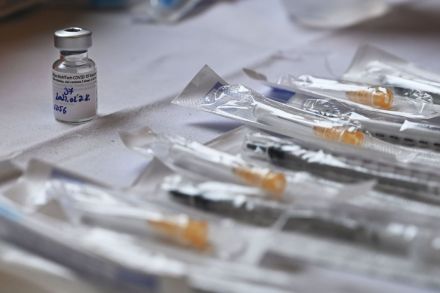
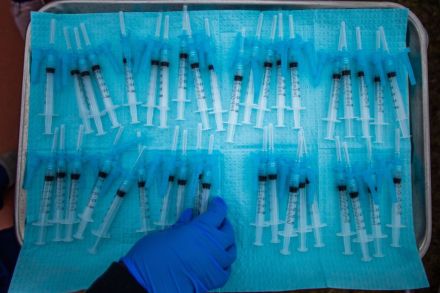
Children could start getting Covid vaccines over the summer as part of the government's herd immunity strategy. As Katy Balls reported last month, the current thinking in government is that vaccinating the majority of the population is the best way to stop the virus in its tracks. But where does this leave parents like me who have concerns about giving their children the jab? NHS England’s chief executive Simon Stevens has already mooted the idea of combining the flu and Covid vaccinations into one dose. And streamlining the two vaccinations makes perfect sense for adults. But it could put parents in a difficult position.

Is making misogyny a hate crime really a victory for women?

From our UK edition

Misogyny will now be recorded as a hate crime by police. But is this really the victory for women’s rights that campaigners are claiming it to be? It’s absolutely right, of course, that the law is bolstered so that incidents against women are taken seriously by the police. But the wording of the policy is disappointingly woolly, relying heavily on what the victim perceives as the motivation for the crime. Speaking in the House of Lords, Home Office minister Baroness Williams said that from the Autumn:  ‘We will ask police forces to record and identify any crimes of violence against the person… where the victim perceives it to have been motivated by a hostility based on their sex.

Why the British love Henry Hoover

From our UK edition

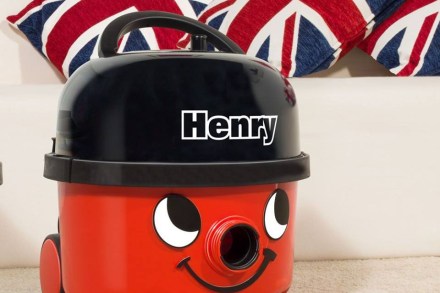
What's so endearing about Henry? It's been the question on everybody's lips since he spectacularly photobombed the unveiling of the new Downing Street press room. The friendly faced vacuum cleaner still manages to compete with the likes of Dyson forty years after he was first created. Made in Chard, Somerset, with his bowler hat shaped ‘cap’ and smiley face, Henry is arguably one of the last remaining bastions of British eccentricity.   Henry is that rare thing in British culture - a domestic appliance that transcends class. As Grayson Perry pointed out in his excellent series All in the Best Possible Taste, the British have a propensity to imbue ordinary household objects with all sorts of thinly veiled social codes.

The royal family is in a perilous position

From our UK edition

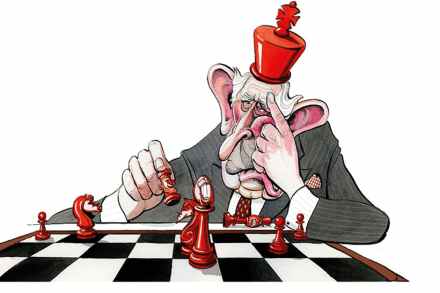
Whatever you think of the Sussex saga, it’s clear that Buckingham Palace are waking up to more uncomfortable reading this morning. The coverage of the allegations made by the Sussexes is not going to die down anytime soon and the public is now poised to see how the Palace reacts. While the Duke and Duchess of Sussex did everything in their power to twist the knife during their two-hour tell-all with Oprah, the royal family’s well-intentioned actions last week may have worsened their predicament. It's easy for the press to pooh-pooh Meghan Markle’s Little Mermaid metaphors but there can be no denying that the Sussexes have inflicted serious reputational damage to the rest of their family. The royal family now finds itself in an impossible situation.

Kazuo Ishiguro is right about cancel culture

From our UK edition

When the Kuwaiti authorities banned nearly 1,000 books from the Kuwait International Literature festival including Dostoevsky’s The Brothers Karamazov, the move was rightly met with outrage from the Western literary community. The press was full of talk about the perils of artistic censorship. That was twelve years ago, but this grand-standing was on display again last year during the Abu Dhabi literature festival. Stephen Fry and Noam Chomsky signed a letter to the United Arab Emirates government, castigating them for ‘promoting a platform for freedom of expression, while keeping behind bars Emirati citizens and residents who shared their own views and opinions.

What Angela Merkel can learn from the Queen about vaccine scepticism

From our UK edition

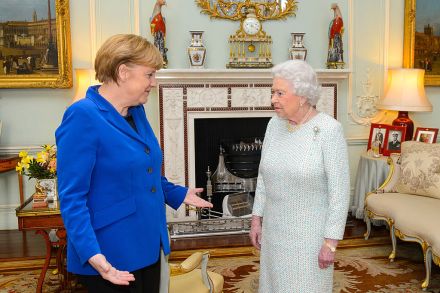
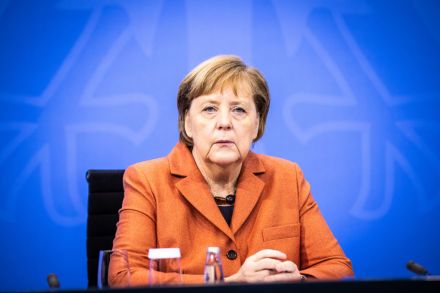
You have to feel for Germany. After a fraught vaccine procurement process, not only is the government struggling to persuade its citizens to take the Oxford AstraZeneca vaccine, but Angela Merkel has now stated that she will not be given the jab on account of her age.  ‘I do not belong to the recommended age group for AstraZeneca,’ the German chancellor told Frankfurter Allgemeine Zeitung newspaper. It could well be the final nail in the coffin for an EMA-approved, safe vaccine that has cost her country millions. Merkel’s view may be aligned with government policy – she is 66 and therefore, under the German rules which state that over 65s should not be given the vaccine, she does not qualify for a dose.

Does Nicola Sturgeon really want to fly the EU flag?

From our UK edition

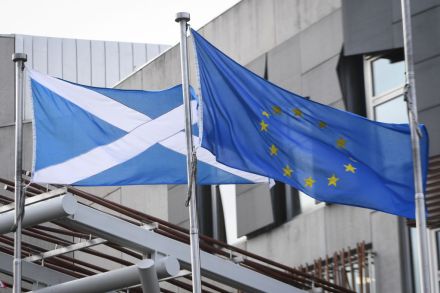
The news that Nicola Sturgeon has asked for the EU flag to be flown every day from the Scottish Parliament building won’t come as a surprise to those familiar with her much-documented Europhilia. Indeed, when Britain was edging ahead in the vaccine race, she threatened to publish confidential information about the UK’s vaccine supply in order to offer support to Brussels, potentially undermining our vaccine deals. The fact that she was prepared to do this in order to cosy up to the EU tells you everything you need to know about the SNP’s particular brand of nationalism. What’s most bizarre about Sturgeon’s focus on the EU is that she lives and breathes Scottish independence.

Britain should follow France and Spain’s lead on school closures

From our UK edition

This pandemic has not been short of unexpected twists. Perhaps the most surprising of them all has been Britain’s willingness to close its schools. Boris Johnson’s reasoning for his U-turn in January seemed paradoxical at best: despite judging schools ‘safe’, he closed them anyway. Even more incredibly, the bulk of British parents have been supportive of his decision. On this issue, at least, is it time to take our lead from Europe? While Britain has outpaced Europe in its vaccine roll-out, the attitude towards schooling on the continent has been much bolder than our own. Schools have remained open in both France and Spain throughout the winter, despite both countries experiencing a spike in Covid cases.

Bezos vs Musk: who will win the new space race?

From our UK edition

While the West gets itself into a lather on a weekly basis about the evils of past colonialism is anyone paying attention to the new empire builders in our midst? Although their ideas for space travel often read like the pages of an Arthur C Clark novel, Jeff Bezos and Elon Musk have done little to disguise the colonising instincts of their space projects. Both have outlined competing intentions to mine the moon and put humans on Mars. And, with Bezos stepping down from Amazon to devote more time to his space venture Blue Origin, we could be witnessing the beginnings of a galactic power struggle - executed not by States but by corporations. Bezos and Musk are far from the only billionaires to follow this route.

Hungary’s vaccine strategy risks showing up the EU

From our UK edition

You have to admire Hungary’s chutzpah. Not only has it bypassed Brussels to pursue its own vaccine procurement strategy, it is also backing two of the most controversial horses in the race: Russia’s Sputnik V and China’s Sinopharm jab. It has just secured enough Sinopharm doses to vaccinate 250,000 people a month while its Sputnik V deal will mean 1 million Hungarians are vaccinated – a tenth of the population. The Sputnik V vaccine may start being rolled out as soon as next week. Hungary’s strategy may appear reckless but its hand has been somewhat forced by EU policy, which prohibitively states that individual member states may only enter into negotiations with vaccine suppliers who are not in talks with the EU.

What’s holding up Scotland’s vaccine rollout?

From our UK edition

If I had a penny for every time I heard someone say that Nicola Sturgeon has had a ‘good pandemic’, I’d be living in my very own Scottish castle by now. Imposing restrictions one step ahead of Boris Johnson seems to have become Sturgeon’s go-to formula. But if the First Minister has been praised for her initial response to Covid-19, Sturgeon is running out of excuses to explain why Scotland’s vaccine programme lags behind that of England, Wales and Northern Ireland. Having just managed to catch up on the over 80s briefly at the weekend, Scotland has now fallen significantly behind in its vaccination of the over 70s. And with England soon to call over 65s for appointments, Sturgeon is finding herself in increasingly hot water.

Why vaccine nationalism won’t end in 2021

From our UK edition

After the EU’s behaviour last week, no one can be under any illusion about how nationalistic the pandemic has now become. Even before the EU attempted to halt vaccine supplies destined for Britain, the scrabble to secure enough doses had become reminiscent of the cold war. It wasn’t for nothing that the Russians named their vaccine ‘Sputnik’ – a reference to the satellite they launched in 1957 during the space race. Nor was it by chance that the Scottish government appeared to find it so difficult to say the word ‘Oxford’ when talking about the Oxford AstraZeneca vaccine. But these sorts of political tiffs are just the beginning. Now that vaccinations are underway across the West, focus is beginning to shift onto future supply.

The EU is blaming everyone but itself for its vaccine debacle

From our UK edition

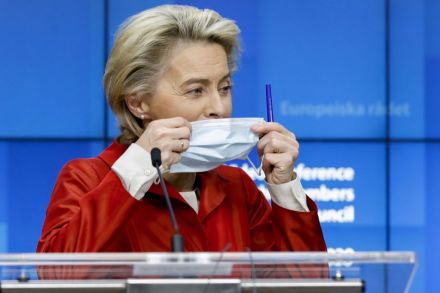
Something has gone badly wrong with the EU's rollout of the Covid vaccine. Yet in its response to this debacle, Brussels seems determined to double down, engaging in behaviour of the pettiest kind as it blames everyone but itself for what has happened. 'The companies must deliver', Ursula von der Leyen, the EU commission's president said this week, as she announced the launch of a 'vaccine export transparency mechanism'. In reality, this plan to oblige companies to notify the commission when vaccines leave the EU (into Britain, for example) is an attempt to pile pressure on the pharmaceutical firms who have given us the only way out of the situation we find ourselves in.

Europe’s slow vaccine approval is testing Germany’s patience

From our UK edition

The Bundestag can’t be an easy place to be a politician right now. At the start of the pandemic, Germany seemed to be steering a steadier course than other countries, who looked on in awe at the speed with which it launched its testing regime. But as Britain, Canada and the USA begin vaccinations, Germany has been left tapping its feet. It is still waiting for the European Medicines Agency to approve the Pfizer vaccine, which it is set to do on 21 December – a state of affairs that is rapidly turning into a national and international embarrassment. The German public have grown increasingly irritated at the delays. ‘It’s just beyond belief,’ the Bild newspaper wrote in an editorial.

The Isles of Scilly: a staycation that feels like you’re abroad

From our UK edition

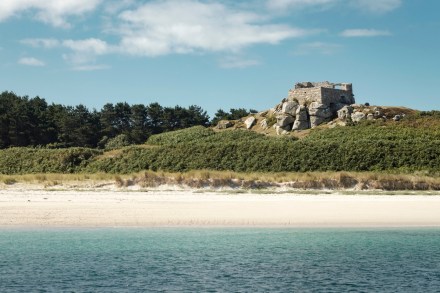
First-time visitors to the Isles of Scilly are hard to find. Once you discover this spell-bindingly beautiful archipelago twenty eight miles off the Cornish coast you quickly become part of its fiercely loyal legion of fans. Indeed, it’s almost impossible to resist the urge for a return visit. It came as no surprise, then, to learn that the Duke and Duchess of Cambridge decided to holiday on the island of Tresco in the heart of the Scillies twice in close succession this year.

Did Brexit boost Britain’s vaccine deal?

From our UK edition

The government’s successful deal to secure 40 million shots of Pfizer's vaccine is a political coup in more ways than one. Not only have ministers successfully backed what looks like the winning vaccine from a pool of 150, it has also pipped the EU to the post. The EU has only just signed on the dotted line with Pfizer to secure 200 million shots of the vaccine, with the coordinator of the European parliament's committee on public health Peter Liese saying that pharmaceuticals 'need to respect EU law and that’s why it took a while’.

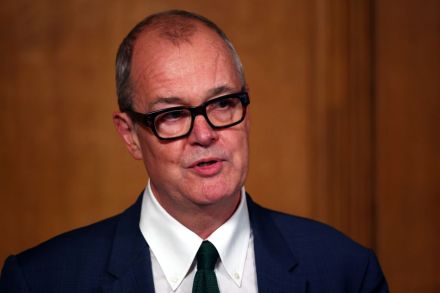
Patrick Vallance was right to hedge his vaccine bets

From our UK edition

Patrick Vallance has rightly come under fire over the use of statistics during the government’s now infamous lockdown press conference, but we ought to give him some credit for the UK’s preparedness for a Covid vaccine. It was Vallance’s forward thinking that established the taskforce responsible for securing 40 million doses of the Pfizer vaccine (enough to cover 20 million people) back in May 2020. This taskforce also made the call to spread the UK’s vaccine investment across six suppliers. People will quibble about the number of doses ordered, but thanks to Vallance, the UK is in a position to benefit from whichever vaccine reaches the market first. After months of negative headlines, Boris Johnson's government also deserves some praise.

8 crowd-free day trips for the bank holiday weekend

From our UK edition

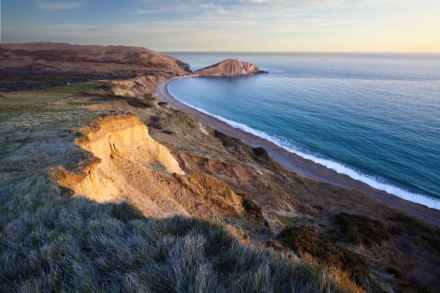
Worbarrow Bay, Dorset In December 1943, just a few weeks before Christmas, the residents of this remote coastal village were told to pack up their belongings and leave their homes so that they could be requisitioned by the army for training in the run up to D Day. The villagers left a note on the church door, saying that they would return one day, but the army kept hold of the land and they never went back. The result is a village frozen in time – complete with school room and telephone box. Not only is it eerily atmospheric but it’s rare to find more than a handful of tourists wandering through the abandoned cottages.

Facebook is wrong to censor Donald Trump

From our UK edition

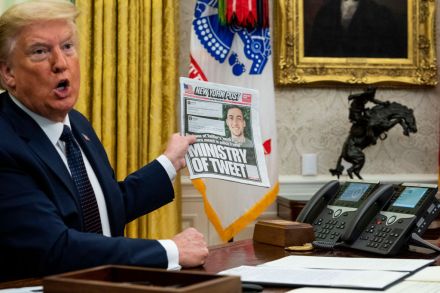
Donald Trump has hardly covered himself in glory in his latest public responses to the pandemic. His calamitous interview with Australian Journalist Jonathan Swan will probably enter the presidential history books for all the wrong reasons. Nevertheless, the news that Facebook has removed a video of the President’s latest appearance on Fox News on the grounds that it spreads ‘misinformation’ about Covid-19 should raise alarm bells in the ears of anyone who cares about free speech. Twitter has similarly frozen a Trump campaign account until the video is removed.  Facebook has taken issue with Trump’s comment that children ‘are almost immune’ from coronavirus.