Joanna Pitman

Yum, yum: love the mousse. But is it art?

From our UK edition

Joanna Pitman talks to Ferran Adrià, widely hailed as the world’s greatest chef and named as one of the 100 most influential people on the planet. He doesn’t think he is Picasso Can I interest you in some almond ice cream served on a swirl of garlic oil and balsamic vinegar? Are you game for a ‘chicken skin and orange blossom envelope’, fried tobacco balls, or a taste of rabbit brains with pistachio, green tea and demerara sugar? Although many of us would hesitate to put such things in our mouths, these startling dishes have all been created by Ferran Adrià, the 47-year-old Spaniard reputed to be the best chef in the world. Reactions to Adrià’s work tend to be rich and gamey.
The timeless beauty of a Stradivari

From our UK edition

How many investments can bring you joy as well as financial gain? Unless pure lucre flows in your veins and you’re the sort of person for whom an excursion into the derivatives market is your greatest pleasure, then there are not many. Wine and art spring to mind, but one relatively under-exploited investment opportunity that can bring pleasure on many levels is that of world-class violins. If the violin is a high-quality instrument, it will bring steady financial appreciation as well as the chance to enable a top-flight musician to conquer the world’s concert halls. In the world of classical music, young and highly gifted musicians find it hard to lay their hands on the quality of instruments they need for a successful international career.

The price of valour and the value of money

From our UK edition

Our gallant armed forces who face the daily horrors of Iraq and Afghanistan are often said to be undervalued by the public. But at least in the narrow financial sense, that cannot be said of historic acts of bravery and devotion to duty and the medals that commemorate them. Have you ever looked to see whether you have any medals lurking in your attic, perhaps won by a grandparent or ancestor for action in the field?

Rare stamps in a class of their own

From our UK edition

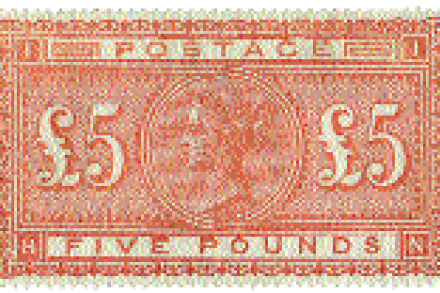
Stamps, it is said, are the most valuable commodity on earth by weight. An 1868 Benjamin Franklin stamp, for example — a standard-sized stamp weighing a fraction of a fraction of a gram — was bought recently for $2.97 million by an American investor. So the claim may well be true. Rare and desirable stamps, in good condition, can make impressive investments. The GB30 index, which tracks the values of the 30 rarest Great Britain stamps, has ‘never once fallen in the last 50 years’, says Geoff Anandappa, investment portfolio manager at the stamp dealers Stanley Gibbons in London. ‘It has gone up by an average of 10.7 per cent per year over the last 50 years, and by 10 to 15 per cent per year in the last five years.

A paradise for bookworms

From our UK edition

Imagine coming across a book that has lain untouched for 100 years, and making an unexpected historical discovery. Ed Maggs, an antiquarian bookseller, had just such a thrill recently. ‘I was reading the epistolary diaries of a rather eccentric Victorian called Cuthbert Bede. I became strangely fixated by the story of this man who was obsessed by an unnamed woman. He fell into a state of schizophrenia and was incarcerated in an asylum called Munster House in Fulham. But as I was reading, I was wondering who this woman could have been — and wouldn’t it be fascinating if it turned out to be Alice Liddell? In the end it did turn out to be her. It was a real hair-on-the-back-of-your-neck moment. We sold the book to the Bodleian.

A frenzy for Chinese art

From our UK edition

The great China investment boom has many facets. A fortnight ago at a Sotheby’s sale in Hong Kong of Chinese works of art, wealthy mainland collectors and their representatives became so excitable during the bidding that along with the rest of the audience they ended up splurging almost £30 million. Historical works of art from the Qianlong Reign attracted particular attention: one of the highlights of the sale was an ‘Extraordinary Group of Seven Jade Imperial Archer’s Rings’ along with its original cinnabar box and cover, which sold for just over £3 million. ‘The Qianlong emperor (1736–1795) was something of a Renaissance man,’ says Henry Howard-Sneyd, managing director of Sotheby’s Asia.

Auctioneer by appointment to the world’s new rich

From our UK edition

In 1987, shortly after joining Christie’s auction house in London as a 23-year-old English Literature graduate from Oxford, Jussi Pylkkanen nervously approached the head of the Impressionists department, James Roundell, and asked if he could transfer to his team. ‘He was a kind of god in the company. He’d just sold Van Gogh’s “Sunflowers” to a Japanese insurance company for almost $40 million. He was the most important man in Christie’s,’ recalls Pylkkanen. A year later, Pylkkanen joined the Impressionists department; 20 years on, he has replaced Roundell as the colossus of Christie’s European operations. Pylkkanen is the president of Christie’s Europe and the company’s top-flight auctioneer this side of the Atlantic.

Antiques: better value than Ikea

From our UK edition

Not many people seem to realise this, but it’s cheaper in the long run to buy a solid carved mahogany antique chest of drawers than a modern pine one from Ikea. Without having to search far, you can get a beautiful Victorian chest of drawers in excellent condition for £200 which will last you and your descendants for a hundred years or more. The equivalent from Ikea might cost a quarter of that, but will probably last for only five years. And you have to build it yourself as well. ‘Basic “brown” antique furniture is extremely good value at the moment,’ says Mark Boyce of Ross Hamilton in London, dealers in 18th- and 19th-century furniture and works of art.

Plafonniers and station platforms

From our UK edition

Christmas is almost upon us and you still haven’t sorted out that significant present for the woman in your life who has everything. And there’s the rub. She already has the jewels, the houses, the horses, the cars, the shoes and furs and more cashmere dressing gowns than she could possibly ever want. Knowing the way she’s capable of burning through your money, you’d like to give her something under the tree that will at least hold its value, and perhaps become a family heirloom. So does she have, I ask you, any Lalique plafonniers? My first thought was that a plafonnier was something to do with platform shoes, although admittedly platform shoes made from antique French glass would be pretty outrageously special.

Flawless, timeless, almost priceless

From our UK edition

White diamonds are the world’s most expensive gems. White diamonds are the world’s most expensive gems. The ideal stone is like a piece of ice, whiter than white, graded ‘D’, the purest possible grading, and cut with exquisite precision. Only a handful exist. Ten years ago a pure white, pear-shaped 100.10 carat diamond (pictured here), classified as ‘D’ and internally flawless, was sold by Sotheby’s in Geneva for $16,548,750. Named ‘The Star of the Season’, it is still the most expensive precious stone ever sold at auction. Today its whereabouts are a closely guarded secret, but it is likely that it sits contentedly, if a little unloved, in a secure bank vault, handled on rare occasions by white-gloved admirers.

Bear market strategies

From our UK edition

Ever thought of investing in teddy bears? Before you collapse in a fit of laughter, consider the fortunate person who found a large Steiff teddy bear abandoned in a skip and took it to Christie’s, where it sold for over £7,000. Or the person who sold a Steiff ‘teddy girl’ to the Yoshihiro Sekiguchi Museum in Japan for £110,000. Or the collector who succumbed to the fascination of a Steiff hot-water-bottle teddy bear made in 1907 and spent £33,000 on it. A surprising number of people invest in teddy bears. The managing director of one UK auction house has bought a collectible teddy bear for each of his grandchildren. These are not things to be kicked around, left out in the garden or smeared with chocolate cake during make-believe tea parties.

At last, some good news from Iran: magic carpets

From our UK edition

Iran hardly counts as an ‘emerging market’ these days, even for the most adventurous stock-pickers. But there is one Iranian export that appeals to the most sophisticated investors — not oil traders or arms buyers, but those who search for trophies that please the eye as well as making interesting conversational gambits at dinner parties. Have you ever thought of buying a Tabriz? But what is a Tabriz? And how much do they cost? The word conjures up images of exotic palaces, or perhaps some ceramic marvel. But those who know will thrill at the thought of a Tabriz because it is currently the most sought-after property in the market for the true carpet collector.

An insatiable appetite for art

From our UK edition

Never in living memory has there been so much interest in buying art as there is now. Across all categories, from Old Masters to Impressionists to photographs, but mostly in 20th-century paintings, the international appetite for buying art has been steadily building in an art-market bull run that has already lasted 11 years. In the second week of February, London witnessed the highest totals ever recorded at auction in the European art market. In the course of five days, over £260 million was handed over for works of art ranging from blue-chip Impressionists to emerging contemporary names. Then, in New York last month, a mysterious middle-aged man spent $95 million at a Sotheby’s auction on Picasso’s portrait of his mistress, ‘Dora Maar with Cat’.