Jenny McCartney

Jenny McCartney

Journalist, reviewer, author of the children's book The Stone Bird.

An ode to the BlackBerry

From our UK edition

The demise of tech plays out first as disorientation, then entertainment. We’ve reached the latter stage with the BlackBerry, the now-defunct Canadian harbinger of global smartphone addiction. A new film out this month charts its spectacular rise and fall: young folk, look up from your iPhones, and learn how in its Noughties heyday, the BlackBerry was beloved by Obama, Beyoncé and Madonna. With its seductively clicky Qwerty keyboard, it came to control 45 per cent of the mobile phone market. Then it plummeted to today’s share, zero. BlackBerry the movie had a particular poignancy for me, because I hung on to my final BlackBerry phone, the KeyOne, until well past its cultural sell-by date. Last May, in fact.

You’ll have a lump in your throat: BBC Radio 4’s Four Sides of Seamus Heaney reviewed

From our UK edition

It’s now been ten years since Seamus Heaney died, and after a great poet’s death it’s natural, I suppose, that the keg of popular imagination works to distil a lifetime’s writing into a kind of Greatest Hits. His poems ‘Digging’, ‘Blackberry Picking’, ‘Mid-Term Break’ and the masterly sonnet sequence about his mother in ‘Clearances’ sit among the justifiable contenders, but even so there can be concentrations too far. A US presidential speech on any given topic is now unlikely to conclude, it seems, without Joe Biden mistily inserting the lines that Heaney wrote for the chorus in his Sophocles adaptation The Cure At Troy. You’ll recognise them: they’re the ones that end ‘The longed for tidal wave/ Of justice can rise up/ And hope and history rhyme’.

Gripping tale of Ireland’s most polite bank robber: I’m Not Here To Hurt You reviewed

From our UK edition

There should really be a special word for it: that vicarious fragility you feel when hearing of a minor decision with catastrophically heavy consequences, as if a falling acorn had tipped a boulder. In the case of John O’Hegarty, the subject of the engrossing podcast I’m Not Here To Hurt You, the catalyst for disaster was a quick short cut the wrong way down a one-way Dublin street while working as a bicycle courier. It would ultimately lead him – an academic with a master’s degree in psychology – into heroin and crack cocaine addiction, followed by a stint as a bank robber and eight years in prison.

The power and the glory that was Belfast

From our UK edition

What should we make of present-day Belfast and its compelling, fractious backstory? English visitors have long found the city invigorating, confusing or exasperating – often all three – but undeniably characterful. Philip Larkin, who lived there for five years in the 1950s, noted its ‘draughty streets, end-on to hills, the faint/Archaic smell of dockland’ and found himself enjoying the ambiance: ‘the salt rebuff of speech/ insisting so on difference, made me welcome’. Not so Sir Reginald Maudling, on his first visit as home secretary amid the escalating sectarian insanity of 1970. He boarded the plane back to London with the words: ‘For God’s sake, bring me a large Scotch. What a bloody awful country!

The stuff of nightmares: Retrievals podcast reviewed

From our UK edition

It is the stuff of nightmares, or a queasily dystopian film plot. A woman is undergoing a surgical procedure in a top-rated US clinic. The aim is ‘egg retrieval’, a process which collects eggs from the ovaries for use in IVF. It involves nerves and hope, long needles and pain – except the patient has been promised that the latter will be minimal, thanks to an injection of fentanyl, a powerful opioid. The pain certainly isn’t minimal, however. It’s excruciating. When the woman says how much it hurts, the nurse tops up the dose, and then says the patient has now received the maximum allowed. There might be a touch of reproof in the refusal, if you’re sensitive to such things, and most women are.

Gripping and admirable: BBC Radio 4’s Fever: The Hunt for Covid’s Origins reviewed

From our UK edition

It’s the whodunnit – or whatdunnit – that has kept scientists, politicians, journalists and armchair sleuths speculating ever since the first stories of a ‘mysterious viral pneumonia’ began leaking out of Wuhan: where did Sars-CoV-2, the virus that causes Covid-19, come from? Was it an unlucky natural occurrence, a bat virus which made the opportunistic leap from animals to humans somewhere in the pulsing zoonotic stew of a Wuhan wet market? Or did it stem from the accidental infection of a laboratory worker, most likely in the nearby Wuhan Institute of Virology (WIV), which by 2019 had collected nearly 20,000 bat samples, and more than 1,500 individual coronavirus sequences?

Looking for a male role model? Check out the silverback gorilla

From our UK edition

One so often hears about famous people who are horrible when they think no one important is looking – barking at assistants, or snapping at waiters – that it’s heartening to learn of the opposite: kindness in circumstances that promise little obvious reward. The author and filmmaker Jon Ronson had just such a story last week about his pick for Radio 4’s Great Lives series: the late Terry Hall, lead singer of the Specials and Fun Boy Three, and an attractively morose and compelling presence on the 1970s and ’80s music scene.  The 12-year-old Ronson was at the front of an ‘excitingly feral’ Specials gig in Cardiff when he conceived ‘on a whim’ of the daring plan of pretending to faint, so that bouncers would lift him to watch the show from the side of the stage.

How productive is it to listen to productivity gurus?

From our UK edition

I was making my way slowly through one of my dismally prosaic little to-do lists – ‘pay the water bill’ ‘wash hair’, etc. – when the voice of the journalist Helen Lewis came on Radio 4 talking about productivity. It’s the Holy Grail of modern life, apparently, and we are now constantly looking for ‘charismatic individuals’ to help us maximise it. Her writer friend Julian Simpson is obsessed with the topic, she said, even though he disarmingly admitted what some of us may quickly have suspected, that ‘my interest in productivity manifests itself when I need to be doing something else’.

In praise of From Our Own Correspondent 

From our UK edition

Most of us are familiar with the notion of writer’s block, that paralysis of invention induced by the appalling sight of a blank page. Composer’s block is less widely discussed, although musicians seem equally afflicted by creative drought. Perhaps the best known case is that of the Russian composer Sergei Rachmaninov, the subject of Radio 3’s Sunday Feature, which describes how the great man finally fought his way out of a numbing three-year ‘apathy’ with the help of a hypnotist.  Rachmaninov fought his way out of a numbing three-year ‘apathy’ with the help of a hypnotist The composer had been catapulted into his long despair by the hostile reception to his First Symphony in 1897.

The war over the womb 

From our UK edition

The womb, that secretive house of early life, is coming under the spotlight. For a long time it was scarcely mentioned in public at all, save in obstetrics, gynaecology, DH Lawrence novels and the Bible. In recent years, however, the uterus has attracted the dubious attentions of the ‘wellness’ industry: Gwyneth Paltrow even recommended ‘cleansing’ it by sitting over a machine pumping out ‘mugwort steam’. And now a new book by the writer and midwife Leah Hazard – Womb: The Inside Story of Where We All Began – looks at this shape-shifting organ from all angles: medical, emotional, political and futuristic.

What’s the difference between Shamima Begum and Unity Mitford?

From our UK edition

The debate sparked by Josh Baker’s BBC podcast on Shamima Begum, and her teenage flight to join Isis, has divided opinion sharply into two camps. According to one, she was a naive 15-year-old cynically groomed by hardened operatives in the most feared terror organisation in the world. No, says the other, she was a capable girl who – knowing of Isis atrocities – made a highly determined decision to join them. But can’t both things be true at once, as they are for so many young recruits to extremism?  From another era, class and race, we might remember Unity Mitford, who flaunted her admiration of Hitler Listening, one is immersed in the surreal mix of mundanity and horror which defined Begum’s world after leaving home in London’s Bethnal Green.

Listen to the world’s first radio play

From our UK edition

Radio works its strongest magic, I always think, when you listen to it in the dark. The most reliable example is the Shipping Forecast, that bracing incantation of place names and gale warnings, which – with the lights out – can transform even the most inland bedroom into a wind-battered coastal cottage. But darkness can heighten disturbance, too, as I was reminded when listening to Danger by Richard Hughes, billed as the BBC’s first-ever radio drama. It was first broadcast in 1924, with the audience at home under instructions to maximise its effect by turning off all their lights.

Jenny McCartney, Chloë Ashby and Ysenda Maxtone Graham

From our UK edition

18 min listen

This week: Jenny McCartney says don't expect a united Ireland any time soon (00:57), Chloë Ashby reads her review of Con/Artist the memoir of notorious art forger Tony Tetro (07:57), and Ysenda Maxtone Graham tells us the etiquette of canapés (14:55).  Produced and presented by Oscar Edmondson.

Don’t expect a united Ireland any time soon

From our UK edition

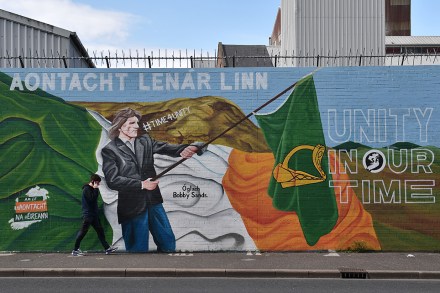
A hundred years since the founding of the Irish state – on 6 December 1922 – how likely or desirable is the prospect of Irish unity? The recent electoral success of Sinn Fein suggested to many – particularly in the US – that the idea’s momentum is now unstoppable. Of course it’s being egged on by Sinn Fein itself, whose New York Times advertisements in March proclaimed that Irish unity would be in the best interests of ‘citizens abroad and the wider diaspora’. Extensive polling for the Irish Times this week, however, paints a much more complex, contradictory picture of opinion at home. Before stocking up on celebratory green beer, the Irish-American diaspora might well be advised to read it.

Jenny McCartney, Dan Hitchens and Gus Carter

From our UK edition

24 min listen

This week on Spectator Out Loud, Jenny McCartney argues that tomorrow belongs to Sinn Fein in Northern Ireland. What could this mean for reunification (00:55)? Then, Dan Hitchens asks why Oxford killed a much loved catholic college (11:44) before Gus Carter reads his notes on the tabletop game Warhammer (20:12).Produced and presented by Oscar Edmondson.

There’s a growing sense that tomorrow belongs to Sinn Fein

From our UK edition

Where can Ulster Unionism go now? If it were a person, it would be someone in the grip of a long depression, whose occasional bursts of anger mask the fact that they so often feel despondent and betrayed. The widespread reaction to the latest Northern Ireland census, in which Catholics narrowly outnumber Protestants for the first time, is unlikely to give it a reason to be cheerful. A jubilant Michelle O’Neill, the Sinn Fein vice-leader, was quick to claim that ‘historic change is happening across this island’, while other party members called for a referendum on unity. The rallying cry of Sinn Fein has long been ‘Tiocfaidh ár lá’, which translates as ‘our day will come’.

Richard Needham takes a businesslike attitude to the Troubles

From our UK edition

This memoir from Sir Richard Needham, 6th Earl of Kilmorey, businessman and former Northern Ireland minister, has a frank opening: ‘I came from a family of barely solvent aristocrats, who distrusted trade and despised politics. For some inexplicable reason, however, I had always been fascinated by both.’ Although generations of Needhams before him had ‘uneventful’ military careers, at 15 Richard decided upon an alternative plan: ‘I would first make some money, and then enter politics and change the world.’ What follows is the tale of how that scheme played out. The literary quality of political diaries can be hit and miss; but Needham is a skilled storyteller, who can deftly sketch a character or situation in a few pithy phrases.

The competitive cult of cosiness

From our UK edition

Do you remember the first wave of hygge, in 2015? It seems a long time ago — back in the freewheeling technicolour of a pre-Covid world — but at that time hygge was the hottest thing to come out of Denmark. The country already attracted envy for its vigorous welfare state, covetable knitwear and high rating on the international happiness index, but the new export outshone them all. It roughly translated as ‘cosy’, people said, but the English word was frail and puny next to the soul-feeding, friendship-cementing, quasi-spiritual force that was hygge. The latter signified home-baked bread and cakes, hand-knitted socks and friends laughing around a wooden dinner table as a hotpot bubbled on the stove.

Rishi’s nightmare: Will inflation crush the recovery?

From our UK edition

41 min listen

Could a blip in inflation ruin the UK's economic recovery? (00:50) Why is support for the IRA becoming normalised? (12:20) What makes a great diarist? (31:15) With The Spectator's economics correspondent Kate Andrews; economist Julian Jessop; writer Jenny McCartney; politician Mairia Cahill; satirist Craig Brown; and historian, journalist and author Simon Heffer. Presented by Cindy Yu.  Produced by Max Jeffery, Alex Valizadeh, Alexa Rendell and Matt Taylor.