Jasper Rees

When things fall apart

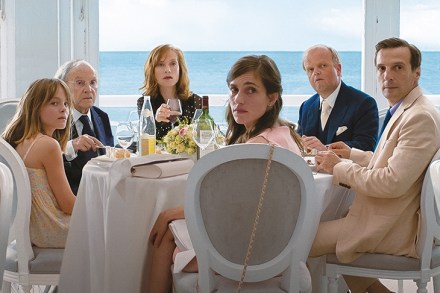
The films of Michael Haneke wear a long face. Psychological terror, domestic horror, sick sex, genital self-harm — these are the joyless tags of his considerable oeuvre. Such an auteur is not the obvious sort for sequels: The Piano Teacher 2 or Hidden — Again! aren’t destined for your nearest multiplex. And yet his new film is an intriguing knight’s move away from his last. Amour (2012) was a hot-button portrait of dementia in which an elderly husband watched his wife’s mind drift away as if on an ice floe. Eventually, he smothered her with a pillow. In Happy End, the widower is back, and this time he’s out to kill himself (although the strapline on the poster is not so jaunty). Haneke has widened the canvas to include the whole family.
The gloves will come off

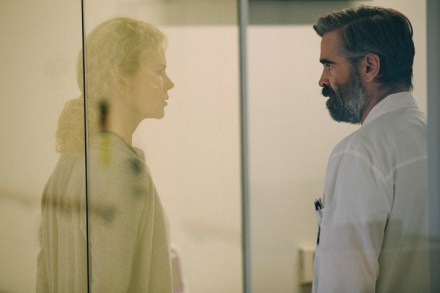
You know where you aren’t with director Yorgos Lanthimos. The Greek allegorist creates parallel worlds which superficially resemble our own. In Dogtooth an overweening patriarch incarcerates his three adult children in a state of infantilised innocence. The Lobster punishes those unable to find a mate by transfiguring them into animals. His acerbic commentaries on flawed modernity feel like lurid horror stories the ancients forgot to write down. The Killing of a Sacred Deer invokes pagan sacrifice in its title. Iphigenia is even mentioned in dispatches — the subject of a schoolgirl essay that doubles as a mythological flare. The film opens on a close-up of open-heart surgery in which a sickly pink organ throbs garishly.

Football focus

The early 1970s was football’s brute era of Passchendaele pitches and Stalingrad tactics. The gnarled ruffians of Leeds United — wee hatchet man Billy Bremner, the graceful assassin Johnny Giles, Norman ‘Bites Yer Legs’ Hunter — embodied the age. Not that you’d guess this from the badge on the club’s shirt: the letters LU were styled into a grinning emoji in goofy yellow. In 1973, the club kit (pristine white, which they had changed to a decade earlier to mimic the lordly Real Madrid) was designed by Admiral, the company that dreamed up the wallet-emptying concept of the replica shirt. Admiral went in for hectic piping and busy collars.

Unhappy days

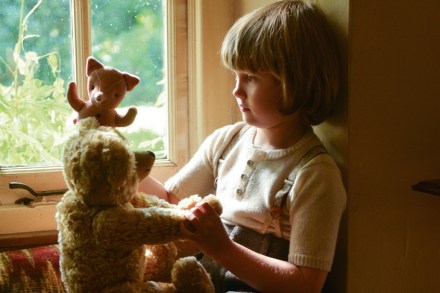
Scriptwriters love to feast on the lives of children’s authors. The themes tend not to vary: they may have brought happiness to millions of children but their stories — sob — were fertilised by unhappiness. Saving Mr Banks: Mary Poppins author was a bossy shrew because her alcoholic father died young. Miss Potter: Peter Rabbit creator never found love. Finding Neverland: Peter Pan playwright cheered up grieving family. Enid (made for BBC Four): Miss Blyton was a monster traumatised by her upbringing. And so it will presumably go on.

Made in Port Talbot

Port Talbot, on the coast of South Wales, is literally overlooked. Most experience the town while flying over it on the M4, held aloft by concrete stilts planted in terraced streets. From that four-lane gantry, the only landmarks are the dockyard cranes and belching steelworks. Over Easter in 2011, National Theatre Wales staged a piece of street theatre that was crafted as a civic resurrection. The Passion of Port Talbot featured Michael Sheen as a Messiah-like teacher who harkens to oral memories. ‘I remember!’ he hollered on the third day, while attached to a crucifix on a traffic island by Aberavon beach, before reeling off a litany of local names: of villages, streets, sweet shops, pubs, clubs, mountains.

Farming today

There are bigger entities landing at your local multiplex this week. An ancient indestructible franchise is re-re-(re-)booted in Alien: Covenant. In Jawbone, it’s seconds out for yet another boxing movie. Miss Sloane is that non-staple of the repertoire, a glossy feminist thriller about public relations. Something there for almost everyone. But there’s also a low-budget British film called The Levelling, which has a very Brexit-y theme — the travails of the farming industry — so let’s pull on our wellies and have a gander. The title alludes to the Somerset Levels, in the news in 2014 when rivers rose to drown the nether parts of southern England. ‘Save our village, dredge the river,’ says a forlorn sign in an inert wintry landscape.

Parting shots

Gurinder Chadha’s modern comedies have fun with cultural divides. Girls kick footballs in Bend It Like Beckham. A gaggle of Punjabis hit Blackpool in Bhaji on the Beach. Jane Austen goes to Bollywood in Bride & Prejudice. In all these films (we may discount Angus, Thongs and Perfect Snogging), Indians and Britons grapple with the knotty ongoing project of mutual comprehension. But there are only so many perky scripts anyone can shoot about multiculturalism. In Viceroy’s House Chadha spools back 70 years to Partition, when the price of India’s independence from her colonial master was to be sundered in two, unleashing what remains the planet’s largest ever migration of refugees.

No peace, no pussy

The bizarro concept of a ‘President-elect Trump’ came to pass despite the wishes, clearly stated on the stump, of the entertainment-industrial complex. They all came out for Hillary — Queen Bey, the Boss, Jay-Z, J-Lo, SJP, Kimye, Madge, Meryl, Gaga, Lena D, old uncle Team Clooney and all. How the alt-right cackled when this star-spangled nobility got in-yer-faced by a basket of deplorables from the West Virginia coalfield. In the circumstances, now is maybe not a propitious moment for Spike Lee (who felt the Bern) to unleash a finger-wagging homily about America and guns. Chi-Raq, you wouldn’t be alone in not knowing, takes its title from the alternate name lately given to Chicago in the state of ‘Killinois’.

Heaven knows they’re miserable now

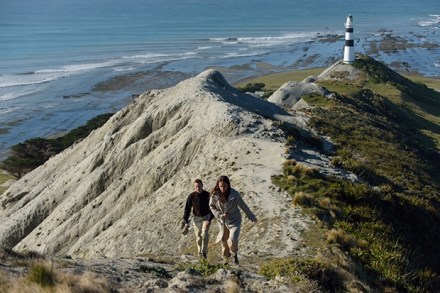
The Light Between Oceans is one of those films that comes issued with a handy how-to-use manual. Shudder as hero arrives on remote Australian island to man lighthouse. Cheer when in swift dash to mainland he secures hot bride to join him. Grimace when her womb proves incapable of holding anything in for a whole nine months. Bring heart to mouth as baby is somewhat implausibly washed ashore in rowing boat. For rest of film, carry on weeping. The source material is the 2012 novel by M.L. Stedman, which has sold millions in loads of languages. It features a Hardy-esque plot of flatpack sadism in which punishment is administered even-handedly to a trio of protagonists.

Red hot

Everything about Julieta feels totally Almodóvarian. It’s a family saga that smoothly blends tragedy and levity, with exquisite performances from a company of passionate actresses. It looks carefully ravishing. Many of the director’s abiding themes are here: terminal illness, sudden death, a mother’s love for her child, men hanging about the fringes. And yet it is based on a most un-Hispanic source. The Julieta of the title was originally Juliet, who features in three interlinked short stories from Runaway, the 2004 collection by Alice Munro. Munro won the Nobel Prize for Literature three years ago after a lifetime writing quiet stories that conceal hammer blows.

Paean to the Starman

On 11 January 2016 Paul Morley was awoken by an urgent voicemail from the Today Programme. Could he talk about the life and — news just in — the death of David Bowie? (The researcher apologised if this was how he’d heard.) Resistant to gnashing his teeth for a few minutes of radio rent-a-commentary, Morley uncharacteristically ignored this and sundry other requests. Instead he wrote these 500 pages in ten weeks. The same time, he says, that Bowie needed to cut albums at his cocaine-powered peak. The Age of Bowie is not strictly a biography, with such things as dates and sources and supporting quotations.

Dahl by Spielberg

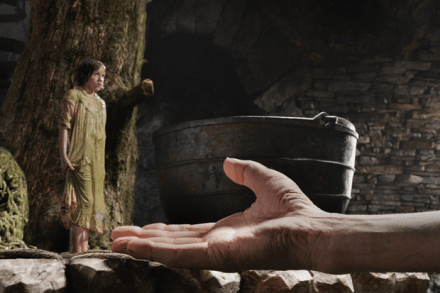
Nobody who witnessed it can have forgotten Mark Rylance summoning giants to his aid in Jerusalem. As Johnny ‘Rooster’ Byron, drug-dealing roustabout threatened with expulsion from his little patch of Eden, Rylance roared and drummed until the theatre shuddered with the sound of gigantic stomps approaching. That colossal performance brought him to international — as in American — attention. The biggest giant to answer his call was Steven Spielberg. The world’s most successful living fabulist now won’t get out of bed for any other leading man. We’ve already had Bridge of Spies, for which Rylance won an Oscar. There are two further Spielberg/Rylance collaborations on the runway.

Punchlines and punches

Regular filmgoers must be losing count of the Rabelaisian revelries they’ve been invited to of late. You may recognise the type of do. The camera ushers you through a door and, wham, the music’s strafing your eardrums and everyone’s letting their hair down along, often, with their underwear. There’s usually a white horse grazing by the pool. The Ballard adaptation High-Rise has one such scene, as do the latest Le Carré film Our Kind of Traitor and the Saudi-set Tom Hanks vehicle A Hologram for the King. Throw on your party shirt and roll up for another courtesy of The Nice Guys. ‘Dad, there’s like whores here and stuff,’ says the heroine, who is no more than 12.

‘Do black movies really not sell?’

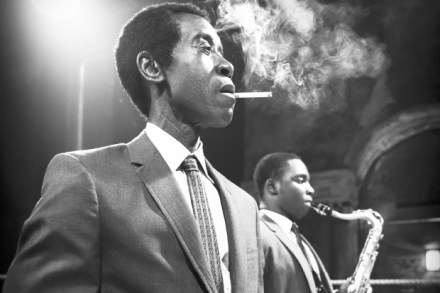
The musical biopic is a staple of the Hollywood economy. Like an Airfix model kit it comes with the necessary parts presupplied: sex, drugs and a soundtrack. All the director need do is glue them together. Actors are keen too, as portraying musicians is like prospecting for Oscars: in recent years the lives of Edith Piaf, Ray Charles and Johnny Cash’s wife June Carter have all won statuettes for their stars. The life of Miles Davis, with its giant musical peaks and deep personal troughs, is tailor-made for the big screen. But for years he couldn’t be captured in a bottle. It hasn’t been for want of trying on the part of Don Cheadle, who stars in, directed, produced and took a co-writing credit on Miles Ahead.

Bitter sweet

The French master film-maker Jacques Audiard has never been anywhere near Hollywood plot school. His films contain gathering menace — something somewhere is going to go horribly wrong — but where the menace will come from, and who will get hurt, is anyone’s guess. In his astonishing prison drama A Prophet the threat to its greenhorn French-Arab inmate comes from all quarters until he himself evolves into the threat. There are two almost unwatchable scenes in Rust and Bone: in one a marine-park trainer of orcas wakes up in hospital to discover she has lost both legs; in another a bareknuckle street fighter has to thump a hole through the thickening ice to rescue his young son.

Touching the void | 18 February 2016

Scholarly filmgoers may recall a movement that sprouted from Danish soil called Dogme 95. It worked to a Spartan set of rules and regs. In Dogme titles there could be no lighting and no soundtrack, no locations pretending to be other locations. Hell, there were probably no Portaloos on set and actors fixed their own herring smørrebrød. The director, in an ultimate gesture of klaxonning self-effacement, took no credit. Except that everyone knew Thomas Vinterburg shot Festen and Lars von Trier made The Idiots. The spirit of cinema’s Mennonites lives on in Chronic, a pitiless, hatchet-faced film set somewhere sunlit in the grassy American suburbs. It is written and shot by Mexican director Michel Franco.

The still point

Lewis Grassic Gibbon’s Sunset Song is the best-remembered title of a short career. Born in 1901, he was dead by 1935. The novel hymned the rhythms of rural life in north-east Scotland in prose that to modern ears sounds as if it comes from a museum of Grampian folklore. At its heart is Chris Guthrie, a spirited young woman whose dream of bettering herself as a teacher is thwarted by tragedy. The world of Sunset Song is a bull’s-eye for Terence Davies, the British director who has always been nostalgically drawn to the travails of unlucky women. Leadings actresses form an orderly queue to emote in his gorgeously lit interiors. Gillian Anderson was up for an Oscar for The House of Mirth and there was a Golden Globe nom for Rachel Weisz in The Deep Blue Sea.

The man who wouldn’t be king

Not that long ago the BBC trumpeted a new Stakhanovite project to big up the arts in its many and various hues. And praise be, this it is jolly well doing with all sorts of dad rock docs, homages to painters and poets, while Sralan Yentob (as he surely ought at the very least to be, and soon) continues to knock frock-coated on doors like a highly remunerated person from Porlock. Before multichannels and multi-platforms, great arts coverage was (if memory serves) done without much song and dance. Lest we forget, Yentob was once a progenitor of Arena. Long the haven of burgeoning filmmakers such as Mary Harron, James Marsh and some bloke called Scorsese, Arena is 40 this month and it’s still the best.

Hunted blows a fresh breeze through the stale world of reality TV

Television used to employ entertainers to entertain the public. Back then you could count the channels on the fingers of one hand and still have a thumb left over to stick aloft in praise of the nightly parade of talent. That was decades ago, before every housing estate in the land pointed supplicatory dishes at the cosmos, which beamed back numberless multi-channels devoted to cooking and/or shopping, golfing and/or shagging. It’s all changed. Now television employs the public to entertain the public. It’s cheaper. So we have talent shows, reality shows, aspirational have-a-go shows from which contestants are expelled one at a time. It is always gripping to find out which members of the public can sing/sell/bake exceedingly good cakes.

Speech impediment | 1 October 2015

Who goes to big-screen Shakespeare? Not theatre-goers much, and with reason. Apart from the odd corker by Kurosawa, arguably Olivier and Orson Welles — and let’s bung in Zeffirelli for those with a sweeter tooth — the Bard is a better scriptwriter when the words are dumped and the plots he nicked from elsewhere are updated. See 10 Things I Hate About You (the Shrew as high-school comedy), Forbidden Planet (Prospero in outer space) and, best of all, West Side Story (in fair Manhattan where we lay our scene). There is, as it happens, a semi-respected English-language version of Macbeth by Roman Polanski, who used the cloak of art to get Lady M’s kit off (in his diaries, Kenneth Tynan perved over Francesca Annis’s ‘fesses tristes’).