Jasper Rees

‘Was I cast because you couldn’t get anyone else?’ Cate Blanchett discusses Rumours

At last, a film about the G7. There have been more movies than you can shake a stick at set in the Oval Office and No. 10 and other citadels. But not once has cinema gathered democracy’s prime septet in the same frame, the way the annual Group of Seven summit does. Until Rumours. ‘Did you cast me because you couldn’t get anyone else to do it?’ Blanchett asks To play the leaders of the free world at this geopolitically sensitive moment, Rumours has attracted stars of magnitude. Cate Blanchett is the German chancellor, Charles Dance the American president. Roy Dupuis plays Canada’s pin-up prime minister and Alicia Vikander gives us her Swedish secretary-general of the EU.

Alienatingly sweet and warm: BBC2’s The Newsreader reviewed

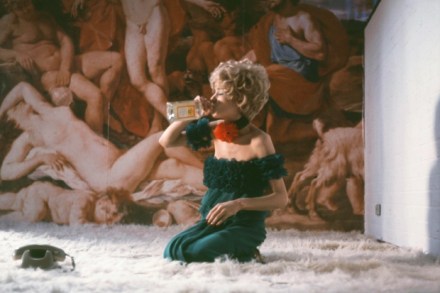
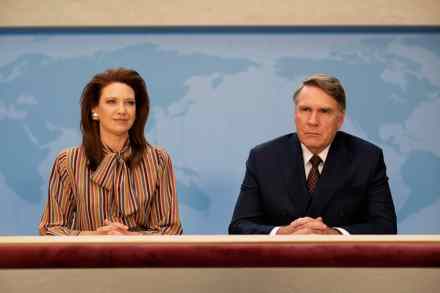
When TV makes shows about TV, it rarely has a good word to say for itself. In the likes of W1A, The Day Today and, savagest of all, Victoria Wood: As Seen on TV, the industry has looked in the mirror and ripped itself to shreds. What all these comedies say, in their own way, is that most TV is bombastic, brain-dead, two-star crap put together in a blind panic and a moral vacuum by idiots and monsters. Second only to politics, it’s the satirists’ biggest sitting duck, the gift that can’t stop giving. The Newsreader, a new newsroom drama, turns out to be cut from different cloth. It’s set in Australia and the 1980s, for one, which means it’s about neither here nor now.

The subtleties of her songbook were lost in this enormodome: Diana Ross at the O2 reviewed

When Motown first packaged up a roster of artists and songs that could be embraced by a non-black audience, no new act – not Smokey Robinson or Marvin Gaye or Little Stevie Wonder or Martha and the Vandellas or the Temptations – crossed over into the bosom of Middle America as easefully as the Supremes. Or Diana Ross and the Supremes, as with many internal ructions they were later rebranded, Ross being the one with shimmering star quality who stood in the middle and sang the lead. They were signed to Motown 60 years ago and given songs by Holland-Dozier-Holland to sell in floor-length gowns. Those songs have seeped into the marrow of us all and, while the world marvels at the longevity of Sirs Paul, Mick, Rod and Elton, it’s time to hear it for the girls.

The return of the implausibly moreish Borgen

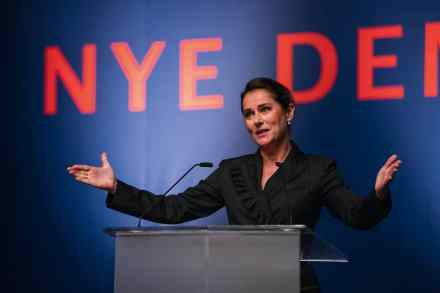
A decade ago the unthinkable happened: a subtitled TV drama about people agreeing with one another went global. On paper it bore the hallmark of a barrel-scraping pitch from Alan Partridge. Somewhere between youth hostelling with Chris Eubank and monkey tennis, he might easily have proposed a new ne plus ultra in implausible entertainment concepts: Danish coalition politics. Yet Borgen caught a thermal and soared. The show took its name (which, correctly pronounced, sounds like a Cockney saying ‘Bolton’) from the so-called fortress in the heart of Copenhagen where state business is conducted. It featured Birgitte Nyborg, a moderate heroine who snuck into Denmark’s highest office through a small centrist crack between left and right.

The unseen Victoria Wood

For a few years now I have been living with Victoria Wood. That sounds all wrong, obviously, and yet no more apt phrase suggests itself. Not long after her death I was invited to write her authorised biography, and in due course a vast collection of documents was delivered to my address. Packed into storage boxes, which I stacked in corners and stuffed under beds, her intellectual legacy became a physical fact. It was in sifting through this remarkable archive that I started to come across work — masses of it — that had never seen the light of day. At its core was a stash of 100 television sketches.

‘What do you think the English will say?’ Pablo Larrain on his pop horror Diana film

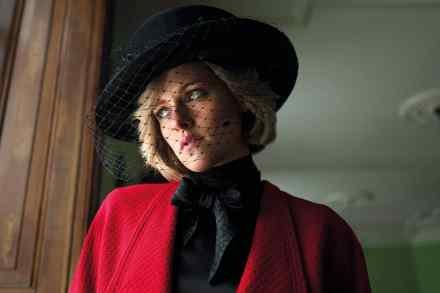
It all looks ever so Sandringham. Formal evening garb, dining table the length of a cricket pitch, royalty nibbling in silence. As a tableau vivant it might be lit by Lichfield and styled by Hartnell. And yet something is awry. The beautiful princess feels stifled. She grabs at the tourniquet of pearls roped round her neck, whereupon it snaps. Huge gems plop into her gloopy green soup. Dauntlessly she dips a spoon in, feeds a pearl into her mouth and takes a pulverising bite. This royal Christmas is not normal for Norfolk. Spencer is the latest entertainment seeking to decrypt the myth of Diana, Princess of Wales.

Remembering David Storey, giant of postwar English culture

There is a famous story about David Storey. It is set in 1976 at the Royal Court where, for ten years, his plays had first been seen before heading away to the West End and Broadway. That same week he had won the Booker Prize with his novel Saville. With unrivalled success across fiction, theatre and cinema, Storey was a giant of postwar English culture. He was also, compared with most writers, an actual giant. This Sporting Life, his novel made into a groundbreaking film, grew out of his experience of playing rugby league for Leeds. Unlike Saville, his new play Mother’s Day was greeted by a raspberry fanfare after Alun Armstrong dried during a speech containing 27 uses of the f-word.

Scooby Doo with better CGI: Doctor Sleep reviewed

Wheeeere’s Johnny? Nearly 40 years ago Jack Nicholson went berserk in a snowbound Rockies hotel, smashing an axe through a bathroom door behind which a pop-eyed Shelley Duvall cowered in terror. It is one of cinema’s truly iconic scenes, once voted the most petrifying in movie history. Now award yourself points if you remember that the family in The Shining were called Torrance. They had a son, Danny, a psychic little boy haunted by apparitions as he pedalled on his trike along the corridor’s hallucinogenic carpets. Danny has now grown up into Dan Torrance and assumed the form of Ewan McGregor who stars in the sort-of-sequel Doctor Sleep.

The Boss goes to Bollywood

Once upon a time two men sat in a New York bar lamenting the state of Broadway. So they decided to play Fantasy Musical. Several beers down they came up with a weird hybrid: a jukebox musical that injected the songs of Blondie into the plot of Desperately Seeking Susan. Somehow this botched centaur stumbled all the way to the West End, where it joined that throng of musicals that should have stayed on the drawing board. Blinded by the Light is a Bollywood-style musical comedy set in the Pakistani community of Luton that takes as its soundtrack the oeuvre of Bruce Springsteen. No drunk blokes in a bar could ever have conjured up such an implausibility. And yet it is a trueish story, inspired by the memoir of Sarfraz Manzoor.

Perfect fourth

Nearly 25 years on from its immaculate birth, Toy Story — like Wagner’s Ring, like John Updike’s Rabbit novels — has become a tetralogy. Do we need another one? Isn’t it time for Woody the toy cowboy to stuff that hat on a peg and stop hanging around kids? The short answer is no.  Though it springs fewer surprises, Toy Story 4 is still reliably fab. The animation now has such a painterly exactness it may as well be real rain/stubble/tarmac up there on screen. As for the cartoon characters, they project their own truth too, even the newest toy fashioned from a plastic fork-cum-spoon.

Weed thriller

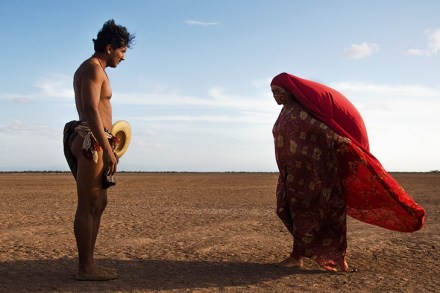
You don’t come across too many films from Colombia, but every few years one wriggles its way through the festival circuit and on to an arthouse screen, fingers crossed near you. Any film that survives that Darwinian journey will be robustly fit for purpose. Such is Birds of Passage (original title: Pajaros de verano), which with startling freshness tells a tale of gruelling familiarity. There tend to be two Colombian subjects that work for distributors: the international drugs trade or, for more rarefied tastes, indigenous tribes. What are the chances of encountering a film that fuses both? Slim, you’d suppose. And yet this narco-ethnographic thriller is inspired, we are advised, by events that took place between 1960 and 1980 in the Guajira region of northern Colombia.

Body and soul | 9 May 2019

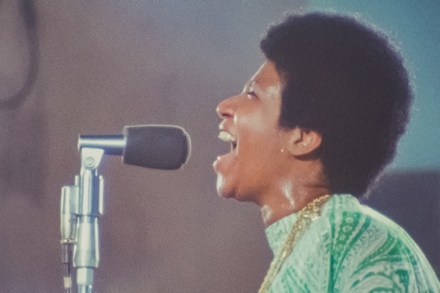
Each December in Washington DC, the Kennedy Center Honors anoints five performing artists who have contributed to American life. In 2015 one of the inductees was Carole King, to whom Janelle Monáe and James Taylor sang nicely in tribute. Then on came Aretha Franklin in a floor-dragging fur coat. She placed her handbag on the piano and broke into ‘(You Make Me Feel Like) A Natural Woman’. As the Queen of Soul hollered, howled and damn near put a hole in the roof, King went forgivably nuts and Barack Obama wiped away a tear. More than 30 million hits on YouTube confirmed that here, still, was a singer who could reach parts off limits to all others in rock and R&B’s halls of fame. The other time Franklin had that effect was in 1972 with her album Amazing Grace.

Drag Queen

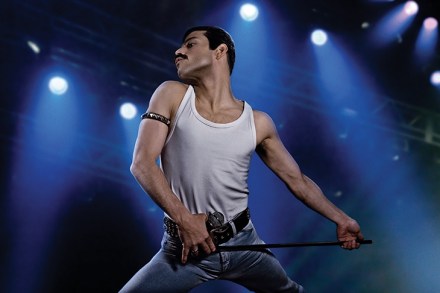
There is a moment in Bohemian Rhapsody when the screen swims with print. The reviews for Queen’s epic new single are in, and they unanimously denounce the song as a vacuous and bloated irrelevance. This feels like a brazen hostage to fortune for a biopic whose botched gestation saw writers, stars and directors roll on and off the project for a decade. But then Queen were always bomb-proof. The script we finally have before us is by Anthony McCarten, who specialises in rewriting the lives of difficult Brits. See also Darkest Hour and The Theory of Everything, whose lead actors both won Oscars. Lightning will probably not strike thrice for Rami Malek.

An artist’s eye

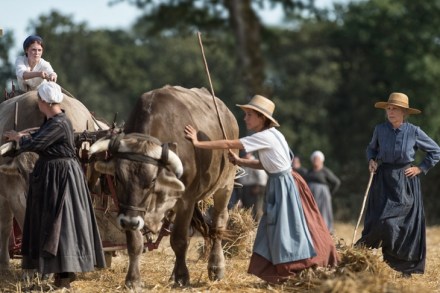
There are moments in The Guardians when you can imagine you’re in the wrong art form. Time stills, the frame all but freezes, and the film seems to have taken a left turn into an exhibition of fetching French landscapes and interiors from the early 20th century. The camera hovers over the harrowed earth, admires the sturdy sunlit front of a farmhouse, lingers thoughtfully on a face. The running time of 138 minutes could easily have been slashed to 100 by a heartless editor. But this is un film de Xavier Beauvois, a specialist in painterly exactitude. The writer-director’s greatest success came in 2010 with Of Gods and Men. This, too, had some of the trappings of a major box-office turn-off.

Barking mad | 9 August 2018

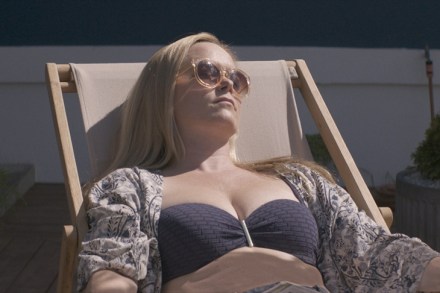
Every so often there’s a news story in which neighbours quarrel over rampaging leylandii. The police are summoned, the case reaches the court, and whole lives are consumed by inextinguishable hatred. These nuclear tiffs are a Middle England staple. A boundary dispute is a border dispute writ small. Other European nations have watched their negotiable frontiers move around like a boundary rope on a cricket pitch. Surrounded by sea, we don’t have that in our DNA. And maybe Icelanders don’t either. Under the Tree is a social comedy from Iceland in which the eponymous tree sits in the more southerly of two abutting gardens. The shade it casts thwarts the sun worship of Eybjorg (Selma Bjornsdottir). Hang on, sunbathing in Iceland?

Ebbsfleet or bust

Dominic Savage had an early start. In Barry Lyndon (1975), Stanley Kubrick’s sprawling take on Thackeray, he played a prepubescent toff called Bullingdon blessed with a blond pudding-basin crop. By the time Savage started making his own films in the early Noughties, the hair had vanished, and so had any of Kubrick’s civilising varnish. For television Savage made a loose trilogy of dramas which plummeted circle by circle into a pit of social deprivation. His subjects were teenage parenthood (Nice Girl), underage drug use and prostitution (When I Was 12), and suicide in a young offenders’ nick (Out of Control). These cheerless vignettes felt all the more raw because his untried young performers ad-libbed without a script.

The horse and his boy

Andrew Haigh makes inaction films. Weekend (2011) tells of two young homosexuals getting to know each other in Nottingham. In the wintry marital drama 45 Years (2015) two old heterosexuals get to unknow each other in Norfolk. The canvases are miniature, the resonances crevasse-deep. His third film, Lean on Pete, brings a change of scene and scope. And volume. Hooves thunder. A fatal gunshot goes off. Ornery men bawl and holler. There is a devastating road accident, and a climactic act of hideous violence. It’s as if Haigh has contracted ’roid rage. What he’s actually done is get on a plane to Oregon to adapt a novel by Willy Vlautin. Haigh is intrigued by the often silent space between two characters.

Wild at heart | 15 March 2018

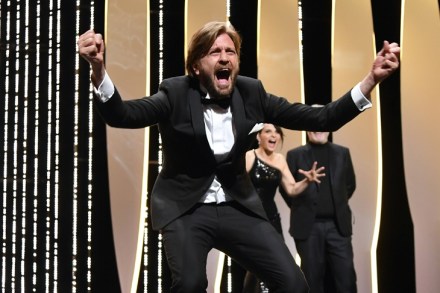
There is a culty YouTube video shot three years ago on the laptop camera of Ruben Ostlund. It shows the film director listening live as the nominations for the Academy Awards are announced from Los Angeles. The tension mounts as they approach the foreign film category. Alas, Force Majeure from Sweden isn’t nominated. Ostlund disappears off screen to sob and mewl. This year, there was a sequel to the video, but with a happier ending: the director’s latest film The Square was nominated for an Oscar. These mini-movies, like the rest of Ostlund’s oeuvre, are funny but subtly savage. He is a provocateur who trades in discomfort. You watch with your toes knotted.

In from the cold | 1 March 2018

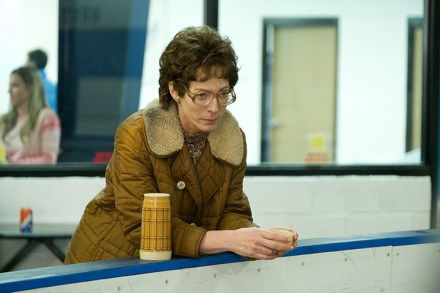
Films about the Winter Olympics don’t grow on conifers. Twenty-five years ago there was Cool Runnings about the Jamaican bobsleigh team. It took many years for Eddie the Eagle to reach the screen. Both were cockle-warming comedies about implausible Olympians who embody the ideal that participation is all. Only last week Elise Christie, the British speed skater who kept tumbling in Pyeongchang (and Sochi), hoped that ‘Reese Witherspoon’ would play her in the movie. In the mean time, the latest Olympiad has flushed out two more biopics on ice. I, Tonya tells of Tonya Harding’s catastrophic career. Like Monica Lewinsky, Harding is a public figure whose epitaph, thanks to a single headline, has already been carved.

Close of play | 15 February 2018

‘Mad, wearying and inconsequential gabble,’ sighed the Financial Times in 1958. ‘One quails in slack-jawed dismay.’ Here’s the FT at the same play last month: ‘The best I have seen on-stage.’ How about the Evening Standard? Then: ‘Like trying to solve a crossword puzzle where every vertical clue is designed to put you off the horizontal.’ Now: ‘Pinter’s cruel dialogue has rarely sounded sharper.’ ‘What all this means only Mr Pinter knows,’ mused the Manchester Guardian. On its return to the West End, the playwright’s biographer Michael Billington, writing in the Guardian, judged that ‘The Birthday Party has lost none of its capacity to intrigue’.