Jane Stannus

Jane Stannus

Jane Stannus is a Canadian journalist and translator.

The small town in Ontario with a world-class chocolatier

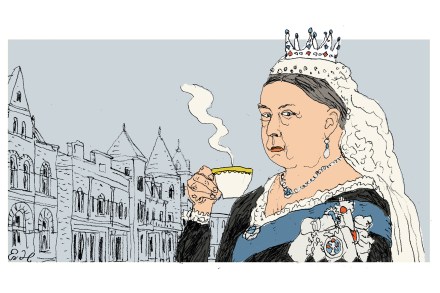
I’m sipping Madagascan hot chocolate out of white-and-gold Haviland Limoges, and nibbling on Venezuelan milk-chocolate bonbons, under an oil painting of Queen Victoria. I am on a visit to Guild Chocolates, “the finest chocolate shop in Petrolia,” in southern Ontario. The town’s population was circa 6,000 at the last census and on a Saturday morning, the chocolate shop is the place to be. During my visit, a sign on the Dickensian, wood-paneled storefront clearly indicates the shop is temporarily closed, but people keep turning the door handle and popping their heads in hopefully. Jaclyn Sanders, proprietor and chocolatier, calls warmly and apologetically out to them. Jaclyn opens her shop only one day a week: Saturdays from 10 a.m. to 5 p.m.

chcolate

Is Canada doing enough to stop the US trade war?

From our UK edition

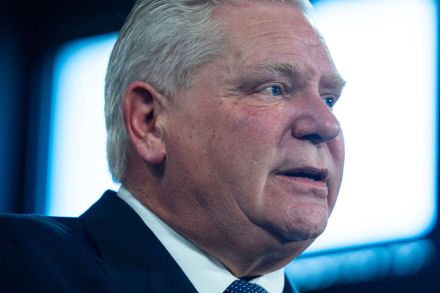
There’s such a thing as cutting off your nose to spite your face, and the tariff war between Canada and the US is beginning to look like a case in point. On Monday, the premier of Ontario, Doug Ford announced a 25 per cent surcharge on electricity exports to the US, with 1.5 million households and businesses in New York, Michigan and Minnesota likely to be impacted. Trump responded with all-caps outrage, raising the March 12 tariff on steel and aluminium coming into the United States from Canada from 25 to 50 per cent — a threat that would mean curtains for Ontario’s auto sector. How, asked the US president, could Canada stoop so low as to use electricity, that so affects the life of innocent people, as a bargaining chip and threat?

Canada

Is Canada doing enough to tame Trump?

There’s such a thing as cutting off your nose to spite your face, and the tariff war between Canada and the US is starting to look like a prime example. On Monday, Ontario Premier Doug Ford announced a 25 percent surcharge on electricity exports to the US, affecting an estimated 1.5 million households and businesses in New York, Michigan, and Minnesota. Trump responded with all-caps outrage, raising the March 12 tariff on steel and aluminum imports from Canada from 25 to 50 percent — a move that would be devastating for Ontario’s auto sector. How, the President asked, could Canada stoop so low as to use electricity — a resource that impacts the daily lives of innocent people — as a bargaining chip and a threat?

Mark Carney will be Canada’s Project Fear PM

From our UK edition

Oh no, Canada. The maple smoke has floated up from the Liberal party’s headquarters, and the bad news is out: our new Prime Minister is Mark Carney, banker, Davos darling, and ruthless climate radical. It’s not even Canadians’ fault this time. Trudeau, admittedly, was. But Carney is a Liberal party pick, which sounds reasonable until you learn that the Liberal party didn’t require its members to hold Canadian citizenship – or even be an adult – to cast a ballot to replace Trudeau as leader. The vote took place online, and while around 400,000 people registered as party members, a glitch-ridden verification process meant only around 160,000 were cleared to vote. It’s pretty clear that Prime Minister Carney is a single-issue man.

Canada can do more to address the fentanyl crisis

It was a field day for the Canadian freight industry on Monday. Every truck in the country, stuffed to the gills with product, was racing the clock to the border. The few drivers still available commanded ridiculous prices — up to $12,000 higher than normal. At the stroke of midnight, the 25 percent blanket tariff kicked in. Trucks that had yet to make it across the border hit the brakes and turned around. The party was over; the coaches became pumpkins again, it was time for Cinderella to go home. The whole week before, business owners, brokers and shippers were asking each other: "Have you seen anything official on this? Anything from the Canadian government?" They hadn't.

fentanyl canada

The dark legacy of Justin Trudeau 

From our UK edition

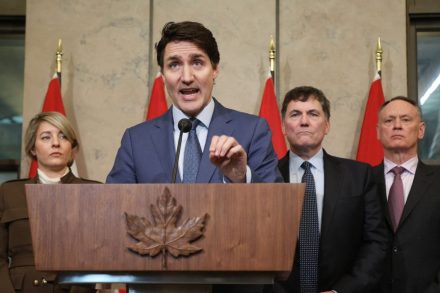
He’s gone – but he’s not gone. As per his announcement in Ottawa on Monday, one of Canada’s most disliked prime ministers is finally set to exit the political stage. First sworn in on November 4, 2015, Justin Trudeau will resign once the Liberal party has chosen his successor. It is a process that may take some time. Trudeau started out as prime minister by promising ‘sunny ways.’ Instead his regime delivered a tumultuous decade of radical social and legal change, achieved by methods that were frequently high-handed and occasionally unprecedented (such as the debanking of protestors).

Prepare for the National Suicide Service

From our UK edition

Tragically, British lawmakers voted on Friday in favour of a bill legalising medically assisted dying. Despite all the talk of 'safeguards' and determination to make it 'the best bill it can be', the horses are out of the stable now. Once assisted suicide is enshrined as a moral good for even the tiniest, most carefully screened subset of the population, pro-euthanasia campaigners have won the war. It’s all over but the shouting. There will be more battles to come, of course, as the inevitable attempts to expand the subset of those thought to be 'better off dead' moves from terminally ill adults, to suffering adults, to 'mature minors', to infants and the mentally incompetent.

How to host the perfect Christmas party

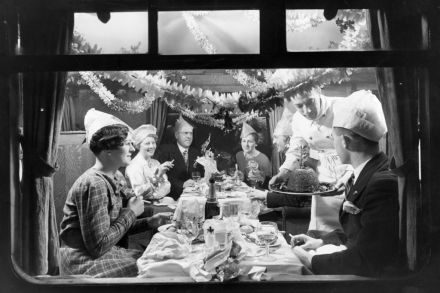
Cool guests, hot food; cool music, warm hostess: the recipe for the perfect party, and the motto of Perle Mesta, one of the most successful postwar Washington hostesses. Good King Wenceslas, a model host of even greater status, lived out this motto in legendary style centuries earlier. His guests were cool, if not downright frozen; their host was warm of heart (and sole, as the page discovered on treading in his footprints). The food was hot, for the king ordered up pine logs along with the flesh and wine. As for the music, the rude wind’s wild lament must have been on the cool side — though jollier tunes would surely have prevailed once the king and his fellow diners made it back to the royal fireside.

Christmas

Chicken soup for the souls: a feast for the dead

It’s indisputable. Food & Drink is The Spectator’s most important section. Ask yourself this: if you hadn’t eaten in days, would you have the slightest interest in perusing the deft political analysis, elevating cultural commentary and scintillating wit to be found the rest of the magazine? Without food, the only reading worth bothering with is Preparation for Death. As starvation sets in, only the two inevitables remain — Death and Taxes — and what need to worry about taxes? Tombstones have no mailboxes, shrouds no pockets. For over a millennium, November has been the month of the dead. The eleventh has been dedicated to fallen soldiers ever since World War One; but All Souls’ Day goes back much farther.

Souls

Kombucha future: my scoby is taking over my life

I once read the back cover of a book with a brilliant premise: a Silicon Valley wage-slave with a dull, lizard-person sort of existence suddenly has the care and feeding of a legacy sourdough starter thrust upon her. The thing promptly takes over her life and she emerges from the grayscale of soulless app-designed routine into the wild drama of an existence ruled by the whims of a yeast-ridden bacterial culture. Some are born to fermentation cultures, others acquire fermentation cultures, and yet others have fermentation cultures thrust upon them. I am among the latter school, a mostly grateful victim of fermentation-culture imposition. (Is this what they mean by Stockholm syndrome?

kombucha

Baked Alaska has become more accessible than ever

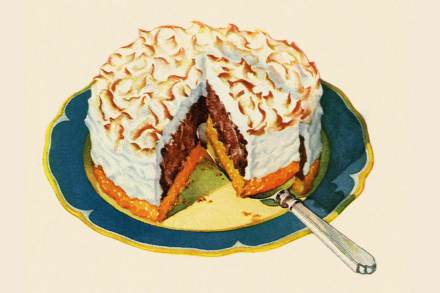
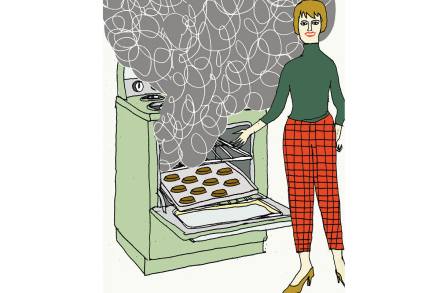
This doesn’t feel right. I am wrapping plastic around a freshly baked cake, preparatory to putting it in the freezer for thirty minutes. Then, I’m supposed to take it out and gingerly unmold a bowl of ice cream on top of it. Back into the freezer after that for another hour or so. The bowl of ice cream is lined with plastic wrap and filled with layers of raspberry sorbet, mango sorbet and chocolate ice cream. The ice cream was pressed flat to fill up all the gaps, and it went into the deep freeze two hours ago. Will it be firm enough to hold a beautiful dome shape as it unmolds onto the cake? Or will it slither and slide everywhere? I’m making Baked Alaska — or what seems to be a modern twist on it.

Baked Alaska

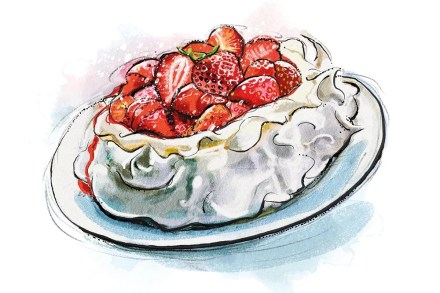
Pavlova: a dessert inspired by the Dying Swan

Pastry chef Alistair Wise says never to make pavlova on a rainy day. “Just forget about it,” he advises. And that’s only the tip of the iceberg when it comes to perfect-pavlova advice. Run a cut lemon around the inside of your bowl before whipping the egg whites. Don’t use fresh egg whites, but also don’t use cold egg whites. Don’t use a plastic bowl, as it may harbor grease. The bowl you do use must be scrupulously cleaned and dried... Don’t whip the whites on a “high” setting, but whatever you do, definitely don’t whip them on low. Use clean sugar — cue the desperate self-analysis of one who has never second-guessed the cleanliness of bagged sugar! Use superfine sugar, or all will be a disaster.

pavlova

Summer flavor pairings

Does anything say “June” quite like strawberries and cream? The sweetness of sun-ripened strawberries allowed to remain on the plant until peak maturity, pairs exquisitely with the velvety, ever-so-slightly tart, richness of cream. Taste-wise, it’s a perfect match — and looks-wise, strawberries and cream are one of the prettiest dishes of summer. Some things are just meant to be. But life isn’t all strawberries and cream. Sometimes you have to shake things up with a lively new take: Gorgonzola and white chocolate cheesecake, for instance, or lamb with anchovy, garlic and rosemary. Love it or hate it, at least you’ll have your diners sitting up and paying attention. And sometimes a bit of experimentation can lead to a new favorite. That’s the story behind salt and caramel.

flavor

Why unorthodox thinkers are embracing Christianity

From our UK edition

Russell Brand was baptised on Sunday, he says – in the River Thames, despite his tongue-in-cheek fear of catching a virus – and he’s thrilled about it. He thanked those who embraced his decision, while expressing understanding of those who are cynical. He’s not perfect, he explains; he knows he’s going to make mistakes, but ‘this is my path now,’ he says. ‘I’m so grateful to be surrendered in Christ.’ Speaking as a Catholic, this writer can’t but consider the advantages of baptism in church: waters freed from viruses and demons through exorcism, holy oils, and proper storage, might have been preferable.

Avoid microplastics? Don’t bother

From our UK edition

They’re everywhere, it seems: in the oceans, the fish, the soil, our drinking water, our vegetables, our grains and cereals, our meat – even in us. Microplastics and smaller nanoplastics are tiny particles of plastic flubbage measuring half a centimetre or less that result from the degradation of plastic refuse, and according to recent news coverage the world is simply crawling with the stuff. Anxiety might turn out to be the biggest health problem caused by microplastics It’s getting everyone in a tizzy. On the one hand you can’t possibly avoid it, since it’s already more or less everywhere. But you must do something, the reports insist, or risk a plethora of terrifying health consequences: cancer, hormonal imbalance, diabetes, reproductive problems, and more.

Canada’s Orwellian online harms Bill

From our UK edition

There’s a way of getting children to eat something they dislike – medicine, for example – where you bury the goods in a spoonful of jam. Justin Trudeau’s Liberals are trying this method with their Online Harms Bill C-63. But it may not go down as well as they hoped. The stated intent of the Bill is something every decent person supports: protecting children from online victimisation. Yet behind this noble aim lurks the thought police. This is no exaggeration. This legislation authorises house arrest and electronic tagging for a person considered likely to commit a future crime.

How eggs became the symbol of Easter

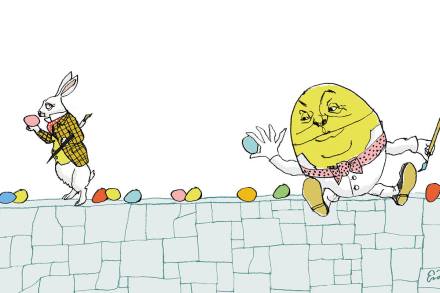
Thirty feet in the air off a northern Canadian highway stands the giant Vegreville Easter egg, rotating gently in the wind. The egg is eighteen feet wide, nearly twenty-five long and designed to turn with the breeze like a weathervane. It is decorated in a traditional Ukrainian pysanka pattern with thousands of gold, black and white aluminum triangles, for the egg is an homage to the Ukrainian immigrants who settled the area long ago. It is a technical feat: the tile- cutting technology developed to produce the mosaic on the egg’s curved surface was later used to tile the exterior of the Space Shuttle. Whatever day of the year you may spy it, it is undeniably an Easter egg.

Easter

Baking mistakes: my Christmas clangers

In a world full of muffins, they say, be a cupcake. As an inspirational saying, it’s a good effort. But handsome is as handsome does: for solid worth, texture and deliciousness, give me the muffin every time. I remain open-minded and willing to be proven wrong, but it seems to me that however gloriously frosted, sprinkled, beflowered or bedazzled the exterior of a cupcake may be, its interior texture is always trying, in a socially anxious sort of way, to be cake. All the icing in the world can’t hide the strain. Allow me to suggest an alternative: in a world of Christmas cookies, be homemade shortbread. The last word in simplicity, shortbread is the Hermès scarf of the cookie world. It has confidence, identity, classical elegance.

Christmas

A culinary tour of southern France and northern Spain

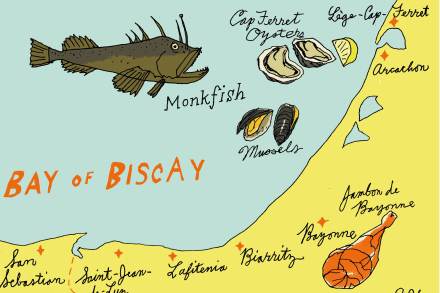
If I’d known what a whole monkfish looks like, I would never have ordered it. It was only weeks later that I saw a picture of the horrid creature: small, wicked eyes, prehistoric head, skin like rusty medieval armor and a gaping mouth overflowing with jagged teeth. Truly the stuff of nightmares. We’d popped over the border from France into San Sebastián, Spain, for a bite of dinner, selecting a spot a stone’s throw from the Baroque exuberance of Santa Maria del Coro. The daily special was monkfish, and for some reason — perhaps an excess of sun that day — the image that came to mind was, inaccurately, that of the innocent red mullet. The daily special in a fishing town is bound to be fresh, so it seemed fair to give it a try.

france

Canada’s parents are taking to the streets

From our UK edition

In the biggest demonstration since the Freedom Convoy, large numbers of Canadian families and supporters took to the streets across the country on 20 September to assert the rights of parents as primary educators and protectors of their children with the slogan, ‘Leave our kids alone!’  The ‘1 Million March 4 Children’ was spearheaded by Muslim Canadians in response to increasingly aggressive policy and curriculum changes in publicly funded schools, pushing radical gender ideology and putting content before children that protesting parents say is indecent or age-inappropriate. Turnout was impressive, with many thousands of participants in over 100 cities and up to 10,000 marchers reported at the largest gathering in Ottawa.