James Walton

James Walton is The Spectator’s TV critic

Home and dry

From our UK edition

In the opening chapter of The Dead Republic, the last novel in The Final Roundup trilogy, the narrator, Henry Smart, gives us a handy summary of the story so far. With it comes a sharp reminder of just how improbable much of the plotting has been. ‘I found my wife again in Chicago,’ recalls Henry, ‘when I broke into a house with Louis Armstrong . . . I crawled into the desert to die. I died. I came back from the dead when Henry Fonda pissed on me.’ Roddy Doyle, of course, once specialised in more straightforward tales of working-class Dubliners, whether comic (The Van), tragic (The Woman Who Walked into Doors) or a bit of both (Paddy Clarke Ha Ha Ha). Then, in 1999, he suddenly struck out in a new direction.

We believe in angels

From our UK edition

Among the more neglected victims of the recession have been the authors of misery memoirs — or ‘mis-mems’ as they’re rather heartlessly known in the trade. As if these people hadn’t suffered enough at the hands of their drunken, violent and/or abusive families, the credit crunch brought more bad news. The books sections of supermarkets began to think that misery was something we could now get for ourselves without the help of reading. What they’d offer instead was a bit of comfort: a belief that, despite appearances to the contrary, we’re surrounded by powerful forces with our best interests at heart. In other words, the way was open for the return of angels.

Not cowardly enough

From our UK edition

Nobody who reads Nigel Farndale’s The Blasphemer is likely to complain about being short-changed. Nobody who reads Nigel Farndale’s The Blasphemer is likely to complain about being short-changed. It tackles five generations of the same family, three wars, Mahler’s ninth symphony and contemporary Islamic terrorism. Along the way, it ponders the nature of male courage, the theological implications of Darwinism and, rather more surprisingly, the existence of angels. As a journalist himself, Farndale also seems to have noted the career path of Sebastian Faulks — that great exemplar for all British journos dreaming of literary glory.

The good old daze

From our UK edition

I don’t imagine that Hail! Hail! Rock ’n’ Roll was a very hard sell to its publishers. I don’t imagine that Hail! Hail! Rock ’n’ Roll was a very hard sell to its publishers. John Harris has been writing about music for nearly 20 years, has an acclaimed book about Britpop to his name and is established enough in the wider media world to appear on Newsnight Review. Now, he’s had the bright idea of providing a kind of Schott’s Miscellany of mostly old pop, linked by a genial Stuart Maconie-style prose, and with a heavy dollop of Nick Hornby-style fandom mixed in. Surely, the result is bound to find its way onto the shelves — or at least into the loos — of middle-aged music obsessives everywhere.

Rhyme and reason

From our UK edition

On the face of it, Nicholson Baker’s books are a varied bunch. His fiction ranges from the ultra close-up observations of daily life in the early novels to the hard-core sex of Fermata and Vox (a copy of which Monica Lewinsky famously gave to Bill Clinton). His non-fiction includes a tribute to John Updike, a plea for libraries not to abandon card catalogues and an attempt to prove that Winston Churchill was a bloodthirsty anti-Semite. There is, though, one quality they do share — and that’s an unmistakable obsessiveness. It’s a quality definitely not lacking in Baker’s new novel either. The narrator of The Anthologist is Paul Chowder, a middle-aged poet in crisis. His girlfriend of eight years has left him.

Inconvenient truths

From our UK edition

People who’ve read Justin Cartwright’s previous novels possibly won’t be too startled at what they find in his new one. The main character is a clever, well-read media man of about Cartwright’s age, who lives in London but ends up feeling the tug of a more primal culture — in this case by clearing off to the Kalahari for six months. His thoughts are conveyed in a quietly glittering, often aphoristic prose. The book ponders the big questions of love, religion and the nature of the self, while also scrutinising such less abstract social phenomena as rap videos and lobster sandwiches. When the novel opens, David Cross, a former TV anchor and foreign correspondent in his early sixties, is adjusting to life as a widower.

A curate’s cornucopia

From our UK edition

Was television in Seventies Britain that good? Is today’s better? James Walton investigates On the weekend of 2–3 December 1978, two ambitious drama projects began on television. One was the BBC Shakespeare — which seven years later had finally carried out its promise to make TV versions of the entire canon. The other took rather less time, but these days is perhaps even harder to imagine. ITV (yes, ITV) gave over the first of six Saturday nights to a series of new and sometimes experimental plays by Alan Bennett. In late 1978, the solid cultural fare didn’t end there. The weekend before, BBC1’s long-running Play of the Month (in the slot recently occupied by such shameless heart-warmers as Lark Rise to Candleford or The No.

What a carry on

From our UK edition

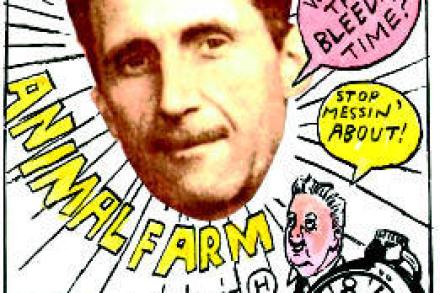
James Walton suggests reading George Orwell in order to understand the appeal of Carry On films Recently, we’ve been hearing quite a lot about how the winds of revolutionary change blew through Britain in 1968. Which doesn’t really explain why, in 1969, the highest-grossing film at the UK box office wasn’t Midnight Cowboy, The Wild Bunch or Easy Rider — but Carry On Camping. (It didn’t get any better for British cinéastes, incidentally: in 1971, the nation’s favourite movie was On the Buses.) Not that the film in question completely ignored the turbulence of the times. Towards the end, you may remember, the presence of hippies on a neighbouring field caused the solid schoolgirl-chasing yeomen of Britain to come together and drive them out.