James Walton

James Walton is The Spectator’s TV critic

From working-class heroes to Disney World mascots: the sad fate of the Chilean miners

From our UK edition

On 5 August 2010, 33 men entered the remote San José mine in Chile’s Atacama desert to begin their 12-hour shift. They came out again 69 days later, to be greeted by the country’s president in front of a worldwide TV audience of around 1.2 billion. A group of workers who, in many cases, had never left the local area in their lives were now global heroes. At the time, it was embarrassingly easy to see their rescue as simply the sort of good news that makes us all aware of our shared humanity. Héctor Tobar’s book, though, is a sharp reminder that the truth was a lot more complicated — and sombre — than that. As their shift started, many of the men were already worried by the rumbling sounds coming from the mine, but were ordered to carry on anyway. Then, at around 2 p.m.


We’re great and baboons are losers: this week’s lesson from Brian Cox

From our UK edition

Anybody feeling a bit depressed about the shortcomings of humanity could do worse than watch Brian Cox’s new series Human Universe (BBC2, Tuesday) — which, judging from the first episode, is all about how great we are. Early on, Cox was shown hanging out, Attenborough-like, with some gelada baboons in the highlands of Ethiopia. They may share a common ancestor with us; by primate standards, they may have unusually complicated social structures and communication skills. Yet, as Cox rather gleefully pointed out, ‘They’re nowhere near as sophisticated as us.’ No wonder that while these losers are picking fleas off each other in a remote corner of Africa, we’ve not only ‘colonised every corner of the earth’, but can also live in space.

Colm Toibin’s restraint – like his characters’ – is quietly overwhelming

From our UK edition

In Colm Tóibín’s much-loved 2009 novel Brooklyn, Eilis Lacy, somewhat to her own surprise, leaves 1950s Enniscorthy (Tóibín’s own home town in County Wexford where several of his books are set) for a new life in the United States. Before that, Eilis had always presumed that she would live in the town all her life, having the same friends and neighbours… that she would find a job in the town, and then marry someone and give up the job and have children. Now, in Nora Webster, we meet a woman who has done all of the above — a contrast made clear in the opening pages when Eilis’s mother makes a brief appearance to lament the fact that her daughter didn’t stay in Ireland.

Marriage and foreplay Sharia-style

From our UK edition

Needless to say, it’s not uncommon to hear single British women in their thirties and forties saying that all the good men are married. But in The Men with Many Wives (Channel 4, Wednesday) this came with a twist: it turned out to be precisely the reason why you should marry them too. Polygamy may be illegal in Britain, but it’s permitted under the Sharia law that many Muslims here apparently live by — and, as several of the programme’s participants told us, there’s no better guide to whether a man is husband material than the fact that he’s a husband already. Take Nabilah, who came to Britain from Malaysia to do a PhD in engineering at Cambridge. By then she was divorced and wanted someone with a proven track record of staying with his spouse.

Now for the really tricky question: can Only Connect survive BBC2?

From our UK edition

For some of us, the biggest TV question of recent weeks hasn’t been how Newsnight is doing without Jeremy Paxman, British drama’s fightback against American competition or even the treatment of Diana Beard by the editors of The Great British Bake Off. Far more important is whether a small BBC4 quiz show can survive a move to BBC2 with its heroic defiance of almost all television fashions intact. Since 2008, Only Connect has been the obvious place to head after University Challenge on a Monday night. Host Victoria Coren Mitchell achieves a neat balance between mild self-satire and an unashamed pride in the show’s cleverness. (More oddly, she also pretends to be a fearful boozehound.

Howard Jacobson’s J convinced me that I’d just read a masterpiece

From our UK edition

At first sight, J — which has beenshortlisted for the Man Booker Prize — represents a significant departure for Howard Jacobson. It’s set in a future Britain where some sort of apocalypse — known only as ‘WHAT HAPPENED, IF IT HAPPENED’ — has taken place several decades ago. It also contains virtually no jokes. Yet, from within this unfamiliar framework, some familiar concerns soon emerge. In 2010, The Finkler Question was hailed as the first comic novel to win the Booker since Kingsley Amis’s The Old Devils. But the book darkened considerably towards the end, with Jacobson unsmilingly warning his readers — and especially any fellow Jews who regard such warnings as ‘hysterical’ — about the continuing, potentially lethal dangers of anti-Semitism.

Is it really imaginable that the British people could rise up against the Jews?

From our UK edition

Howard Jacobsen’s J has been shortlisted for the 2014 Booker Prize today: At first sight, J represents a significant departure for Howard Jacobson. It’s set in a future Britain where some sort of apocalypse — known only as ‘WHAT HAPPENED, IF IT HAPPENED’ — has taken place several decades ago. It also contains virtually no jokes. Yet, from within this unfamiliar framework, some familiar concerns soon emerge. In 2010, The Finkler Question was hailed as the first comic novel to win the Booker Prize since Kingsley Amis’s The Old Devils.

BBC2’s Hotel India: slums? What slums?

From our UK edition

Viewers who like their TV journalism hard-hitting should probably avoid Hotel India, a new BBC2 series about the Taj Mahal Palace in Mumbai. The tone of Wednesday’s episode was set immediately when the narrator introduced us to ‘one of the oldest and grandest hotels in the world’, where ‘no detail is too small or demand too great’, and there’s ‘an army of staff dedicated to flawless service’. To prove it, head of housekeeping Indrani then strode fearsomely down a corridor like a more elegant version of Hattie Jacques’s matron in the Carry On films.

Kate Bush Hammersmith Apollo review: Still crazy after all these years

From our UK edition

It says something about Kate Bush’s standing in the music world that, perhaps uniquely in the history of long-awaited live comebacks, nobody has suggested — or possibly even thought — that her motives might be financial. After all, this is a woman who’s stuck to her artistic guns ever since, aged 19, she defied EMI by insisting that her first single should be the abidingly peculiar ‘Wuthering Heights’. So, a famous 35 years after her last stage appearance, how on earth could she live up to such a fiercely idiosyncratic career, now regarded with almost universal awe? Well, at first the answer seemed to be by doing the most unexpected thing of all: serving up a bog-standard rock concert.

Kate Bush Hammersmith Apollo review: still crazy after all these years

From our UK edition

It says something about Kate Bush’s standing in the music world that, perhaps uniquely in the history of long-awaited live comebacks, nobody has suggested — or possibly even thought — that her motives might be financial. After all, this is a woman who’s stuck to her artistic guns ever since, aged 19, she defied EMI by insisting that her first single should be the abidingly peculiar ‘Wuthering Heights’.  So, a famous 35 years after her last stage appearance, how on earth could she live up to such a fiercely idiosyncratic career, now regarded with almost universal awe?

The Village: Sunday-night TV at its most unsubtle and addictive

From our UK edition

Proof that television has changed a bit since 1972 came with an archive clip shown on BBC4 on Sunday. 'My first guest:' Michael Parkinson announced matter-of-factly on his Saturday-night chat show, 'W. H. Auden.' Auden then made his way gingerly down the stairs, lit a fag and began by discussing the failure of the poetry of the 1930s to effect political change. 'Nothing I wrote,' he told Parky, 'postponed war for five seconds or prevented one Jew from being gassed.' The clip appeared in Great Poets in their Own Words, the first of a two-part series combining archive film with talking heads to provide a useful if workmanlike history of 20th-century British poetry.

The case of the amnesiac autobiographer

From our UK edition

In October 2002, 28-year-old David Stuart MacLean woke up at Hyderabad railway station. He was standing at the time, and had no idea where or who he was. A kindly tourist police officer reassured him that his case wasn’t unusual: plenty of young people came to India, took too many drugs and ended up similarly ‘confused’. MacLean immediately had a flashback to injecting heroin with a redhead called Christina — but this proved to be untrue. (Nor was the universe, as he then believed, created by Jim Henson at a studio in Burbank.) Instead, after he’d been taken to a local mental hospital, the doctor diagnosed the side effects of Lariam, an anti-malaria drug with a history of causing psychosis in a minority of users.

Barbie dolls? This girl aims for the head

From our UK edition

Channel 4’s Kids and Guns (Thursday) began with an American TV advert in which a young boy’s eyes shone with gratitude when his parents gave him a large gun, proudly marketed as ‘My First Rifle’. And just in case that seemed a bit macho, the ad also pointed out that My First Rifle is available in pink. Next, we met the real-life Gia, who at the age of nine already has quite an arsenal — thanks to her dad Spyder, a firm believer in the old Texan motto that ‘If you know how many guns you have, you don’t have enough’. ‘Wouldn’t it be more usual to buy her Barbie dolls?’ asked what couldn’t help but sound like a rather prissy British off-screen voice.

Murakami drops magic for realism in this tale of a lonely Tokyo engineer

From our UK edition

When Haruki Murakami — Japan’s most successful novelist at home and abroad — was interviewed by the Paris Review in 2004, the questions weren’t always characterised by their pithiness. Many of his novels, the interviewer suggested at one point, are variations on a theme: a man has been abandoned by, or has otherwise lost, the object of his desire, and is drawn by his inability to forget her into a parallel world that seems to offer the possibility of regaining what he has lost, a possibility that life, as he (and the reader) knows it, can never offer. Would you agree with this characterisation? Murakami’s answer, in full, was ‘Yes’. Ten years on, his new novel won’t require him to revise that answer a great deal.

The quest for the perfect guitar riff is a noble one – if not quite the key to unlocking the mysteries of the universe

From our UK edition

A few weeks ago, my eight-year-old son, who’s taken up the guitar, announced that he’d learned something new. He then played a sequence of chords — approximately, Duh-duh-duuh, Duh-duh-da-duuh — that I’ve been hearing from all guitarists since I was about eight myself. ‘It’s called “Smoke on the Water”,’ he informed me, unnecessarily. Of course, any sign that the world hasn’t changed as much as we thought is always welcome to the middle-aged man. Yet when I showed him Deep Purple performing the whole track on YouTube, he was both slightly bored and rather mystified. Not only had he no idea that ‘Smoke on the Water’ came with a song attached, but he couldn’t understand why it needed one.

A tribute to the King – or a compendium of journalistic bad habits?

From our UK edition

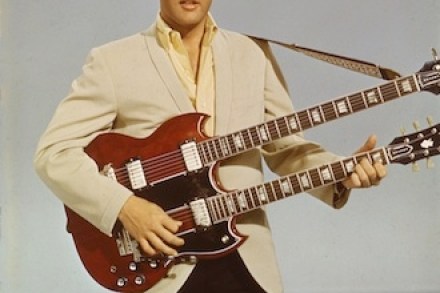
With Elvis has Left the Building, the longstanding editor of GQ has inexplicably written a book that could serve as a handy, if perhaps overly comprehensive, compendium of bad journalistic habits: from the over-arching flaw of failing to decide what you want to say to such specifics as the excessive use of the phrase ‘American dream’ and wildly random scene-setting. (In the lengthy section on 1977, the year of Presley’s death, we learn that ‘five days before Luciano Pavarotti made his first appearance on American television, the rings of Uranus were discovered’.

The Honourable Woman could have done with some help from an overpaid executive in a suit

From our UK edition

BBC2’s The Honourable Woman (Thursday) began with a rather portentous voice-over bringing us the unsurprising news that ‘We all have secrets. We all tell lies just to keep them from each other and ...pause to indicate psychological profundity ...from ourselves.’ Luckily for the viewer, this was accompanied by the sight of man in a restaurant being stabbed to death by a waiter in front of his young son and daughter. As it turned out, this would set the tone for much of what followed — an hour of drama that combined memorable set-pieces with slightly too transparent an insistence on its own significance.

The girl who had sex with dolphins

From our UK edition

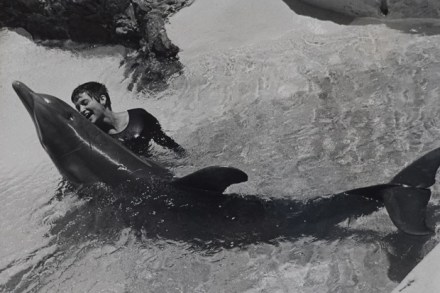
BBC4’s The Girl Who Talked to Dolphins (Tuesday) began with the overstated-sounding claim that it would be tackling ‘perhaps the most remarkable period in the history of animal science’. In fact, though, the longer the programme went on, the more convincing this claim felt — even if the word ‘period’ should possibly have been replaced with ‘episode’, and ‘remarkable’ with ‘bonkers’. At times, the story seemed almost too neat a microcosm of the 1960s, as well meant if not necessarily practical ideas about transforming life on earth — and beyond — gave way to something much darker. At others, it brought to mind that hippie Californian scientist in The Fast Show.

Those weren’t the days

From our UK edition

If you wanted a brief epigraph for Linda Grant’s recent fiction, then five words from Dorothy Parker might well do the trick: ‘Time doth flit/ Oh shit.’ Certainly, there aren’t many writers who seem so astonished, even affronted, by life’s tendency (admittedly a strange one) to pass by more quickly than you ever imagined. Her previous novel, We Had It So Good, followed a group of students from the Oxford of the late 1960s to the present day, where they were bewildered to find themselves in the unthinkable position of being quite old. Now her new one does the same with a group of students from the York of the early 1970s. Inevitably, then, the two books do have similar themes, as youthful ideals come up against the annoyingly intractable world.

Is BBC1’s Quirke bravely unhurried – or too slow?

From our UK edition

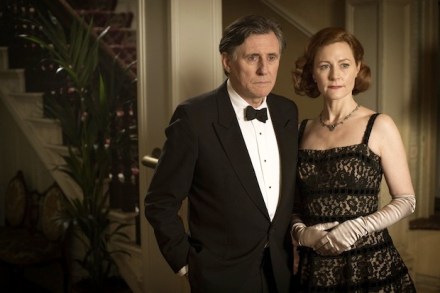
The work of John Banville — Booker-winning novelist and impeccably high-minded literary critic — might seem an unlikely source for a primetime crime series. But since 2006, under the telling pseudonym of Benjamin Black, he’s also published a series of Celtic-noir novels set in 1950s Dublin about a pathologist-sleuth known, even to his intimates, only as Quirke. To the understandable annoyance of full-time crime writers, Banville describes these books as ‘a kind of relaxation’, banging them out at a brisk 2,000 words a day compared with the Flaubertian 200 he manages for his more serious fiction. Yet, if this led any viewers to hope for an action-packed thrill-fest from Quirke (BBC1, Sundays), they’ll have been disappointed.