James Walton

James Walton is The Spectator’s TV critic

Over-cooked

From our UK edition

Starting with Lemprière’s Dictionary — an unexpected worldwide hit in the early 1990s — Lawrence Norfolk has never been a man for the slim novella. Complicated of plot and huge of cast, his books generally serve up a combination of almost obsessively researched history and somewhat arcane mythology. Now, 12 years since his last one, comes John Saturnall’s Feast —  a novel, I think it’s fair to say, that doesn’t mark a radical change of direction. The year is 1625, and in the Oxfordshire village of Buckland the puritans are on the march. For 11-year-old John Saturnall, this is particularly worrying, because his mother Susan is widely (and, it would seem, accurately) regarded as the local witch.

Bookends: The Saint Zita Society, by Ruth Rendell

From our UK edition

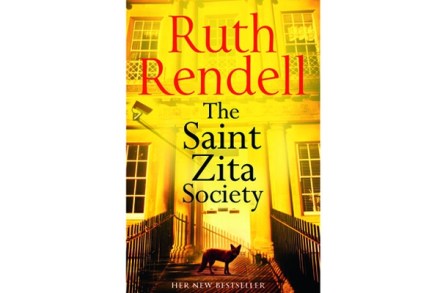
Sometimes it seems as if Ruth Rendell’s heart just isn’t in all that killing any more. Certainly, her latest book, The Saint Zita Society (Hutchinson, £12.99), works best as a portrait of modern London, sharing many of the characteristics of novels like John Lanchester’s Capital and Sebastian Faulks’s A Week in December. The murders, when they finally happen, not only go unsolved, but even largely uninvestigated. They also feel rather sketchily plotted and weirdly peripheral to the action. The setting is an upmarket street in Pimlico whose inhabitants include a paediatrician, a classic gentlewoman of the old school and, naturally, a horrible City financier and his lazy wife.

Little Miss Sunshine

From our UK edition

James Kelman is famously not a man fond of making concessions — whether to bourgeois interviewers, literary fashions, traditional punctuation or his own readers. Sure enough, his latest novel comes in familiar form: a continuous, chapterless slab of interior monologue from a working-class Glaswegian struggling against the un-remitting toughness of what a character in his last book of short stories called the ‘greatbritishsocialsystem’. True, the protagonist here does represent one departure from the norm, by being a woman — thereby allowing Kelman to add another layer of oppression to the usual mix. Even so, the only thing remotely quirky about Mo said she was quirky is the title.

Don’t hold your breath

From our UK edition

The case for Richard Ford isn’t hard to make. Ever since his breakthrough novel The Sportswriter in 1986, his multi-award-winning fiction has combined an unsparing intelligence with an unashamed high-mindedness about what literature can achieve — nothing less than a careful exploration of the best way to live. In some hands, this moral sense might feel self-conscious, sentimental or even faintly embarrassing. In Ford’s, it’s done with such measured skill that the impact is quietly overwhelming. Sentence by sentence, too, his prose is pretty much peerless. Every word that makes it onto the page has clearly been on trial for its life, before being triumphantly acquitted.

Heroics and mock-heroics

From our UK edition

‘Poets don’t count well,’ says Ian Duhig in his contribution to Jubilee Lines — an assertion unexpectedly confirmed by Carol Ann Duffy’s preface. Admittedly, if the book did contain one poem for every year since 1952, there’d be an annoyingly untidy 61. Even so, Duffy’s declaration that the Queen was crowned ‘on 2 June 1953, 60 years ago this year of 2012’ may come as a surprise. No less puzzlingly, we’re also told that in 1977 ‘the Queen had been on the throne for nearly a quarter of a century’, which makes the Silver Jubilee seem a bit ill-timed.

To thine own self be true

From our UK edition

Azazeel comes to Britain as the winner of the 2009 International Prize for Arabic Fiction, inevitably known as the ‘Arabic Booker’. It’s also been both a source of controversy and an unexpected popular hit in Youssef Ziedan’s homeland. According to the translator’s afterword, within months of publication, ‘piles of the novel appeared on the pavements of Cairo, alongside the self-help manuals, political memoirs and Teach Yourself English books that are the staple of the Egyptian popular book market.’   The action takes place — and this is the controversial bit — during the relatively brief period when Egypt was a Christian country.

Deviation and double entendre

From our UK edition

If there’s anything full-time novelists hate more than a celebrity muscling in on their turf, it’s the celebrity doing such a good job that it seems as if anybody could write fiction. Happily for the pros, this isn’t a problem with Briefs Encountered. Not only is the book full of obvious flaws, but it also makes the whole business of novel-writing look unbelievably difficult. There is, it turns out, so much to do — what with plot, characters, dialogue and tone all to be created and, worse still, made coherent. And then there’s all those pesky sentences you have to string together… In fact, Clary’s set-up is quite promising.

Resounding successes

From our UK edition

The British Library’s ‘Spoken Word’ series, drawing heavily on the BBC archives, has already shown quite a range — from Tennyson’s famously crackly reading of ‘Charge of the Light Brigade’ to Scott Fitzgerald declaiming a speech from Othello. Now, it moves on to the short story and, despite the curious decision to include two tales apiece from Somerset Maugham and Algernon Blackwood (none of them especially overwhelming), once again nobody is likely to complain about a lack of variety. The three discs are kicked off by Maugham’s chatty reading of ‘Salvatore’, a story in praise of a lithe young Italian fisherman. According to the final lines, this is a plucky attempt to hold our attention with a portrait of simple goodness.

Many parts of man

From our UK edition

In some ways, you’ve got to hand it to Craig Raine. Two years ago, after a distinguished career as a poet and all-round man of letters, he published his first novel — and received a series of reviews that, as Woody Allen once put it, read like a Tibetan Book of the Dead. According to virtually all of them, Heartbreak was fragmented, name-dropping, pretentious, and not really a novel anyway: more a loose collection of thoughts, revealing an alarming obsession with sexual organs. But with The Divine Comedy, Raine responds with almost heroic defiance. If you felt like that about the last book, it seems to shout, try this one for size. In Heartbreak, for instance, the fragments were comparatively chunky, even featuring some recognisably extended narrative.

Simon Hoggart: Chilean Miners

From our UK edition

Angus Macqueen is a film-maker whose CV includes The Death of Yugoslavia, Gulag, Cocaine and a slightly odd period commissioning the likes of The Secret Millionaire as Channel 4’s head of documentaries. These days, happily, he’s back making his own stuff — and BBC2’s Chilean Miners: 17 Days Buried Alive was another gem. Commentary was kept to a minimum and the reconstructions were nicely restrained, leaving the heart of Friday’s programme filled by gripping interviews with six of the miners themselves. These proved to be a varied lot, from Mario ‘Perry’ Sepúlveda, a family-loving Jehovah’s Witness, to Samuel Ávalos, a cheerfully foul-mouthed former street-kid, who praised mining as the best way to sweat off a hangover.

Golden corn

From our UK edition

Sebastian Barry’s novels, I’m beginning to think, are a bit like that famous illusion of the two faces and a vase. Most of the time you’re reading them, they seem to be wrenchingly powerful and heartfelt depictions of suffering and grief. Yet, it doesn’t take much of a squint for them suddenly to look like the purest Irish corn. When his last novel The Secret Scripture won the Costa Book of the Year Award in 2008, even the judges suggested that it was badly spoiled by a melodramatic twist at the end. The public, who bought it in their hundreds of thousands, clearly didn’t agree — and neither, it appears, did Barry. On Canaan’s Side also comes complete with a big closing revelation that two of the characters are more connected than we thought.

Don’t blur the lines

From our UK edition

Did you know that on the Central Line’s maiden journey to Shepherd’s Bush, one of the passengers was Mark Twain? Or that The Picture of Dorian Gray and The Sign of Four were both commissioned by the same publisher at the same London dinner? Or that Harrods dropped the apostrophe from its name in 1921, a full 19 years before Selfridges followed suit? My guess is that you probably didn’t — which is where Walk the Lines comes in. Did you know that on the Central Line’s maiden journey to Shepherd’s Bush, one of the passengers was Mark Twain? Or that The Picture of Dorian Gray and The Sign of Four were both commissioned by the same publisher at the same London dinner?

When more is less

From our UK edition

If you know anything at all about Cynthia Ozick — an officially accredited grande dame in America, less famous in Britain — you won’t be surprised to hear that her new novel is influenced by Henry James. If you know anything at all about Cynthia Ozick — an officially accredited grande dame in America, less famous in Britain — you won’t be surprised to hear that her new novel is influenced by Henry James. Throughout Ozick’s career, James has hovered over her fiction and featured heavily in her essays. Now, in Foreign Bodies, she goes for, among other things, a full-scale recasting of The Ambassadors.

Freudian slip

From our UK edition

At Last is the fifth — and, it’s pretty safe to say, most eagerly awaited — of Edward St Aubyn’s Patrick Melrose novels. At Last is the fifth — and, it’s pretty safe to say, most eagerly awaited — of Edward St Aubyn’s Patrick Melrose novels. The first three, now called the Some Hope trilogy, took Patrick from an upper-class childhood where he was raped by his father from the age of five, through his understandably drug-addicted youth and on to the nervous beginnings of recovery at 30. Somehow, though, the result was a joy to read: full of dazzling phrase-making, terrific black comedy and stirringly vicious satire on the ghastly inhabitants of Patrick’s privileged world.

There is no alternative

From our UK edition

Stand-up comedians: is there anything they can’t do? Not only do they make up a huge proportion of chat-show guests — and of chat-show hosts — they also present Horizon, give us guides to the night sky, utterly dominate panel shows and regularly pop up on Question Time. Recently, they even set up their own news discussion programme in the as yet formless shape of Ten O’Clock Live. And that’s just television. In the lead-up to Christmas, Dawn French saw off Stephen King, John Grisham and Maeve Binchy to have the country’s bestselling hardback novel, while the fastest selling DVD in British history is Michael McIntyre’s ‘Hello Wembley!’, whose title is a clue to the type of places he and many of his fellow comics play these days.

Morphine memories

From our UK edition

Chapman’s Odyssey became quite famous before it was published, largely because it nearly wasn’t. Chapman’s Odyssey became quite famous before it was published, largely because it nearly wasn’t. Paul Bailey’s long and distinguished career, complete with two appearances on the Booker shortlist, apparently counted for nothing last year when he was reduced to what he called the ‘sheer hell’ of touting the book unavailingly round town, while living off grants from the Royal Literary Fund. Yet, sad though this undoubtedly was, when Bloomsbury finally rode to his rescue, one heretical thought was hard to suppress.

Numb to fiction

From our UK edition

In the recent EastEnders cot-death controversy, both sides behaved pretty much as you’d expect. The BBC-bashers denounced the ‘offensive’ suggestion that grieving mothers routinely steal other people’s babies. In the recent EastEnders cot-death controversy, both sides behaved pretty much as you’d expect. The BBC-bashers denounced the ‘offensive’ suggestion that grieving mothers routinely steal other people’s babies. The corporation itself used words like ‘challenging’ and ‘sensitive’ — before caving in to the criticism.

Learning to listen

From our UK edition

How Music Works opens with a blizzard of reassurances. First, John Powell establishes his ordinary-bloke credentials by means of a slightly tortured analogy between many people’s attitude to music (‘pleasure without understanding’) and the time he went to the chip shop after the pub and realised he couldn’t tell the Chinese owner exactly what gravy was. He then lays out in some detail what prior knowledge of musical theory, maths and science we’ll need for what follows: absolutely none. The message, in other words, is a firm ‘Don’t panic’. This might be a book of musicology by a classically trained composer and physics professor, but it’s aimed squarely at the novice. And from there, Powell proves as good as his word.

Frustrating but enjoyable

From our UK edition

If we didn’t already know that Milan Kundera is one of Craig Raine’s literary heroes, then it wouldn’t be too hard to work it out from his first novel. If we didn’t already know that Milan Kundera is one of Craig Raine’s literary heroes, then it wouldn’t be too hard to work it out from his first novel. As in Kundera’s later fiction (Immortality, Slowness, Identity, Ignorance), there’s the stark one-word title laying out the theme to be interrogated. There’s the same relentless erudition — so that even Raine’s two-page thematic scene-setter finds room for Dickens, Beckett, Auden and Henry James.

On the brink

From our UK edition

Stephen Potter’s Lifemanship contains a celebrated tip for writers who want to ensure good reviews. Stephen Potter’s Lifemanship contains a celebrated tip for writers who want to ensure good reviews. Simply make the dedication so emotionally blackmailing that no critic will dare attack you — something like, ‘To Phyllis, in the hope that God’s glorious gift of sight will be restored to her.’ It’s a ploy that springs inescapably to mind when reading the introduction to Winter on the Nile. What we’re about to read, Anthony Sattin explains, is the culmination of a dream he’s cherished for decades — a dream whose importance to him will only be truly understood by his beloved wife and children.