James Walton

James Walton is The Spectator’s TV critic

Affairs in squares

From our UK edition

On all those comic lists of the world’s shortest books (Great Italian War Heroes, My Hunt for the Real Killers, by O.J. Simpson etc.), the best title I ever came across was Bloomsbury: the Untold Story. Now, though, BBC2’s new drama, Life in Squares, is giving us yet another chance to marvel at how many sexual permutations one small group of people can achieve. But before all that began, Monday’s first episode was at some pains to show us the forces of Victorian stuffiness against which the Bloomsbury group rebelled. In the first scene, a suitor tried to woo Vanessa Stephen with the chat-up line, ‘Only two more days, Miss Stephen, to the opening of the trout-fishing season.

Institutional feminism

From our UK edition

Some revelations, it seems, are capable of being endlessly repeated while still remaining revelations. Think of all the books, articles and TV programmes over the years which have ‘revealed’ that the Victorians weren’t, after all, mad sexual repressives who had a fit of the vapours at the sight of an uncovered table-leg; or that the 1950s were a lot more fun than the drab conformist decade of popular imagination. Or that Rudyard Kipling was by no means a straightforward imperialist. (Feel free to add examples of your own.) And yet, no matter how many times these things are pointed out, it’s always with a proud flourish — as if what’s being said stands in fearless contradiction to everything we’ve previously heard.

Serial thriller

From our UK edition

For keen students of China, this week’s television provided yet more proof that Deng Xiaoping’s decision to open the country to the West has had consequences that he’s unlikely to have foreseen. He probably couldn’t have predicted, for example, that one day a former Bond girl would travel the country finding almost everything ‘thrilling’. Or that a bloke who made his name in a British makeover show would proudly explain to a group of Chinese journalists that ‘I’ve got the sunglasses, I’ve got the big hair — all [sic] of these things are what you’d expect from a celebrity.

The bankers’ darling

From our UK edition

This week’s Imagine... Jeff Koons: Diary of a Seducer (BBC1, Tuesday) began with Koons telling a slightly puzzled-looking Alan Yentob that what spinach was to Popeye, so art is to the rest of us: a way of achieving transcendence and appreciating ‘the vastness of life’. As it turned out, though, not all the claims made in the programme were quite so straightforward. Later, for example, Koons argued that ‘the only thing you really have in life is your interests and when you focus on them it takes you to a connecting place where time really kind of bends’.

One helluva racket

From our UK edition

For a music fan, the quiz question, ‘Who wrote “This Land is Your Land”?’ might seem laughably easy. Yet if you answered ‘Woody Guthrie’, I’m afraid you only get half marks. Guthrie did write the lyrics, but following his normal practice he set them to an existing melody — in this case that of the Carter Family’s ‘When the World’s on Fire’, which they’d got from their friend Lesley Riddle, who may well have found it somewhere else. None of which, in 2004, stopped Guthrie’s copyright-holders from threatening a satirical website with a lawsuit when, like Guthrie himself, it put new words to the same tune. And if that doesn’t sound shameless enough, try this.

Bad robots

From our UK edition

You’d think scientists might have realised by now that creating a race of super-robots is about as wise as opening a dinosaur park. Yet in Channel 4’s new sci-fi series Humans (Sunday), the manufacturers of the extremely lifelike cyber-servants known as ‘synths’ were weirdly confident that nothing could go wrong. Nor did it cross their minds that the synths — programmed only to do whatever their owners told them — could possibly develop their own thoughts and emotions... Still, if its premise is almost heroically unoriginal, Humans does look as if it’ll be giving the social, scientific and philosophical implications of advanced artificial intelligence an impressively thorough airing.

Are you being funny?

From our UK edition

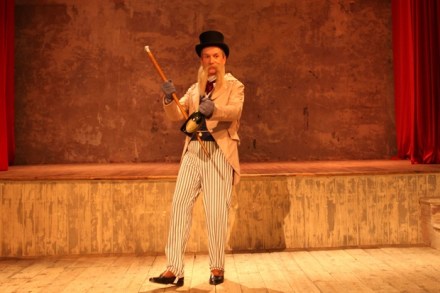
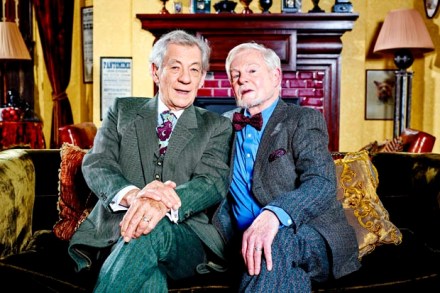
Monday saw the return of possibly the weirdest TV series in living memory. Imagine a parallel universe in which Are You Being Served? had starred Laurence Olivier, John Gielgud and Janet Suzman, and you might get some idea of what ITV’s Vicious is like. Alternatively, I suppose, you could just watch the thing and realise that no, you’re not drunk — you really are seeing Derek Jacobi, Ian McKellen and Frances de la Tour acting their socks off in a sitcom that would have been considered rather creaky in 1975. Jacobi and McKellen play Stuart and Freddie: a pair of gay actors who’ve been living together for decades despite the fact that their main mode of communication is to trade personal insults while the studio audience laughs dutifully.

Strange ways

From our UK edition

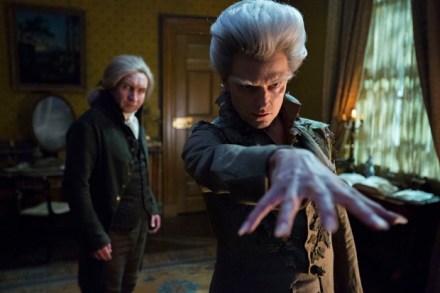
BBC One’s 2015 choice of Sunday-night drama series is beginning to resemble the career of the kind of Hollywood actor who alternates between reliable crowd-pleasers and more eccentric personal projects. The year started with the return of the much-loved Last Tango in Halifax, followed by the distinctly peculiar A Casual Vacancy. Now, after the mainstream triumph of Poldark, we get Jonathan Strange & Mr Norrell — which, whatever else you might think about it, definitely can’t be accused of feeling like drama by committee.

Not much cop | 7 May 2015

From our UK edition

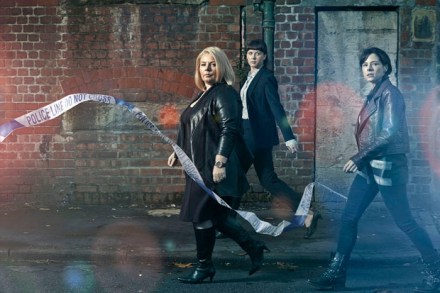
With Clocking Off, Shameless and State of Play among his credits, Paul Abbott is undoubtedly one of the most respected TV writers in Britain. Not even his biggest fans, though, could argue that he’s one of the subtlest. On the whole, whatever his characters are thinking, they’ll also be saying — and generally in a way that proves what no-nonsense salt-of-the-earth types they are. Nor do his dramas ever suffer from a shortage of incident, much of it pitched somewhere between the bracing and the lurid. It’s an approach that Abbott evidently felt no need to change now that he’s writing a cop series. No Offence (Channel 4, Tuesday) began with DC Dinah Kowalska coming back in a taxi from a disappointing evening out with her boyfriend, who was on crutches.

Target practice

From our UK edition

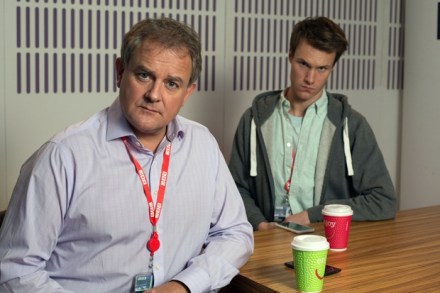
Ever since the days of Tony Hancock, many of the best British sitcoms — from Dad’s Army to Fawlty Towers, Rising Damp to The Royle Family — have featured a middle-aged man convinced that he’s the only sane person left in an increasingly mad world. The frankly subversive twist in W1A (BBC2, Thursday) is that the middle-aged man in question might well be right. As the BBC’s Head of Values, Ian Fletcher (Hugh Bonneville) is surrounded by any number of jargon-spouting younger colleagues whose apparent aim is not to let anybody realise how stupid they are — or at least it would be if they realised it themselves.

Comics’ trip

From our UK edition

Who says British television lacks imagination? You might have thought, for example, that every possible combination of comedian and travel programme had been exhausted long ago. After all, it’s now 26 years since Michael Palin set the trend by following in Phileas Fogg’s footsteps (sort of). In more recent times, we’ve had Stephen Fry going round America in a London taxi, Billy Connolly going round Australia on a Harley-Davidson trike and — perhaps drawing the short straw — Ade Edmondson going round Britain in a caravan. There’s also been Paul Merton in India, Sue Perkins in China, Sean Lock and Jon Richardson in the Deep South and... well, you get the idea.

Scabrous lyricism

From our UK edition

Irvine Welsh, I think it’s safe to say, is not a writer who’s mellowing with age. His latest book sees the return of ‘Juice’ Terry Lawson from the novel Glue and the short story ‘I Am Miami’ — now an Edinburgh taxi-driver in his mid-forties but still, in the face of some competition, possibly the most priapic character Welsh has ever created. With a penis he understandably nicknames ‘Auld Faithful’ and an unshakeable faith in the power of porridge (‘Complex carbs: set ye up fir a day’s shaggin’), Terry begins his latest adventures by pulling a grieving relative at a funeral — and, on the way home afterwards, two young American tourists.

Channel 4’s The Coalition reviewed: heroically free of cynicism

From our UK edition

In a late schedule change, Channel 4’s Coalition was shifted from Thursday to Saturday to make room for Jeremy Paxman interviewing the party leaders. With most dramas, that would mean I’d have to issue the sternest of spoiler alerts for anybody reading before the programme goes out. In this case, though, you know the story already — because Coalition was a dramatisation of what happened in Westminster in the days after the last general election. Fortunately, one of the programme’s many qualities was its Day of the Jackal ability to keep us gripped even though we were always aware of the outcome — largely by reminding us that the characters weren’t.

Poldark review: drama by committee

From our UK edition

By my calculations, the remake of Poldark (BBC1, Sunday) is the first time BBC drama has returned to Cornwall since that famously mumbling Jamaica Inn — which may explain why even the lowliest yokel here tends to project from the diaphragm. Leading both the cast and the diaphragm-projection is Aidan Turner as Ross Poldark, initially seen as a British Redcoat in a wood rather unconvincingly captioned ‘Virginia, America, 1781’. The short scene that followed efficiently established that he had a rackety past and some politically radical ideas, before the American rebels attacked, leaving several extras dead.

Critical on Sky1 reviewed: a new medical drama where everyone radiates an unusual degree of competence and concern

From our UK edition

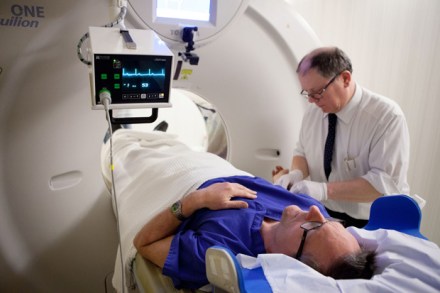
Sky1’s new hospital drama Critical (Tuesday) can’t be accused of making a timid start. Within seconds, an urgent request had come over the loudspeaker system for ‘the trauma corps’ to head to the emergency department, causing the main members of the cast to sprint down various corridors at impressive speed. Meanwhile, a patient was briskly wheeled to the same department from a helicopter on the roof, pausing only to cough up blood all over the lift. Moments after that, the trauma corps were already exchanging the kind of rapid-fire medical speak — ‘Dullness to percussion on the left side!’— that most viewers mightn’t entirely comprehend but that clearly translates as variations on the phrase, ‘Uh-oh’.

Ogres, pixies, dragons, goblins… Kazuo Ishiguro’s first novel in ten years is a strange beast indeed

From our UK edition

If you’d been asked at the beginning of the year whose new novel would feature ogres, pixies and a she-dragon called Querig, I suspect you might have taken a while to guess that the answer was Kazuo Ishiguro. Admittedly, since his career-establishing 1980s triumphs with An Artist of the Floating World and The Remains of the Day, Ishiguro has been at some pains to distance himself from poignant, perfectly-wrought narratives by uptight self-deceivers who find themselves on the wrong side of history. There was, for example, the long, dream-like and famously punishing The Unconsoled. More rewardingly, Never Let Me Go — published ten years ago — took place in an alternative Nineties world in which clones were created to act as organ donors.

Better Call Saul review: the box set equivalent of a (very) well-made play

From our UK edition

I lost count long ago of the number of dinner parties and pub conversations where I’ve had to utter the humiliating words, ‘Actually I haven’t seen Breaking Bad.’ The social isolation became even more shaming when my 81-year-old mother rang to ask me if I’d heard of the show and to explain how much she loved it. (‘But isn’t it very violent, Mum?’ I said. ‘Yes,’ she replied.) All of which means that I can approach Better Call Saul (Netflix) with what I like to think of as stern critical neutrality — rather than, say, ignorance.

Could it be that Wolf Hall is actually the teeniest bit dull?

From our UK edition

In January 1958, the British government began working on the significantly titled Operation Hope Not: its plans for what to do when Winston Churchill died. The plans, it turned out, wouldn’t be needed until January 1965 — but the intervening seven years were obviously well spent, because, as Churchill: A Nation’s Farewell (BBC1, Wednesday) made resoundingly clear, the farewell in question was a triumph. London came to a standstill and Big Ben fell silent as huge crowds watched the procession of the coffin from Westminster to the spectacular state funeral in St Paul’s — and its boat journey along the Thames afterwards. For the 50th anniversary, Jeremy Paxman talked us through the day with the aid of some of those who took part.

Channel 4’s Cyberbully: an unashamedly old-fashioned drama in being both well made and moral

From our UK edition

Channel 4’s Cyberbully (Thursday), written by Ben Chanan and David Lobatto, turned out to be a brilliantly gripping drama, even if the average middle-aged viewer might have found the early scenes as baffling as Finnegans Wake. Teenage Casey Jacobs (Maisie Williams) was alone in her bedroom, although not in the way we used to be: with an LP playing and the latest NME to hand. Instead, she was skyping her friend Megan (‘Hey, bitch,’ they greeted each other cheerfully), while also tweeting, texting, instagramming and wondering who’d hacked into her Spotify playlist and replaced all the good stuff with dreary old Led Zeppelin. But then she saw a tweet from her ex-boyfriend Nathan: ‘I’m not surprised Casey Jacobs is on anti-depressants.

James Walton’s five favourite TV programmes of 2014

From our UK edition

1. Fargo, Channel 4 In a particularly strong year for thrillers (Line of Duty, The Missing and Homeland ­among them) this was for my money the best of the lot, with a fantastically sinister central performance from Billy Bob Thornton, and story-telling that remained entirely sure-footed throughout, no matter how weird the events became. 2. Detectorists, BBC4 When it comes to sitcoms, the words 'gentle' and 'idiosyncratic' are often euphemisms for 'not funny' - but not in the case of Mackenzie Crook’s affectionate and affecting story of two metal-detecting friends in small-town Britain. 3.