James Walton

James Walton is The Spectator’s TV critic

Just what the doctor ordered

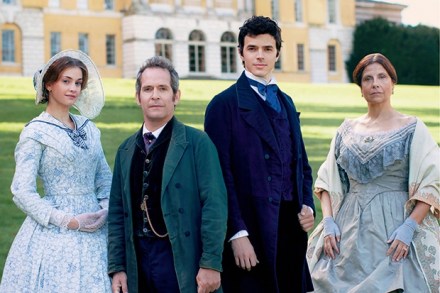
Every now and then, a costume drama comes along that’s so daringly unconventional as to make us re-examine our whole idea of what the form can achieve. ITV’s Doctor Thorne, though, isn’t one of them. Instead, Julian Fellowes’s adaptation of Anthony Trollope observes the usual rules with almost pathological fidelity. Extras dance gamely in ballrooms, scheming matriarchs stand in the way of sweet young lovers and characters express deep fury with the words, ‘Good day to you, madam.’ In the first scene, we even had a handy refresher on the genre’s use of hats as a social signifier. (Basically, toppers for the toffs, peaks for the proles.

Night moves

The Night Manager (BBC1, Sunday) announced its intentions immediately, when the opening credits lovingly combined weapons and luxury items. ‘Blimey,’ we were clearly intended to think, ‘it’s a bit like James Bond.’ True, the main character works — at this stage, anyway — in the hotel trade rather than as a secret agent. Yet, when it comes to dress sense, being irresistible to the ladies and alternating between looking suave and enigmatically purposeful, Jonathan Pine (Tom Hiddleston) has little to learn from the great man himself. Pine was first seen heading to work in 2011 through an uprising in Cairo where dozens of extras were demanding the overthrow of President Mubarak.

Doomed youth

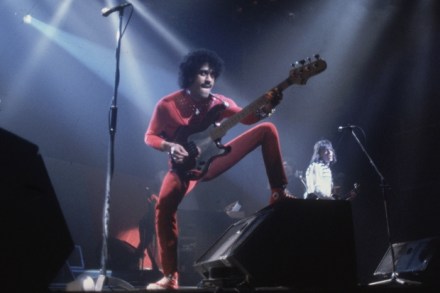
It’s often said that there are only seven basic plots in literature. When it comes to biographies of rock stars who died young, by contrast, there’s usually just the one: somebody mysteriously talented emerges from an unlikely background to achieve stardom, before being destroyed by drink, drugs and fame. Yet, as the film Amy proved last year, it’s a plot still capable of packing a real emotional punch — and, as Cowboy Song proves now, the life of Phil Lynott from Thin Lizzy embodies it more vividly than most. Certainly, there’s no faulting the unlikeliness of his background.

Marty’s way

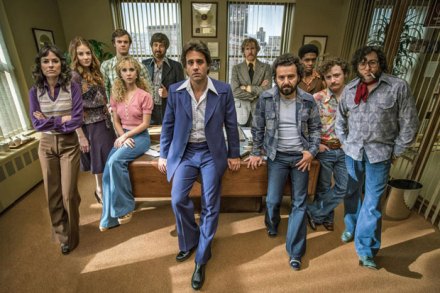
Vinyl (Sky Atlantic) — the much-anticipated series, co-produced by Martin Scorsese and Mick Jagger, about the 1970s New York record industry — began on Monday with a two-hour episode directed by Scorsese himself. The result was, as you’d expect, an exhilarating watch. So why did it also create an undeniable feeling of slight disappointment? One reason, I suppose, could just be that modern TV viewers are spoiled rotten. So many American dramas since The Sopranos have shown such a miraculous mixture of breadth and depth that the problem is no longer believing how ambitious television can be, but simply keeping up with them all. (More bloody golden eggs? Why can’t these people leave us alone to read a book?

In excess

Judging from its website, Hebden Bridge’s tourist office considers the fact that BBC1’s Happy Valley is filmed in the town something of a selling point. Personally, I can’t see why. (Perhaps points of especial tourist interest might include the cellar where Sergeant Catherine Cawood was almost battered to death, or the caravan site where drug dealers fed heroin to the teenage girl they’d kidnapped and raped.) And now that it’s back for a second series, viewers of Sally Wainwright’s Bafta-winning drama are still unlikely to confuse Hebden Bridge with, say, Chipping Norton. In Tuesday’s opening scene Catherine (Sarah Lancashire) filled in her sister on the events of her day.

Voices of St Joan

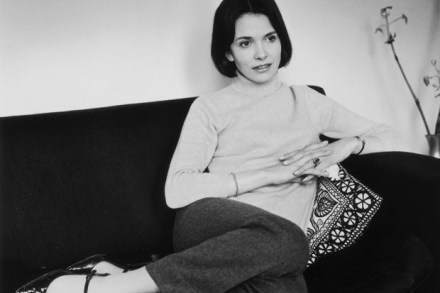
I don’t know if this counts as name-dropping, but I recently interviewed a boyhood friend of Elvis Presley’s in Tupelo, Mississippi. The interview required a bit of patience, because his memories of the young Elvis appeared only intermittently amid a lengthy ramble through more or less anything that crossed his mind. But, as it turned out, it was also good preparation for reading Stop the Clocks. Joan Bakewell published her autobiography in 2003 and this, as the subtitle suggests, is intended to be a far looser set of reflections.

Weekend world

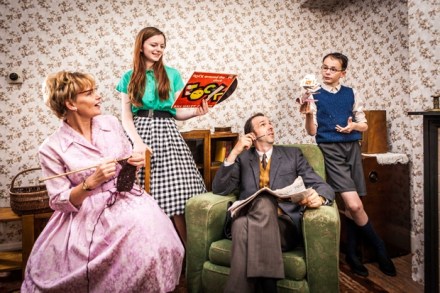
When the time comes to make programmes looking back on the 2010s, I wonder which aspects of life today will seem the weirdest. Quinoa? The fact that we were expected to be ‘passionate’ about our jobs? Being so overexcited by new technology that we constantly stared at phones? Or maybe it’ll just be how many almost identical TV series looking back on previous decades we used to watch: the kind where a family dresses up in period costume and lives for a while like people from previous eras, carefully ticking off the signifiers as they go. (Space hoppers and Chopper bikes for the Seventies, Rubik’s Cubes and shoulder pads for the Eighties.

An inconvenient truth | 28 January 2016

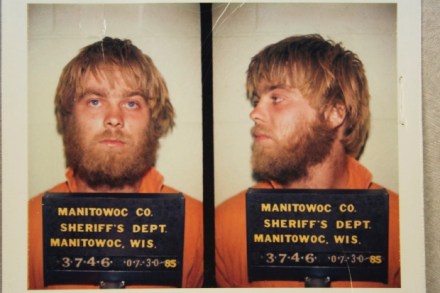
On the face of it, the Netflix documentary serial Making a Murderer should only take up ten hours of your life. Judging from my experience, though, its ten episodes will prove so overwhelmingly riveting that you’re going to need at least two more days to scour the internet in an obsessive quest for every scrap of information about the Steven Avery case — and several evenings to discuss it with any fellow viewers you can find. If the fuss about the series has so far passed you by (and if it has, it probably won’t for much longer), you may have to trust me that the story it tells — through such unspectacular old-school methods as assiduously researched footage, talking heads and the occasional caption — is from real life.

Compliance order

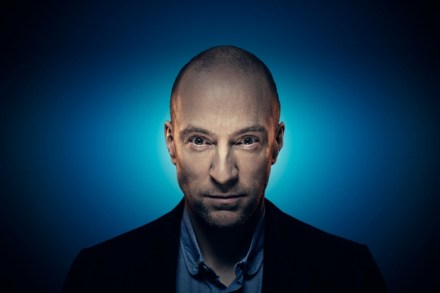
Never a man tortured by self-doubt, Derren Brown introduced his latest special Pushed to the Edge (Channel 4, Tuesday) as a fascinating psychological experiment about the dangers of ‘social compliance’ — our willingness to do what authority figures ask, however morally dubious. In fact, much of what followed was a weird, and itself rather morally dubious, mix of Candid Camera, Fawlty Towers and something pretty close to entrapment. But from time to time, it also proved, annoyingly enough, a fascinating psychological experiment about the dangers of social compliance. The central aim was fairly straightforward: to see if a member of the public could be persuaded to shove a stranger off a high roof.

United States: Deep South, full strength

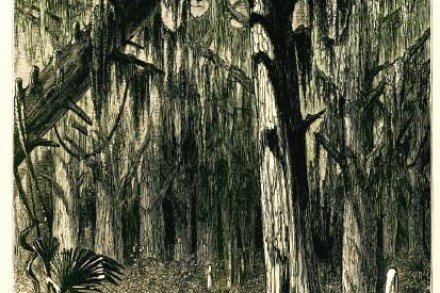
My new friends and I are sitting outside what’s fast becoming my favourite bar in the world: the Under the Hill Saloon in Natchez, Mississippi. Already one man has held forth on the presidential campaign to anyone who’d listen — which, given how entertainingly he did it (‘Donald Trump? Pure white trash’) was most of us. Another has asked me if I’ve ever fired a gun and, if not, whether I’d like to see how much fun it is. But by this stage it’s getting late, and I really should be going — except that the conversation has just turned to alligator hunting, a subject I’m unlikely to get the chance of ever discussing again. (The key, I now know, is to use rotten chicken as bait.

Losing the plot | 31 December 2015

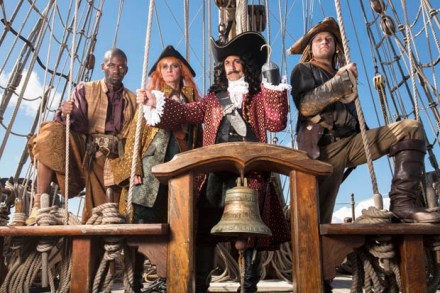
On the face of it, ITV’s Peter & Wendy sounded like a perfect family offering for Boxing Day: an adaptation of J.M. Barrie’s novel, with a framing story about how much Peter Pan can still mean to children today. In fact, though, the programme suffered from one serious flaw for any Boxing Day entertainment — if you were slightly drunk, slightly hungover or both, it was almost impossible to understand. Then again, I suspect that even the most weirdly sober of viewers might have struggled with a drama that never seemed to know the difference between the intriguingly suggestive and the utterly baffling. The opening sequence played to one of its undoubted strengths, with an introductory cameo from Stanley Tucci’s Captain Hook.

Beyond a joke | 3 December 2015

Let’s start this week with a joke: ‘You know Mrs Kelly? Do you know Mrs Kelly? Her husband’s that little stout man, always on the corner of the street in a greasy waistcoat. You must know Mrs Kelly. Well, of course if you don’t, you don’t, but I thought you did, because I thought everybody knew Mrs Kelly.’ No, I can’t claim my sides are entirely split either. Yet, according to the first episode of What a Performance! Pioneers of Popular Entertainment (BBC4, Thursday), this sort of material by the Victorian music-hall star Dan Leno marked the birth of stand-up comedy as we know and are perhaps overburdened by it today. The series’ stated aim is to explore mass entertainment from the days before television.

Everything you always wanted to know about Sixties pop —and more

It might seem an odd choice, but after reading Jon Savage’s new book, I think if I had a time machine I’d now be tempted to set its controls for 13 January 1966 and the annual dinner of the New York Society for Clinical Psychiatry. Andy Warhol had been booked to give a speech, but instead he put on a gig by the Velvet Underground and Nico at full uncompromising blast, with a couple of Factory favourites dancing alongside them. One shrink described the evening as a ‘torture of cacophony’; another — no less disapprovingly — as an ‘eruption of the id’. A third left hurriedly, with the explanation that ‘I’m ready to vomit.

Why most four-year-olds deserve to be sectioned

The first episode of Let Us Entertain You (BBC2, Wednesday) definitely couldn’t be accused of lacking a central thesis. Presenter Dominic Sandbrook began by arguing that, since its industrial heyday, Britain has changed from a country that manufactures and exports things into one that, just as successfully, manufactures and exports popular culture. He then continued to argue it, approximately every five minutes, for the rest of the programme. By way of proof, Sandbrook presented a fairly random collection of postwar Britain’s greatest hits, which served both as examples and as opportunities for some nifty wordplay designed to hammer the point home still further.

The Last Kingdom is BBC2’s solemnly cheesy answer to Game of Thrones

The opening caption for The Last Kingdom (BBC2, Thursday) read ‘Kingdom of Northumbria, North of England, 866 AD’. In fact, though, an equally accurate piece of scene-setting might have been ‘Britain, Saturday teatime, the 1970s’. The series, based on the novels by Bernard Cornwell, has been described in advance as the BBC’s answer to Game of Thrones — and, as various thesps in furs and long beards began to attack each other with swords, it wasn’t hard to see why. Yet, apart perhaps from the level of the violence, the programme’s real roots seem to belong to less sophisticated (and less expensive) shows than that: the kind set firmly in the period known as ‘yore’ and that many of us will dimly remember from our childhoods.

Was BBC1’s Rooney hagiography more scripted reality than documentary?

Close to the Edge (BBC4, Tuesday) feels very much like an idea conceived during a particularly good night in the BBC bar. Why not take the ‘scripted reality’ methods of such youth hits as The Only Way Is Essex and apply them to a group of over-65s living in Bournemouth? So it is that the chosen oldies are given one main characteristic each, and required to act out events from their own lives — events that might or might not have happened if the cameras weren’t there. Or as Tuesday’s opening caption rather optimistically put it, ‘Some of the scenes have been constructed purely for your enjoyment.’ Which scenes these were, the programme didn’t of course specify.

Talk of the devil | 24 September 2015

For years, Ian Fleming was famously self-deprecating about the James Bond books. (‘I have a rule of not looking back,’ he once said. ‘Otherwise I’d wonder, “How could I write such piffle?”’) Towards the end of his life, though, he finally produced an essay in their defence — proudly pointing out, among other things, that however fantastical the plots may become, they’re always carefully rooted in a world recognisable as our own. Of course, this is not something that can necessarily be said of all the Bond films — but it certainly applies to ITV’s new three-part thriller Midwinter of the Spirit (Wednesday), based on the novel by Phil Rickman. It also explains why the programme already feels so promising.

Cock and bull

It’s hard to know whether the actor James Norton was being naive or disingenuous when he claimed in publicity interviews for BBC1’s Lady Chatterley’s Lover that ‘We are no longer shocked that people have sex.’ Either way, the tabloids soon proved him wrong. Days before the programme went out, the Sun had duly worked itself up into a state of delighted outrage about a TV drama that was apparently ‘so steamy it borders on porn’. In the event, this proved an exaggeration wild enough to suggest that none of the journalists involved had seen the programme —or, less likely, any porn.

Will he was

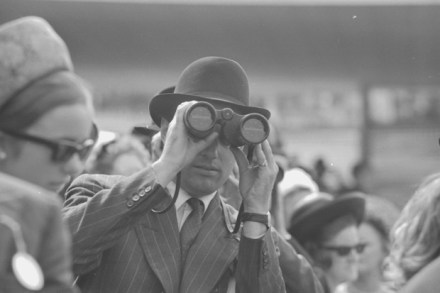
In 2011, the Daily Mail carried a long story about how the Queen’s cousin Prince William of Gloucester, who died in a plane crash aged 30, had been Prince Charles’s boyhood idol. (Our own Prince William, it claimed, was named after him.) In passing, it tactfully informed us that William’s ex-girlfriend Zsuzsi Starkloff ‘no longer wishes to be reminded of her lost love’. Well, the good news is that Zsuzsi has certainly changed her mind since. The following year she gave the Mail an interview describing their relationship in some detail. And on Thursday, she appeared in The Other Prince William: Secret History to tell all over again what Channel 4 unblushingly called ‘the untold story’ of their time together.

Sick and tired

When the link between tobacco and lung cancer was first established in the early 1950s, one obvious question arose: should doctors tell people not to smoke? These days, of course, the answer seems equally obvious — but at the time, medical opinion was divided. According to the highly distinguished Dr Erich Geiringer in a letter to the Lancet, ‘the best advice a doctor can give ...to many non-smokers’ was that ‘they should get a pipe and dissolve their ...body-destroying frustrations into blue smoke’.