James Walton

James Walton is The Spectator’s TV critic

Psycho thriller

From our UK edition

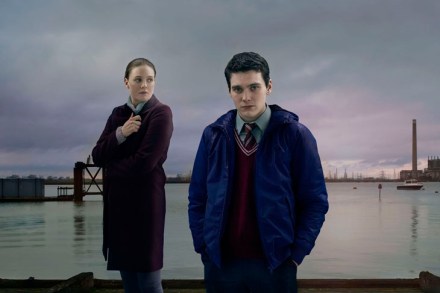
Psychological thrillers — or ‘thrillers’ as they used to be known — have become almost as ubiquitous on television as they are in the average bookshop. On the whole, this is now a genre where contented domesticity exists solely to be undermined, and where the chief function of the past is to come back and haunt people — which is clearly what it’s going to do in Channel 4’s Born to Kill, even if Thursday’s increasingly intriguing first episode was in no hurry to explain exactly how. To begin with, 16-year-old Sam (Jack Rowan) seemed to be on a solo mission to overturn all preconceptions about teenage boys.

Age as allegory

From our UK edition

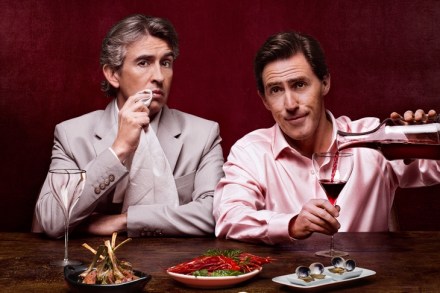
Sky Atlantic — available only to Sky customers — has the cunning/infuriating policy of broadcasting the kind of programmes most likely to appeal to people who pride themselves on not being Sky customers. (Basically, the liberal, metropolitan you-know-what.) Now, to a list that includes Veep, Curb Your Enthusiasm, Girls and Last Week Tonight with John Oliver, we can add The Trip, whose third series Sky has poached from the BBC. Like the first two — set in the Lake District and Italy — The Trip to Spain (Thursday) is directed by Michael Winterbottom and features Rob Brydon and Steve Coogan playing versions of themselves that feel teasingly close to the truth.

The man who’s read everything

From our UK edition

According to Martin Amis in The Information, the last person to have read every book ever published was Coleridge. Faced with More Alive and Less Lonely, though, you might wonder whether there’s a new candidate in town. Certainly, Jonathan Lethem’s mind seems not so much well-stocked as bursting at the seams. A few of the 70-odd pieces gathered here do concern such mainstream figures as Dickens, Kafka and Melville (where Lethem appears to know all the books not just by, but also about, them). But many of the others may have even the most erudite of readers heading sheepishly for Google, as he considers the work of say, Russell Greenan, Bernard Wolfe or Tanguy Viel.

An original and brilliant show: Loudon Wainwright III at Leicester Square Theatre reviewed

From our UK edition

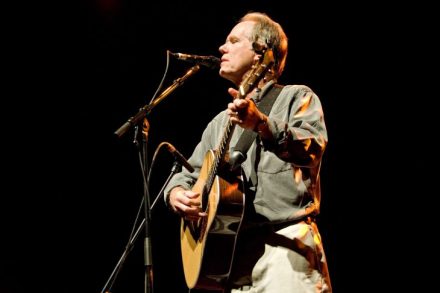
Loudon Wainwright III: Surviving Twin Leicester Square Theatre Even by the standards of his fellow confessional singer-songwriters who emerged alongside him in the 1970s, Loudon Wainwright III has spared us very little over the years about his marriages, divorces, affairs and — not surprisingly in the circumstances — his often troubled relationships with his children. (Two of those children, Rufus and Martha, have also exercised their right to reply, perhaps most memorably in Martha’s song ‘Bloody Mother Fucking Asshole’.) In this original and brilliant new show, he’s still at it — although this time the primary focus is on his relationship with his own father, who wrote for Life magazine from the early Sixties until his death in 1988.

Beyond belief | 23 March 2017

From our UK edition

As we know from all those newspaper articles and actress interviews, there’s a scandalous lack of high-profile British TV dramas starring women over 40. Indeed, if it wasn’t for No Offence, Unforgotten, Silent Witness, Last Tango in Halifax, The Fall, NW, Agatha Raisin, Broadchurch, Happy Valley and Apple Tree Yard, there’d really only be Vera, which returned to ITV on Sunday. The Vera in question is DCI Vera Stanhope, who, in the teeth of fierce competition, may well be the most implausible cop on television — even if she does fit snugly into a thriving sub-genre featuring sharp but kindly policewomen whose male colleagues spend much of the time shaking their heads in disbelieving admiration.

On the money | 9 March 2017

From our UK edition

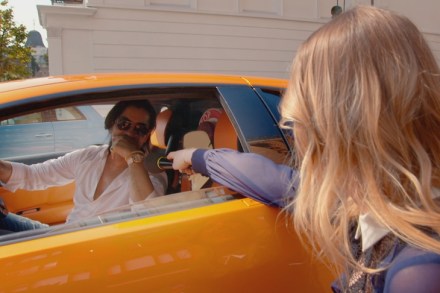
Fans of tough investigative journalism should probably avoid Channel 4’s How’d You Get So Rich? Presenter Katherine Ryan’s main tactic is to ask wealthy people how much they paid for something and, when they tell her, to repeat their answer in a tone of wondering admiration. Yet, despite her best efforts to keep it shallow, the programme does end up shedding some light on our peculiar attitudes to the very rich — and in particular our capacity to feel superior and inferior to them at the same time. Ryan, a Canadian comedian who’ll be familiar to anybody who’s watched virtually any panel show, began Monday’s opening episode at the Shropshire pile owned by Steve Smith, the founder of Poundland.

Occupational hazard

From our UK edition

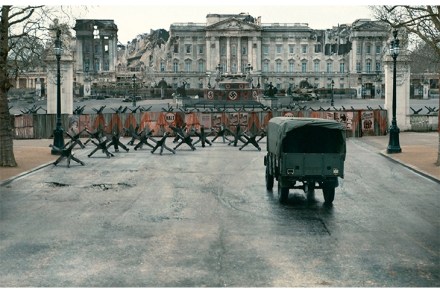
Rival law-enforcement agencies arguing about which of them should investigate a murder has, of course, been a staple of crime dramas for decades. Rather less common, though, is for the agencies in question to be the Metropolitan Police, the Gestapo and the SS. SS-GB (BBC1, Sunday), based on Len Deighton’s novel, poses the undeniably interesting question of what this country would have been like in 1941 if Germany had won the Battle of Britain. Its primary answer is that — in every way — it would have been very murky indeed. Again, plenty of crime dramas over the years have created a suitably noirish atmosphere, while cunningly saving on the lighting budget at the same time.

Tricks of the trades

From our UK edition

Oddly enough, one of the most historically influential pieces of British writing has turned out to be an essay that appeared in the June 1800 issue of the Commercial, Agricultural and Manufacturers Magazine. Over the preceding decades, there’d been much anguished debate about the size of the country’s population. Many commentators were convinced that, thanks to the gin craze, it was in potentially disastrous decline. Others, led by Thomas Malthus, were convinced that it was on the potentially disastrous rise. The biggest question of all, though, was what the population actually was, with most estimates — or, as it transpired, wild guesses — ranging from four million to six million.

Impaired vision

From our UK edition

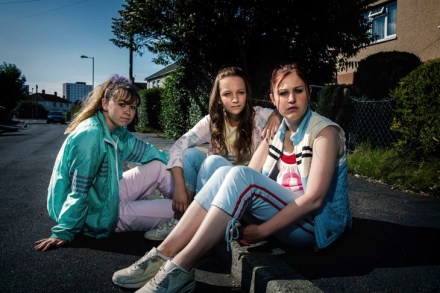
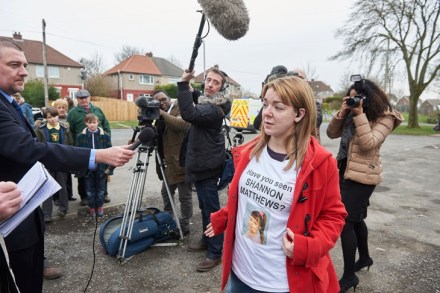
With the Shannon Matthews story, it’s not easy to accentuate the positive — but BBC1’s The Moorside (Tuesday) is having a go nonetheless. Although touching at times, the result ultimately proves a rather awkward watch. Shannon was nine when she went missing from the Moorside estate, Dewsbury, in February 2008. Her mother Karen made a tearful televised appeal for the return of ‘my beautiful princess daughter’, but ended up serving four years in jail for being an accomplice in Shannon’s kidnapping. With her chaotic taxpayer-funded life, and her seven children by five fathers, Karen was duly turned into a sort of anti-poster girl for the tabloids. The Moorside itself became a symbol, including for David Cameron, of ‘our broken society’.

Hull’s a poppin’

From our UK edition

In early January, lastminute.com recommended its top 15 destinations for 2017. In 12th spot, just above Montreal, Croatia and Japan, was Hull. And if you’re tempted to opt for a snooty chuckle at this point, my advice would be to go to Hull — because, judging from my recent experience, even on a cold January weekend, the place is buzzing with a hugely infectious, if still slightly bashful, sense of rediscovered civic pride. ‘I’ve lived here for 50 years,’ one man told me, ‘and this is the greatest thing that’s happened to the city in my time.’ The ‘this’ he’s referring to is, of course, Hull’s status as the UK City of Culture for 2017.

Adult entertainment | 26 January 2017

From our UK edition

The mid-life crisis novel, I think it’s fair to say, is traditionally a male form. But in Louise Doughty’s Apple Tree Yard, the person feeling a bit trapped in what might seem a pretty nice life — while also fretting about how much (or how little) sex the rest of it will contain — is fiftysomething Yvonne Carmichael: wife, mother and all-round radiator of female competence. In BBC1’s adaptation of Apple Tree Yard (Sunday), Yvonne was first heard giving us a brief meditation on the provisional nature of civilised behaviour — a voiceover, it turned out, being delivered as she travelled in the back of a prison van.

Shall we dance?

From our UK edition

‘Blimey! How on earth did they think of that?’ is unlikely to be anyone’s response to Our Dancing Town (BBC2, Tuesday). A few years ago, The Great British Bake Off was adapted into The Great British Sewing Bee by the simple process of fitting another domestic activity to the same formula. Now — after what I imagine was a brain-storming session lasting approximately 30 seconds — the BBC has taken the idea, structure and tone of Gareth Malone’s singing programmes and applied them to a series about dance. Enthusiastic evangelist for the life-changing potential of his chosen art form? Lots of initial sceptics dolefully shaking their heads and insisting that it can’t be done?

Weird and wonderful | 29 December 2016

From our UK edition

As you’ve probably noticed, TV critics spend a lot of their time trying to identify which other programmes the one they’re reviewing most resembles. Sadly, in the case of BBC2’s The Entire Universe, this noble quest proved futile. Written and emceed by Eric Idle, the show did contain plenty of familiar television elements: songs, dance troupes, Warwick Davis making jokes about how small he is, a lecture by Professor Brian Cox on the nature of the cosmos. Yet the way it mixed them together was so unprecedentedly odd that it may well have made the average Boxing Day viewer feel they must be drunker than they thought.

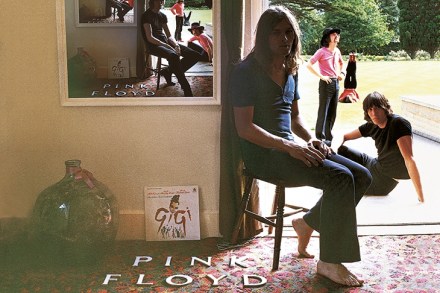
Spectator Books of the Year: Why 1971 was the golden year for rock

From our UK edition

Lionel Shriver’s The Mandibles: A Family, 2029–2047 (Borough, £16.99) is set in a bankrupt America where the middle classes are foraging to survive. All aspects of the dystopia are thoroughly and chillingly imagined — but without ever losing the psychological plausibility of a gripping family saga. My other favourite novel was Jonathan Unleashed (Bloomsbury, £14.99), Meg Rosoff’s first work for adults. For some writers, twentysomething Jonathan’s inability to ‘cross the huge gulf between childhood and adulthood’ might be evidence of male inadequacy. Rosoff, though, shows how right he is to be scared about growing up, in an exhilarating read that makes abiding pessimism very funny indeed.

Closing credits

From our UK edition

BBC1’s The Missing has been one of the undoubted TV highlights of 2016. Yet, even thrillers as overwhelmingly thrilling as this one have been known to blow it in the concluding episode, when the biggest revelation of the lot turns out to be that the writers couldn’t really answer all the questions that previous episodes had so intriguingly raised. And of course, The Missing had raised more than most, with its fiendish plotting ranging across three timeframes — until last week, that is, when it added a fourth. So could Wednesday’s finale possibly avoid giving us that sense of outraged disappointment that comes from realising we’ve spent weeks looking forward to a full-scale solution that never quite comes?

Pandora’s box

From our UK edition

While I’ve read plenty of books worse than Television: A Biography, I can’t immediately think of any that were more disappointing. After all, here’s David Thomson — a film critic about whom it’s hard not to use the word ‘doyen’ — looking back on more than 60 years of TV viewing for what should be a magisterial summation of the whole medium. Yet, although some of his analyses of individual shows are as sharp as ever, the overall result is often contradictory, occasionally incomprehensible and at times plain weird. At first, it seems as if the main problem will merely be the traditional snootiness of the intellectual movie buff towards telly, and the damage it supposedly does to all of us by offering only mind-numbing reassurance.

Old stamping ground

From our UK edition

If I tell you that on Monday there was an hour-long documentary about the history of stamp-collecting, then you probably don’t need this column’s usual bit in brackets saying which channel it was on. Indeed, at times Timeshift: Penny Blacks and Twopenny Blues seemed determined to be the most BBC4-like programme in the history of BBC4: cheerfully niche, heroically indifferent to all notions of cool and so old-school in its production style that any mention of France was introduced with a blast of accordion music. Above all — and unlike so many other documentaries elsewhere — it was wholly confident that its viewers would be interested in interesting things without having to be shrilly reminded every few minutes of how interesting they are.

Losing heart | 3 November 2016

From our UK edition

In 2015, the first series of Humans (Sunday) was apparently Channel 4’s most watched home grown drama since The Camomile Lawn: a programme broadcast when Neil Kinnock was still the Labour leader and given a obvious ratings boost by the tabloid outrage about its many nude scenes (and by its many nude scenes). In the case of Humans, though, the British people can’t be accused of ulterior motives, because this is a winningly intelligent piece of sci fi that ponders, among other things, the nature of consciousness and the future of the human race. Cleverly, too, it’s set, not in a domed city of jet packing commuters, but in a world very like our own.

Digging for the truth

From our UK edition

The discovery of Tutankhamun’s tomb may well be one of the 20th century’s great stories — but naturally that doesn’t mean a television drama won’t want to jazz it up a bit. Or, in the case of ITV’s lavishly produced but distinctly corny Tutankhamun, quite a lot. The programme gives us a Howard Carter younger and considerably hunkier than in real life. It throws in a couple of smitten hotties to emphasise the fact. Above all, it transforms Carter into the archaeological equivalent of a maverick TV cop: a man who doesn’t play by the rules, isn’t afraid to follow wild hunches but, by God, gets results.

Too good to be true

From our UK edition

The McNulty family in the novels of Sebastian Barry have a definite claim to be one of the unluckiest in all fiction. After serving with the Brits in the first world war, the main character in The Where-abouts of Eneas McNulty is branded a traitor to Ireland, and spends the rest of his days in bleak and terrified exile. In The Secret Scripture, his sister-in-law Roseanne is locked up for life in a Sligo mental asylum for having an illegitimate baby (that’s taken from her). In The Temporary Gentleman, Eneas’s brother Jack is an ageing alcoholic reflecting on the failure of virtually everything he’s ever done.