James Walton

James Walton is The Spectator’s TV critic

Recipe for success | 3 May 2018

From our UK edition

From time to time, a TV show comes along which is so thrillingly original, so wildly imaginative, that you can’t even begin to think where the makers got the idea. Britain’s Best Home Cook (BBC1, Thursday) isn’t one of them. Nevertheless, it has a serious claim to being the most important new programme of the week — if only to the BBC which, despite the failure of The Big Family Cooking Showdown (whose title I just had to check via Google), clearly hasn’t given up on the possibility of finding a way to replace The Great British Bake Off. But in fact there’s another series that some viewers might feel is lurking in the background here — and that’s W1A.
Obsession and obfuscation

From our UK edition

The target audience for David Peace’s new novel appears almost defiantly niche. Certainly, any readers in the embarrassing position of not being entirely up to speed on the life and works of the Japanese writer Ryunosuke Akutagawa (1892–1927) seem destined — even intended — to find Patient X a less than alluring combination of the tediously baffling and the bafflingly tedious. Peace’s fact-based fiction has always demanded a fair amount of patience and concentration, with obsession serving as both his subject matter and his method.

The great pretenders | 19 April 2018

From our UK edition

For a while now, the Korowai people of Western Papua have been the go-to primitive tribe for documentary-makers. The Korowai were unknown to the outside world until the 1970s — but they’ve certainly made up for it since, with their Stone Age tools, jungle treehouses and penis gourds becoming almost as familiar to TV viewers as Brian Cox on top of a mountain. No wonder, then, that Will Millard’s introduction to My Year with the Tribe (BBC2, Sunday) smacked of mild desperation as he sought to distinguish his new series from its many predecessors. (No fixers laying on anything in advance! Not just one snapshot of Korowai life, but four over 12 months!) In the event, however, he needn’t have worried.

Friday night refreshment

From our UK edition

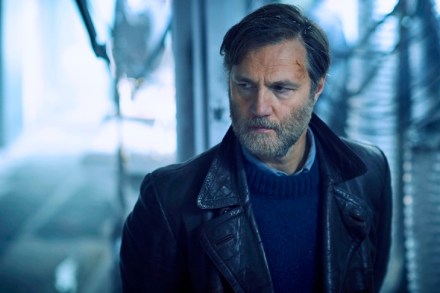
BBC2 has a new drama series for Friday nights. The main character is a world-weary middle-aged police inspector with an unshakeable commitment to smoking. His work partner is a feisty female officer in her twenties who combines salt-of-the-earth irreverence with being a damn good cop. Between them, they’re investigating the murder of an attractive young woman who their colleagues immediately assumed was a prostitute, and whose death reminds the inspector of a previous investigation that continues to haunt him — which is why his boss is constantly trying to take him off the case. But if this makes you think that The City & The City is yet another identikit crime drama, then you couldn’t be more wrong.

Sunday best

From our UK edition

For as long as I can remember, Sunday nights have been the home of the kind of TV drama cunningly designed to warm the sternest of heart cockles. Think, for example, of Robert Hardy cheerfully bellowing his way through almost every scene of All Creatures Great and Small (‘PASS THE SALT, JAMES!’). Or of Pop Larkin’s impressive commitment to chuckling indulgently in The Darling Buds of May. Or of Heartbeat somehow racking up 372 episodes. Even so, ITV has now taken this tendency to surprising new lengths, with not one but two Sunday-night dramas that run consecutively and contain such traditional elements as gorgeous sun-dappled scenery, cute animals, gruff old-timers with hearts of gold and any number of lovable eccentrics. First up, at 8 p.m.

Fashion victim

From our UK edition

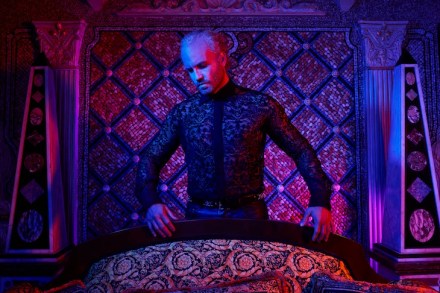
By common consent, including Bafta’s, The People v. O.J. Simpson: American Crime Story was one of the best TV dramas of 2016. Produced by Ryan Murphy, it laid out the story in a beautifully clear, largely chronological way that made us appreciate, all over again, just how strange the whole O.J. business was — not least thanks to the wider social forces at work. Now, we’ve got The Assassination of Gianni Versace: American Crime Story (BBC2, Wednesday), also produced by Ryan Murphy and also tackling an event from the 1990s that manages to seem both shockingly particular and neatly revealing of more general trends. At which point, all similarities end, because here Murphy (who also directed the first episode) takes a far more fragmented and less viewer-friendly approach.

Losing the plot | 22 February 2018

From our UK edition

ITV’s Marcella (Monday) represents another triumphant breakthrough in the portrayal of female cops on television. Of course, thanks to more or less every other crime show around, we already know that women in their forties can be senior police officers. But what Marcella makes even clearer than, say, Vera or No Offence is that so can women in their forties who are entirely unsuited to being senior police officers. For a start, the eponymous heroine suffers from regular mental collapses during which she often turns violent before handily forgetting — and forgiving herself for — anything bad she may have done. She also seems to specialise in cases where she hasa deep personal involvement that might cause a lesser woman to worry about a conflict of interests.

Girls on film

From our UK edition

To mark the 100th anniversary of women’s suffrage — if a little oddly — Channel 4 on Tuesday brought us a special girls-only edition of The Secret Life of Five-Year-Olds. The cast were a mix of new faces and old hands from previous series: among them Jet who, like a primary-school version of a traditional Hollywood actress, has been playing a five-year-old on the show since 2016. Still, you can see why the producers keep calling — because, by now, Jet has got the tomboy role required of her down pat. ‘It’s hard to make friends with just girls,’ she declared early on, hitting the word ‘girls’ with exactly the right degree of scornful emphasis.

Old hat | 25 January 2018

From our UK edition

These days, when it comes to people who used to be on the telly, the answer to the classic newspaper question ‘Where are they now?’ tends to be a fairly predictable one: they’re still on the telly — if, that is, you look carefully enough. They’re also quite likely to be travelling abroad with a few of their peers while wearing a large hat. The BBC started the trend — possibly even the genre — with The Real Marigold Hotel. ITV has provided the weirdest example so far, with Gone to Pot, in which the likes of Christopher Biggins and Pat Butcher from EastEnders investigated the legalisation of marijuana in California by smoking bongs and giggling a lot.

Thinking outside the box

From our UK edition

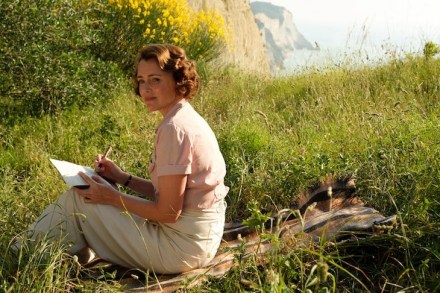
These days a genuinely controversial TV drama series would surely be one with an all-white, male-led cast that examined the problems of a bunch of middle-class people. (Just imagine the Twitter outrage!) But while we await that — possibly for a while yet — we’ve now got two highly promising new shows of the more approved ‘controversial’ kind: where racial issues are tackled in a thoughtful and scrupulously responsible way. Kiri (Channel 4, Wednesday) has the distinct advantage of starring Sarah Lancashire, whose character Miriam proves that TV mavericks needn’t always be doctors, lawyers or cops. They can, it seems, also be social workers. So it was that Miriam was first seen adding something a little stronger to her breakfast coffee.

Men behaving badly | 13 December 2017

From our UK edition

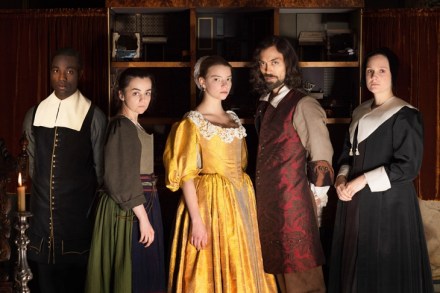
BBC1’s The Miniaturist (26/7 December) is a lavish two-part adaptation of Jessie Burton’s bestseller. It’s also further proof that almost any geographical and historical setting can be conscripted to tell us what’s apparently the only story we’re interested in these days: an alliance of plucky and unfailingly virtuous black people, gay people and women taking on the repressive forces of straight white blokes. The main character, Nella (Anya Taylor-Joy), is ostensibly a young 17th-century Dutchwoman who’s been married off to a rich Amsterdam merchant. On closer inspection, though, she turns out to be a 21st-century feminist who’s somehow been transported back in time to show our benighted forebears the error of their patriarchal ways.

Easy on the hard stuff

From our UK edition

It’s one of the more mysterious features of human history that people of every era and in almost every place have regularly striven to reduce their intelligence, impair their reflexes and generally ensure that everything about them functions far less well. So what is about getting drunk that we love so much? According to Mark Forsyth’s breezy new book, the best answer comes from somebody not often thought of as a classic roisterer: William James, the American philosopher and brother of Henry. ‘Sobriety,’ James wrote, ‘diminishes, discriminates, and says no; drunkenness expands, unites, and says yes.’ And the way Forsyth tells it, drink has caused us to say yes to an awful lot.

Living dolls

From our UK edition

This week on Channel 4, we watched a cheery 58-year-old American engineer called James going on a first date. He was meeting Harmony, an extravagantly shapely blonde who was obliging enough to be wearing a low-cut crop top and tiny shorts, and who greeted him with a charming smile. After a spot of small talk and a dumb-blonde joke, she then alternated between assuring him how great he was and inviting him to masturbate over her. ‘You’re awesome,’ a visibly smitten James declared — apparently not at all bothered that Harmony was a robot.

Adult entertainment | 16 November 2017

From our UK edition

Any readers of the Sun who excitedly tuned in to Howards End on Sunday night with their pause button at the ready will, I fear, have been in for a disappointment. Before the programme went out, the paper had assured them that this new BBC1 adaptation would ‘do a Poldark’, with ‘a hot cast’ providing ‘a sexed-up remake’ of the 1992 Merchant Ivory film. (The sub-editors may have missed a trick by not headlining the piece, ‘It’s E.M. Phwoar-ster!’) In the event, what they got was a quietly thoughtful exploration of Edwardian intellectual life. The first episode, in fact, didn’t differ very much from the non-sexed-up film version — and when it did, it was generally by being even more faithful to the book.

Paradise lost | 2 November 2017

From our UK edition

Anybody who wants to maintain a strong and untroubled stance against mass migration to Europe should probably avoid BBC2’s Exodus: Our Journey Continues. In theory, the case for limiting the numbers may be more or less unanswerable — but this is a joltingly uncomfortable reminder of what it can mean in practice. Any viewers suspicious of the BBC’s pinko tendencies will presumably have noticed that all the refugees we’ve met so far are completely lovely. Yet, faced with Thursday’s episode, even they might have found it tricky to preserve a steely primacy of head over heart. Or not to notice that these are people very much like us — only a lot unluckier in where and when they were born.

Amazing Grace

From our UK edition

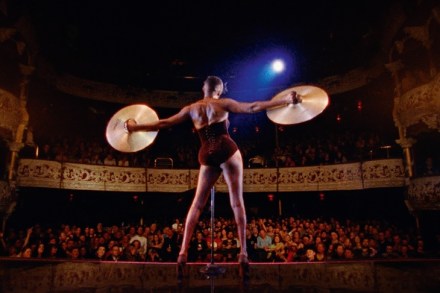
In the first scene of this distinctly odd documentary, Grace Jones meets a group of fans, who squeal with delight at the sight of her and nearly pass out with excitement when they hear her speak. And that, I suspect, is the effect which the film confidently expects to have on the rest of us. OK, it seems to be saying, so you’re not going to learn how Jones got from the Jamaican childhood we see her revisiting to the globetrotting life we see her living now. OK, so there’s no structure, sometimes no clue as to where scenes are taking place or who the other people in them might be — and for quite a lot of the time she’s just pottering around not doing very much. But look! It’s Grace Jones!

Saints and sinners | 19 October 2017

From our UK edition

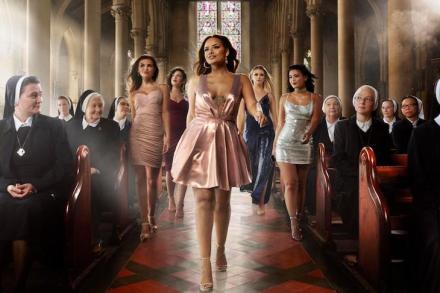
Any rival reality-TV makers watching Channel 5 on Thursday will, I suspect, have been both mystified and slightly embarrassed at not having thought up Bad Habits, Holy Orders themselves. After all, the concept is a blindingly obvious one. Take five young women whose primary interests are selfies, booze and clubbing and make them live like nuns for a month. And not metaphorically either: the five are staying with the Daughters of Divine Charity at the Convent of the Sacred Heart in Swaffham, where days filled with prayer, reflection, manual work and wholesome play end at a 10 p.m. bedtime.

Gleaming pictures of the past

From our UK edition

If you think you know what to expect from an Alan Hollinghurst novel, then when it comes to The Sparsholt Affair, you’ll almost certainly be right. Once again, Hollinghurst explores British gay history by plunging us into haute bohemia over several decades of the 20th century. (A few years ago he told an interviewer that the main characters in his next book ‘will all be more or less heterosexual’: a plan that sounded pretty unlikely at the time and, seeing as this is his next book, was evidently abandoned.) Once again, he combines his broad sweep with plenty of equally impressive close-up analysis — and all in prose that manages to be both utterly sumptuous and utterly precise.

Mourning glory

From our UK edition

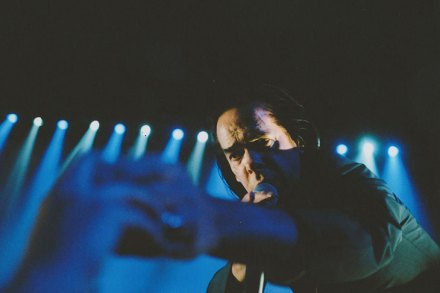
  On the face of it, Nick Cave & the Bad Seeds aren’t exactly a natural fit with the O2. Cave’s songs range from the thrillingly cacophonous to the quietly lovely. But with their recurring themes of death, violence and religion, and a muse that rarely leads Cave in the direction of the mainstream, very few have ever seemed particularly arena-friendly. And that was before his latest album, Skeleton Tree, which forms the basis of his current tour — and which Cave completed after his 15-year-old son Arthur died falling from a cliff in Brighton. Cave has warned against seeing the album as a direct response to the tragedy, emphasising that many tracks were written before it happened.

Playing it safe | 5 October 2017

From our UK edition

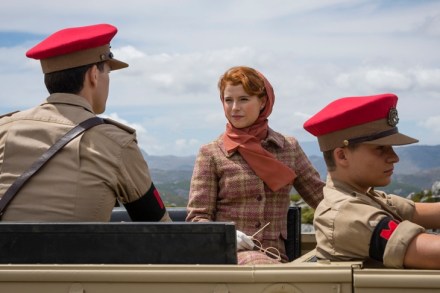
BBC1’s latest Sunday-night drama The Last Post, about a British military base in Aden in 1965, feels like a programme on a mission: that mission being to avoid getting shouted at by either the Guardian or the Daily Mail. To this (possibly doomed) end, it goes about its business very gingerly, with an almost pathological devotion to balance, and a safety-first reliance on the trusty methods of the well-made play, where each scene makes a single discrete point and the characters are as carefully differentiated as the members of a boy band. The first episode opened with the base’s new captain landing at Aden airport with his wife. ‘It must be a hundred degrees,’ she said scene-settingly as they descended from the plane.