James Walton

James Walton is The Spectator’s TV critic

Mummy porn

From our UK edition

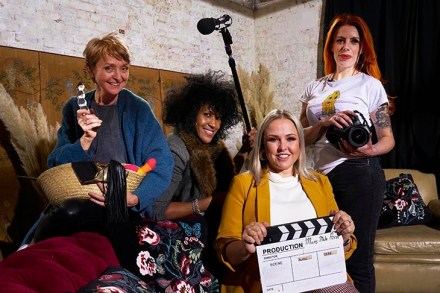
What can parents do about the avalanche of pornography available to their children on tablet, phone and laptop? This question was the starting point for a documentary series that began on Wednesday — and the answer proved unexpected. Having gathered five mothers together and shown them a hair-raising selection of online filth, the programme blithely declared that the best way for these women to ‘make a change’ was ‘by making their own mum-approved porn film’, which they’d then screen for their families and friends. If this premise struck anyone involved in Mums Make Porn (Channel 4, obviously) as at all questionable, they didn’t mention it.

Comedy returns

From our UK edition

BBC2’s MotherFatherSon announced its status as a classy thriller in the traditional way: by ensuring that for quite a long time we had no idea what was going on. At first it looked as if the focus would be on a missing teenager whose phone we saw abandoned in the woods. But then we cut to an American called Max (Richard Gere, no less) arriving in London by private jet on an apparent mission to choose our next prime minister. Then to a younger man running fast and screaming. Then to a veteran female journalist being sacked — and not only because she’d just lit a cigarette at her desk. Then back to the young screamer, who by now had revealed himself as the newspaper’s coked-up editor. Then to a woman working in a homeless centre.

Take drugs, write songs

From our UK edition

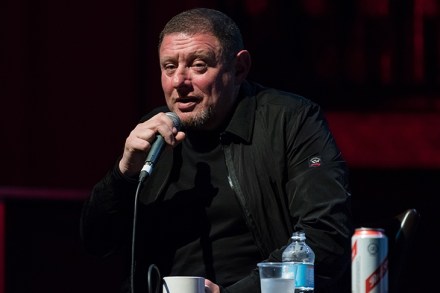
If you’re unsure whether Shaun Ryder’s lyrics for Happy Mondays and Black Grape really deserve the full Faber-poetry treatment, then you’re not alone. So, it seems, is Shaun Ryder. ‘I… wouldn’t call myself a poet,’ he writes in the preface, adding characteristically that ‘I’ve never put myself forward as an anguished wordsmith… like fucking Morrissey.’ It’s also unlikely that his work would have appealed much to Faber’s original poetry editor T.S. Eliot — not when the very first lyric contains the phrase, ‘Jesus is a c***’.

Let’s twist again

From our UK edition

What’s the best way to start a six-part thriller? The answer, it seems, is to have a bloke of a certain age pottering about at home when he’s suddenly and shockingly murdered by asphyxiation. You then roll the opening credits, forget about the dead guy and introduce the main character, who’s asked to take part in some sort of mission — and agonises about whether to accept or to leave the whole series somewhat stranded. At least, this is exactly what happened in both of this week’s big new Sunday-night dramas: BBC1’s Baptiste and Channel 4’s Traitors.

A romp through royal hits and misses

From our UK edition

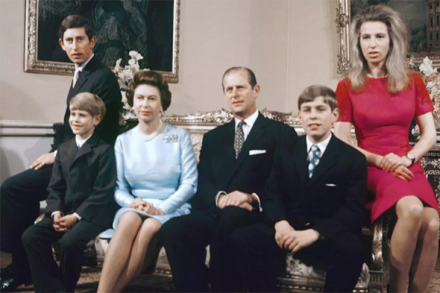
You might well expect a royal documentary on Channel 5 to be unashamedly gossipy. You might also expect it to go for the simultaneous possession and eating of cake — lamenting the endless scrutiny the poor Windsors are subject to, while adding a fair amount of its own. What you mightn’t expect, however, is for the presenter to be Jeremy Paxman. But in Paxman On The Queen’s Children all three things are true. Stranger still, the result is undeniably enjoyable, thanks largely to Paxo himself, who comes across rather as Robert De Niro did in films like Meet the Fockers: as a man who, after decades of the serious stuff, is visibly having fun slumming it for a while.

The man who would be king

From our UK edition

Last year on Who Do You Think You Are?, Danny Dyer — EastEnders actor and very possibly Britain’s most cockney man — discovered that he was a direct descendant of Edward III. Luckily, nobody had the heart to tell him that for somebody of English stock the chances of not being are estimated at 0.0000000000000000000000000001 per cent, and Dyer reacted with a memorable mix of excitement, delight and overwhelming pride. Now, in the two-part Danny Dyer’s Right Royal Family, both he and BBC1 are milking his regal lineage for all it’s worth in what might well be the oddest TV show of recent times.

Beat it

From our UK edition

Here’s a tricky quiz question for you. What word completes this sentence from a BBC4 documentary on Friday: ‘The world as we know it was created by the…’? The answer, bizarrely enough, is ‘backbeat’ — because the documentary in question was On Drums… Stewart Copeland!, in which the former Police percussionist took a fiercely drum-centric view of well, more or less everything. This was a programme, for example, that compared Elvin Jones’s stick work for John Coltrane to Moses’s parting of the Red Sea; that attributed the Beatles’ success largely to Ringo; and that put forward Dee Dee Chandler as one of the key figures of 20th-century global history.

The write stuff | 3 January 2019

From our UK edition

Given their track record, you might think that Dick Clement and Ian La Frenais would be spared the struggles that lesser screenwriters go through to see their writing on screen. But this, it turns out, would be naive. Clement and La Frenais may have written some of the best-loved programmes in British television history: Auf Wiedersehen, Pet; Porridge; The Likely Lads; Whatever Happened to the Likely Lads? Their CV may contain the huge hit film The Commitments — as well as more recently acclaimed TV dramas like The Rotters’ Club and Archangel. Yet, when I meet Clement on a solo visit to London, the two most striking things about him are how driven he remains at 81, and how driven he apparently needs to be.

Heaven knows we’re miserable now

From our UK edition

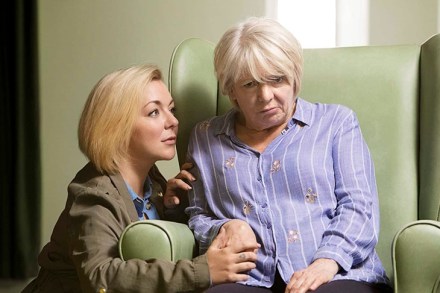
Jimmy McGovern’s one-off drama Care (BBC1, Sunday 9 December) began with a loving grandmother called Mary having a lovely time with her loving grandchildren. During a laughter-filled visit to the chip shop, she also tested their maths by asking how much their order would cost, and they answered with impressive aplomb. So could it be that McGovern — whose previous work (The Lakes, The Street, Broken etc.) has never been difficult to distinguish from a ray of sunshine — was getting into the festive mood? Well, no. As she drove away from the chippy, Mary slumped forward on to the steering wheel as the children screamed and the car headed towards a roadside skip.

Secrets and lies | 29 November 2018

From our UK edition

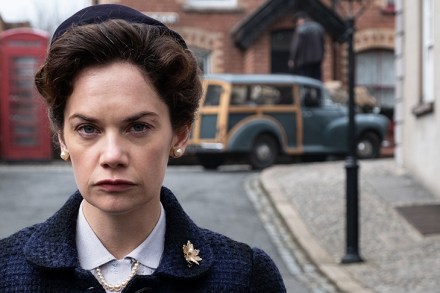
Shortly before her husband’s funeral, the undertaker told the eponymous main character in Mrs Wilson (BBC1, Tuesday) that, ‘We’re here to make this tragic time as straightforward as possible.’ By then, though, we already knew this remark was the kind that, in a school set book, would soon be underlined with the words ‘Dramatic irony!!’ written in the margin. That’s because in its quiet way — devoid of both globetrotting locations and international terrorism — Mrs Wilson is as tangled and morally ambiguous as The Little Drummer Girl. The opening episode began in the far-off days of 1963: so far off, in fact, that Alison Wilson (Ruth Wilson) was first seen nipping home from her office typing pool to make lunch for her husband Alec.

Monkey business | 15 November 2018

From our UK edition

The opening episode of BBC1’s Dynasties — the new Attenborough-fronted series from the Natural History Unit — introduced us to ‘a territory ruled by a strong and determined leader: an alpha male known as David’. Despite what you might think, though, this wasn’t a reference to the Natural History Unit itself, but to a troop of chimps in Senegal, whose power struggles unfolded on Sunday in an almost Shakespearean way. As ever, Sir David started by demonstrating that he can still handle a spot of location shooting, in this case bellowing a few lines from a jeep speeding across the African savannah. But after that, he was again content simply to supply an authoritative voice-over and the occasional joke.

Her dark materials | 1 November 2018

From our UK edition

The Little Drummer Girl (BBC1, Sunday) is the new John le Carré adaptation from the production company that brought us The Night Manager. It’s also directed by Park Chan-wook from South Korea, a man generally referred to by film buffs as an ‘auteur’. All of which may be just as well, because with a less distinguished pedigree, the first episode might possibly have seemed a bit corny. The opening section, for example, featured the impeccably complicated delivery of a Palestinian bomb to the Bonn residence of a Jewish attaché in 1979, and would, I’m fairly sure, have proved exciting enough without being cunningly overlaid by a series of loudly ticking clocks.

Novel gazing

From our UK edition

At the beginning of Barneys, Books and Bust Ups: 50 Years of the Booker Prize (BBC4), Kirsty Wark’s voiceover promised us ‘a tale of fierce rivalries, bruised egos and, most importantly of all, countless brilliant books’. In the event, though — as the title perhaps suggested — those countless brilliant books proved rather less important to the programme than Kirsty’s edifying words had led us to believe. At one point, it noted in passing that Midnight’s Children is a very good novel. At another, it lamented the melancholy fact that Booker ‘voting intrigue and judges’ fallings-out’ have sometimes overshadowed ‘the books themselves’.

Mother’s ruin

From our UK edition

It’s a radical thought I know, but I sometimes wonder what it would be like if a new TV thriller began by carefully introducing the characters and basic situation, before proceeding chronologically from there. In the meantime, though, there’s BBC1’s The Cry, which didn’t just start with the traditional blizzard of time-shifts, but continued like that for the next hour. In one of the more prolonged of Sunday’s many opening scenes — it lasted at least 60 seconds — main character Joanna (Jenna Coleman) explained to an unseen listener that ‘that’s when this began, with two faces’.

What Phoebe did next

From our UK edition

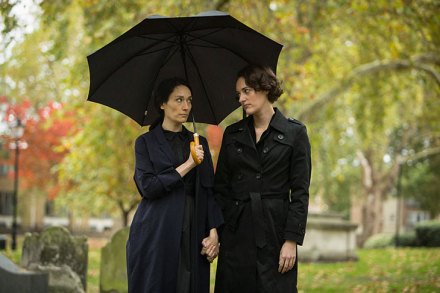
After the all-conquering success of Fleabag — her brilliant dark comedy about a smart but rudderless young woman in London — Phoebe Waller-Bridge could presumably have done whatever she wanted for her next TV project. And what she wanted to do next, it now turns out, is very odd indeed. Killing Eve (BBC1, Saturday) — which Waller-Bridge has adapted from a novel by Luke Jennings but doesn’t appear in — has its moments of recognisably ordinary life. But not many. Near the beginning, for example, Eve Polastri (Sandra Oh) woke with a Saturday-morning hangover and unwelcome memories of her karaoke performance the night before.

Let’s talk about sex | 6 September 2018

From our UK edition

This week was bad news for fans of good television drama series — mainly because there’s now three more of the things to keep up with if you don’t want to feel left out of office conversations. The one that stirred up the most advance media excitement was Wanderlust (BBC1, Tuesday), on the traditional grounds that it promised to be unusually explicit about sex. And in that, it certainly didn’t disappoint. The first episode began with a flurry of masturbation (not a phrase I can remember using in a TV column before). First, Joy, a middle-aged therapist, slipped a hand beneath the morning bedclothes — until her teenage son came in to ask where his shoes were.

Rubbish on TV

From our UK edition

Not the most beguiling of titles, I admit, but The Secret Life of Landfill: A Rubbish History (BBC4, Thursday) was a genuine eye-opener. The programme began with Dr George McGavin proudly announcing that ‘What we’re about to do has never been attempted on television before’: a claim that it’s usually best to treat with some scepticism, but that here seemed hard to deny. Certainly, I can’t remember another TV documentary in which the presenters spent 90 minutes digging through (non-metaphorical) rubbish. At first, the mood was one of rather determined excitement.

The fault was in his stars

In 1957, aged 13, Jimmy Page appeared with his skiffle group on a children’s TV programme dedicated to ‘unusual hobbies’ — skiffle apparently qualifying as one. During the show, he was interviewed by Huw Wheldon who, following an old-fashioned BBC lunch, arrived in the studio with a hearty cry of ‘Where are these fucking kids then?’ Asked what he planned to do when he grew up, Page gave a perhaps unexpected reply: find a cure for cancer. As we now know, this plan failed — but already, it seems, the young Jimmy wasn’t lacking in the swaggering self-confidence that true rock stars are required to possess (or at least to fake convincingly).

Medical examination

From our UK edition

Surprising I know, but judging from The Foreign Doctors Are Coming (Channel 4, Tuesday), Britain mightn’t be such a bad place after all. The programme followed a group of medics from non-EU countries whose dream is to work for the NHS, but who first had to pass a practical exam in Manchester known, for reasons left unexplained, as PLAB 2. ‘When I landed in Britain it felt like a breath of freedom,’ said a young Pakistani woman. ‘People here are helpful,’ declared Ahmed from Egypt as he walked the Manchester streets. ‘I see you have no problem with other cultures.

Full circle

From our UK edition

After just one episode, The Bletchley Circle: San Francisco (ITV, Wednesday) seems certain to stand out from the crowd. In an age when most television dramas range from the perfectly fine to the extremely good, it already looks like a proper old-fashioned stinker. Admittedly, one of its more obvious problems is bang up-to-date: by adhering so spinelessly to the mantra of ‘women and black people good, white men bad’, the programme not only creates an overwhelmingly dreary sense of déjà vu, it also deprives itself of any possibility of genuine dramatic tension. But there are plenty of more traditional flaws too, including such classics as wooden dialogue, leaden humour and a plot of impressively po-faced preposterousness.