James Kirkup

James Kirkup

James Kirkup is a partner at Apella Advisors and a senior fellow at the Social Market Foundation.

Has David Cameron any shame?

From our UK edition

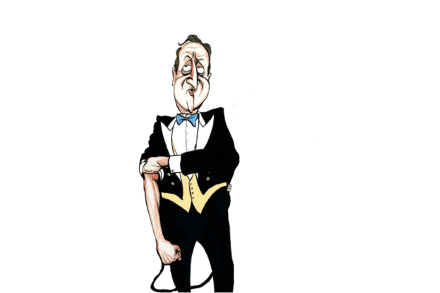
$10million, or £7million. That’s what David Cameron is now reported to have made from Greensill Capital, the company he helped lead to ruin. The number, reported by the BBC, is news, not least because Cameron himself had refused to disclose it. Speaking to a Commons committee investigating his failed lobbying for the failed company, the failed former PM would say only that he had been paid a 'generous' sum by Greensill. That one word, 'generous', speaks volumes about Cameron and the Greensill episode. Let’s start with the obvious fact that Cameron used a word rather than a number to describe the money he got (I’m not sure 'earned' is the right term) from Greensill. It seems fair to ask if that was because he was in some way embarrassed by it.

Is it fair for Laurel Hubbard to compete against women?

From our UK edition

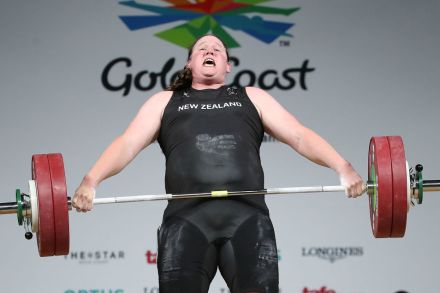
Today, the conversation about transgender rights and the interests of women turns to sport. At the Olympic Games, Laurel Hubbard of New Zealand, will compete in the +87kg women’s weightlifting. Hubbard, as you surely know, was born male and grew up to become a competitive weightlifter. At the age of 33, the athlete then transitioned and became a trans woman. And because the International Olympic Committee effectively signs up to the mantra of trans rights – 'Trans women are women' – Hubbard can duly compete in the women’s contest in Tokyo.

The truth about Nick Gibb, history and ‘dead white men’

From our UK edition

In 1983, Daniel Patrick Moynihan, a great American sociologist and politician, wrote: 'Everyone is entitled to his own opinion, but not his own facts.' Then the internet happened. Anyone who has spent five minutes online, especially on a social media site, is aware that everyone now has their own facts, carefully chosen to support whatever argument or narrative they favour. Any contested issue that’s debated online (i.e. all of them) sees people on different sides of the argument adduce statistics, quotations and any other material helpful to their cause. Take this stuff far enough and you get people prioritising subjective experience above objective fact.

How Denmark made England

From our UK edition

International football is good for many things other than the sport itself. Politics, culture and history are all in play in the best matches. I’m hardly a football fan but I’d watch, say, Spain vs Portugal just for the spectacle. And who could turn away from Serbia vs Croatia, or Finland vs Russia? Like a lot of countries, England fixtures are often seen through the prism of the country’s history of conflict. So far, Euro 2020 has heard echoes of battles ancient and modern, as England played Scotland then Germany. And everyone knows the history of those meetings. But what about England and Denmark? How many people know that this is about as old a rivalry as nations can have, one that goes back to before there really were nations?

The court judgement that confirms women pay for trans rights

From our UK edition

I am coming out of semi-retirement from writing about sex and gender to write this, because it’s about women in prison, a group that desperately need more attention from people interested in politics and policy. The High Court has been considering the question of transgender women (i.e. people who were born male) in the female prison estate. That’s after a legal action was brought by a woman in a female jail who says she was sexually assaulted by a trans prisoner. The prison service hasn’t denied that this assault took place.

Cummings’s messages aren’t a ‘bombshell’ revelation

From our UK edition

On days like this, I despair of the media-political village where I’ve spent most of my adult life. Because that village is going to get very, very excited about some things that the Prime Minister said about one of his ministers on WhatsApp – even though it doesn’t really matter. By now, you know that Boris Johnson wrote ‘totally fucking useless’ in an exchange with Dominic Cummings, and also said things about possibly removing Hancock from his job as health secretary in the early stages of the pandemic. You know that because several thousand political journalists, tweeters and others have shared it, often with words like ‘bombshell’ and ‘dramatic revelation’.

Euro 2020 and the search for a new Englishness

From our UK edition

A soccer contest is upon us. I know nothing of football as a sport, but even a dunce like me knows that these things are about more than 22 men chasing a ball for 90 minutes. Big sporting events such as Euro 2020 matter, especially for England and Englishness. Any big England game is a rare chance for people to fly the flag and briefly talk about Englishness. But we need to do more than talk about this when the football team is playing. A proper national debate about English identity is overdue and badly needed. New polling from British Future this week showed that only two thirds of BAME people think 'Englishness' is open to them. Worse, 14 per cent of white English people still think only white people can be English.

Boris should be worried about Steve Baker, not Dominic Cummings

From our UK edition

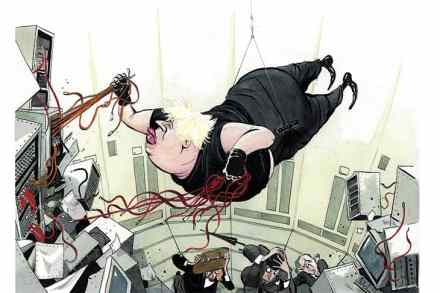
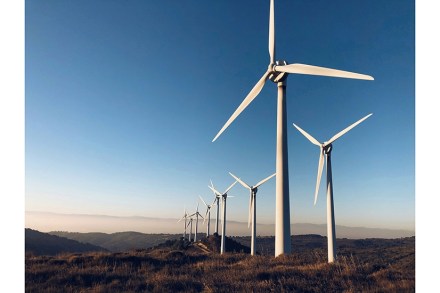
While Westminster fixates on Dominic Cummings, what could well be a bigger political challenge for Boris Johnson is being somewhat overlooked. That challenge is called Steve Baker. Baker has now launched his long-whispered campaign over net zero and the policies it entails. He’s in the Sun today talking about issues including gas boilers and the need to replace them with something that doesn’t burn gas. Reaching net zero carbon emissions means a boiler switchover has to happen, and soon. Homes account for about 14 per cent of the UK’s carbon output, and weaning the country off gas boilers is possibly the trickiest bit of making net zero (a legal requirement, remember) actually happen.

MPs are finally engaging with the gender identity debate

From our UK edition

I used to write a lot about sex and gender here. I don’t do so quite as much these days for a few reasons, one of which is that the issues involved are now better recognised and better handled by people whose job it is to deal with the complexities of policies and conflicts of rights and arguments. An example of that came at the weekend when Baroness Falkner, the new chair of the Equality and Human Rights Commission, told the Times that women should not be penalised or abused if they believe that transgender women do not become female by dint of their professed identity. ‘Someone can believe that people who self-identify as a different sex are not the different sex that they self-identify,’ she said.

The shamelessness of David Cameron

From our UK edition

I’m almost starting to admire David Cameron. Almost. There is something that borders on the impressive about the former prime minister’s dedication to the destruction of his own reputation. He may have been a casually idle premier, but he’s really rolled up his sleeves and got stuck into the job of trashing his own name. How many times did he use the private jets of his collapsed finance firm to travel between his houses? Can’t remember. How much did said collapsed financial contraption pay him for services including pestering senior civil servants with texts signed ‘Love, DC’? Not saying, but it was much more than the mere £150k he got for being PM. https://www.youtube.com/watch?

Will Rishi Sunak fund Boris’s skills promises to the red wall?

From our UK edition

Queen’s Speech day is one of the set-pieces when the government gets to decide that morning’s headlines. Barring disaster, the stuff you brief to the media the day before the speech will be what leads that morning’s bulletins, and has the best chance of being the thing that punters remember about the speech – if they remember anything at all, since, of course, most people don’t pay any attention to political news. Anyway, the central fact here is that No. 10 chose to lead with skills today, a package of promises about how things will get better for the people who do not do A-levels then got to university for three years to get a degree. There’s a name for those people: the majority.

Education, not class, is Britain’s real political divide

From our UK edition

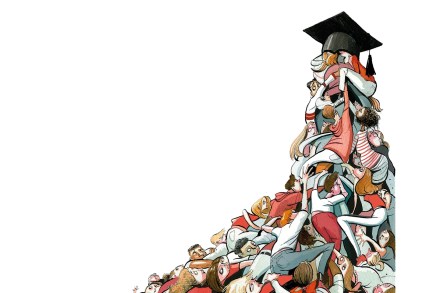
Social class is dead. Education is the political dividing line that matters. This has been apparent since (at least) the 2016 EU referendum, although it has not been recognised by enough people who do and write about politics. The results of this week’s elections should drive the point home. According to early analysis of polling by elections demigod Sir John Curtice, there are some parts of England where the Labour party actually made some modest gains in yesterday’s elections. In places – mostly urban – where a high proportion of the population has a university degree, Labour got a small positive swing.

Why the Hartlepool election result doesn’t really matter

From our UK edition

Ah, Hartlepool. The by-election there brings back memories: I am old enough to have reported on the last one, back in 2004, when Peter Mandelson went off to Brussels and left behind what was then a fairly safe Labour seat. My slightly faded memory of that 2004 vote informs my view of what is apparently the most important question in British politics today: who will win the latest Hartlepool by-election? And my view is this: it doesn’t really matter.

Football’s Super League row can save capitalism from itself

From our UK edition

I am not a football fan. Reactions to plans for a European super-league remind me why. According to the BBC ‘critics say the move is being driven purely by money.’ Whereas in the prelapsarian days of, say, last week, professional football was all about craft and community? Free marketeers should be relaxed about this. You could argue that the super league members’ decision is a matter for them and them alone. They are private businesses supplying a product – entertainment – to paying customers in a market. If they want to supply that product via slightly different arrangements, why should anyone else care? If the public anger in today’s headlines and pixels is really that deep, there’ll be no demand for the product and the league will fail.

Could Cameron’s Greensill lobbying damage Rishi Sunak?

From our UK edition

13 min listen

The Treasury has released text messages that the Chancellor sent to David Cameron, in response to the latter's repeated lobbying. While Labour is trying to land a blow on Rishi Sunak as a result of this, can they succeed? Cindy Yu talks to Katy Balls and James Kirkup, Spectator contributor and Director of the Social Markets Foundation.

In praise of David Lammy, a true Englishman

From our UK edition

David Lammy, the shadow justice secretary, has been doing his LBC radio phone-in show. If you believe LBC, he has 'schooled' a 'caller' who told him he is not English. If you listen to the exchanges in question, you’ll realise he did something much more impressive, and important than that. The clip, which is all over social media, is here: https://www.youtube.com/watch?v=ssLC4U7u9t8 The short summary is that 'Jean' tells Lammy he cannot be English because of his Afro-Caribbean heritage. Lammy, who was born in London, politely examines her arguments and disagrees. There is no shouting and no fighting – that suggestion has been added by LBC to stir up anger and get some clicks.

The delightful humiliation of David Cameron

From our UK edition

Say what you like about David Cameron, the man never stops trying to exceed expectations. I once thought that he’d never do anything sadder than giving his wife’s stylist an honour then running away from parliament like a child. Then he proved me wrong by publishing his memoirs. And now, demonstrating his unstinting commitment to the cause of his own humiliation, he has reinvented himself as a shoddy lobbyist. When he naffed off after making a horlicks of the referendum, Cameron warbled the usual shiny words about duty to the nation. It turns out he meant it: in these dark times, we all need a laugh, so we should thank him for cheering up a gloomy nation by means of his own embarrassment. Public service takes many forms.

My Covid-19 vaccine jab means I love NHS managers

From our UK edition

I am 45. That means I’m old enough to have been writing about politics at a time when political attacks on ‘NHS managers’ were a routine part of political debate and media coverage, standing alongside ‘yobs’ and ‘asylum-seekers’ as the nation’s villains. It’s also old enough to get me a Covid-19 vaccine, injected into my arm on Saturday morning at a GP surgery in south London by a student doctor from a nearby teaching hospital. Watching the performance of the vaccine centre, doling out hundreds of vaccines each hour, I was reminded of all those promises from all those politicians about getting rid of fat cat NHS managers.

Life as a Lobby journalist

From our UK edition

30 min listen

The Lobby refers to the group of political journalists with access to the Palace of Westminster. On this episode, three former Lobby hacks - Fraser Nelson, James Kirkup (of the Social Mobility Foundation) and Francis Elliott (retiring political editor of the Times) - discuss their rehabilitation from the job, the old days of boozing lunches and the impact of social media on the job today, and much more.

The case of Sarah Everard should make us all stop and think

From our UK edition

At the time of writing, we don’t know what happened to Sarah Everard. However this story ends, it should be an important national moment of reflection, because the way it has made a lot of people feel deserves serious attention. When I say 'people', I largely mean 'women'. And that reflection should come from men. Men need to learn some lessons about the way this case makes women feel. Perhaps there is something jarring about me, a man, writing a column about women’s feelings and thoughts. Should I even be trying to describe and report the experience of a group to which I do not belong? There’s a lot of identity-based thinking and argument that would say 'No' to that question.