James Kirkup

James Kirkup

James Kirkup is a partner at Apella Advisors and a senior fellow at the Social Market Foundation.

The Burnham that might have been

From our UK edition

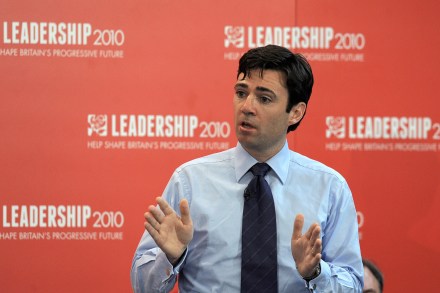
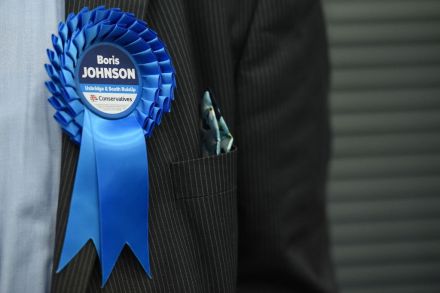
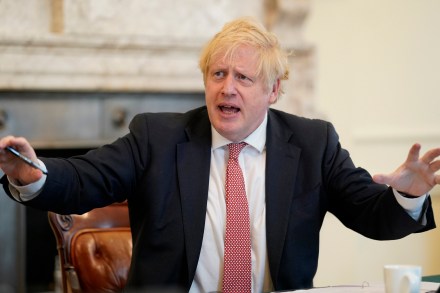
Watching anorak-clad Andy Burnham go toe-to-toe with Boris Johnson might leave Westminster-watchers of a certain vintage a bit bemused. How did the Burnham we used to know in the noughties become Manc lad-in-chief, a political brawler who gives brick-chewing interviews on the pavement? And perhaps more interestingly, what would have happened if the Burnham of earlier decades had shown the fighting spirit of today’s incarnation? British history might have been quite different. Think back, if you can, to the summer of 2009. The global financial crisis was still weighing on the UK economy. Gordon Brown was, just about, still Prime Minister, facing an election that had to be called within a year. One hot night in June that year, James Purnell made his move.

Why shouldn’t a ballerina retrain?

From our UK edition

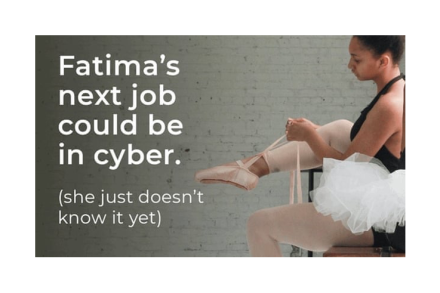
A 'story' covered by several outlets today about a ballerina and a government skills campaign is the latest evidence of how Twitter is making us all more stupid and should generally be ignored. The 'story' in short summary: a government campaign to encourage people to consider training to develop skills in 'cyber' is using images of people doing jobs, including dancing, to suggest that people who are today doing one thing for a living might one day do something else. (For more on the full range of jobs depicted, see this bit of proper journalism from a BBC reporter.) The ad that’s picked up some attention online shows 'Fatima' a ballerina, with the caption: 'Fatima’s next job could be in cyber (she just doesn’t know it yet).

Covid is turning the Tories into the Grey Party

From our UK edition

This week in the Commons, the Government introduced the Social Security (Up-rating of Benefits) Bill. It’s a technical bit of legislation that will allow ministers to increase the state pension next year, keeping the 'Triple Lock' promise that pensions will rise in line with wages, inflation or 2.5 per cent, depending on which is highest. It also confirms that the Conservative party is continuing its journey towards becoming the Grey party, unravelling Britain’s social contract and generally forgetting what it means to be conservative. Even before the coronavirus, the Tories were becoming the party of the old. Responses to the Covid pandemic could accelerate that movement. In the 2010 general election, the Tories got 37 per cent of the vote overall.

How women won the war against gender ‘self-ID’

From our UK edition

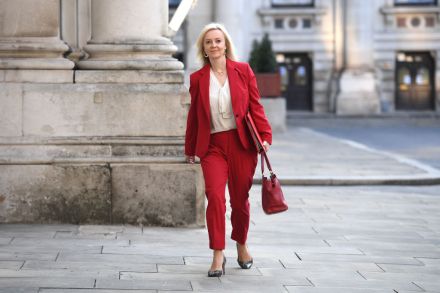
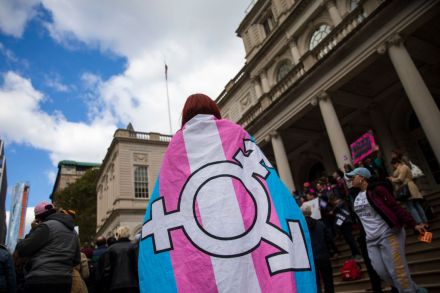
Liz Truss, in her role as equalities minister, has confirmed to Parliament that the Government will not amend the Gender Recognition Act 2004 to allow people to change their legal gender without the approval of doctors and officials. 'Self-ID' is not happening. There is a lot to say about this statement, and the way it has been made. Here are four thoughts, for now. 1: It was the women what won it This decision is a significant reversal in government thinking. In 2017, when the May government announced a consultation on GRA reform, a system of self-ID was effectively the default option. Most politicians paid no attention to the detail, instead outsourcing their judgement on a complex and seemingly obscure issue to officials who were often very (too?

Why is my Northumberland being locked down?

From our UK edition

I am from Northumberland. You might have heard of the place, or even been there: the glorious coastline is increasingly popular for holidays, though the Cheviot Hills (even more deserving of attention) are less well-known. Often, the county is lumped into a bigger mass known as ‘the north-east’. Which I suppose makes a certain sense, given the basic geography and accents that – at least to outsiders – sound broadly similar. (I might return to this another day, but the idea that the accent of the Upper Coquet Valley sounds anything like, say, that of Sunderland is actually comical.) Northumberland is a curious construction as a local authority area. It’s big by English standards and largely empty.

No, Marcus Rashford didn’t ‘slam’ a Tory MP over child hunger

From our UK edition

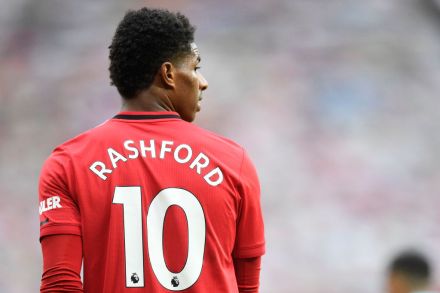
'Rashford slams MP’s tweet about feeding children' That was a headline last night on the BBC News site. It neatly captures a tale that sums up just about everything that’s wrong with politics and journalism today. The 'story' – also in most newspapers today – is that Kevin Hollinrake, Conservative MP for Thirsk and Malton, wrote the following on Twitter: 'Where they can, it’s a parents job to feed their children' He was writing in response to another tweet asking why it has taken the efforts of Marcus Rashford, a campaigning footballer, to put the issue of child hunger on the agenda. In turn, Rashford wrote a tweet directed to Hollinrake: 'I would urge you to talk to families before tweeting.

Tories need to get real about tax rises

From our UK edition

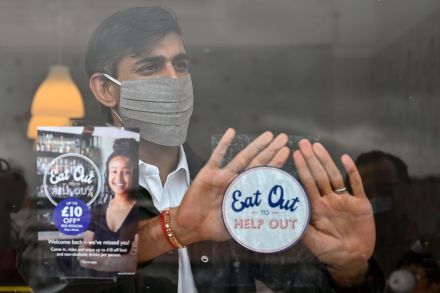
It’s sometimes said that Rishi Sunak has been playing politics on easy mode: when you’re giving away loads of cash, it’s hard not to be popular. Now, as summer fades and autumn beckons, politics gets harder. The chancellor is facing his first real test with Conservative MPs over reports that his Treasury is considering a range of tax rises to help repair, in part, the public finances. A number of those Conservative MPs have made clear in recent days that they do not want taxes to rise. On one level, this is unsurprising: not many people who get elected to Parliament as Conservatives are keen on higher taxes. Yet what is surprising is the lack of significant Tory engagement with the wider fiscal context of this debate.

Duel Britannia: The myth of Britain’s culture war

From our UK edition

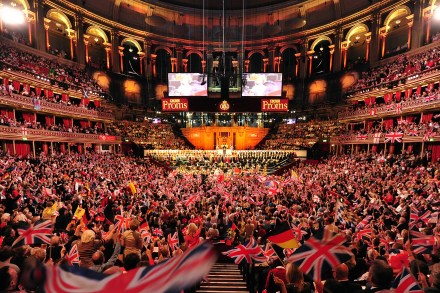
Can I make a confession? I’m not really interested in the Last Night of the Proms. I don’t think I’ve ever watched it. I don’t really know the words to 'Rule Britannia'. Or the other one. Does that mean I hate Britain and all it stands for? Does it mean I am callously indifferent to Britain’s shameful history of imperialism and oppression? Of course not. It means I’m like the overwhelming majority of people in this country — of all ages, races, backgrounds — who don’t get very excited about this stuff. We are the civilians in the culture wars, and we are many. Yes, I know a lot of people who comment under articles like this are passionately insistent that these things matter, to them and everyone they know. Likewise Twitter.

What explains the rising number of children with gender issues?

From our UK edition

I have recently read a fascinating new paper, via a Mail on Sunday report, about the growing number of children presenting as transgender to gender clinics. It raises all sorts of questions, and deserves to be read widely and carefully. The paper, published in the Journal of the American Medical Association, can be found – unlike a lot of similar work, for free – here. Among its seven authors are two staff from the Gender Identity Development Service (GIDS) in London, the main NHS clinic for children with gender identity issues, including the service’s head, Polly Carmichael. The other authors include clinicians in Australia and the Netherlands, and elsewhere.

Don’t forget about BTECs during the A-level circus

From our UK edition

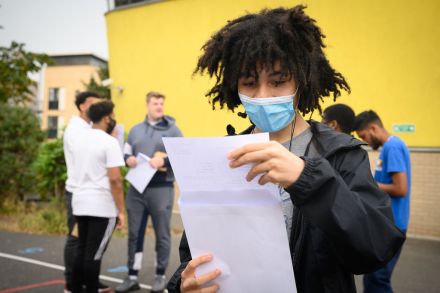
The summer ritual of A-level results day is so well known it's easy to forget the thousands of students receiving their BTec National results. That’s the intro to a BBC News item on vocational qualification results issued today. It’s also the story of British culture and economics, told in a single, unwittingly revealing, sentence. Around 250,000 kids will get BTEC results today – that’s almost as many as the 300,000 or so who get A-level results. But of course, media and political attention paid to the latter group is vastly greater than the former. Why?

What Rishi Sunak should learn from Kirstie Allsopp

From our UK edition

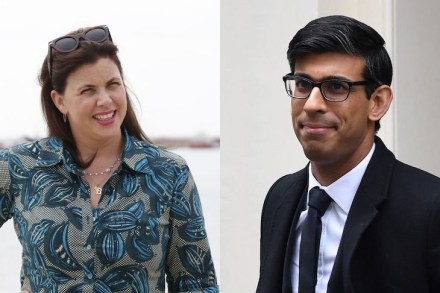
Kirstie Allsopp is in trouble. The posh-but-nice telly lady committed two cardinal errors of modern life: first by saying something interesting on Twitter, and second by assuming people would credit her with good intentions. She wrote: ‘If your job can be done from home it can be done from abroad where wages are lower. If I had an office job I’d want to be first in the queue to get back to work and prove my worth to my employer. I am terrified by what could be on the horizon for so many.’ I think most fair-minded people would read that as a clumsy but well-meaning attempt to warn people about some tough economic times ahead, and not a criticism of the people who may well suffer in those times.

Why I’m glad Boris and Starmer are sitting out the trans rights war

From our UK edition

I’m starting to think that Boris Johnson and Keir Starmer have quite similar views about the politics of trans rights, sex and gender. I’m also inclined to think this could be a good thing. In the last couple of weeks, both the PM and the Labour leader have been invited to wade into the lake of bile that is the trans debate. And both have declined, opting instead to say nothing.   In Johnson’s case, this was the decision to delay, again, a government response to a consultation on reforming the Gender Recognition Act. All the signs were that Liz Truss, the minister in charge, was set to use an announcement in July to make a statement about protecting women’s legal rights to same-sex spaces.

The BBC’s failure to report gender identity accurately

From our UK edition

‘Blackpool woman accessed child abuse images in hospital bed’. It’s a good headline, in that it catches your attention. But there are two things making it an effective headline, at least in the sense that it gets attention. One is the notion of someone looking at child porn in a hospital – that’s a shocking thing, and as they sometimes say in American journalism schools, ‘news is a surprise.’ The other important part of the headline is the word ‘woman’. We don’t often associate women with crimes like viewing images of child abuse; the idea of a woman doing so has a bit of ‘man bites dog’ news surprise to it.

Gavin Williamson is right to call out educational snobbery

From our UK edition

Politicians give speeches all the time, but with differing levels of significance. Can you think of a genuinely important political speech given by a minister this week? Maybe your answer is Rishi Sunak’s fiscal statement, and I’m not going to suggest that speech isn’t a big deal. It is. But I am going to make the case for a speech given today by Gavin Williamson, the Education Secretary. The speech was to the Social Market Foundation, the think-tank I run, so I obviously have an interest here. Nonetheless, I think Williamson’s speech deserves to be seen as a big deal.

Are whistleblowers being silenced at the NHS gender clinic?

From our UK edition

The Gender Identity Development Service (GIDS) at the Tavistock and Portman NHS Foundation Trust carries out some of the most complex and contentious clinical work in the NHS. It deals with children and young people who are experiencing discomfort over their gender identity, but is it raising patient safety concerns? Some of the children it sees go on to change their legal gender. Some receive physical treatment in the form of puberty-blocking medications. Some go on to have further treatments including cross-sex hormones and surgery. The service, which is heavily over-subscribed, is a divisive one. A number say it offers vital, even life-changing care to children in great distress and need, others are less positive.

In praise of Harriet Harman

From our UK edition

One of my proudest moments as a Daily Telegraph leader writer came in 2015 when I managed to persuade my masters that their paper should bestow official praise on Harriet Harman as she stepped down (for a second time) as Labour’s interim leader and made way for Jeremy Corbyn. The resulting editorial (you can read it here) raised a few eyebrows, but the most striking thing about it was the number of people on the right of politics who quietly agreed with it. You don’t have to agree with all, or even any, of Harman’s political positions to acknowledge her formidable resilience. There are mountain ranges with less endurance than the MP for Camberwell and Peckham, who was first elected in 1982 at a by-election that made her one of 20 women in the Commons.

Helen Whately is right about student nurses

From our UK edition

Helen Whately, the care minister, is being tarred and feathered. She wrote a letter to an MP about student nurses, saying they are ‘supernumerary and not deemed to be providing a service’. The outpouring of fury online and, sadly, from some traditional media outlets provides an object lesson in all that’s wrong with the way Britain debates politics and government in the era of Twitter. Whately’s comments should not be ‘controversial’ or even newsworthy, because she said nothing wrong. Student nurses are indeed ‘supernumerary’, which means that they are not counted towards the total of nursing staff in the NHS. This is not just sensible, it’s something recognised and demanded by bodies such as the Royal College of Nursing (RCN).

Free school meals and the anatomy of a U-turn

From our UK edition

No. 10's screeching U-turn on food for low-income kids over the summer will not do the government or ministers serious harm with the wider public. That doesn’t mean it’s not a problem. First, the public. They are not on Twitter. This fact cannot be repeated enough around Westminster. In a finding that should be tattooed on the flesh of every politician and journalist in and around Westminster, the latest Reuters digital news report finds that only 14 per cent of the UK population say they get news from Twitter. The hours of Twitter frenzy that precede the U-turn will have gone largely unnoticed by most people. The BBC (including its website) is still, by a mile, the biggest news source in Britain.

Boris’s gender change shake-up leaves Labour with a difficult choice

From our UK edition

The Sunday Times says Boris Johnson is going to reject May-era proposals to allow people to “self-identify” changes of their legal gender. Some thoughts: 1. Trust this report. It’s by one of the best-connected reporters around and it’s consistent with public and private signals from inside government in recent months. The organised trans rights groups also failed to distance themselves from the online hate-mongers who do trans people a huge disservice by bombarding dissenting women with obscene abuse. 2. This is a remarkable demonstration of how grassroots politics can still work.

Why does Labour ‘welcome’ school closures?

From our UK edition

This will come as little surprise to anyone who has followed my writing over the last few years, but I have accepted that I simply do not understand politics at all.  On Tuesday, the government announced that it was no longer urging primary schools in England to get all children back to school for some teaching before the summer holidays. There are many reasons for this announcement and its consequences are probably being overstated in some places: the government doesn’t have any effective power to compel headteachers to reopen, but merely issues guidelines and sets expectations. Some schools will likely go ahead with whatever opening plans they had in place.