James Kirkup

James Kirkup

James Kirkup is a partner at Apella Advisors and a senior fellow at the Social Market Foundation.

How Philip Hammond could be PM by October

From our UK edition

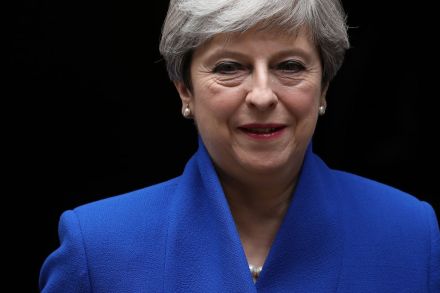
The biggest factor keeping Theresa May in office is the absence of an alternative Conservative leader with broad enough backing in the party to be crowned her successor, without causing a messy contest that could destabilise the party and put it out of power.  That is why some Tories are grimly resigned to Mrs May limping on until 2019 or so, when they hope Brexit talks may have come to something resembling a conclusion.  But there is an alternative scenario emerging. Philip Hammond is increasingly seen by some colleagues as the man to replace Mrs May in a relatively smooth and bloodless transition later this year.  The Chancellor's name has come up in several conversations I've had with Conservatives this week.

If Jeremy Corbyn can rise from the depths, why can’t Theresa May?

From our UK edition

When John Curtice speaks, listen. That's one thing we learned in the general election. This week we hosted John at the Social Market Foundation, where he explained just what actually happened on June 8. Among his many observations was that Jeremy Corbyn really had done something unprecedented: he changed the way voters saw him, for the better. In John’s view, no one has ever done this before. Public opinion of Corbyn was settled: he was useless. And voters, once they've decided you're useless, don't change their minds.  But they did. They still don't think Corbyn is brilliant, but they don't dismiss him the way they used to. The great Curtice brain holds no other example of such a change. Truly, we live in an age of miracles.

The Queen’s Speech was diluted – but Theresa May’s strategy hasn’t changed

From our UK edition

Brexit will dominate political and parliamentary life for years to come. The weight of EU exit legislation announced in the Queen’s Speech could, as someone once said, stun a team of oxen in its tracks.  Not too long ago, a cabinet minister involved in these things told me that the 'Great Repeal Bill' alone could consume most of a standard parliamentary session. There are now seven more bills, covering such trifles as Britain’s immigration system, trade policy, customs arrangements, farms and fisheries. Parliamentarians will be wading through Brexit legislation for years to come, and every line of every bill could have real impact on British companies and people. Remember that when you hear analysts saying this was a thin or lightweight speech.

It’s time to prepare voters for some tough Brexit compromises

From our UK edition

Brexit is like life. The journey matters more than the final destination. Instead of fixating on where we will, eventually, end up, pay more attention to the things that happen along the way. As Brexit talks start, there are abundant signs of a possible compromise on Britain’s exit, or at least, on the timing of that exit. Yes, the Article 50 period will, absent an agreement to the contrary, expire in March 2019 and with it Britain’s formal membership of the EU. But what follows might not look or feel like the clean break that some voters have imagined.

Forget Michael Gove or the rise of the Remainers. The reshuffle is about the march of the moderates

From our UK edition

Michael Gove will get all the headlines, and there is something darkly ironic about his appointment. Theresa May may be fighting for her political life, but even her 11th hour manoeuvres have a sharp edge. She’s been forced to bring back a man she sacked, but her choice of job is lovely: Michael Gove of the Leave campaign now gets to tell British farmers how life will be better when farm subsidies end. Meanwhile, Gove replaces Andrea Leadsom, another Leaver, who as Commons leader now gets to oversee the speeding legislative freight train that is the Great Repeal Bill, not to mention seven or eight other bits of Brexit legislation - all without a Commons majority.

In praise of Nick Timothy

From our UK edition

First, some caveats. This article isn’t about Fiona Hill. That’s not a comment on her. It just reflects the fact that, for reasons set out here, I can't claim to offer reasonable journalistic assessment of a friend. This is nothing to do with Nick Timothy’s personal conduct, management style or dealings with colleagues and others. It's not my job to judge whether someone is nice or nasty. And too much is written about this stuff anyway. If we'd all paid less attention to office gossip and more to the country we live in, we might not have got the election so wrong. This isn't about the justice or wisdom of his departure, though I'll offer two thoughts in that context. First, it's being suggested that Timothy (and Hill) were solely responsible for the Tory campaign.

To survive, Tories must compromise with Remainers – and Corbynism

From our UK edition

Regardless of who leads it, the Conservative Party now has the opportunity to cling to office, possibly even for the rest of this five-year Parliament. They're the biggest party and a deal with the DUP is the basis for forming a new government. But that's only the start. To remain in office, the Conservatives are going to have to accept a lot of compromises. They're going to have to compromise on Brexit, and thus on immigration. They're going to have to compromise on economic policy (spend more, cut less) and markets (intervene more). They're going to have to compromise with the Scottish voters who threw them a parliamentary lifeline by endorsing Ruth Davidson's humane, moderate Conservatism.

To survive, the Tories must compromise with Remainers – and Corbynism

From our UK edition

Regardless of who leads it, the Conservative party now has the opportunity to cling to office, possibly even for the rest of this five-year Parliament. They’re the biggest party and a deal with the DUP is the basis for forming a new government. But that’s only the start. To remain in office, the Conservatives are going to have to accept a lot of compromises. They’re going to have to compromise on Brexit, and thus on immigration. They’re going to have to compromise on economic policy (spend more, cut less) and markets (intervene more). They’re going to have to compromise with the Scottish voters who threw them a parliamentary lifeline by endorsing Ruth Davidson’s humane, moderate Conservatism.

Jeremy Corbyn has transformed into a ruthless political operator

From our UK edition

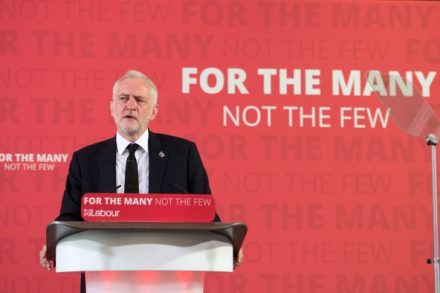
Jeremy Corbyn says that if he was Prime Minister, he would authorise the police to use 'whatever force is necessary' against terrorists. Is that true? Is he really ready to go back on decades of suspicion of the police, of hostility to the security forces of an imperialist British state? How can this be reconciled with the man who was so obviously unwilling to back the use of lethal force in that interview with Laura Kuenssberg that's doing the rounds again. Jeremy Corbyn opposes 'shoot to kill' policy. Does he mean it? I have no idea. But the comment confirms that Mr Corbyn's newfound political ruthlessness is the story of this election.

Ignore all the bluster, the Tories will still win

From our UK edition

This is the first general election since 1997 where I have not primarily been employed as a journalist, covering the story of the campaign and its participants. Of course, I’ve still been writing about it, but from a certain distance. I miss some of the peculiar entertainments of the political circus, and some of the freaks and wild animals that provide those entertainments. But by and large, it’s rather nice to be watching things from a little way off. Especially because that distance allows me to say things like this: a lot of journalists, and a lot of politicians (especially Conservative ones) have gone stark raving mad and are talking gibberish about this election. I know why, of course. Campaigns create madness. The days are longer and the pressure greater.

Corbyn wants a kinder politics. Try telling that to some of his fans

From our UK edition

Jeremy Corbyn must be furious about his interview with Emma Barnett on Woman’s Hour. Not because of the contents of that interview, because presumably he doesn’t mind people thinking he doesn’t have a clue how he’d fund his promise of state-provided childcare. After all, if he thought stuff like that was important, he’d have taken 30 seconds to read the brief about his own policy before announcing it, right? No, I mean he must be furious about what happened after that interview, and happened to Emma. Within minutes, she was subjected to the full spectrum of abuse online from people unhappy about a journalist doing her job and asking a politician to explain one of his policies. Some of that abuse focussed on her religion.

U-turns matter less than journalists think, especially if voters like the result

From our UK edition

This is the latest in a series of posts that could be entitled 'things I could never say when I was a political journalist but now I can.'  Today’s topic: U-turns. The bottom line: they don’t matter, or at least, they don’t matter anywhere near as much as most of the coverage of them suggests. Theresa May has changed her mind on social care. Political Twitter is still, as I type, in the sort of excited spasm that suggests that this is an event that will change EVERYTHING.  To some, Mrs May has shattered forever her image as a strong, steady leader. A slightly more sophisticated take suggests that she’s shattered her relationship with the Conservative Party, which will never trust her again.

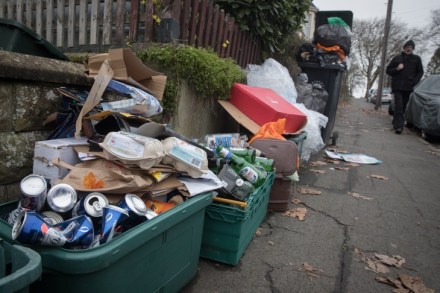
Forget Brexit. What really matters is rubbish

From our UK edition

Pardon the heresy, but I have a suggestion to make about the general election, and politics in general: Brexit isn’t as important as you think it is. The fact that you, dear reader, are reading this, a Spectator article, says many things about you.  Obviously, it denotes good taste, since this is a fine publication, notwithstanding the Editor’s peculiar accent, absurd hair and questionable choices in hiring old colleagues to write for him. But more importantly, it says you’re interested in the stuff that The Spectator is interested in, and almost certainly in politics.  That, politely put, means you’re a bit weird.  Most people aren’t interested in politics; they don’t spend their valuable time reading things like this.

It’s time for a real Department of Housing, with a minister to match

From our UK edition

'I earned capital in the campaign, political capital, and I intend to spend it'.  That was how George W Bush put it after winning his second presidential election in 2004. He’s possibly not the best model for good governance, but the sentiment is worth pondering as Theresa May rolls on relentlessly towards victory. Mrs May will wake on June 9 with money in the bank, politically if not fiscally. She’ll have crushed and possibly split apart the Labour Party, secured her party another five years in office and stamped and stamped and stamped her personal authority on the Conservative Party.

Where I’m from in Northumberland, the Tories don’t win – until now

From our UK edition

The story of a council election decided by drawing straws isn't the most remarkable thing to happen in Northumberland today, not by a long way. Pegswood. Cramlington. Morpeth.  These aren't the names of places that normally figure much in national political reporting or debate. That's because they're in Northumberland, or more accurately, south Northumberland, where Labour has dominated for my entire lifetime until now. The first half of that life was spent in Northumberland, and I still call the place home even though I've lived somewhere else for more than 20 years.  I grew up in the glorious rural north of the county, but I went to school in Morpeth; my grandparents were from Pegswood, a pit village not far from Ashington, where I was born.

What journalists know, but can never admit: election campaigns don’t matter

From our UK edition

I love election days.  Some of that is just the simple, wondrous glee that democracy deserves but doesn't get enough of.  Really, whatever its flaws and frailties, a collectively-agreed and universally accepted set of essentially voluntary arrangements where we all get a say on hiring and firing our rulers is pretty damn glorious.   To hell with cynicism: whatever you think of your local candidates or the political class as a whole, the simple act of voting is great, just great. We should remember - and say - that more often.  But my enjoyment of polling day goes beyond lofty stuff like that. I've just emerged from 20 years as a full-time journalist, most of it spent doing politics.  For political hacks, polling day is an unofficial holiday.

Britain needs Blairite optimism – but it won’t come from Tony Blair

From our UK edition

We all have different ways of realising we're not as young as we were. I still remember the first time England named a cricket captain younger than me: Andrew Strauss (a man I still believe will one day serve as a Conservative parliamentarian incidentally).   Passing that milestone didn't bother me much, but the relative youth of politicians is a bit harder to take. Put it this way: I'm 41 and the best I've managed to achieve professionally is to end up running a centrist think-tank. Emmanuel Macron, on course to run France as a centrist president, is 39.  Macron gets called a lot of things, but many in Britain find it easiest to understand him as a Blairite.

Nigel Farage will always have more power outside Parliament

From our UK edition

It's easy to mock Nigel Farage over his decision to turn down an 'easy win' in Clacton or some other Westminster constituency in preference for the hard graft of the European Parliament and its excruciating regime of expenses and allowances. Easy, but quite likely wrong.  Whether or not he ever sets foot in Parliament, Farage can already claim to have changed British history. His role in the Brexit referendum result is debateable; his role in bringing about that referendum isn't.   Just in case the story needs retelling, Farage did it by forming a connection between two issues: Europe and immigration. Until that linkage was made, Ukip was an ignorable splinter of the Conservative Party.

Theresa May will campaign as being tough on Brexit, but soft on society

From our UK edition

A Brexit election, then. Theresa May will win and claim that victory is all the mandate she needs for whatever comes from the negotiations in Brussels.  The working assumption must be that includes leaving the Single Market and the Customs Union, and, of course, an end to free movement when we leave. And we are leaving.  This election should kill stone dead any Remainer dream that Brexit can be stopped.  When she takes Britain out of the EU, Mrs May will have both a referendum and a general election win on her side; what will Brexit’s opponents have?  The Lib Dems will very likely do well in the election, possibly emerging as the party of the unreconciled metropolitan Remainer vote.

United Airlines prove Corbyn’s point about bad business

From our UK edition

The French have their uses, don't they? They offer us their food, their wine and their bankers, and they also offer some reassurance. No matter how demented our politics may seem, things are never quite as dramatic, as emotional, as they are over the Channel. The best Britain offers Nigel Farage is an embarrassed slap on the back in the hope he’ll move down the bar to tell his war stories to someone else; the French are considering making Marine Le Pen head of state. As if that wasn't mad enough, they're now taking Jean Luc Melenchon, the Gallic Chavez, seriously, or at least seriously enough to ruffle the markets. More proof of a very French romantic attachment to state socialism? Perhaps. Or perhaps there's something else going on here.