James Kirkup

James Kirkup

James Kirkup is a partner at Apella Advisors and a senior fellow at the Social Market Foundation.

The Tory tide is turning against austerity

From our UK edition

Tom Tugendhat, the Tory MP for Tonbridge sometimes called a rising star, finds himself making front page news today as a 'Brexit mutineer'. That strikes me as a novel term for a man who spent several years in the British Army fighting in Iraq and Afghanistan, but such are the terms of British political debate these days, I suppose. The MP hasn’t responded to that headline, but used a question at PMQs to talk about something else, which I think is worth a little more attention than the latest round of name-calling over Brexit. Given that Britain’s deficit is well down from crisis levels, and given that gilt auctions are oversubscribed, Mr Tugendhat asked Theresa May, is this not a good time for the government to invest more?

Priti Patel’s survival speaks volumes about the state of May’s premiership

From our UK edition

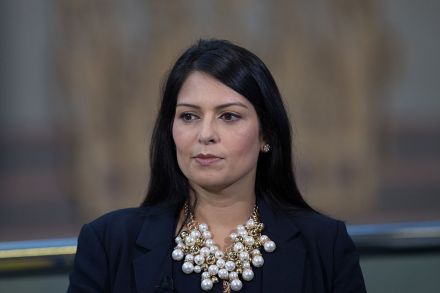
'Extraordinary' is perhaps the most over-used word in the Westminster lexicon. Days, statements, speeches, developments – all are routinely described as extraordinary, so often that the word is, well, ordinary. But some extraordinary things deserve the term more than others. A statement issued yesterday by the Department for International Development about Priti Patel’s holiday is more than ordinarily extraordinary. I’ll leave aside the fairly obvious politics of all this: under any other circumstances, Ms Patel would have been sacked, and the fact that she hasn’t been is just another comment on the state of Theresa May’s premiership.

A Westminster witch hunt is in nobody’s interests

From our UK edition

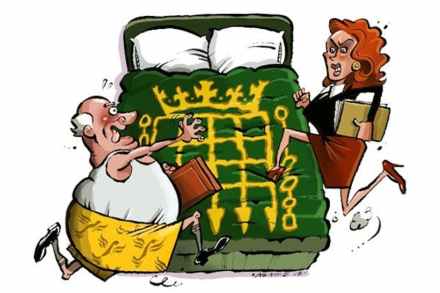
Did a male MP allow three other men to urinate on him, for sexual gratification? That is one of the more exotic suggestions on a spreadsheet of allegations and rumours about MPs and their conduct that is circulating at Westminster. 'Video exists of three males urinating on him', the spreadsheet is said to record. That may not strike you as a pleasant notion, but this an account that bears thinking about closely. First, is it true? I have no idea. I’ve heard the rumour, or variants on it, several times since the MP concerned was first elected. Lots of people have. I know the name of the MP allegedly involved. Lots of people do. Let’s suppose it’s not true, that it didn’t happen. How should that MP act?

Are the Tories about to abandon austerity?

From our UK edition

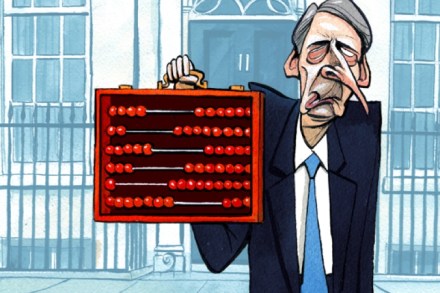
Last week I wrote a column elsewhere arguing, among other things, that it is time for the government to look beyond its (almost impossible-to-meet) commitment to a budget surplus at some point in the 2020s and think about a looser target that might allow more public spending, seeking perhaps a primary but not overall surplus. (IE tax receipts equal spending on everything except debt interest.) I mention this not to advertise that column but because I think some of the reactions to it are worth sharing. As expected, one hawkish Cabinet friend was quick to scold me for advocating 'yet more borrowing'. But another, well-acquainted with Treasury thinking, simply described the idea as 'interesting' and suggested we discuss it soon.

Misogynists can’t decide: are Weinstein’s accusers weak subhumans or devious slags?

From our UK edition

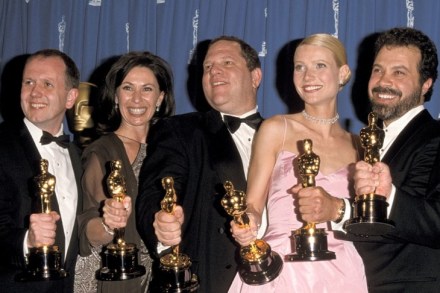
The volley of accusations against Harvey Weinstein has been extraordinary – and, to some, suspicious. Why keep silent after so many years? If an actress says that he raped her, why did she agree to go for lunch afterwards? The Spectator, in keeping with its tradition of saying things you’re unlikely to read elsewhere, has published some of these more controversial points. Gwyneth Paltrow says she was sexually harassed by Weinstein when she was 22, says Toby Young. He continues: Why, then, did she thank him three years later when she won an Oscar for her performance in Shakespeare in Love?” The same goes for Angelina Jolie and all the other actresses who have gone on the record only in the past week to describe the ordeals Harvey put them through.

Does the Tory party really want to decapitate itself?

From our UK edition

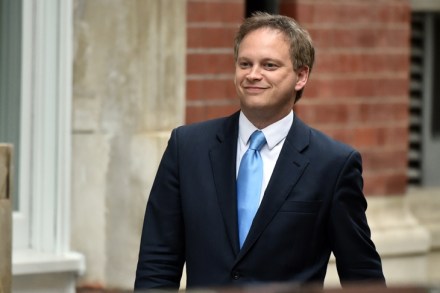
It's taken me a while, but I think I've got my head around this now. Grant Shapps is proposing that the Conservative Party should hold a protracted contest to select a new chief, and thus render itself and the Government of Britain leaderless for several weeks, at a time when the UK economy and public finances are worsening and Brexit talks are going horribly.  And he's doing this because he says the Conservatives need to demonstrate leadership. When you think of it that way, you start to understand the (really rather unkind) things Tory MPs are saying about Mr Shapps today. Not that anyone is saying he's wrong about Theresa May. She's in a dreadful state, the PM. But the brutal truth is that for the Conservatives today, there are no good choices, just degrees of badness.

The torment of Theresa May

From our UK edition

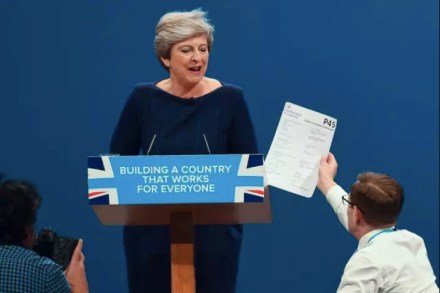
It’s always easy and usually wrong to describe single political speeches as pivotal or decisive.  Always remember: almost no-one in the real world watches anything except a few clips on the news the evening the speech is given.   The amount of coverage devoted to leaders’ speeches at party conferences is usually excessive, beyond what most of the readership or audience really want or care about. But this one, this one is different.  This really is the crucible, the decisive moment.  Theresa May’s premiership turns on how this is seen. Coughing, stumbling and victim to a brutally effective visual prank by an apparent 'comedian', we have seen a British Prime Minister come as close to the brink of public unravelling as we ever have before.

What the threat to Laura Kuenssberg says about the country we live in

From our UK edition

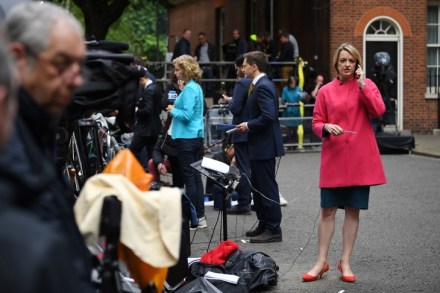
For perfectly understandable reasons, neither she nor her employers want to talk about it, but the fact that Laura Kuenssberg of the BBC is covering the Labour Party conference in Brighton accompanied by a bodyguard is an outrage that has not been greeted with the anger and disgust it merits. Imagine, for a second, if you heard this story – first revealed by Charles Moore in The Spectator earlier this year – about a foreign country. Imagine a country where a journalist could not go about the basic task of reporting a political meeting without fear of physical attack. Would you consider that country to be a fully functioning democracy?

A Brexit transition deal could make things worse

From our UK edition

As the sort of treacherous, Britain-hating invertebrate who betrayed his Queen and country by voting Remain and still doesn't believe leaving the EU will make us happier or richer, I should welcome Theresa May's Florence speech. It is, after all, confirmation that the British Government has - far, far later than it should have done - accepted political, diplomatic and economic reality. Remember, not too long ago we were being told that Britain would pay nothing to the EU after March 2019, that there would be a complete end to ECJ jurisdiction, that 'no deal' was nothing to fear and that those semi-mythical German carmakers would force the EU to give us a favourable trade deal, pronto. That's all gone now, at least among members of the reality-based community.

Boris’s nasty politics would hurt the Tories and Britain

From our UK edition

I used to have a lot of time for Boris Johnson. Sometimes whole days, in fact: from 8am until 8pm, I'd ring and text and email him, politely urging him to tell me what he planned to write his exquisitely expensive Telegraph column about, and when he'd deign to send it to me. It was, as others who've had the joy of calling him a colleague can attest, maddening. But he always filed, in the end. I don't claim that working acquaintance with Boris gives me any unique insight into his soul. In fact, familiarity only makes his real character more obscure. My overall impression of a man famous for being talkative and flamboyant is that the real Boris Johnson, the man concealed beneath onionskin layers of artifice and performance, can be quite guarded and even a bit shy.

Theresa May is right to think there’s more to life than Brexit

From our UK edition

The general election in June changed the politics of Brexit in ways that some pro-Leave commentators are desperately trying to ignore but which anyone actually doing politics has now accepted: 'no deal' is not an option, because there is not a Commons majority that would accept the steep drop out of the EU onto the rocks of the jagged WTO rules below. There certainly isn't a majority in the country for that option, and a PM who tried to sell a 'no deal' Brexit would be asking for removal and possibly an election the Tories could lose. There will be a deal, in the end, because the Conservative Party, despite its fondness for self-harm, always stops short of full-blown suicide. Anyone who tries to tell you otherwise is either deluded or trying to mislead you. Or both.

Neither May nor Corbyn will fight the next election

From our UK edition

I've been arguing since June that it is at least possible that Theresa May could remain in office longer than the Westminster village consensus dictated, so I'm not too surprised by her statement of intent in Japan. Besides, what else could she say? Like most people, I still don't expect her to fight the next election, but if she does manage the sort of transformative dogged resurrection I wrote about in June, it could just be possible. For now though, what will hold her in place will be not so much her own talents (whatever they may be) but her party's fear of confronting the huge and possibly existential questions that will come with the choice of a new leader.

Boris Johnson has returned to the political wilderness

From our UK edition

Some of his friends will tell you that beneath all the bluster and fluster, beneath the posture and the persona, Boris Johnson is actually quite like the rest of us. He has doubts and fears, good days and bad days, times when he's up and times when he's down. 'Boris' in a sense, is a construct, a costume worn by a man whose given name is actually Alexander and is sometimes known as Al. Whatever his name, Boris or Al could be forgiven for feeling a bit down these days. Not too long ago, reaching his life's ambition of the premiership seemed a realistic possibility.

Theresa May’s ‘no deal’ bravado is a thing of the past

From our UK edition

A transitional period that offers businesses some time, and some certainty.  A financial settlement including a one-off severance payment and possibly ongoing contributions for continuing programmes. A legal arrangement that concedes some sort of role to some sort of European court, and thus concedes that any substantive trade relationship with the EU will involve some sort of sharing of sovereignty. Today’s government paper on the ECJ is more proof that Theresa May has come a long way from the days of “no deal is better than a bad deal”. The clear message from the UK government positions sketched out this summer is this: we want a deal. We really want a deal. We want a deal so much that we’re prepared to walk back from our previous rhetoric and posturing.

In defence of Britain’s political centre

From our UK edition

Writing in the Times today, Hugo Rifkind charges that centrists do not want to smash up the existing order and start again. As someone who runs a centrist think tank, I can only say: guilty as charged, your honour. And if it please the court, I’d like a further crime to be taken into consideration: I like Britain. By that I mean I don’t recognise the bleak caricatures of this country offered by many people who define themselves as Right or Left.   The Right’s description of a country enfeebled by regulation and tax and divided by migration is a nonsense that ignores the necessary role of the state in making markets work fairly and in providing essential services.

Fiona Hill’s key role in the fight against modern slavery

From our UK edition

This article is, partly, about Fiona Hill. You remember Fiona Hill, the most evil woman in Britain, the wicked, snarling monster who led Theresa May to disaster then quit as Downing Street chief of staff. That Fiona Hill. That same Fiona Hill is a friend of mine, so you can feel free to ignore everything I say about her: I’m not objective and I don’t pretend to be.  Let’s just say I don’t think you should accept at face value the lazy, unfair and often self-serving caricature of my friend that has been put into the public square by various people, for reasons of their own. Maybe one day I’ll write a little more about those people, their motives and their honesty, but that can wait.

Who will be the next Tory leader? | 21 July 2017

From our UK edition

Summer is finally here. Tory MPs, exhausted, relieved and nervous, can retreat to contemplation. One theory says that distance from Westminster will break the magic spell that holds Theresa May aloft: they’ll go away and realise that stumbling and mumbling into full-blown Brexit is just impossible, then come back in September and put an end to her. Some are citing the IDS precedent, when summer thoughts turned to autumn deeds. But there’s a difference. Then, the party could agree on Michael Howard. Today, there is no Michael Howard figure: David Davis, Boris Johnson and Philip Hammond are all divisive and becoming more so: none has impressed colleagues in recent days; anger at their perceived antics means the share prices of the Big Three are all at historic lows, I reckon.

Jeremy Corbyn is Britain’s first truly post-modern politician

From our UK edition

Does Labour want to leave the Single Market? Maybes aye, maybes naw, as we used to say in North Britain. Corbyn isn't saying. It might be one of the biggest questions of public policy of this decade, but the man who now has at least a non-trivial chance of being PM one day isn't saying where he stands on it. This matters. Of course, we think we know what he intends on the single market. We think he is hostile to it and regards it as a wicked capitalist plot. We think he also inclines towards leaving because he wants to keep inside the remaining chunk of the old Labour working-class vote that is persuaded by the Ukip argument that the single market means free movement which means immigrants.   But we don't know because Corbyn isn't saying.

We should welcome Nicky Morgan’s election as Treasury Select Committee chair

From our UK edition

Nicky Morgan's election as chair of the Treasury Select Committee will doubtless be written into a narrative of Remainers taking key parliamentary positions overseeing Brexit. There's also a story to be told about the power of the Tory moderates: as well as Morgan, Rob Halfon took the education chair, and Tom Tugendhat got foreign affairs.   But what interests me here is another aspect of Morgan's arrival at the TSC. Perhaps the most important parliamentary committee is now run by someone who takes a gloriously sensible view of immigration.

Jeremy Corbyn should give Nigel Farage a job

From our UK edition

Jeremy Corbyn is 'almost a proper chap', says Nigel Farage, lauding the Labour leader for sacking frontbenchers who voted for a Commons motion seeking to keep Britain in the Single Market. That's a policy that, one suspects, quite a few recent middle-class metropolitan converts to Corbynism would agree with. Perhaps Mr Farage's praise will help them see that JC isn't quite the prophet of pro-European liberalism some of his admirers have somehow managed to imagine him as.  The Farage praise will doubtless appall many Corbynistas, who see him as the antichrist, the nasty, xenophobic antithesis of their cuddly, inclusive and not-at-all anti-Semitic messiah. It shouldn't, though, since Jeremy and Nigel have always had a lot in common.