James Kirkup

James Kirkup

James Kirkup is a partner at Apella Advisors and a senior fellow at the Social Market Foundation.

Ignore the spin. Boris surrendered to the Surrender Act

From our UK edition

What happened in Brexit this weekend? Here is the story in one sentence. Boris Johnson asked the EU to extend UK membership, something he said he would never do. The rest is spin. How many times did Boris Johnson promise not to seek an extension of the UK membership of the EU? More than I can count. Yet that is what he has now done. By sending a letter to the European Council requesting an extension, the Prime Minister has done something he said he would not do. He talked a good fight, then caved. There are perfectly good reasons for that; I suspect many of the voters he needs will accept them. There is also a debate about whether any of this matters: he may well get a majority for his deal next week anyway. But those things are secondary elements of this story.

Boris has compromised, not conquered on Brexit

From our UK edition

Reflecting on Boris Johnson’s Brexit deal, I have many questions. Why are people who rejected the possibility of Northern Ireland being subject to EU rules and regulation via a contingent backstop now embracing the certainty of that happening? How could anyone reasonably expect the DUP to sign up to something that really does make Northern Ireland a very, very different part of the Union? Something they were repeatedly promised would never be conceded. Why are none of the people who used to be furious about the '£39 billion' (actually less now but never mind) objecting to paying it now? Why shouldn’t MPs have at least a superficial analysis of the economic trade-offs made in this deal?

Meet the top cop who wants to police your pronouns

From our UK edition

What is the purpose of the police? Maybe your answer has something to do with “preventing crime” or “arresting criminals”. Or maybe you think it’s the job of officers of the law to tell us how to behave, to police our conduct, and to make sure we all speak to each other nicely. In which case, the copper for you is Deputy Chief Constable Julie Cooke of Cheshire Police. DCC Cooke has rather a big job in Cheshire, where there were more than 30,000 violent crimes in the year to August 2019 and the monthly rate of violent crime is up by more than 50 per cent in the last year.  Fortunately, however,  DCC Cooke has still managed to find time to make a video marking International Pronouns Day.

A ‘transphobic’ crime wave has hit Oxford

From our UK edition

Oxford is suffering a crime wave. Police are investigating numerous serious offences over more than six months. Thames Valley Police has issued this sweeping statement about unacceptable acts in the city: “Thames Valley Police is appealing for witnesses following a number of public offences in Oxford. Officers are investigating a large number of offensive stickers that have been placed across Oxford city centre containing transphobic comments. It is believed they started appearing in March 2019 within the High Street, Catte Street and Parks Road area. Investigating officer PC Rebecca Nightingale based at St Aldates police station said: “Behaviour like this is not acceptable and we take incidents of this nature very seriously.

If Boris does a Brexit deal, it will be because of the ‘Surrender Act’

From our UK edition

Will he strike a deal with the EU allowing Britain to leave this month? Will he compromise on the Irish border? I don’t know what Boris Johnson will do. I’ve thought for some time that he and the Conservatives would be quite willing to compromise on Northern Ireland’s future status, but I’ve also often wondered whether some people close to him would be quite happy to charge towards a no-deal exit in hope of smashing through all those who would stand in the way. Let us assume the current talks with the EU are being held in good faith on both sides. This does make sense: both sides’ best interests lie in a negotiated exit, after all. How to explain Johnson’s drive for a deal, his apparent willingness to compromise?

Can Boris Johnson survive if he breaks his Brexit promise?

From our UK edition

It gives me no pleasure to report this of my former Daily Telegraph colleague, but some people who know Boris Johnson don’t trust him. Whatever the Prime Minister’s other virtues, he is not seen by some acquaintances as a man who will always keep his word, who always does the things he says he will do. Polls appear to suggest that the public isn’t much more impressed with Johnson’s integrity. YouGov reckons just 24 per cent see him as “trustworthy” and the same proportion rate him as “honest”.

Four reasons Rory Stewart could struggle in London

From our UK edition

Could Rory Stewart become Mayor of London, disrupt the main political parties and strike a historic blow for humane centrism and political compromise? Possibly the best reason to bet against him is that quite a lot of people like me will be arguing – and hoping – that he can win. By “people like me” I mean the commentator-class. I know what I am. I run a think-tank at Westminster and I write about politics for newspapers and magazines. I don’t belong to any political party and have voted for at least five of them in my 43 and three-quarter years.

The genius of Boris’s Brexit slogan

From our UK edition

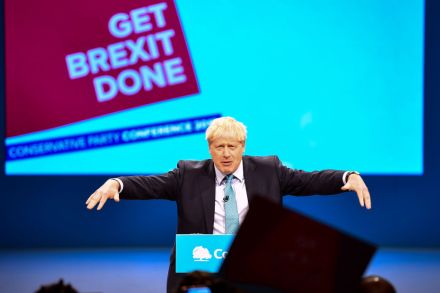
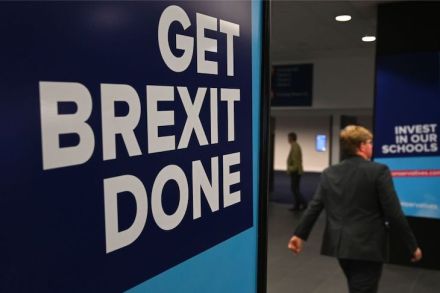
I can’t say I like it much, but the slogan for the Conservative Party conference in Manchester is a work of political genius: 'Get Brexit done: invest in our NHS, schools and police'. In ten words, it offers a simplicity and clarity of intent that none of those who stand opposed to Boris Johnson have yet summoned up. Arguably, that slogan captures something that could even be described as the missing centre-ground in British politics: socially conservative (Brexit as reassertion of the nation state and the rejection of liberal internationalism) and economically liberal (Spend! Spend! Spend on the strong state!). If – big if – the Conservatives fight a general under that banner, my money would be on them to win.

Brexiteers should cheer the Supreme Court

From our UK edition

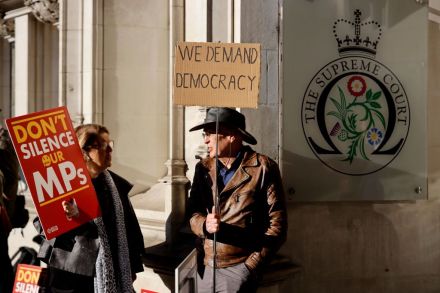
Ignore, with great respect, the people telling you today that the justices of the Supreme Court have waded into politics, exceeded their mandate and involved themselves in matters that belong to elected officials not the judiciary. Take five minutes to read the Court’s judgement on Boris Johnson’s prorogation of Parliament, where you will find a crystal-clear elucidation of principles that everyone – but perhaps especially those who favour leaving the EU – should celebrate and defend. Before I get to that, it appears to be necessary to point out what the Court has not done and not said. The judges have not ruled that Boris Johnson lied to the Queen, even though many people who really should know better are saying this. David Lammy, for instance: https://twitter.

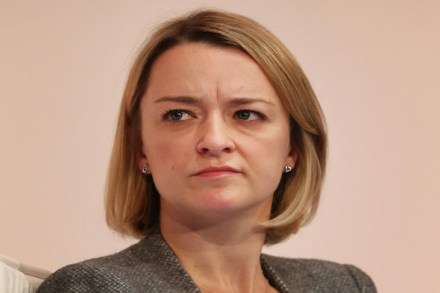
Laura Kuenssberg did her job. Leave her alone

From our UK edition

This is an article about Twitter, so you might decide to ignore it. Social media is not real life, after all, and many sensible people dismiss it as meaningless noise: 'it’s just Twitter'. But this article is also about the current state of politics and journalism, neither of which can – sadly – be discussed without reference to Twitter, so bear with me. Twitter is, to use a technical term, going batshit about Laura Kuenssberg, the BBC political editor. This isn’t the first time, and I’m sure it won’t be the last, but that doesn’t mean it’s not deserving of comment. Kuenssberg’s name is all over Twitter because of an incident at a London hospital that Boris Johnson visited today.

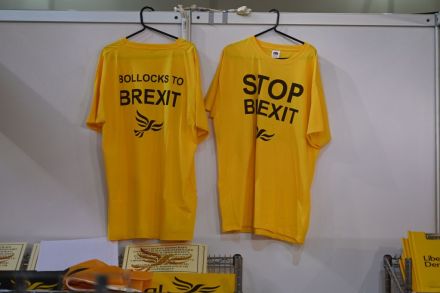
The Lib Dems’ Brexit unicorn

From our UK edition

Lib Dem conference in Bournemouth is proving to be a jolly affair so far. I’m writing this in the garden of the Highcliff hotel, looking out over the Channel that divides the UK from France and, perhaps one day, the European Union. It’s Brexit that’s making the Lib Dems happy as they bustle by. Parties are generally happy when they feel they have a clear line on big issues, and the Lib Dem line on Brexit is now crystal-clear: cancel it. Partly because they expect a big Labour shift towards a clear Remain position, the Lib Dems are now, in headline terms, committed to revoking the Article 50 notification and thus returning UK membership of the EU to its previous permanent status.

Can you imagine a lobbyist against women’s rights being made a peer?

From our UK edition

This is a thought-experiment. Imagine the following scenario: A Conservative Prime Minister is dishing out peerages. Among the people given a lifelong right to sit in the House of Lords and vote on new laws is a lobbyist who has conducted a long campaign to diminish women’s rights under the law. The lobbyist, leading an organisation that describes itself as a 'professional lobbying group', has particularly targeted the Equality Act 2010 for change. A quick primer on the law: The Act is the basis for most equality law and practice in the UK. It says that in general, people should be treated in the same way whatever their sex, race, sexuality, age, religion, gender reassignment or disability.

The vices and virtues of Theresa May’s honours list

From our UK edition

An awful lot of Theresa May’s resignation honours list is awful. In no particular order: Knighting Geoff Boycott would be a horrible act for any PM, let alone one who actually did some good on domestic violence. Who cares if he punched a woman repeatedly in the face, he played great cricket, eh? A gruesome choice, even though he continues to deny the offence. Knighting the communications Director who failed to communicate your central policy would be a misjudgement at the best of times. But Theresa May adds hypocrisy to the mix: she once cruelly and very publicly mocked David Cameron’s press chief for precisely the same honour.

We angry Remainers must listen to Leave voters – or risk losing again

From our UK edition

As a Remain voter who believes that Britain must leave the European Union, I’m finding the Brexit seas ever harder to navigate. In particular, the siren call of the outraged Remainers grows louder. I have little time for many people on the Stop Brexit extreme of the debate, and that includes those who hide beneath the cloak of calling for a People’s Vote. Such people did as much as the headbangers on the no deal side to kill attempts at compromise that could have seen Britain leave with a deal and even – my preference – continued membership of the Single Market. Even Remainiac pin-up Ian Dunt – rightly – laments the People’s Vote campaign’s assault on the Norwegian option as irresponsible 'purity politics'.

Could Boris Johnson cut Northern Ireland loose?

From our UK edition

Boris Johnson is trapped. He has thrown away his working Commons majority by expelling 21 reality-based Conservatives. He gambled on his political enemies doing the thing he wanted them to, vote for an early general election, then appeared surprised when they declined to do so. If he can’t get a Commons vote for that election next week, it seems quite likely he will face a legal requirement to request an Article 50 extension, with no prospect of an election and a new majority before 31 October that could free him from that obligation. How does he get out of the hole he has dug himself?

Boris Johnson has not made Nigel Farage go away

From our UK edition

Nigel Farage: whatever happened to him? You remember, the chap in the coat who used to go on about Europe and all that. Time was, you couldn’t turn on the TV without seeing him. These days, not so much. Farage’s relative quiet in political circles says quite a lot about how easy a ride Boris Johnson is getting in his early days as PM. It is implicitly assumed by many commentators and editors that the advent of a Boris Johnson Government packed with ultra-committed Brexiters, directed by the Vote Leave team and seemingly hell-bent on No Deal will, in due course, render Farage and his Brexit Party irrelevant.

A-levels vs BTECs is the story of British politics

From our UK edition

Exam question: what percentage of 17 and 18-year-olds sit A-levels? The answer – I’ll come to it in a bit – might just be the most important fact in British politics that most people in British politics don’t know. I ask because this is A-level results week, the annual festival of photogenic teenagers jumping joyously to mark their results and annoying celebrities sharing think-positive truisms about failing your exams not being the end of the world. It’s all lovely and familiar and predictable and utterly missing the big picture.

It’s time David Cameron returned to fix his Brexit mess

From our UK edition

In private moments of exasperation with rebellious Tory MPs, prime minister David Cameron used to complain that “too many of my colleagues think they’re here as tribunes of the people”. For him, as for Conservatives since the days of Edmund Burke, MPs should be representatives autonomously exercising judgment, not delegates meekly obeying instructions. Well congratulations Dave. Thanks to your brilliant decision to risk EU membership – and the entire British political settlement on a coin-toss, MPs are all tribunes now. There are some serious caveats about the ComRes poll on the front of the Daily Telegraph today: the question looks loaded and the “don’t know” figure is very high.

Brexiteers should be careful about setting fire to the British constitution

From our UK edition

Revolutions, once started, are hard to stop. The fire that David Cameron so casually lit in 2016 has burned through many things that seemed like fixtures of British national life. Judicial independence; the Civil Service and the Bank of England; the Union; the Conservative party's faith in institutions; basic standards of journalism; and parliament itself: all have been pushed towards the the flames by chanting members of the Brexit death-cult. So it should be no great surprise that we’ve reached the stage where it is said that the Prime Minister of the day is prepared to set aside pretty much the most fundamental principle of representative democracy in the name of the precious Brexit.

Can the Tory party survive Prime Minister Boris Johnson?

From our UK edition

Some thoughts on the arrival in office of Prime Minister Boris Johnson, based on his first speech, his first appointments and some conversations with people in different parts of the Conservative party and Whitehall today.  These are not all my own predictions; some belong to others. But they’re under my name, so I’ll be happy to answer for them when – and if – they’re proven wrong: 1. A no-deal exit from the EU is much more likely than financial markets currently imply, and much more likely to become the de facto object of UK government policy Johnson’s speech gave him very, very little room for manoeuvre over Brexit. As his first act, he’s committed to leaving on October 31.