James Kirkup

James Kirkup

James Kirkup is a partner at Apella Advisors and a senior fellow at the Social Market Foundation.

Jake Berry is the real hero of the reshuffle

From our UK edition

OK there are bigger stories in the reshuffle, but the tale of Jake Berry is an important one. He quit to spend more time with his family – and really meant that. Berry was minister for the northern powerhouse. He is also one of Boris Johnson’s oldest allies in the Commons. These days (almost) everyone is the PM’s friend, but not long ago there were only two: Berry and Ben Wallace. So when Berry says he was asked to stay in government, believe him. And why is he not a minister today? Because he was offered a job that would have taken him abroad a lot when his children are very young; thanks to the arrival of a new baby this month, he and his wife now have three children under three. So faced with a choice of career and kids, he chose the kids.

The minister who politely refused to play the trans language game

From our UK edition

This is an article about the power of language in the transgender debate, about how the trans agenda has been advanced by the skilful capture of language, and about a government minister who has rejected that capture in favour of facts. It’s a bit complicated, so bear with me while I try to explain a slightly technical legal thing. It’s also based on a debate that happened in Parliament last week, but which I’ve only just had time to read in full. Sorry. Anyway, this is about what happens when a person who is married changes their gender in law. Let’s say that person - Alex - was born male, grew to manhood and married a woman, Sue. Let’s say that in his 50s, Alex took steps to change his legal gender to be recognised as a woman.

In defence of Laura Pidcock

From our UK edition

Oh, Laura Pidcock. The former Labour MP for North West Durham, former shadow cabinet member, and former leadership hope of the Corbynite left may be gone from parliament but she has not left the political stage. Pidcock, it seems to fair to say, is on the left of politics. A proud socialist who said she could never be friends with a Tory, she was seen by some as the future of the left. Even in defeat, she has been feted: the Canary recently ran a column saying she 'captures the spirit left-wingers need to have' after the election loss. I rehearse Pidcock’s left-wing credentials here because they’re important to understand what follows. Pidcock has been writing about the election defeat and its lessons for the left in Tribune magazine.

You can thank Remainers for the hardness of this Brexit

From our UK edition

The first chapter of Britain’s Brexit story ends tonight. For some, that’s something to celebrate. For others it means sadness. For most of us, I suspect, emotions are mixed: a bit of relief at the sense of clarity that underpins politics; a bit of optimism that we might all learn from the psychodrama/culture war of 2016-2019; a bit of foreboding about the Brexit dramas still to come. I voted Remain. I believed that despite its flaws (and I know them well: I covered more than 50 EU summits as a reporter, and projects including birth of the euro, the stability and growth pact and the European Constitution) Britain’s long-term interests lay in accepting the trade-offs entailed by membership of the EU.

Was this journalist sacked for saying ‘sex is binary’?

From our UK edition

I write a lot about transgenderism. I do so for several reasons. Among them: because politicians still aren’t doing their job and assessing policies and representing concerns properly. Because politics fails if groups of people are silenced and ignored. Because the way some women are abused, threatened and silenced on this topic makes me angry. Because other journalists (mostly male ones) who know that this stuff matters still aren’t covering it. And because language, our ability to give form and expression to our thoughts, is important. George Orwell is probably the most over-quoted author in the language. That’s true even if you exclude all the people who cite things he didn’t say ('In a time of universal deceit…'). But sometimes nothing else will do.

Harry has deserted the Royal Marines in their hour of need

From our UK edition

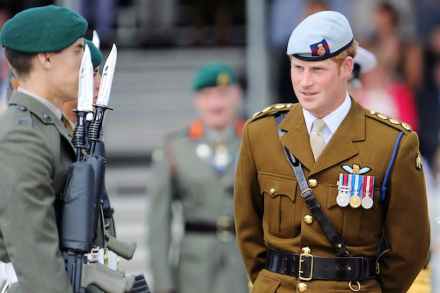
I have been trying with considerable success not to give two hoots about this Harry and Meghan thing. But a detail of their departure from the royal orbit bothers me. It arises from Harry’s surrender of his royal patronages, part of his move to cease being an HRH and become a plain old duke. That detail is this: the Captain General of the Royal Marines is resigning his post in order to spend more time on Instagram. And that, bluntly, is a pretty shabby thing.

Boris Johnson is the real heir to Blair

From our UK edition

Boris Johnson is to 'take personal charge' of a new crackdown on crime and gangs. So reports Steve Swinford of the Times, one of the Lobby’s best reporters. While this is a good and new story, for a jaded and ageing ex-hack like me it crystallises a vague feeling that’s been nagging at me for a few weeks and prompts this realisation: Boris Johnson is turning into Tony Blair. These days Blair is often remembered as the quintessential metropolitan liberal politician, a champion of globalisation, economic openness and, above all, the EU. I became a Lobby reporter in 2001 and my memory of the Blair government that I covered is was rather different. On the economy, he oversaw an expansion of state spending and state provision.

How Greggs can save capitalism

From our UK edition

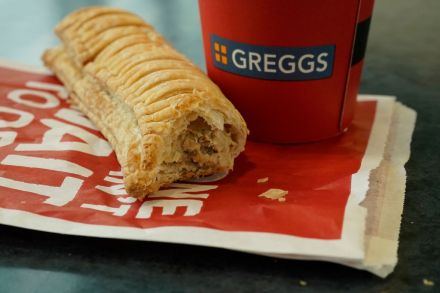
Greggs' sausage rolls are part of the national conversation. The smart shift to offer a vegan variant caught the mood and bragging about your love of Greggs is an easy way for politicos to signal their down-with-the-proles ordinariness. In fact, political types should be paying more attention to the company behind the sausage rolls, because it might just be the future (and saviour) of capitalism. Greggs is a public company, part of the FTSE 250 and a good bet for the FTSE 100 one day. That and it treats people well. The latest sign of this is the £300 bonus Greggs is paying to staff, reflecting those profits and a £35million dividend to shareholders. That bonus is on top of the firm’s existing profit share scheme.

In defence of SpAds

From our UK edition

Government by headline is always tempting, and always a mistake. Some of the worst such mistakes concern the machinery and cost of politics, where it’s all too easy to announce stuff that sounds good for a day or two yet inflicts long-term harm on the quality of politics and government. Scrapping and merging Whitehall departments generally falls into the category of 'things that sound sensible but aren’t', so reports that such a reorganisation has been canned are encouraging. In any case, there are bigger problems to fix in Whitehall, problems caused by politicians putting appearances before effectiveness. Public sector pay is a good example.

In just a few words, JK Rowling has changed the transgender debate

From our UK edition

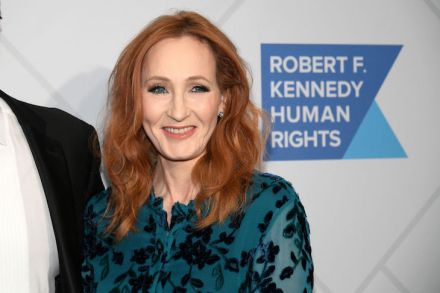
One of the (many) frustrations of writing a lot about sex and gender is knowing that there are a lot of people who are concerned about these issues but who do not, for various reasons, say so. I’ve written quite a lot about the politicians, of all parties, who have private worries and criticisms about policies and laws intended to benefit transgender people which, however inadvertently, might have implications for women and their legal rights. I’ve also written about the failure of some media outlets, including some (but not all) parts of the BBC, to cover this issue properly. I am also aware of lots of women in lots of different walks of life who worry about this stuff but do not say so. Many are fearful of the backlash, the accusations of transphobia that could follow.

Now even rape is ‘gender neutral’

From our UK edition

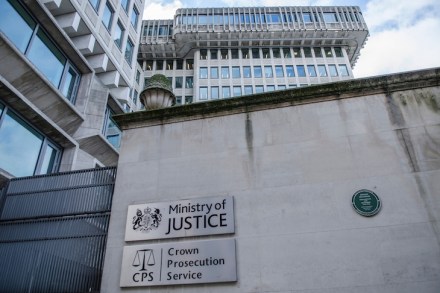
First, a warning. This is one of those articles where I use the word 'penis' a lot. Yes, another one. No, I don’t enjoy it much either, but sometimes it’s unavoidable. Sorry. Now, some law. Specifically, the Sexual Offences Act 2003. Among other things, it defines the crime of rape, in Sections 1 and 5. Section 1: A person (A) commits an offence if— a) he intentionally penetrates the vagina, anus or mouth of another person (B) with his penis, b) B does not consent to the penetration, and c) A does not reasonably believe that B consents.   Section 5: A person commits an offence if— a) he intentionally penetrates the vagina, anus or mouth of another person with his penis, and b) the other person is under 13.

Boris Johnson has all the power. Here’s what he’ll do with it

From our UK edition

Put aside the surprise at the scale of the Tory gains and look at where those gains came, and consider what is now the central question of British politics: how will the Conservatives try to keep their gains at the next general election? Don’t assume that’s in 2024. The Fixed Term Parliaments Act may well not survive this election result. This majority gives Boris Johnson the scope to engage in constitutional reform, though big SNP gains mean the biggest constitutional challenge will be keeping Scotland in the Union. I sadly think we’ll see IndyRef2 in this Parliament and I fear the outcome. The Tories did badly in Scotland, but won in the English north and midlands. How well?

Jo Swinson has finally made the BBC do its job on trans rights

From our UK edition

Jo Swinson won’t be our next prime minister but her election campaign has achieved one significant thing already: she’s helped the BBC to start doing the job of journalism on trans rights issues. The Lib Dems have taken a conscious decision to go into the election campaign as the party of trans rights and inclusion. They think that embracing the transgender issue plays well with the degree-educated, socially liberal voters in university towns. I can’t judge how well the Lib Dem trans strategy is playing out with those key voters. I can simply assess the public results of that decision, which has been a string of frankly horrible broadcast interviews by Swinson and other Lib Dem candidates.

Corbynomics won’t help the poor

From our UK edition

Here’s a curiosity of the 2019 general election: given that both the big parties agree that austerity is over and Britain wants a more generous state, why is no one doing much to help the poor? And why is no one talking about that failure? These questions start with Labour. Jeremy Corbyn’s fans see him as a radical crusader for economic justice, an almost ascetic figure utterly devoted to the disadvantaged. In the mad 'story' about Corbyn and the Queen’s speech this week, the Labour leader had a perfectly good tale to tell: he spends part of his Christmas Day in a shelter for the homeless. According to the Social Metrics Commission (SMC), a cross-party group of experts (including my Social Market Foundation colleague Matt Oakley) there are 4.

The document that reveals the remarkable tactics of trans lobbyists

From our UK edition

A great deal of the transgender debate is unexplained. One of the most mystifying aspects is the speed and success of a small number of small organisations in achieving major influence over public bodies, politicians and officials. How has a certain idea taken hold in so many places so swiftly? People and organisations that at the start of this decade had no clear policy on or even knowledge of trans issues are now enthusiastically embracing non-binary gender identities and transition, offering gender-neutral toilets and other changes required to accommodate trans people and their interests. These changes have, among other things, surprised many people.

Boris’s ‘Buy British’ plan shows how Brexit has changed the Tories

From our UK edition

Where to start with the Conservatives’ “Buy British” promises to end EU state aid rules? The obvious point is that dumping rules that prevent governments subsidising domestic firms will make it much harder to strike a trade deal with the EU after Brexit. Limiting state aid is pretty much fundamental to the EU’s very existence and operations; arguably the story of the EU since the late 1980s is a story of trying to drag European politicians away from protecting favoured sectors and firms and opening their economies up to cross-border competition. Of course, that story isn’t much told in the UK where, thanks not least to the sort of journalism once practiced by Boris Johnson, most people believe the EU is an exercise in anti-competitive protectionism.

Ivan Rogers is wrong about Boris Johnson

From our UK edition

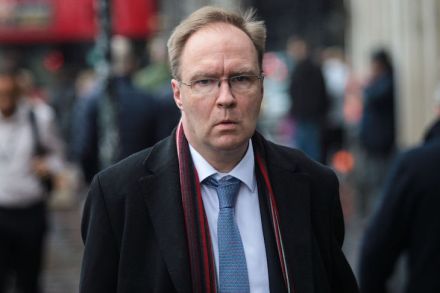
Sir Ivan Rogers missed his calling. Our former envoy to the EU would have made a fine newspaper columnist, albeit one who struggled to file to length. His ability to capture the big issues of the Brexit process and make a compelling argument about what happens next is quite something, and explains why a Rogers intervention always gets people talking. His latest contribution is a long speech arguing that Boris Johnson is heading for a fall in late 2020 when the UK’s Brexit transition period ends and the country faces three options: 1) Conclude a trade deal with the EU 2) Fully leave the EU without a deal 3) Contrive a way to extend the transition and keep talking about a deal.

Corbyn and McDonnell want you to attack their broadband pledge

From our UK edition

The Labour plan to nationalise broadband is a good illustration of why the Corbyn-McDonnell team are much better at politics than their Conservative critics realise. It is also more evidence that the allegedly radical socialist Corbyn is actually engaged in an almost Blairite exercise of calculated branding and positioning. If you read certain newspapers and listen to the mainstream Conservative narrative about Corbyn, you’ll hear that he is an economic radical intent on the biggest extension of state power into the private economy in modern British history. There is a lot in that narrative, but his Tory opponents should ponder the fact that Corbyn and his friends are actually quite happy to be accused of doing this.

Hillary Clinton’s transgender heresy

From our UK edition

Hillary Clinton’s BBC interview in London is making headlines mainly about Russia, but students of the debate about transgender rights and self-identification should pay close attention to another moment in the interview. For Clinton, still the most prominent women on the left of politics in the world, said there are 'legitimate concerns' about the way the move to recognise transgender identities might affect women. Those concerns should he recognised, she told the BBC. Now, this isn’t technically 'news' in the sense that it’s not the first time Clinton has spoken about this topic of late.

Should Stewart Jackson’s swimming pool disqualify him from being an MP?

From our UK edition

How long should we remember the MPs’ expenses scandal? Should someone who used taxpayers’ money to kit out their home and renovate their swimming pool be allowed a second chance at being an MP? The imminent selection of a Conservative candidate in Sevenoaks raises such questions. Selections are politics in its most raw and spiteful form. The battles to be nominated in a seat where your party usually wins are the fiercest, nastiest and most consequential that many politicians will ever be involved in. Because selections matter so much – missing out a safe seat can mean your career is over before it begins – the resentments that flow from these battles can last for years and decades.