James Heale

James Heale

James Heale is The Spectator’s deputy political editor.

Tory favourites enjoy mixed success in safe seats

From our UK edition

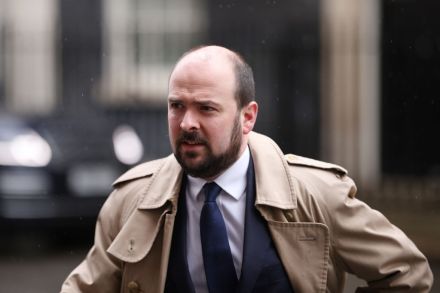
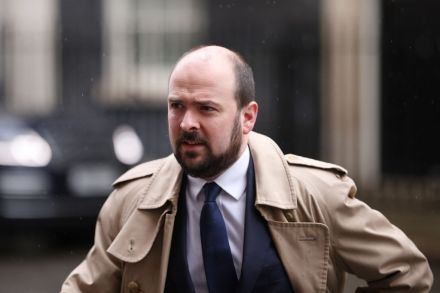
Claims of stitch-ups in seat selections are as old as the Tory party itself. But the chaotic nature of this snap election and the Conservatives’ poor polling have produced an especially angry reaction among elements of the party grassroots. With Tory nominations set to close tomorrow, only one ‘safe’ seat now remains: Basildon and Billericay, the Essex stronghold that returned John Baron with a majority of 20,412 in 2019. For weeks, there have been rumours circulating that Tory chairman Richard Holden would switch to this seat from North West Durham. Today they have been confirmed. Holden is the sole name going forward to the local association at 8 p.m today.
What would it take for Sunak to have a breakthrough?

From our UK edition

13 min listen

Some Conservatives have put their hopes on tonight's TV debate as a breakthrough moment for the lacklustre and disorganised Tory campaign, but will it really be a gamechanger? James Heale talks to Isabel Hardman about why she's sceptical, and to the pollster Chris Hopkins at Savanta about why the Tories just aren't closing that poll gap. Produced by Megan McElroy and Cindy Yu.

What will Tory leadership hopefuls do about Farage?

From our UK edition

What comes next? That is what many Tories are asking as they stare down the barrel of defeat. Even before Nigel Farage's re-entry into the election campaign, most had privately conceded that the election was lost. An MRP/YouGov poll out yesterday suggested that the Tories are on course to win just 140 seats – the worst result in the party’s history. Penny Mordaunt, Grant Shapps and Jeremy Hunt are among those set to lose. If such a result came to pass, which of the survivors would be best placed to succeed Rishi Sunak and start the slow, painful process of building from such a meagre base? 'Nigel Farage is still against many Conservatives,' said Badenoch Every contender is going to have to face a variation of the inevitable question: will you work with Nigel Farage?

Could Farage crush the Tories?

From our UK edition

13 min listen

This afternoon a wildcard was thrown into the election – the return of Nigel Farage. He will be standing for the Reform party at Clacton, the one parliamentary seat that Ukip had held. What will this mean for the Conservatives? James Heale talks to Fraser Nelson and Katy Balls. Produced by Oscar Edmondson and Cindy Yu.

Why Farage is back as Reform leader

From our UK edition

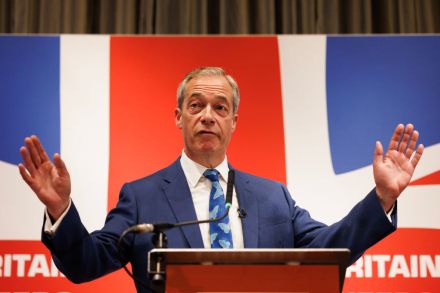
He’s back. After all the teasing and all the rhetoric, Nigel Farage has finally announced his return as Reform leader. Having initially pledged that he would not stand at this election, he told a 100-strong room in Westminster: ‘I’ve changed my mind.’ He will now stand as Reform’s candidate in Clacton – the only seat Ukip ever won in a general election, back in 2015. ‘I cannot turn my back on the people’s army’ he said to the room. ‘I cannot turn my back on all those people who voted for us… I can’t let those people down, I won’t let those people down.’ If this is to be a change election, then Farage wants to lead the radical charge If this is to be a change election, then Farage wants to lead the radical charge.

What is Nigel Farage planning?

From our UK edition

Nigel Farage continues to tease Westminster with his endless ‘will he, won’t he?’ dance. The former Ukip leader is hosting an ‘emergency press conference’ at 4pm amid speculation that he will announce he is standing as a candidate for Reform. It’s been a rollercoaster fortnight for Farage. His initial response to the election was to rule himself out from running, preferring instead to focus on the United States. In the days that followed, Farage expressed his ‘huge regrets’ about that decision. His commitments stateside seem less extensive than many first thought, with Farage expecting to only do one event for Donald Trump in Detroit. His two speeches for Reform last week, meanwhile, received extensive media coverage.

Can Keir handle Trump?

From our UK edition

12 min listen

The news that Donald Trump has been convicted of 34 felonies meant that the Labour leader faced questions about the former president on Friday morning, rather than the Diane Abbott selection storm. On his visit to Scotland, Starmer told the BBC that a Labour government would be willing to work with ‘whoever’ was elected in November’s presidential contest. But how would Starmer deal with Trump?  James Heale speaks to Kate Andrews and Freddy Gray.

Mega-poll suggests worst ever Tory result

From our UK edition

Another day brings another devastating poll for the Tories. The first MRP polling of the election campaign is out and it makes for grim reading for Rishi Sunak. A 10,000-strong survey by Electoral Calculus for the Daily Mail suggests that the Conservative party could receive just 66 seats – its worst result in history – with Labour on course for a staggering majority of 302. This takes into account tactical voting and is based on a poll which shows Keir Starmer's party on 46 per cent – more than twice the level of Rishi Sunak's Tories on 19 per cent. An individual constituency breakdown suggests that 18 cabinet ministers would lose their seats. Among them include Kemi Badenoch, James Cleverly, Grant Shapps and Penny Mordaunt, all of whose seats would be taken by Labour.

Labour’s parachute regiment bolsters the Starmtroopers

From our UK edition

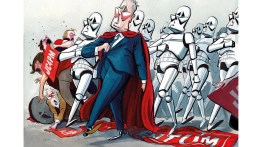
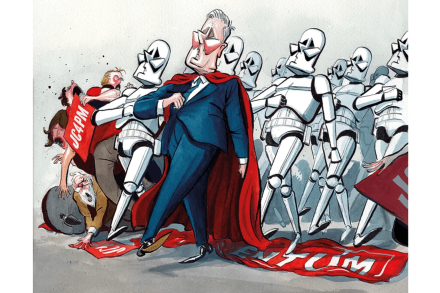
If you put the Diane Abbott row to one side, it has been a very successful week for the clique who control Labour's candidate selections. Rishi Sunak's decision to call an election eight days ago means that the National Executive Committee can now impose who they want on constituencies across the country. More than 100 have since been slotted into seats, ahead of the party's self-imposed deadline of all candidates being chosen by next Tuesday – an impressive exercise in party management. It is certainly a marked contrast with the 150-odd vacancies which their Tory equivalents need to fill. The candidates selected over the past week are very much Starmer's people. Their politics are moderate; their brand professional.

I’ll still work with Trump, says Starmer

From our UK edition

Keir Starmer really is a lucky general. The news that Donald Trump has been convicted of 34 felonies helped ensure that the Labour leader faced questions this morning about the former president, rather than the Diane Abbott selection storm. On his visit to Scotland, Starmer told the BBC that a Labour government would be willing to work with ‘whoever’ was elected in November’s presidential contest.   If elected, Starmer will be in Washington DC for the Nato summit on the day that Trump is sentenced ‘Obviously we respect the decision of the court, the independent court – there’s a bit of process to go with sentencing and appeal,’ he said. ‘But we are in an unprecedented situation. There’s no doubt about that.

Can Keir Starmer control the Labour left?

From our UK edition

18 min listen

Keir Starmer has began a purge of pre-existing candidates and MPs who risk frustrating their election campaign. There is an ongoing row about whether Diane Abbott, the former shadow home secretary, will be barred from standing. Angela Rayner has now weighed in saying she 'sees no reason why Diane Abbott can't stand for Labour'. Could this become a problem for Keir Starmer? James Heale speaks to Fraser Nelson and Paul Goodman. Produced by Natasha Feroze and Oscar Edmondson.

Starmer purges the Corbynites

From our UK edition

12 min listen

Keir Starmer is now putting the final touches to this with a last minute purge of pre-existing candidates and MPs who risk frustrating their election campaign. There is an ongoing row about whether Diane Abbott, the former shadow home secretary, will be barred from standing, but who else might join her?  Oscar Edmondson speaks to Katy Balls and James Heale.  Produced by Oscar Edmondson.

Is Diane Abbott in or out?

From our UK edition

11 min listen

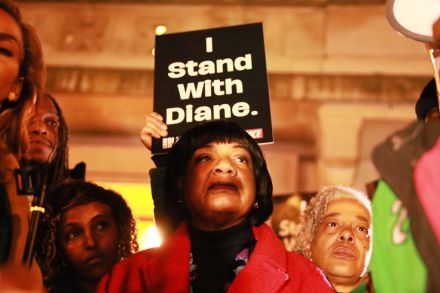
The drama in Westminster never seems to end. Last night the Times reported that the Labour party would not allow veteran MP Diane Abbott to represent the party at the upcoming general election. Abbott has reportedly been given the Labour whip back as a middle way, causing something of a backlash. Seeking to clarify the situation, Keir Starmer has today insisted that, 'no decision has been taken to bar Diane Abbot' and that 'she is a member of the parliamentary Labour party.' What's going on? Will she be standing?  James Heale speaks to Katy Balls and John McTernan, former political secretary to Tony Blair.  Produced by Oscar Edmondson.

Police drop investigation into Rayner housing claims

From our UK edition

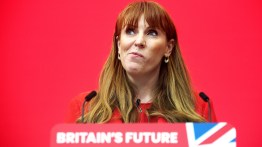
Labour's election campaign continues to get off to a good start. Greater Manchester Police (GMP) has today confirmed that it will take no further action against Angela Rayner after accusations surrounding her living arrangements. Officers from the force launched an investigation into the party's deputy leader in April after Tory MP James Daly registered a complaint. It followed reports in the Mail which suggested that Rayner might have lived primarily at her then-husband's address in Stockport, despite registering to vote under her own – a potential breach of electoral rules. But this afternoon GMP released a 121-word statement which says that after 'a thorough, carefully considered and proportionate investigation' they have concluded that 'no further police action will be taken'.

Farage speaks of ‘six-year plan’ as he launches campaign

From our UK edition

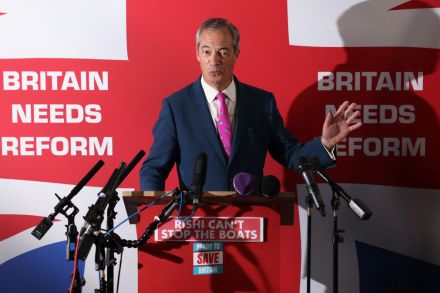
The Royal Cinque Ports Yachts Club was an appropriate place for Nigel Farage to make his first big speech of the election campaign today. Set on the Dover seafront, it offered the perfect setting for Farage – Reform’s honorary president and spiritual figurehead – to lambast the Tory record on small boats. The Conservatives, he said, had betrayed their 2019 voters by allowing an ‘invasion’ of migrants: ‘If 3,800 boats and 125,000 people isn’t a sort of slow motion D-Day in reverse, I don’t know what is.’ It was the kind of stump speech that we have seen honed in endless GB News monologues, with the familiar cast of villains: Strasbourg jurists, French naval officers, continental people-smugglers and above all, the spineless British political class.

Tories race to find 160 candidates

From our UK edition

The decision to call a snap election last Wednesday caught many in Tory and Labour high command by surprise. Both parties are now racing to finalise candidate selections for all 630 seats in Britain by the deadline of Friday 7 June, with Labour much further advanced in this process than the Conservatives. Fewer than 35 constituencies currently lack a Labour candidate, and some in Keir Starmer's team are keen to highlight the contrast in readiness between the two parties. The Tories now have 12 days to fill 160 vacancies – the equivalent of picking one candidate every 100 minutes. Within CCHQ, however, there is confidence that this target can be met, in spite of the onerous demands of the national campaign.

Sunday shows round-up: Farage brands national service plan ‘a joke’

From our UK edition

Today saw the first set of Sunday shows since the election was called on Wednesday. Rachel Reeves was interviewed by Laura Kuenssberg about Labour's fiscal plans if they win power on 4 July. The Shadow Chancellor said 'We won't increase income tax or National Insurance' but refused to rule out some public spending cuts as she vowed that there 'will not be a return to austerity' under a Labour government. Reeves also refused to put a timetable on raising defence spending to 2.5 per cent of GDP by 2030, though she said the party supported getting there eventually. https://www.youtube.com/watch?v=0hWj3WlTwso Cleverly rules out jail for national service refuseniks The big announcement of the day is the Conservatives' plan to introduce a new form of national service.

Sunak’s smoking ‘legacy’ goes up in flames 

From our UK edition

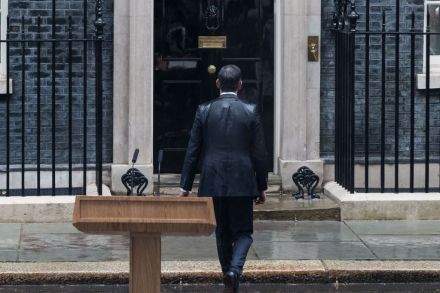
When Rishi Sunak announced his decision to call a July election, he used his rain-soaked speech to list his apparent achievements in office. This included his plans for a ‘smoke-free generation’: We set out a comprehensive plan to reform our welfare system to make it fair to those who pay for it as well as those who need it. Immigration is finally coming down and we will stop the boats with our Rwanda partnership. We will ensure that the next generation grows up smoke free. I hope that my work since I became Prime Minister shows that we have a plan and are prepared to take the bold action necessary for our country to flourish.

Why has the election been called now?

From our UK edition

15 min listen

Less than 24 hours after Rishi Sunak's surprise election announcement, we look ahead to the parties' campaigns. What has been the fall out? How have Labour responded to the shock news? And why didn't Rishi have an umbrella? James Heale is joined by Isabel Hardman and former Labour adviser John McTernan to discuss.  Produced by Patrick Gibbons.

Reform’s election launch overshadowed by Farage

From our UK edition

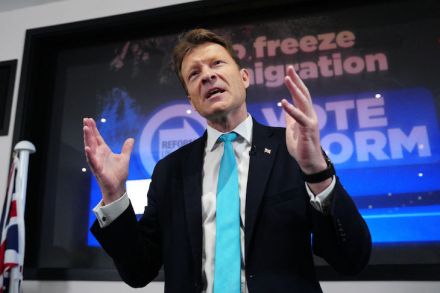
It’s been a big morning on the right of British politics. First, net migration figures were published showing 685,000 people arrived in the 12 months between 2022 and 2023. Rishi Sunak then admitted that no flights to Rwanda will take off before polling day on 4 July. This was followed shortly after by Nigel Farage ruling himself out as a candidate in the snap election. Reform UK leader Richard Tice then took to his feet to launch his party’s election campaign. Tice’s party will likely still hurt the Tories There was little that was new on policy or messaging as Tice, Reform deputy leader Ben Habib and ex-Tory cabinet minister Ann Widdecombe all attacked the Conservatives on migration.