James Heale

James Heale

James Heale is The Spectator’s deputy political editor.

Sunak makes security central to his stump speech

From our UK edition

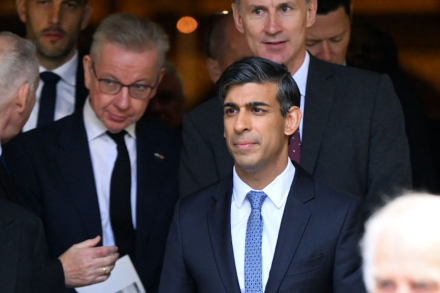
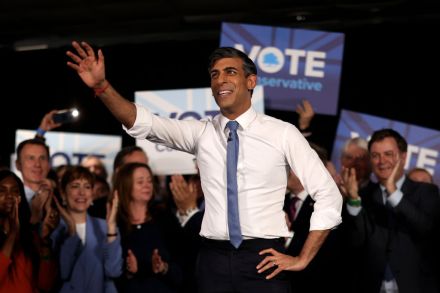
Rishi Sunak tonight made his first stump speech, kicking off the Tory election campaign with an appearance at the Excel Centre in the East End of London. The Prime Minister took to the stage after James Cleverly served as his warm-up act, reliving the role he played in the last election as party chairman and Tory cheerleader. The contrast between the two men emphasised the message which Sunak wanted to land. While Cleverly's speech was relaxed and off the-cuff and relaxed, Sunak stuck to his autocue and talked up the importance of security in this election, using variations of the word eight times in his ten-minute speech to the 100-odd attendees.
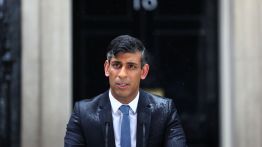
Sunak’s biggest gamble yet: a July election

From our UK edition

12 min listen

Rishi Sunak has called a general election on July 4. A new parliament will be summoned on 9 July and the state opening will be on 17 July. Is a summer election a wise decision? Katy Balls and James Heale discuss from parliament. Produced by Natasha Feroze.

Starmer pitches stability

From our UK edition

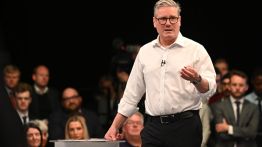
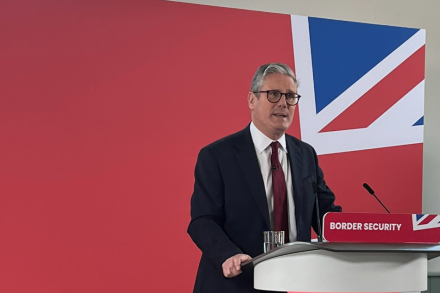
Within 20 minutes of Rishi Sunak announcing plans for a July election, Keir Starmer was up delivering his response. The Labour leader’s first pitch of the campaign could be summed up in six words: stop the chaos, vote for change. It is a neat encapsulation of Starmer’s four-year-mission as Leader of the Opposition – making his party electable again by fashioning it as the safe, reliable, respectable mainstream of British politics. Central to Labour’s election campaign will be contrasting Sir Keir’s leadership with the three Tory premiers he has faced across the despatch box. Over the next six weeks, he and his shadow cabinet will hammer home to voters the message that the past 14 years have been ones of disarray and division.

Visa figures fall again – but is it enough?

From our UK edition

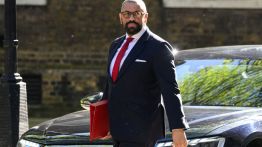
It’s a big day for stats in British politics. Following the news that inflation has dropped to 2.3 per cent, the Home Office has this morning published its latest figures for visa applications. They reveal a 25 per cent fall across all visa routes in the first four months of 2024, following the package of changes that the Home Secretary announced in December 2023. The most significant drop was in student dependant numbers, which fell by 79 per cent.  This big fall is one of the reasons why Home Secretary James Cleverly is reluctant to clamp down even further on the graduate visa route. Last week’s report by the Migration Advisory Committee disappointed some Tory MPs, who have significant concerns about the number of visas being handed out.

Is there finally good news for the government?

From our UK edition

11 min listen

The IMF has upgraded the 2024 economic forecast for the UK. What does this mean for the Government and could more good news follow this week? And, with speeches on tax, benefit crackdowns and tackling anti-semitism, what should we make of all this political activity? Will we see the return of 'the hot lectern guy'? Kate Andrews and James Heale join Katy Balls to discuss.

Gove sounds the alarm on anti-Semitism

From our UK edition

Multiple ministers are out giving speeches today but none will be as hard-hitting as that made by Michael Gove this morning. Britain, he warned, risks 'descending into the darkness' if it fails to tackle growing anti-Semitism in the wake of the 7 October attacks. Much of the Community Secretary's ire was directed at the recent pro-Palestine campus protests, amid fears of the impact on Jewish students. University encampments are merely, in Gove's words, ‘anti-Semitism repurposed for the Instagram age'; the boycott, divestment and sanctions campaign is 'explicitly anti-Semitic'. It comes after anti-Jewish hate crime incidents rose by 147 per cent last year, two-thirds of which followed the attack on Israel, according to the Community Security Trust.

Infected blood scandal was ‘no accident’, says report

From our UK edition

17 min listen

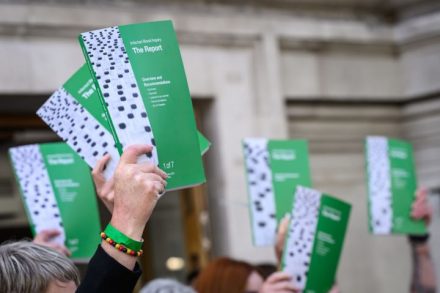
The Infected Blood Inquiry has finally concluded after a five-year investigation. This lunchtime, the inquiry’s chair Sir Brian Langstaff said thousands of deaths could have been prevented and the ‘worst ever’ NHS scandal, which saw thousands of Britons between 1970 and 1998 become infected by contaminated blood, could ‘largely, though not entirely, have been avoided’. Will the NHS change after change after this latest scandal?  James Heale speaks to Katy Balls and Isabel Hardman.

The whips’ office and their woes

From our UK edition

18 min listen

There have been two recent defections from the Conservatives to Labour. There's lots of chatter in parliament about a potential third defector. In this Saturday edition of Coffee House Shots, Katy Balls and James Heale hear from Gyles Brandreth, former MP and broadcaster. He takes us back to what it was like working in the whips' office in the 1990s, and ask if he thinks there are more defections to come.  You can read Gyles' diary here. Produced by Megan McElroy.

Welsh government in crisis after Plaid pull the plug

From our UK edition

Throughout the last 25 years of devolution in the UK, one thing has remained consistent: Welsh Labour's stranglehold on Cardiff Bay. But in recent weeks, the party's grip on the Senedd has been shaken by a series of controversies, culminating in today's news that Plaid Cymru is pulling out of their power-sharing agreement. The two parties signed up to the three-year deal in 2021. However the Welsh nationalists have this afternoon withdrawn with immediate effect – seven months before the agreement was due to officially end.

Can Hunt answer the Reagan question?

From our UK edition

11 min listen

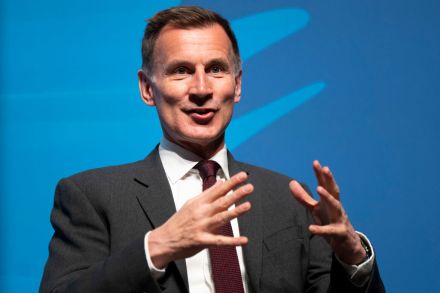
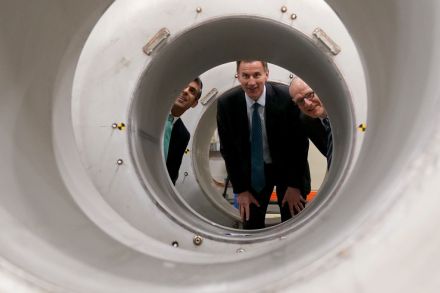
Ronald Reagan famously asked voters: 'are you better off than you were four years ago?' At the next election, the Tories face a public thinking over the last fourteen years. Chancellor Jeremy Hunt gave a speech today defending the UK's record tax levels and attacking Labour's economic plans. But who should we trust more on tax? Fraser Nelson and James Heale join Katy Balls to discuss. Produced by Megan McElroy and Patrick Gibbons.

Has Starmer scaled down his pledges?

From our UK edition

13 min listen

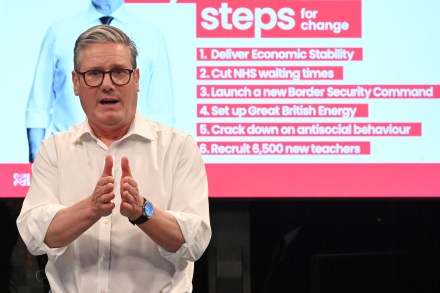
Keir Starmer has unveiled his six election pledges. In a nod to Tony Blair's 1997 election card, the Labour leader has announced key promises to the public should they win the election. How are the commitments being received, and what will the impact of his speech be?  James Heale speaks to Katy Balls and Stephen Bush, Associate Editor at the Financial Times.

Will Labour fall into the migration trap?

From our UK edition

Brexit was the issue that won the last general election for the Tories but botching it may well lose them the next. The Red Wall was attracted by the promise that after sovereignty was wrested back from Brussels, the UK would be able to control its immigration policy and employers would have to pay their workers more. Instead, net immigration – the legal kind, nothing to do with small boats – hit 745,000 in 2022. This is double pre-Brexit levels and far higher than the government expected. No one knew quite how the new visa toolkit would work, and ministers are now scrambling to curb numbers. Higher salary thresholds have been imposed and rules on bringing over dependants have been tightened.

Starmer fluffs his lines at PMQs

From our UK edition

11 min listen

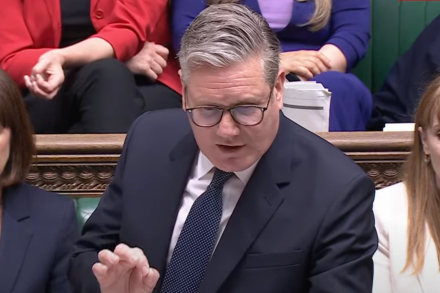
There were no defections today at Prime Minister’s Questions, which probably put Keir Starmer in a slightly stronger position, ironically, given the fuss about Natalie Elphicke crossing the floor last week. The focus was on justice and both the PM and Starmer came up with some new attack lines, but the delivery was – in parts – decidedly lacking. Who came out on top?  Cindy Yu speaks to Isabel Hardman and James Heale.  Produced by Cindy Yu and Oscar Edmondson.

Can John Swinney turn it around for the SNP?

From our UK edition

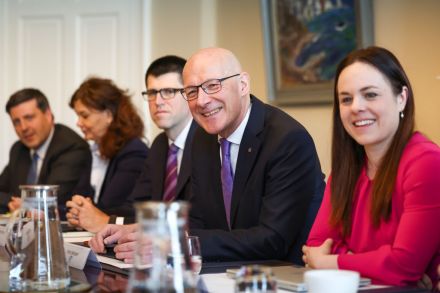
John Swinney, newly inaugurated First Minister of Scotland and Leader of the SNP, has been in the job for a week. What have we learnt since he took up the job, and can he turn things around for the party in time for a general election?  James Heale speaks to Lucy Dunn and Fergus Mutch, former SNP adviser. Produced by Megan McElroy.

Starmer is copying the Tory small boats strategy

From our UK edition

Today is one of those rare occasions in British politics – a day when Rishi Sunak’s government has a bit of good news. Figures released this morning show the UK economy grew by 0.6 per cent in the first three months of the year, thanks to stronger than expected growth in March. So it is no surprise then that Labour want to take control of the news agenda by turning attention elsewhere. Sir Keir Starmer is in Dover this morning, proudly unveiling his latest Tory defector. Natalie Elphicke is intended to be Starmer’s ‘small boats bodyguard’ in the upcoming election, using her reputation as a migration hawk to deflect Tory attacks.

The UK leaves recession – but is it too late for the Tories?

From our UK edition

10 min listen

The Office for National Statistics (ONS) confirmed this morning that the UK confined its technical recession to 2023. The economy grew by 0.6 per cent in the first three months of the year, thanks in large part to stronger-than-expected growth in March, which reached 0.4 per cent. But is the plan really working?  Also on the podcast, Keir Starmer gave a speech in Dover this morning on Labour's plans to stop the boats. He also took the opportunity to unveil new Labour MP Natalie Elphicke. Is there any clear blue water between Labour and the Tories when it comes to migration?  Oscar Edmondson speaks to Kate Andrews and James Heale.  Produced by Oscar Edmondson.

Can Lammy charm Trump?

From our UK edition

14 min listen

This week, shadow foreign secretary David Lammy is stateside, meeting with senior advisors to Donald Trump and hoping to charm them. Meanwhile, David Cameron gives his first set-piece policy speech. Who is the more credible statesman? Cindy Yu talks to James Heale and Charles Grant, director of the Centre for European Reform. Produced by Cindy Yu.

Sunak’s ex-ministers demand Home Office overhaul

From our UK edition

Eight months ago, Robert Jenrick and Neil O’Brien were serving ministers under Rishi Sunak. But both are now out of government and keen to show where their former colleagues are going wrong. The two backbenchers today published a big paper on migration with the Centre for Policy Studies. It calls for the Home Office to be broken up to create a new ‘Department of Border Security and Immigration Control’. The aim is to get the number of legal arrivals to Britain down to the ‘tens of thousands’ – a target which has eluded every Tory leader since David Cameron. Speaking at the report’s launch in Westminster, both Jenrick and O’Brien were keen to stress their emphasis on policy, rather than party politics.

Tory MP Natalie Elphicke defects to Labour

From our UK edition

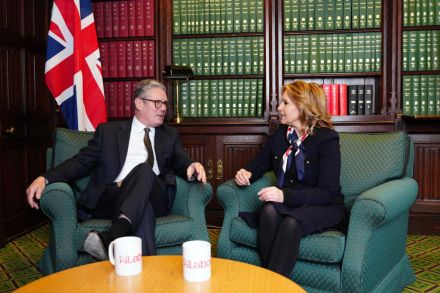
Shortly before Prime Minister's Questions today, Labour dropped a bombshell. Natalie Elphicke, one of the most hawkish Tory MPs on migration, has defected to Sir Keir Starmer's party. Elphicke, who has sat for Dover and Deal since 2019, said in a statement that she was switching parties because of how much the political landscape had shifted over the past five years. Under the Conservatives, she said, 'the centre ground has been abandoned and key pledges of the 2019 manifesto have been ditched'. Labour, by contrast, 'has moved on from Jeremy Corbyn and now, under Keir Starmer, occupies the centre ground of British politics.

Will there really be a hung parliament?

From our UK edition

14 min listen

It's the first day back after the local elections. Following Thursday's results, some polling suggests that if the votes were replicated in a general election, there might be a hung parliament. Could this be a reality?  The Spectator's James Heale and Katy Balls are joined by Chris Hopkins, Political Research Director at Savanta.  Produced by Megan McElroy.