James Heale

James Heale

James Heale is The Spectator’s deputy political editor.

Catholic Burnham barred: should the law change?

From our UK edition

15 min listen

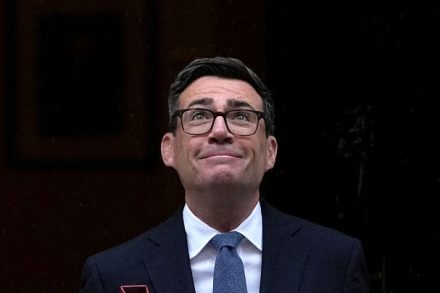
Andy Burnham has announced his intention to change a law which bars him from advising the King on appointments to the Church of England. The Victorian-era law explicitly bars Catholics like Burnham, as well as Jews – but doesn't prevent those of other Christian denominations, other faiths – like Hindu Rishi Sunak, or atheists like Keir Starmer. So, if the law is going to be changed to address this anomaly, should it allow all Prime Ministers of any faith to provide advice – or should all non-Anglicans be barred? And what does Burnham's interest in the power tell us about his relationship with his faith – and his approach to the job? The Spectator's James Heale and William Moore join Damian Thompson to discuss. Produced by Patrick Gibbons.

Catholic Burnham barred: should the law change?

Laura Trott: ‘Labour are kowtowing to the unions’

From our UK edition

England's 15-year-olds came eighth in the world for science, ninth for reading and tenth for maths in Tuesday's Pisa results, though it took the education secretary, Lucy Powell, hours to send the congratulatory message. James Heale is joined by Tim Shipman and the shadow education secretary, Laura Trott, to go through the numbers, why Labour wants to unpick the reforms behind them, and whether a vocational route at 14 would help the pupils it is aimed at. Produced by Henry Lloyd.

Assisted dying dead – for now

From our UK edition

8 min listen

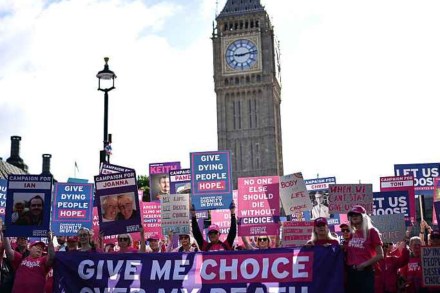
James Heale joins Patrick Gibbons to react to the news that MPs have voted against Assisted Dying. The vote was close – 286 vs 270 – but not a knife-edge, and several MPs changed their minds compared with previous votes earlier this year. What conclusions can we draw? Produced by Patrick Gibbons.

Assisted dying dead – for now
Assisted dying is back: what does Burnham think?

Assisted dying is back: what does Burnham think?

From our UK edition

15 min listen

The topic of assisted dying returns to Parliament today, with a vote scheduled in the Commons this afternoon. Labour MP Lauren Evans has used her private member's bill to reintroduce it, after Kim Leaderbeater's attempt failed, running out of time during the last parliamentary session. Then-Prime Minister Keir Starmer voted for the Bill; now, Andy Burnham has pledged to abstain, saying that – as Prime Minister – he should remain neutral. So what are the chances of this Bill passing? And what does Burnham really think? Tim Shipman and James Heale join Noa Hoffman to discuss. Plus: the team reflect on the 9/11 terrorist attacks in the US and its consequences, 25 years on from that seminal moment. Produced by Patrick Gibbons.
The most powerful woman in Britain

From our UK edition

After plans emerged for the Cabinet Secretary, Dame Antonia Romeo, to consolidate power across the civil service this week, Oscar Edmondson is joined by James Heale and Tim Shipman, to discuss this week's political column, in which Tim unpacks the potentials motives behind the new alpha at the very top of Whitehall.

Why Ed Miliband is taking on Israel

From our UK edition

15 min listen

Ed Miliband has made his first major intervention as Foreign Secretary, with Britain set to announce a trade ban on Israeli settlements in the West Bank. The move comes amid increasingly strained relations between London and Jerusalem – and marks Andy Burnham’s first big foreign policy fight. Oscar Edmondson is joined by James Heale and Michael Stephens to discuss whether the sanctions will have any real effect, how far UK–Israel relations have deteriorated and whether Labour is simply moving with public opinion. Produced by Oscar Edmondson.

‘Andy Burnham did the Tories a huge favour’ | Sir Malcolm Rifkind

From our UK edition

29 min listen

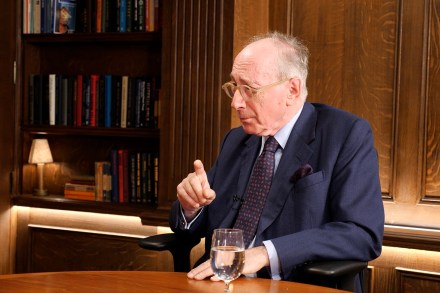
Sir Malcolm Rifkind joins Tim Shipman and James Heale to discuss the future of the conservatism and tells The Spectator why Kemi Badenoch is the person to bring the Conservative Party back from the brink. He explains why he thinks Reform is already losing momentum, why Nigel Farage is ‘not fit to govern’, and why Andy Burnham could actually help the Conservatives at the next election. He also reflects on Britain’s relationship with Israel and the United States, criticises Labour’s approach to sanctions on Israel, and gives his verdict on Donald Trump second term. Produced by Oscar Edmondson and Abigail Brierley.

LIVE | Reform conference round-up – everything you need to know

From our UK edition

23 min listen

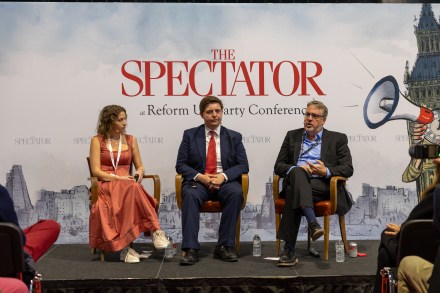
Noa Hoffman, James Heale and Tim Shipman host a special live recording of Coffee House Shots from Reform conference. They discuss whether a damaging 48 hours for the party have breached the walls of Birmingham’s NEC, whether Nigel Farage can weather serious questions over Reform’s funding, and whether Zia Yusuf should throw his phone in the nearest river and get off Twitter. Produced by Oscar Edmondson, Henry Lloyd and The Spectator’s events team.

Bardella offers Britain European olive branch

From our UK edition

In Birmingham, Reform UK has begun its conference amid a wave of allegations that has forced Nigel Farage to suspend two of his top aides. The party hopes to get back on the front foot this afternoon with a press conference between the Reform UK leader and Jordan Bardella, a leading member of France's National Rally (RN) party. Farage has made much of his relationship with Bardella. He claims that if Marine Le Pen wins control of the Élysée next spring, then her young male compatriot will serve as the French premier, working with a Reform UK government to stop the Channel crossings. 'We have been working for several months with Nigel Farage to strengthen co-operation', Bardella told The Spectator,' shortly before the joint event.

LIVE | Reform in crisis after Channel 4 sting

From our UK edition

12 min listen

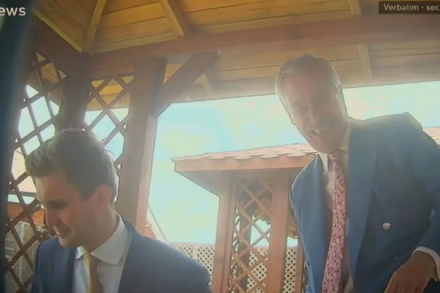
There are grey clouds over day two of Reform UK’s conference after a Channel 4 investigation caused heads to roll. The party announced this morning that Dan Jukes, Nigel Farage’s right-hand man, and James Orr, Reform’s head of strategy, have stood down and left the conference. ‘They have left the building and they won’t be coming back,’ chairman Lee Anderson said. Footage broadcast by Channel 4 on Thursday night showed Jukes suggesting a way to get around electoral law in order to secure a foreign donation. A reporter posed as a UK-based son of an American benefactor, who was to give money to Reform via his 'son' after being wooed by both Orr and Jukes.

Chris Philp: mass immigration is making Britain ‘ungovernable’

From our UK edition

34 min listen

Chris Philp joins James Heale to discuss what the Conservatives got wrong on immigration – and how they plan to fix it. The shadow Home Secretary argues that mass immigration risks making Britain ‘ungovernable’, says the last Tory government made a ‘catastrophic mistake’ after 2020 and explains why he thinks Reform still lacks a credible plan for government. He also lifts the lid on his time inside the Home Office, from civil service resistance to the Rwanda scheme to the legal constraints he believes stop ministers controlling the borders. Produced Oscar Edmondson and Abigail Brierley.

Badenoch promotes top Jenrick backer

From our UK edition

With the shadow cabinet reshuffle completed, Kemi Badenoch is now turning her attention to the junior ranks. One of the initial complaints of her leadership was that she was insufficiently connected to other parts of the parliamentary party. The appointment of John Glen, a respected long-serving former minister, as her parliamentary private secretary (PPS) has helped rectify this. But now Badenoch has gone further, appointing a second PPS in the form of a much younger Member from the 2024 intake: Jack Rankin. Energetic and robust, he is viewed as a staunch right-winger and regular attendee at meetings of the 92 Group. There is a touch of Ian Gow about him: the gossipy right-wing Thatcher aide known as 'supergrass' for his knowledge about his colleagues.

Politics returns: Tories reshuffle & Starmer slopes off

From our UK edition

13 min listen

Politics is back – and it’s a bumper day in Westminster. Kemi Badenoch got ahead of the field yesterday by reshuffling her top team a day earlier than expected, and the changes are much more comprehensive than first thought. James Cleverly is off to run for the London mayoralty, while Priti Patel and Mel Stride have both been given the boot. Katie Lam takes over Cleverly’s housing brief, while Andrew Griffith will hope to bring some much-needed energy to the role of shadow chancellor. So what does the reshuffle tell us about Badenoch’s strategy – and what does it mean for the Tories’ economic offer? Elsewhere, Keir Starmer has resigned as an MP.

The thinking behind Badenoch’s reshuffle

From our UK edition

The scale of yesterday's shadow cabinet reshuffle has taken most Tories by surprise, given a report by the Daily Telegraph last Tuesday which suggested that only minor changes were on the cards. But after that article was published, James Cleverly believed that now was the right time to quit the front bench, in order to stand for London Mayor. Having discussed it with Kemi Badenoch, she decided that Cleverly's resignation was one of two key factors necessary to bring forward a complete restructuring of the front bench. The other was the signal from Tom Tugendhat that he was now prepared to take up a berth in the shadow cabinet, having previously declined to do so back in 2024. Badenoch's team prepared the timetable accordingly.

Katie Lam gets Cleverly’s old brief

From our UK edition

Of all the 26 Tory MPs elected in the new intake, none has grabbed more headlines than Katie Lam. A former special adviser, musical scriptwriter and Goldman Sachs banker, the MP for the Weald of Kent has made a series of eye-catching interventions on grooming gangs and veterans’ prosecutions. So her growing band of admirers will be delighted that her talents have been recognised with a post in the revamped Shadow Cabinet. Lam succeeds James Cleverly as Shadow Secretary for Housing, Communities and Local Government. She is one several members of the 2024 intake to take their spots in the shadow cabinet today including Rebecca Paul at Culture and Harriet Cross at the Scotland Office. Talented politicians tend to relish going up against the best.

Badenoch bets on a new economy team

From our UK edition

Today is the day that Kemi Badenoch settles all family business. A Tory reshuffle that was expected to be small in scale has become nothing less than a complete reboot. Priti Patel, James Cleverly and Stuart Andrew have left the frontbench, with Tom Tugendhat arriving. But the biggest change of all is Sir Mel Stride stepping down from Shadow Chancellor after nearly two years. He is replaced by Andrew Griffith, with Claire Coutinho becoming his deputy and taking up the Business brief. The Treasury team is being rebranded as the ‘Economic leadership team’ with Richard Fuller focused on fiscal discipline as Shadow Chief Secretary to the Treasury. Julia Lopez will cover for Coutinho, who is on maternity leave until the New Year.

Priti Patel out as Kemi Badenoch shuffles her team

From our UK edition

It seems that the shadow cabinet reshuffle is less of an event and more of a process. Traditionally, these events in both government and opposition tend to take place over one day. But Kemi Badenoch, mindful of the tensions that sackings can cause, is allowing those departing to do so one at a time and in their own way. James Cleverly quit the housing brief on Saturday as he bids to become the party’s London mayoral candidate. Now it is the turn of Priti Patel who is standing down as Shadow Foreign Secretary. She has released a statement overnight, explaining that she will be taking up a newly-created international role, liaising with the Tories’ sister parties around the world. This novel approach to reshuffles is how Badenoch intends to minimise any fall out from her changes.

Can James Cleverly turn London blue?

From our UK edition

All good Tories are wary of that word ‘inevitable’. But few things were more foreseeable in politics than James Cleverly running for Mayor of London. The Essex MP will quit Kemi Badenoch’s shadow cabinet in order to stand for City Hall in 2028. Writing for the Sunday Times, Cleverly says he needs to ‘be free to speak about every aspect of London’s future and concentrate fully on winning this race’. The capital, he suggests, ‘needs more than an administrator’, in order to ‘rebuild its reputation and make it, once again, the best place in the world to live, work, invest and build a business.’ It is little secret in Tory circles that Cleverly covets the role of mayor.

How to write about Farage

From our UK edition

Reform has spent the summer taking lumps out of itself, with the battles leaking into public view, and it's position in the polls slipping to around 25 percent. Just in time for conference season, James Heale is joined by Nick Tyrone, whose new book The Rise of Reform is the product of 18 months trailing the party's candidates and activists, to discuss whether Nigel Farage can get the show back on the road before the May 2027 local elections.