James Heale

James Heale

James Heale is The Spectator’s deputy political editor.

Mark Carney is Canada’s new prime minister

It is difficult to overstate how much Donald Trump has changed the dynamics of Canadian politics. When Justin Trudeau resigned on January 6, his Liberal party was on just 16 percent in the polls — 25 points behind Pierre Poilievre’s Conservatives. Within six weeks, that had narrowed substantially, with Nanos suggesting there was just two points between the two parties. The top issue of national concern? Donald Trump and US relations. Visiting Ottawa in January, I was struck by the remark which one Member of Parliament made to me. “We don’t see America and tariffs as foreign affairs — we see them as actually an extension of our domestic economic policies.

mark carney

Who would be a Conservative? – Kate Andrews vs Michael Gove

From our UK edition

25 min listen

It’s a special (and emotional) edition of Coffee House Shots this Saturday because it is the last with Kate Andrews on this side of the Atlantic. She joins our editor Michael Gove and political correspondent James Heale for a debate on ideology. Kate – a liberal, in the classical British sense – explains exactly why she is not a Conservative and the various tenets that distinguish liberalism from conservatism, whilst Michael makes the case for being a 'pessimistic' conservative.  So, what makes a liberal? What makes a conservative? And was Hayek right in saying that while there isn’t much to choose between these two political creeds, ultimately, they need each other.  Produced by Cindy Yu and Oscar Edmondson.

Reform refer Rupert Lowe to the police

From our UK edition

After months of leading in the polls, Reform UK is now in meltdown. This afternoon, the party chairman, Zia Yusuf, and the chief whip, Lee Anderson, released a joint statement which says that they have now referred Rupert Lowe to the police. The pair say that they have ‘received complaints from two female employees about serious bullying’ in Lowe’s offices and that ‘we understand complaints have been made to parliamentary authorities’. They allege that evidence has been provided of workplace bullying, with female staff who raised concerns being targeted. They suggest too that Lowe made ‘derogatory and discriminatory remarks’ about women, ‘including reference to a perceived disability’.

How long will Starmer’s ‘war bounce’ last?

From our UK edition

11 min listen

Trump has been stealing the headlines when it comes to Ukraine this week, but Europe – and whether it can stay united in the face of the US pulling its support – remains an important subplot. At a summit yesterday, 27 countries backed the plan to increase spending on defence, but when will the cracks start to show? Thankfully, it seems that the Prime Minister is good in a crisis. Back at home, he has seen a modest bounce in popularity and he is making a good impression in Brussels, coming across as assured without grandstanding. He has also been leading on defence spending – could defence be the way in for Starmer to renegotiate a new position within the EU? Is Starmer having a good crisis?

Labour’s ‘two tier policing’ headache

From our UK edition

12 min listen

Labour have found themselves facing accusations of enabling ‘two tier policing’ following new guidelines from the Sentencing Council. Shadow Justice Secretary Robert Jenrick has been quick to criticise the government, but Labour’s Justice Secretary Shabana Mahmood has also urged the council reconsider their recommendations.  Yvette Cooper’s former adviser Danny Shaw joins Katy Balls and James Heale to discuss the row. While Danny points out that the issue is more nuanced than the row makes out, to the public the very perception of ‘two tier policing’ will damage the government - and at a time when confidence in the justice system is at an all-time low. How will they fix the problem? Produced by Patrick Gibbons.

Rupert Lowe’s warning shot to Nigel Farage

From our UK edition

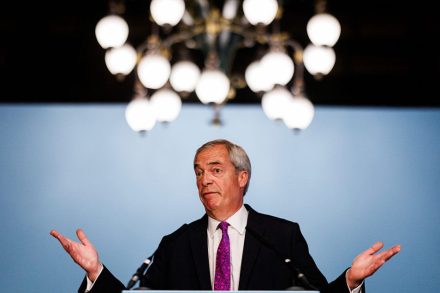
There is a striking interview in today’s Daily Mail between Andrew Pierce and Rupert Lowe. The Reform MP is known for speaking his mind and he certainly does not hold back. Asked whether he thinks Nigel Farage would make a good prime minister, Lowe praises him as a ‘fiercely independent individual’ but says that ‘it's too early to know whether Nigel will deliver the goods. He can only deliver if he surrounds himself with the right people.’ Lowe adds: ‘He has got messianic qualities. Will those messianic qualities distil into sage leadership? I don't know.’ Such remarks about Farage are unlikely to improve the often-strained relationship between the two men. The Great Yarmouth MP goes on to express his concerns about Reform’s lack of a policy platform.

The Special Forces scandal is not going away

From our UK edition

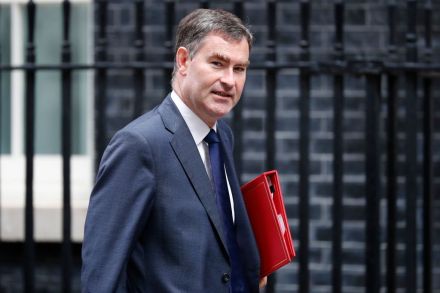
What was the most important moment at Prime Minister's Questions today? It was not the somewhat pedestrian back-and-forth between Keir Starmer and Kemi Badenoch on support for Ukraine. It was instead a subsequent point raised by David Davis on the subject of Britain's Special Forces. Davis – a textbook example of a free-thinking backbencher – asked the Prime Minister about a ruling last month by Northern Ireland’s presiding coroner. The government has given no signal that it intends to pursue a judicial review The ruling concerned a 1992 SAS ambush at St Patrick's Church in Clonoe, County Tyrone. It found that the use of lethal force by British soldiers against four members of the IRA was not justified or reasonable.

Where does Trump’s suspension of Ukraine aid leave Europe?

From our UK edition

13 min listen

Overnight President Trump made another extraordinary move in his ongoing attempt to broker a deal between Ukraine and Russia, suspending all U.S. military aid to Ukraine. Katy Balls talks to James Heale and geopolitical analyst Mark Galeotti about how serious this development is and where it leaves Ukraine's European supporters. Produced by Natasha Feroze and Cindy Yu.

Keir Starmer’s bridge to Trump is crumbling 

From our UK edition

So it turns out he wasn’t bluffing after all. Six weeks after taking office, Donald Trump has made two big decisions overnight: pausing all American aid to Kyiv and imposing 25 per cent tariffs on Canada. Both will cause consternation in Whitehall – but it is the situation in Ukraine which is of most immediate concern. Less than 24 hours after Keir Starmer unveiled his 'four-point plan' in parliament, it already risks falling apart. Speaking in the Commons, the Prime Minister said yesterday that the West must keep military aid flowing to Ukraine. Asked by Stephen Flynn about the prospect of a pause in contributions, Starmer replied 'As I understand it, that is not its position.' But hours later, Donald Trump did exactly that.

Priti Patel attacks Nigel Farage over Zelensky comments

From our UK edition

During the early days of the Gaza crisis, there was an unofficial refrain doing the rounds in the Foreign Office: 'Foreign policy doesn't win votes – but it can lose them.' In recent days, the same could be said of Ukraine's peace negotiations. The drama between Presidents Trump and Zelensky which played out in the Oval Office on Friday horrified Westminster. Both Keir Starmer and Kemi Badenoch were quick to signal their support for Zelensky, aware that – three years after the war with Russia began – public support for Ukraine remains rock solid. It poses a difficulty for Nigel Farage That poses a difficulty for Nigel Farage.

Can Starmer stick to his promises to Ukraine?

From our UK edition

14 min listen

Along with the French President Emmanuel Macron, Keir Starmer seems to be spearheading Europe's diplomatic efforts to secure a lasting peace deal for Ukraine in light of the new American administration's animosity towards Zelensky. Among the proposals being discussed are a peace-keeping force in the country, as a part of efforts to show the Trump administration that Europe is taking responsibility, as it were, for its own security. But will Starmer really get the Americans on board? And if not, does he risk over-promising to Ukraine? James Heale talks to Kate Andrews and Katy Balls. Produced by Cindy Yu.

Can Starmer charm Trump?

From our UK edition

12 min listen

Keir Starmer is in D.C. for what will probably be one of the most important bilateral meetings of his premiership. The goal is to charm Trump and secure some guarantees for Ukraine's security after a negotiated peace in the war. Can he succeed? Cindy Yu talks to James Heale and Peter Quentin, Rusi Associate Fellow and former policy adviser to Ben Wallace. Produced by Cindy Yu.

Inside Nigel’s gang, my day as a ‘missing person’ & how to save James Bond

From our UK edition

38 min listen

This week: Nigel’s gang – Reform’s plan for power.Look at any opinion survey or poll, and it’s clear that Reform is hard to dismiss, write Katy Balls and James Heale. Yet surprisingly little is known about the main players behind the scenes who make up Nigel Farage’s new gang. There are ‘the lifers’ – Dan Jukes and ‘Posh George’ Cottrell. Then there are the Tory defectors, trained by Richard Murphy, a valued CCHQ veteran, who is described as a ‘secret weapon’. The most curious new additions are the Gen Zers, who include Tucker Carlson’s nephew, Charles Carlson, and Jack Anderton, known as ‘the Matrix’. Katy and James joined the podcast to lift the lid on Nigel Farage’s inner circle.

Why is Kemi struggling at PMQs?

From our UK edition

12 min listen

For the second week in a row, the leader of the opposition seemed to struggle at Prime Minister's Questions, ending up accusing Keir Starmer of being 'patronising' after having a couple of her questions rebuffed. Cindy Yu talks to James Heale and Isabel Hardman. Produced by Cindy Yu.

Starmer timed his defence announcement to perfection

From our UK edition

Politics is a matter of timing – and Keir Starmer perfected today. Barely two hours after Kemi Badenoch’s big foreign affairs speech, the Prime Minister has stolen the headlines off her in a textbook example of the difference between fruitless opposition and the possibilities of government. While the Tory leader could only muse on the need for higher defence spending post-2030, Starmer just went ahead and announced he wants 3 per cent spending of GDP in the next parliament. Under Starmer’s plans, current expenditure will rise from 2.3 per cent to 2.5 per cent by 2027. The additional £13.4 billion a year, he claimed in the Commons, will come in large part from reducing the aid budget from 0.5 per cent to 0.3 per cent in 2027.

Is there any substance to Kemi’s ‘conservative realism’?

From our UK edition

Kemi Badenoch set out her world view in a speech this morning at Policy Exchange. As protesting tractors blared their horns outside, inside the room the Tory leader was sounding the alarm for the post-Cold War order. The UK, she warned, faces a 'bitter reckoning' unless it wakes up to the fact that 'it is no longer 1995.' With threats growing at home and abroad, too much focus had been placed on values at the expense of interests. Instead, Badenoch argued, ‘conservative realism’ was needed – with a hard-headed, realistic approach to different spheres. Watching in attendance was the historian Niall Ferguson, whose warning about countries spending more on debt interest than ddefence, was quoted by the speaker approvingly. What does that mean then in terms of top-line policy?

Ukraine war, three years on

From our UK edition

13 min listen

Today marks three years since the start of Russia's full-scale invasion of Ukraine. From early fears of a swift Russian victory to the Kharkiv offensive and the slow war of attrition that has played out since, each stage of this war has been hard to predict. None more so than this stage, with the USA drastically changing tack and tearing up the transatlantic alliance by pursuing back-channel peace talks with Putin. Europe has been left scrambling. Where do we go from here? And with an isolationist USA, the breakdown of the European consensus on Ukraine and the UK's armed forces being hollowed out, who is left to defend Europe? James Heale speaks to Katy Balls and Keir Giles, a senior consulting fellow at Chatham House. Produced by Oscar Edmondson.

Reform fancies its chances in Mike Amesbury’s seat

From our UK edition

This afternoon Mike Amesbury was sentenced to ten weeks in prison. The ex-Labour MP for Runcorn and Helsby was handed a custodial sentence at Chester Magistrates' Court for assaulting a man in his constituency last October. Deputy Chief Magistrate Tan Ikram said the immediate custodial sentence was 'necessary both as a punishment and a deterrent'. The sentence means a recall petition will be triggered in Runcorn and Helsby, unless Amesbury chooses to appeal.A recall petition means voters in the MP’s seat have six weeks to sign requesting a by-election; if 10 per cent sign the by-election goes ahead, but if the threshold is not met, the MP can stay in place. Amesbury, who lost the Labour whip after footage of the incident went viral, is expected to release a statement soon.

Germany’s results are a relief for Starmer – for now

From our UK edition

Over beer, pretzels and sausages, guests gathered last night at the German ambassador’s house in Belgravia to watch the federal election results come in. The fact that the mood scarcely changed after the 5 p.m exit poll hinted at the prevailing sense of relief. Across London, similar sentiments were likely shared in Downing Street. The Christian Democrats, came top on 28.6 per cent, a result at the lower end of expectations. But barring any unforeseen circumstances, it means the CDU will provide the next Chancellor in Friedrich Merz.  He will now work to build a stable coalition in the 630-strong Bundestag, potentially with Olaf Scholz’s SPD, who came third on 16.4 per cent. The two parties’ shared goal is shutting out the AfD, who finished on 20.8 per cent.

How the Whips’ office really works

From our UK edition

35 min listen

Simon Hart joins James Heale to talk about his new book Ungovernable: The Political Diaries of a Chief Whip. Having stepped down at the 2024 election, Simon has become the first former Chief Whip to publish his diaries. What are his reflections on the Conservatives' time in office? Simon explains why his decision to resign under Boris Johnson was so difficult, why the Rwanda vote under Rishi Sunak was their finest hour, and why the Whips' office is really the government's HR department. Just how Ungovernable was the Tory Party? Produced by Patrick Gibbons.