James Heale

James Heale

James Heale is The Spectator’s deputy political editor.

How will the parties judge success at the local elections?

From our UK edition

14 min listen

With just over two weeks to go until the May elections, the latest national polling suggests an almost three-way split between Reform, Labour and the Conservatives. But will this translate to the locals? And, given these particular seats were last contested in 2021 amidst the 'Boris wave', how will the parties judge success?  The Spectator's deputy political editor James Heale and More in Common's Luke Tryl join Lucy Dunn to discuss. Will the story of the night be Tory losses and Reform  gains? Or will it be about the government's performance against opposition parties? Produced by Patrick Gibbons.

Reform remix Farage’s greatest hits

From our UK edition

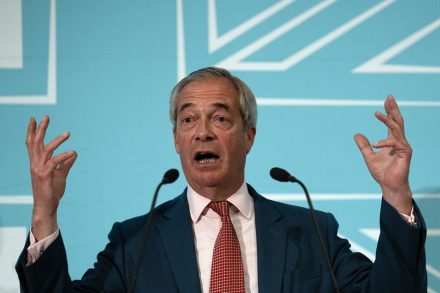
In truth, there was little that was new in Nigel Farage’s speech today. For more than a decade, he has positioned himself as commander of the ‘people’s army’, fearlessly ‘parking our tanks on Labour’s lawn.’ First, it was Ukip, then it was the Brexit party. Now, his chosen vehicle to crush the establishment is Reform. All the greatest hits were played at today’s party rally: taxes are too high, migration is out of control and working class strongholds have effectively been abandoned. His Durham members lapped it up appreciatively, buoyed by a week in which Reform outflanked the government on British Steel. But while the songbook was familiar, Farage offered some new remixes too.

Nigel Farage turns his guns on the Red Wall

From our UK edition

Much of the commentary on the local elections has focused thus far on the Tories' southern discontent. But today, Nigel Farage will turn his guns on the north of England, as he seeks to position his party as the real challenger to Labour across swathes of the so-called Red Wall. Key voters in these northern constituencies broke with Keir Starmer's party over Brexit, elected Boris Johnson in 2019 but then switched back to Labour in protest at the Tories last July. Given the government's subsequent woes, Farage clearly now senses an opening. This afternoon's speech has been heavily trailed, with a column in the Sunday Express and the splash of today's Sun.

‘Betgate’ is the latest blow to the Welsh Tories

From our UK edition

It is a tough life these days being a member of the Welsh Conservatives. The party lost every Westminster seat in July and now have barely a hundred councillors across the country. In December, the fractious parliamentary party voted by nine votes to seven to retain leader Andrew RT Davies; he quit regardless, prompting his replacement by Darren Millar. He looks to be taking his party to a distant fourth place in the newly-expanded Senedd next year, with polls suggesting that the Conservatives will finish ten points behind Reform. Now, today, a fresh blow has hit Millar’s party. Among those who have been charged by the Gambling Commission in last summer’s ‘betgate’ scandal are three senior Welsh Conservatives.

‘Nationalisation in all but name’: the blame game over British Steel

From our UK edition

11 min listen

Parliament was recalled from Easter recess for a rare Saturday sitting of Parliament yesterday, to debate the future of British Steel. Legislation was passed to allow the government to take control of the Chinese-owned company – Conservative MP David Davis called this 'nationalisation in all but name'. Though, with broad support across the House including from Reform leader Nigel Farage, the debate centred less around the cure and more around the cause.  Katy Balls and James Heale join Patrick Gibbons to discuss the debate, the political reaction and how much of a precedent this sets for Starmer.  Produced by Patrick Gibbons.

The steel debate was an unseemly blame game

From our UK edition

In the end, it was David Davis who said it best. Today’s emergency debate on how to save British Steel’s Scunthorpe plant amounted to a ‘nationalisation in all but name Bill’, with new measures amounting to a ‘reprieve, not a rescue’. Jonathan Reynolds, the Business Secretary, did a decent job of affecting reluctance at the sweeping powers being handed to him to order Chinese owners Jingye to buy the raw materials to keep the plant’s two blast furnaces going. ‘I do not want these powers any minute longer than is necessary, but I do need these powers to rectify and save this situation’, he told the House. But, in the key admission of today’s debate, Reynolds told MPs that nationalisation remains ‘the likely option’ in the long term.

Marine Le Pen: justice or lawfare?

From our UK edition

14 min listen

Marine Le Pen, president of Rassemblement National (National Rally) was found guilty this week of embezzling EU funds to boost her party’s finances. The guilty verdict was widely expected, however her sentence was far harsher than even her strongest critics expected – part of which saw her banned from standing for office for five years, with immediate effect. Le Pen had been the favourite to win the next French presidential election in 2027. Pursuing Donald Trump through the courts was widely seen as backfiring as he went on to win the presidential election, and many have argued that there is a double standard with many more figures and parties facing investigation from the right than from the left.

Five years on, who is Keir Starmer?

From our UK edition

13 min listen

Today marks five years since Keir Starmer became leader of the Labour party. In that time, he has gradually purged Labour of its leftist wing and wrestled the party back to the centre, winning a historic majority in 2024. But, five years on, the question remains: what does Keir Starmer stand for? He came in as the acceptable face of Corbynism but looks more and more like a Conservative with each passing domestic policy announcement (take your pick: winter fuel, waging war with the size of the state, welfare cuts etc.). Internationally, it is a different story. Despite saying little on foreign policy in the build-up to the general election, he has been widely praised for his foreign policy and his steady hand when dealing with Trump.

China hits back against Trump’s tariffs

From our UK edition

Donald Trump has sown the wind – and now America must reap the whirlwind. Beijing has today announced plans to slap an additional 34 per cent tax on all US imported goods from next Thursday. China had already applied tariffs – ranging from 10 to 15 per cent – to a range of American agricultural products after the last round of charges from the Trump administration. But now, after Chinese goods were hit by this week’s hike, taking the rate to 54 per cent (the US had existing tariffs on China), Beijing has delivered fresh retaliation. Export controls have been imposed on seven rare earth elements critical to the production of consumer electronics. China has also filed a lawsuit with the World Trade Organisation in protest.

Should Starmer impose retaliatory tariffs? Plus local elections lookahead

From our UK edition

14 min listen

It’s World Tariff Day – or Liberation Day, depending on what you prefer to call it – but we won’t know for certain what levies Donald Trump will impose on the world until around 9 p.m. this evening. Sources are speculating that Trump still isn’t 100 per cent sure himself. But as the UK awaits its fate, what is the polling saying: should Starmer stand up to Trump? Also on the podcast, it’s just under a month until the local elections, and we have seen big launch events from Reform UK and the Liberal Democrats. These are the parties expecting to do well – potentially winning upwards of 400 council seats each. Labour and the Tories, meanwhile, are managing expectations.

Welcome to Terrible Tuesday

From our UK edition

14 min listen

Britain’s real economic pain starts today. Overnight, the cost of living has jumped once again: energy, water, broadband, public transport, TV licences – all up. So too are council tax bills, capital gains, and vehicle taxes. And that’s before we even get to the slow stealth march of fiscal drag and the impact of World Tariff Day which could wipe out Rachel Reeve's newly restored headroom. Jonathan Reynolds was the unlucky minister on the broadcast round this morning trying to defend this increasingly bleak picture, is there any good news?  James Heale speaks to Katy Balls and Michael Simmons.  Produced by Oscar Edmondson.

The Sentencing Council U-turn is a victory for Jenrick

From our UK edition

It was not quite at the eleventh hour – but it wasn't too far off. The Sentencing Council has tonight decided to delay the introduction of so-called 'two-tier guidance' after being threatened with emergency legislation to block it by the government. The new guidelines, which had been due to come into force on Tuesday, would have required magistrates and judges to consult a pre-sentence report before deciding whether to imprison someone of an ethnic or religious minority, or a young adult, abuse survivor or pregnant woman. Advocates of the move argued it would fix the disparity in sentencing between ethnicities. But critics claimed it would lead to criminals form minority backgrounds potentially avoiding jail by instead being handed more lenient community sentences.

What to expect on ‘World Tariff Day’

From our UK edition

13 min listen

This week will see ‘World Tariff Day’ – as those in Westminster are not-so-excitedly calling Wednesday – when Donald Trump will announce a wave of new tariffs. Trump is expected to reveal plans for reciprocal tariffs aimed at addressing what he sees as an ongoing trade imbalance between the US and other countries. He argues that it is ‘finally time for the Good Ol’ USA to get some of that MONEY, and RESPECT, BACK. GOD BLESS AMERICA!!!’. It had looked as though the Prime Minister’s softly-softly approach to US relations was working and that we might avoid Trump’s levies... that was until the UK was included in the 25 per cent tariff on cars and auto parts imported into the US, along with steel. There is some hope, however.

The Lib Dems are gunning for Middle England

From our UK edition

This morning's local elections launch was everything we have come to expect from the Liberal Democrats. In leafy Henley, Ed Davey galloped around on a hobby horse, while gamely activists lustily cheered him on. Infantile? Yes. But such tactics are effective too. Sir Ed is clearly happy to reprise his role as the Mr Tumble of British politics, having slid, paddle-boarded and bungee-jumped his way to 59 gains in England last July. These included 44 seats in the south – something Davey is keen to build on this time around. 'These local elections are a chance for the Liberal Democrats to replace the Conservatives as the party of Middle England', he told journalists today. There are 20 Tory-run councils up for election in four weeks' time.

Starmer pledges migration action before summer wave

From our UK edition

The British weather is improving – and that is bad news for Labour's migration efforts. For the past five years, the beginning of spring has coincided with an uptick in Channel crossings; ministers expect the same again this summer. It is a phenomena that has reduced a succession of Home Secretaries to little more than weathermen; Yvette Cooper this weekend blamed sunnier conditions for the record number of arrivals this year. So far, 6,632 migrants have reached the UK since January, up from 4,600 at the same point in 2024. The small boats are no longer even that small: people smugglers are now favouring larger vessels, with 98 people crammed into one craft last year.

Can Reform emulate its Canadian cousins?

From our UK edition

A historic election defeat leaves the Conservatives crushed, Reform rampant and a left-wing government securely entrenched in power. The similarities between Canada in 1993 and the UK result of 2024 have been much remarked upon. But what is less discussed is the aftermath of that ‘93 result and the ten years it took to finally ‘unite the right’ under the merged Conservative party of Canada in 2003. The man at the centre of those debates was Preston Manning. He founded and led the Reform party from 1987 to 2000, spending the final three years as Leader of the Opposition in parliament. Manning, now 82, is something of an intellectual godfather for Nigel Farage. As far back as 2013, Farage – the-then leader of Ukip – was talking publicly of taking inspiration from Canada.

Michael Heseltine on Thatcher, Boris and Badenoch

From our UK edition

30 min listen

An MP for 35 years, Michael Heseltine served as Environment Secretary and then Defence Secretary in Margaret Thatcher’s government. Following his well-publicised resignation in 1986, he returned to government under John Major and was Deputy Prime Minister for the last two years of Major’s premiership. Once seen as a potential successor to Thatcher and Major, he has sat in the Lords since stepping down as an MP in 2001, and in recent years has been an outspoken critic of Brexit. Lord Heseltine sits down with James Heale to discuss his thoughts on the current Labour government, how to fix Britain’s broken economy and why devolution should go further.

Owen Matthews, James Heale, Francis Pike, Christian House and Mark Mason

From our UK edition

32 min listen

On this week’s Spectator Out Loud: Owen Matthews argues that Turkish President Erdogan’s position is starting to look shaky (1:19); James Heale examines the new party of the posh: the Lib Dems (7:51); Francis Pike highlights the danger Chinese hypersonic missiles pose to the US navy (13:54); Christian House highlights Norway’s occupation during the Second World War, as he reviews Robert Ferguson’s book Norway’s War (22:01); and, Mark Mason provides his notes on coins (28:18).  Produced and presented by Patrick Gibbons.

The Boden Belt: the Lib Dems are the new party of the posh

From our UK edition

The English social season has begun, kicking off with Gold Cup day. But this year, there is a new common denominator in the seats of southern England where the middle classes congregate: Liberal Democrat MPs. From the Cheltenham Festival in March right the way through to Goodwood in September, it is Ed Davey’s party which represents the constituencies where Britain’s bourgeoisie are most comfortable. Whether it is the Boat Race in April (Richmond) or the Derby in June (Epsom and Ewell), or even Wimbledon and Henley in July, everywhere Pimm’s is served, a Lib Dem is the local MP. They dominate the Boden Belt. And even Tories despair that the Lib Dems are the real ‘party of the posh’. At this week’s spring conference, the party was in an optimistic mood.

Can Britain dodge Trump’s tariffs?

From our UK edition

14 min listen

Reports in the papers today say that the British government is considering scrapping its digital services tax – largely levied at American tech companies – in return for an exemption to Trump's tariffs that come into effect on April 2. Would this be an effective – or desirable – move on the British part? James Heale speaks to Katy Balls and Kate Andrews. Produced by Oscar Edmondson and Cindy Yu.