James Heale

James Heale

James Heale is The Spectator’s deputy political editor.

How Reform and the Tories plan to fight Andy Burnham

From our UK edition

Kemi Badenoch was in an upbeat mood when she addressed her troops last week. ‘This time last year,’ she said to the 1922 Committee, ‘people told me Jenrick was taking over the party, Starmer was steady, Farage would be the next prime minister. A year later, Rob is under police investigation, Starmer has resigned and Farage is not even an MP.’ It was a reminder of how quickly the wheel of politics can turn. Now the arrival of Andy Burnham has reset Westminster. The cabinet has been re-orientated towards Birmingham and the north. Members of the Co-Operative party – the standard-bearers of Labour’s collectivist tradition – have been given the business, energy and education briefs. Mutualism, more than Manchesterism, could define the new government. In his first speech at No.

Jordan Bardella to headline Reform conference

From our UK edition

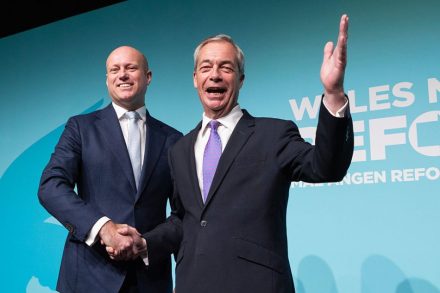
Nigel Farage has always been keen to emphasise his status as a global figure. Whether it is his friendships with America's Donald Trump or Australia's Pauline Hanson, the Reform UK leader likes to see himself as part of a wave of 'new right' figures across the globe, championing national sovereignty and borders. One of those he has forged ties with is Jordan Bardella, President of the National Rally in France. Marine Le Pen, the RN party leader, is currently polling as the favourite for next May's presidential election: if elected, Bardella will serve as her Prime Minister. Farage had lunch with the young Frenchman last December, discussing plans to stop small boats crossing the Channel. Since then, the relationship only seems to have deepened.

Burnham's northern queens

Burnham’s northern queens

From our UK edition

14 min listen

Appointment into Andy Burnham's new cabinet went late into the evening: Wes Streeting to defence, plus the comeback queens – Louise Haigh, Lucy Powell and Angela Rayner all into senior posts in government. Noa Hoffman, James Heale and Tim Shipman discuss the new appointments and Andy Burnham's morning policy announcements.

Burnham, Healey, Miliband & Mahmood become the big four

From our UK edition

10 min listen

Andy Burnham has continued to announce his new cabinet: John Healey as Chancellor, Ed Miliband as Foreign Secretary and Shabana Mahmood remains in the Home Office. Now ten of Starmer's most trusted ministers have either been sacked or quit. What could come of Angela Rayner? And what could be the consequences of having some of the most powerful people in Labour on the backbenches? Natasha Feroze speaks to Noa Hoffman & James Heale.

Burnham, Healey, Miliband & Mahmood become the big four

John Healey is a clever choice for Chancellor

From our UK edition

One of the key traits of a successful politician is the capacity to surprise. Andy Burnham has proved he has that ability in his first big call of the new cabinet. For weeks now, the race for Chancellor has dominated in Westminster. Most pundits backed either Ed Miliband or Shabana Mahmood to take up the post: standard bearers for the soft left and Blue Labour factions in the party, respectively. But Burnham has decided to go for a third option: John Healey, the Defence Secretary who quit Keir Starmer’s government 39 days ago over the failure to increase military expenditure sufficiently. The move will be read as a sign that Burnham is serious about bolstering defence spending and honouring Britain’s international commitments, as he claimed on the steps of Downing Street this morning.

Burnham's new cabinet – who's in & who's out?

Labour’s new cabinet – who’s in & who’s out?

From our UK edition

21 min listen

As Andy Burnham unveils his first Cabinet, join Tim Shipman and James Heale for a special live edition of Coffee House. Who’s in, who’s out? What do the appointments reveal about Burnham’s priorities, and might they hint at the likely direction of his premiership? Along with a panel of familiar faces and special guests, get the only analysis you’ll need as the political implications begin to unfold.

Burnham is trying to do a Brown

From our UK edition

Tomorrow, Andy Burnham will become Britain’s 59th Prime Minister. The team around him has been strikingly circumspect when it comes to setting out his plans. But this weekend we are starting to get some smoke signals via the Sunday papers. The new PM will back licences for drilling at the Rosebank and Jackdaw gas fields. Thames Water, Britain’s largest water supplier, is likely to be placed in special measures over £18bn owed to creditors. Plans for digital ID and the abolition of jury trials will be scrapped, with the post of AI minister upgraded to cabinet rank. Around a third of the cabinet are expected to be sacked and the Departments for Business and Technology overhauled too.

Neil O’Brien: ‘This is a radically different party’

From our UK edition

No one quite yet knows what Andy Burnham will be like as Prime Minister. But a preview of the coming Tory critique is offered by Neil O’Brien, the man tasked with co-ordinating the Conservative Party’s policy offering. ‘He's tended to go with the soft left all the time, WASPI women, always the sort of easy answers’, he says. ‘I just don't see any fundamental reconsideration of the big choices that got us into this mess.’ Burnham might be ‘more deft’ than his predecessor – but there is little sign he is willing to countenance ‘some big break with Starmerism’ on Britain’s economic woes. An Opposition criticising the government is nothing new. O’Brien, though, is refreshingly willing to hold his own party to account.

The coming battle between ‘Mr Brexit’ and the ‘King of the North’

From our UK edition

It was Napoleon who said that ‘To understand the man you have to know what was happening in the world when he was twenty.’ Nigel Farage is nothing if not a man of the 1980s. Big ambitions, loud suits, indoor smoking: for him, the greatest year to have been alive was 1988, the high noon of Nigel Lawson’s tax-cutting zeal. Farage was a City trader whose thinking remains defined by that era of Thatcherism: of buccaneering Britain and primary colours politics. ‘Everyone around him was doing well’, says one friend ‘and then he spent the next two decades discovering that it was not the case for the rest of the country’. One person who recalls that era less fondly than Nigel Farage is Andy Burnham One person who recalls that era less fondly is Andy Burnham.

Happy coronation day!

Happy Coronation Day!

From our UK edition

14 min listen

Andy Burnham will today be crowned Labour leader, before entering Downing Street on Monday. His first speech is expected to argue that Labour has lost touch with the working-class communities it was founded to represent – and to promise a new era of devolution, economic intervention and northern political power. Meanwhile, the shape of Burnham’s government is beginning to emerge. Ed Miliband now appears unlikely to become chancellor, amid concerns that he would be too powerful and too closely associated with Labour’s north London intellectual set. What does his apparent rejection reveal about the party’s new dividing lines? And, as details emerge of a possible 'policy blitz' in the first days of Burnham’s premiership, could a wealth tax be on the cards?

Lib Dems plot their own think tank

From our UK edition

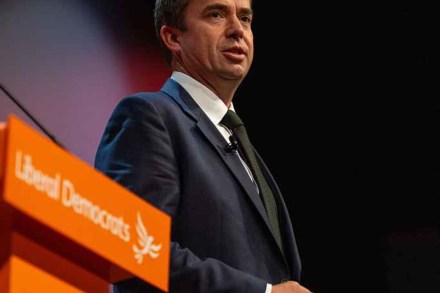
For almost a century, first the Liberals and now the Liberal Democrats have had to consign themselves to being the third force of British politics. This minor status though can conceal the party’s rich history of contributing to broader intellectual thought. David Lloyd George, John Maynard Keynes and William Beveridge are the classic cases; Matthew Taylor and Tim Leunig are more recent examples. A raft of current government policies have their roots in Liberal policy papers. Devolution, Bank of England independence and the pensions triple lock were all proposed in various Liberal manifestos, years before being enacted into law.

Reeves out, Shabana in?

From our UK edition

15 min listen

Rachel Reeves has delivered what is likely to be her valedictory Mansion House speech, defending her record on growth, borrowing and the public finances. But with businesses counting the cost of higher employers’ National Insurance and Labour preparing for a change of government, what will her legacy be? Meanwhile, the race to become Andy Burnham’s chancellor appears to be shifting. Ed Miliband was once seen as the frontrunner, but some around Burnham fear that he would be too powerful – and too resistant to their plans for devolution and Treasury reform. Shabana Mahmood is now being tipped for the job, but would moving her from the Home Office prove a costly mistake? Noa Hoffman speaks to James Heale and Michael Simmons. Produced by Oscar Edmondson.

Reeves out, Shabana in?

Lineker’s Burnham chat told us nothing

From our UK edition

On the terrace of parliament, only two stories dominate this evening. The first is the end of Keir Starmer, who this lunchtime faced Prime Minister’s Questions for the final time. The second, much more exciting event, is England versus Argentina in the World Cup semi-final tonight. It was only appropriate, therefore, that Starmer’s successor, Andy Burnham, has sought to tie the two together in one of the few interviews he has given prior to entering No. 10. Since a poor performance on Newsnight during the Makerfield by-election, Burnham has sat down for only one full-length broadcast grilling – despite being about to take over the nuclear codes for a G7 country.

Farewell, Sir Keir Starmer

Farewell, Sir Keir Starmer

From our UK edition

Keir Starmer has delivered his final PMQs. It was a more cordial occasion compared to most weeks, with Kemi Badenoch exchanging jokes with the outgoing Prime Minister over their previous clashes amid a more sombre tone given the murder of Ann Widdecombe. But will this final speech go down in history? And how will Andy Burnham do things differently? Noa Hoffman speaks to James Heale and Tim Shipman.

farage

Inside Reform’s fightback

From our UK edition

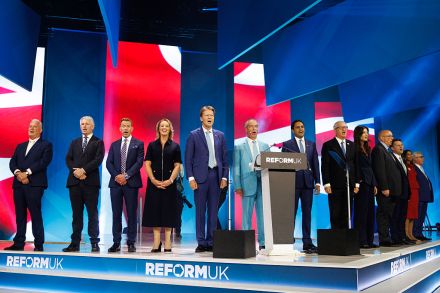
It has been a difficult time for Reform. A kind of malaise has hung about the party since the local elections. There have been a raft of internal changes, a barrage of funding stories, the Makerfield defeat and now, worst of all, the tragic murder of Ann Widdecombe. This morning Zia Yusuf, the party’s home affairs spokesman, will give a press conference focusing on security. But while those at the top of the party confess to feeling a sense of shock at Widdecombe’s death, work continues apace to overhaul the party for its next stage. A fortnight ago, senior figures within Reform HQ gathered for a six hour-long meeting at Milbank Tower. Discussion centred on how best to get the party machine ready for a snap election.

Kemi wages war on the ‘Tory wets’

From our UK edition

15 min listen

Kemi Badenoch has declared war on the Tory wets, removing the whip from Gavin Barwell after Theresa May’s former chief of staff criticised her leadership and opposed the party’s positions on net zero and the ECHR. Her allies insist this is not a purge, but proof that the Conservatives have changed. Is Badenoch finally imposing discipline on her party – or narrowing a broad church that is already struggling to fill its pews? Meanwhile, Andy Burnham has addressed the Parliamentary Labour Party, promising to listen to MPs and preside over a broader, more inclusive Labour party. But the demands are already piling up, from immigration and rural policy to coastal communities.

Kemi wages war on the 'Tory wets'

Counter terrorism police investigate Widdecombe murder

From our UK edition

The investigation into Ann Widdecombe’s death continues to astound. Counter terrorism police have now taken the lead on the probe after ‘new information and evidence’ came to light. A 28-year-old man arrested on suspicion of murdering the former MP remains in custody and has been re-arrested on suspicion of commission, preparation or instigation of acts of terrorism. ‘We are pursuing multiple lines of enquiry to establish the motivation for this attack’, said Laurence Taylor, the Head of National Counter Terrorism Policing. Today’s statement completely contradicts the claims of Devon and Cornwall Police who said yesterday that counter-terrorism partners had reviewed the case and ruled out a terrorist motive.

Is Farage 'weaponising' the murder of Ann Widdecombe?

Is Ann Widdecombe’s murder being politicised?

From our UK edition

20 min listen

The murder of Ann Widdecombe has sent shockwaves through Westminster and reignited the debate over politicians’ security. But with questions still unanswered about the motive for the attack, Reform’s response has already become politically charged. Is Nigel Farage right to argue that threats against him and his party have not been taken seriously – or is he ‘weaponising’ Widdecombe’s death for political advantage? Meanwhile, Andy Burnham is preparing to enter Downing Street, but Westminster is still struggling to work out what kind of prime minister he will be. Labour MPs are cautiously optimistic, yet many remain unconvinced that Burnham has the tactical judgement needed when the pressure mounts.

The definitive guide to ‘Manchesterism’

From our UK edition

10 min listen

Everyone in Westminster is trying desperately to peer inside Andy Burnham’s head and work out what ‘Manchesterism’ really is – and in the magazine this week, Tali Fraser offers the definitive take. Rather than being a mixture of vibes and ‘business-friendly socialism’, it's roots lie in the 'Manchester liberalism' of Richard Cobden and John Bright, from which a direct line can be drawn to Margaret Thatcher. It turns out that the Manchester success story did not begin with a socialist rejection of neoliberalism, but by courting business. Will Burnham be able to sell that to the PLP? Or will he come unstuck on contact with the Labour left, in much the same way Starmer did? Noa Hoffman speaks to James Heale and Tali Fraser. Produced by Oscar Edmondson.

The definitive guide to 'Manchesterism'

Labour is one big happy family | with Chris Curtis MP

From our UK edition

15 min listen

Nominations openned today for the next Labour leader and – spoiler alert – it looks as though Andy Burnham might clinch it. We strongly suspect he will be the only person to put his name forward, after Al Carns pulled out and rowed in behind the MP for Makerfield. In the background, Burnham’s preparations for government are continuing, including a surprise intervention on foreign affairs and an email to the PLP setting out how he hopes to restore hope and a sense of togetherness to the Labour party. One key part of that plan is to soften the whips’ office into something resembling an HR department, under which MPs would be free to vote against the government if they wished. That will please a lot of MPs – but is it sustainable?

Labour is one big happy family | with Chris Curtis MP