James Forsyth

James Forsyth

James Forsyth is former political editor of The Spectator.

Boris’s climate conundrum

From our UK edition

13 min listen

While coronavirus has dominated the last year in politics, domestic issues are creeping back onto the agenda. Near the top of the list is reaching Net Zero by 2050 - not least because climate-conscious Joe Biden is now in the White House. Can Britain hit its target? Katy Balls speaks to James Forsyth and Sam Lowe, senior research fellow at the Centre for European Reform.

Britain’s battle to prevent ‘green protectionism’

From our UK edition

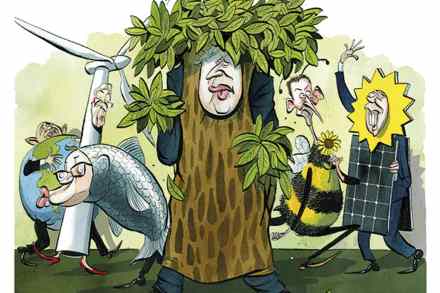
The UK’s commitment to get to net zero by 2050 is going to require some difficult political choices. But it will be impossible to maintain public support for the policy if people think that climate action at home is simply leading to work moving abroad and no great reduction in the amount of carbon emitted globally. This, as I say in the Times today, is going to become an increasingly big problem in years to come. There is mounting concern about it at the top of government. If you can’t address ‘carbon leakage’, to use the rather grim technical term, you can’t deal with climate change. For Britain, the situation represents both a threat and an opportunity.

Has Macron stolen Boris’s G7 thunder?

From our UK edition

10 min listen

Emmanuel Macron has said wealthy nations should begin donating up to five per cent of their vaccines to Africa. It comes as Boris Johnson hosts a virtual G7 today - Joe Biden's first multilateral meeting. Has the French president stolen Boris's thunder? Cindy Yu speaks to James Forsyth and Katy Balls.

Why Starmer is no modern day Beveridge

From our UK edition

15 min listen

Today's speech from the Labour leader was billed to be 'Beveridge-style'. On the podcast, Kate Andrews tells Katy Balls and James Forsyth why it was nothing of the sort, and they strategise what Starmer should have said.

The EU needs to stop punishing Britain for Brexit

From our UK edition

There have always been those on the European side who believe that for the EU project to succeed, Brexit must fail and must be seen to fail. So it is a problem that the first major act of Brexit Britain — going its own way to obtain and approve vaccines — appears to have been a success. For this reason, EU leaders must cast doubt on the achievement. As I say in the magazine this week, look at how Clément Beaune, Macron’s Europe Minister, went out of his way to tweet out his criticisms of the UK approach. (To be fair, there is a Brexiteer version of this hostile sentiment. You can find those on the Tory backbenches who think that Britain’s success requires the EU’s failure.

It is time to make friends with the EU

From our UK edition

On Monday morning, Clément Beaune, Emmanuel Macron’s Europe Minister, clipped out the section of his media interview criticising Britain’s vaccination strategy and posted it on Twitter. He declared: ‘What is happening in the UK is not something I envy. It is a strategy of massive acceleration which also means taking more risks because the Covid situation is much worse there.’ Such remarks are becoming something of a habit for Beaune. He fired off tweets lambasting Brexit in the days after the deal was done and grinned broadly in an interview this year when he was questioned about reports that British cabinet ministers had asked him to tone it down on his Twitter account. Macron has also been critical of the UK vaccination programme.

David Frost will need to learn to work with the EU

From our UK edition

Boris Johnson has made his Brexit negotiator David Frost a full member of the Cabinet and the UK chair of both the partnership council, which manages the UK/EU trade deal, and the joint committee, which handles the Northern Ireland protocol. Frost’s appointment is a recognition that someone is needed at the heart of government to handle the EU relationship – that it can’t be treated as simply a Foreign Office matter, and that it needs to be a full-time job (Michael Gove had previously been the UK chair of these committees). The challenge for Frost will be to get out of the negotiations mindset. The withdrawal negotiations and the trade talks were necessarily tough and Frost pushed hard.

Will rapid testing bring back nightclubs?

From our UK edition

9 min listen

Nadhim Zahawi this morning said that scientists are working on rapid Covid tests to reopen large events. The vaccine deployment minister said that 'new technologies' are being trialled at the Porton Down laboratories, and ruled out the government introducing vaccine passports. Cindy Yu speaks to Katy Balls and James Forsyth.

How did an enigma like Theresa May become PM?

From our UK edition

Theresa May is not the easiest person to speak to in Westminster. She is reluctant to get drawn into a conversation unless she knows what the outcome of it is going to be. But it is still surprising to find the lengths that her colleagues had to go to, to get an understanding of what she wanted to do as Prime Minister. In an interview with Britain in a Changing Europe, Gavin Barwell recalls going to see her after the 2017 election – which had seen May lose her majority and Barwell his seat. In an attempt to reset her premiership, May had invited him to be her chief of staff. So, he travelled to her constituency home to see her. But the talk hardly flowed, he says: You can imagine, knowing Theresa, that was not an easy conversation to have initially.

The Northern Ireland conundrum

From our UK edition

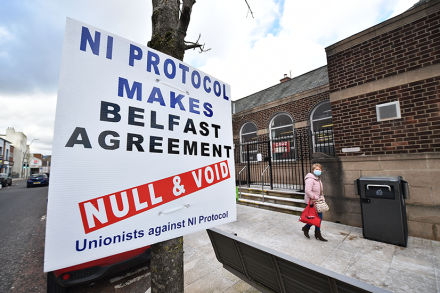
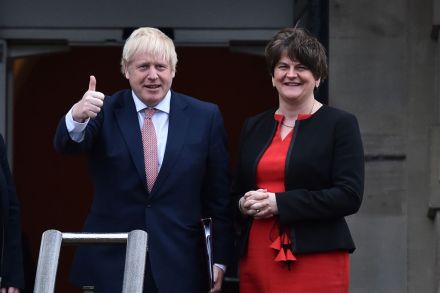
The purpose of the Northern Ireland protocol was meant to be to square the circles of simultaneously protecting the single market and stability in Northern Ireland. But, as I write in the magazine this week, there are signs it is beginning to undermine stability there. The fundamental problem is that Unionists are increasingly against it. The First Minister and DUP leader Arlene Foster tweeted this morning that Northern Ireland must be ‘freed from the protocol’. We could be in a nightmare situation where direct rule from London had to be imposed to fully implement the protocol Now, the EU can say that the checks the Unionists are objecting to are in the protocol that the UK government signed, and they would be right.

Will the economy bounce back after lockdown?

From our UK edition

18 min listen

Despite the GDP figures from the ONS today, the Bank of England's chief economist Andy Haldane has written an optimistic commentary today, arguing why he thinks the British economy will bounce back after Covid restrictions end. Katy Balls talks to Kate Andrews, the Spectator's Economics Correspondent, and James Forsyth about that possibility.

Are Tory lockdown-sceptics returning in force?

From our UK edition

18 min listen

After a brief winter hibernation, it seems that the lockdown-sceptic wing of the Conservative party is returning in force. Cindy Yu talks to Katy Balls and James Forsyth about the increasing clamour to reopen society and whether the government really has shifted the goalposts for easing lockdown.

The Northern Ireland protocol problem

From our UK edition

Ursula von der Leyen now admits that she overreacted in the EU’s vaccine row with the UK. She has spoken of her ‘regret’ that Article 16 of the Northern Ireland border protocol was triggered by the European Commission in a Friday night fit of pique at the end of last month. But there is a sense in Brussels that the British are still trying to exploit her misstep. This claim is not entirely baseless. The UK is getting increasingly worried about the protocol, and clearly does see a chance to push for concessions now that the Commission has surrendered the moral high ground. The Northern Ireland protocol was agreed by Boris Johnson as he struggled to get a Brexit deal in time for the 2019 general election. The bureaucracy it causes is already leading to problems.

Boris Johnson sets out the new normal on vaccines

From our UK edition

10 min listen

At PMQs today, Boris Johnson said the public would need to 'get used to the idea of vaccinating and then revaccinating in the autumn, as we come to face these new variants.' The government's contract with the Wrexham factory that helps make the Oxford/AstraZeneca vaccine has been extended to August 2022 at the earliest, so will repeat inoculations be the way forward? Katy Balls speaks to Isabel Hardman and James Forsyth.

China hawks suffer a setback

From our UK edition

15 min listen

The government has managed to delay a backbench rebellion on the so-called 'genocide amendment' today, using what Iain Duncan Smith called 'arcane procedural games'. The Trade Bill amendment, which would have seen courts given the power to designate abuses as a genocide, was expected to have a significant number of Tory backers. Katy Balls discusses with James Forsyth and Isabel Hardman.

Will Boris Johnson’s Northern Ireland gamble pay off?

From our UK edition

14 min listen

Sensing an opportunity after the EU triggered Article 16 of the Northern Ireland Protocol, the British government is in talks with the EU over compromises to the agreement. Will this gamble pay off, or could it backfire to stoke tensions on the island of Ireland? Katy Balls talks to James Forsyth and Denis Staunton, London Editor of the Irish Times.

Covid could force a major schools shake-up

From our UK edition

At some point in the next few months, life will return to something approaching normality. When that happens, the UK will have to confront all the problems that Covid has left behind: bruised public finances, long NHS waiting list and the rest. But the problem that Boris Johnson is most worried about, as I write in the Times today, is the effect on children of having been out of school for so long. This pandemic has probably wiped out a decade of progress in narrowing the attainment gap. There would undoubtedly be resistance from the education sector The government is hoping that small group tutoring can help make up much of the lost learning; it looks like the school day will be extended as part of this.

Should schools return in February?

From our UK edition

13 min listen

Some Sage scientists have broken rank to suggest that the falling infection rates mean that schools in England should go back at the end of this month, like in Scotland. Will the government cave from their March 8th promise? Cindy Yu talks to Katy Balls and James Forsyth.