James Forsyth

James Forsyth

James Forsyth is former political editor of The Spectator.

Will Rishi Sunak’s budget give Britain a boost?

From our UK edition

14 min listen

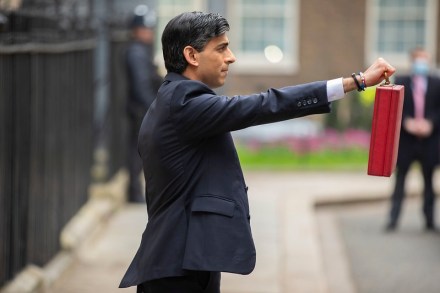
Chancellor Rishi Sunak pledged a further £65bn in today's budget, bringing the government's total spending during coronavirus to more than £400bn. But aside from splurges on extending furlough and the Universal Credit uplift, and new 'restart grants' offered to ailing businesses, the first belt-tightening measures were announced. Income tax thresholds will be frozen, and cooperation tax on profitable companies will rise from 19 to 25 per cent in 2023. Katy Balls speaks to Fraser Nelson, James Forsyth and Kate Andrews about what it all means.

Why Rishi Sunak is hiking corporation tax

From our UK edition

It might seem a strange thing to say about a Chancellor who is presiding over an annual deficit of £355 billion, but Rishi Sunak is a fiscal conservative. This is what explains his decision to hike corporation tax to 25p in 2023. He thinks that this move is necessary to begin to put the public finances on a sounder footing. The increase in corporation tax is offset by the so-called ‘super deduction’. This allows companies to write off 130 per cent of the cost of an investment against tax for the next two years. The aim is to try and boost investment and help address this country’s long-standing productivity problems. The move is particularly likely to benefit manufacturing which should help with the government’s levelling up agenda.

Will Brand Rishi take a hit?

From our UK edition

13 min listen

Rishi Sunak has been a popular Chancellor, mainly because he's responsible for pandemic giveaway after giveaway. But with tomorrow's Budget, the tone will begin to change. Can he get through it unscathed? Katy Balls talks to Isabel Hardman and James Forsyth.

Oxford’s remarkable vaccine success

From our UK edition

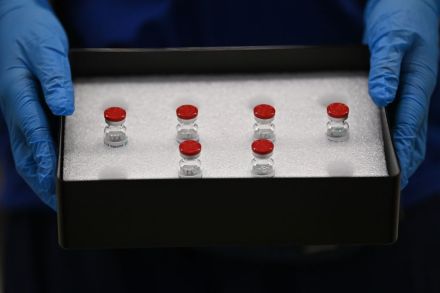
It is worth taking a moment to stand back and applaud Sarah Gilbert and the Oxford vaccine team’s achievement. The data released this evening by Public Health England shows that a single dose of both the Oxford /AstraZeneca vaccine and the Pfizer vaccine cuts the risk of hospitalisation by 80 per cent in the over-80s, the most vulnerable group. It also suggests that the Oxford one, despite its messy trial data, is slightly more effective than the Pfizer vaccine in preventing symptomatic infection among the over-70s. The efficacy of the Oxford vaccine has completely changed the outlook for the UK.

Can the government contain the Brazilian variant?

From our UK edition

10 min listen

Contact tracers are trying to find a person infected with the Brazilian variant of coronavirus, after they incorrectly returned their testing form. How serious is the new strain's arrival, and could it have been stopped with a stricter quarantine policy? Isabel Hardman speaks to James Forsyth and Katy Balls.

When will Boris urge workers to return to the office?

From our UK edition

One of the big post-Covid unknowns is whether people will return to big city centre offices or not. As I write in the Times today, the truth is that no one in government can be quite sure of what is going to happen. The Government does have some levers it can pull if it wants to nudge people back to their desks. At present it is instructing people to work from home, advice that’s not due to be reviewed before 21 June. There is also the question of social distancing. If the one-metre rule remains in place after 21 June, it will restrict how many staff any business can accommodate. There is a recognition that you can’t push people to crowd onto public transport until you can be sure it is safe The government can set an example if it wants to.

Shamima Begum’s citizenship should never have been taken away

From our UK edition

The Supreme Court has today upheld the ban on Shamima Begum returning to this country to contest the Home Secretary’s decision to strip her of her citizenship. The judges ruled that her right to a fair hearing did not trump national security considerations. But Begum should never have been stripped of her citizenship in the first place. She was born in this country, grew up here and was educated here. This makes her British. To pretend otherwise is absurd. Stripping her of her citizenship allows us to ignore the fact that someone from this country – a liberal democracy with the rule of law – went to live in a self-proclaimed caliphate that so offended against the values we hold most dear.

Tory nerves grow over Sunak’s budget

From our UK edition

14 min listen

The Chancellor is expected to announce tax hikes in next week's budget as he looks to bolster the public purse and reassure markets. With capital gains and cooperation tax in his sights, how will the decision go down with Tory MPs? Katy Balls speaks to James Forsyth and Kate Andrews.

Will teacher assessed grades work?

From our UK edition

17 min listen

Teachers will assess pupil's grades next year, the Education Secretary said today. Has the decision come too late, and will it disadvantage students? Cindy Yu speaks to James Forsyth and Katy Balls.

Spare a thought for students

From our UK edition

Spare a thought for those due to sit their A-Levels next summer. They have already had considerable disruption to their education. But today’s announcement that this year’s A-Level grades will be done by teacher assessment risks compounding their misfortune.  It means that the current lower sixth will be competing for university places — and jobs — against those who have received teacher assessed grades, which are bound to be more generous than those that an exam would produce. (For all sorts of understandable reasons, teachers will want to give their pupils the benefit of the doubt when awarding potentially life-changing marks). The disadvantage the current lower sixth cohort is being put at is so obvious that the government will have to address it.

Too much good news could spell trouble for Boris

From our UK edition

Tory MP’s reaction to the lockdown easing plan is a mixed bag. In general, they would have preferred a quicker timetable. But, as I say in the magazine this week, there is also relief that Johnson has explicitly ruled out going for a zero-Covid strategy and that there is an end date for all restrictions. A big fear on the Tory benches was that unless a date was set, restrictions could drag on for years in the way that rationing did after the second world war.  If the data on vaccine take-up and efficacy continues to beat the government’s models, there will be some very impatient Tory MPs One senior Conservative backbencher from the more libertarian wing of the party observes that the plan ‘could have been worse’.

What will life look like after 21 June?

From our UK edition

‘Alas’ is a word used many times by Boris Johnson during the pandemic. It is how he prefaces announcements that the data is getting worse and so the government has to impose further restrictions. In recent weeks, though, the numbers have been going in the right direction. The first stage of the vaccination programme was completed two days ahead of schedule. For the first time in this crisis, government targets are being moved forward, not back. Early results seem to show that the jabs are more effective than expected: a Public Health Scotland study suggests that the Oxford-Astra-Zeneca vaccine, the workhorse of the UK immunisation programme, cuts the risk of hospitalisation by 94 per cent. At the same time, take-up has been higher than predicted.

Will Gove greenlight immunity passports?

From our UK edition

19 min listen

Michael Gove will lead a government review into immunity passports. Does his appointment make IDs a foregone conclusion, what will they look like, and when can we expect to see their domestic rollout? Katy Balls speaks to Fraser Nelson and James Forsyth.

PMQs: Boris sidesteps Starmer’s bait

From our UK edition

Keir Starmer tried to use today’s PMQs to set up some future attack lines. First, he again tried to drive a wedge between Boris Johnson and the Covid Recovery Group, asking him to criticise the statements that members of it have made denouncing the lockdown easing plan.  Unsurprisingly, Johnson didn’t take the bait. But if the data continues to surprise for the better, these MPs will become more vocal in calling for a faster end to restrictions. Second, Starmer pressed Johnson to rule out tax rises for families or businesses — an attempt to lay down a marker before next week’s Budget where Rishi Sunak is predicted to announce an increase in corporation tax. Johnson again sidestepped. One can see what Starmer is trying to do on corporation tax.

Sturgeon versus Salmond

From our UK edition

20 min listen

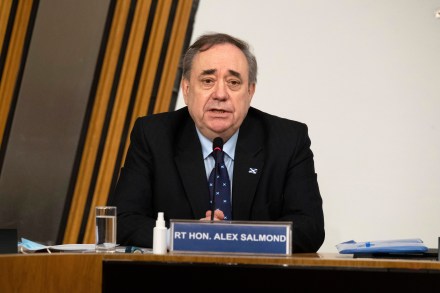
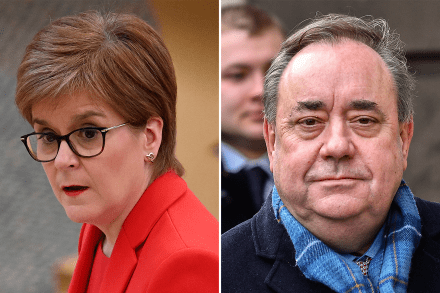
Alex Salmond has pulled out from his appearance in front of the harassment complaints committee, where he was expected to give evidence about an alleged breach of the ministerial code by First Minister Nicola Sturgeon. Fraser Nelson speaks to James Forsyth and Katy Balls about the SNP implosion.

Boris hints at a ‘no jab, no job’ policy

From our UK edition

The most striking moment of Monday night's press conference was Chris Whitty’s declaration that it was the ‘professional responsibility’ on health and social care staff to get the vaccine. Whitty stressed that the question of contracts — whether there should be a contractual obligation to take the jab — was a political decision and so not one for him. Boris Johnson then followed up by talking about ‘very high quality care home groups’ that were looking at making vaccination a condition of employment. The significance of these exchanges is that they suggest the government is moving towards the idea of allowing hospitals and care homes to insist employees are vaccinated. If this happens, it will be a highly significant moment.

The lockdown roadmap explained

From our UK edition

12 min listen

Boris Johnson has finally set out his roadmap for easing lockdown. On the episode, Katy Balls talks to Isabel Hardman and James Forsyth about what to expect over the next few months.

Boris’s lockdown speech was classic Blairite triangulation

From our UK edition

Several of Tony Blair’s ideas have found their way into the government’s Covid policy, most notably the policy of prioritising first doses. The end of Boris Johnson’s statement today owed a lot to Blair. Johnson cast himself as charting a middle course between those who think the government’s plan is too ambitious and those who want restrictions eased faster. It was classic Blairite triangulation. The road map is an interesting document. It is initially cautious and the decision to put five weeks between easing measures means that we won’t be able to sit inside a pub until 17 May, a long way from the idea that things would be heading back to normal by the Easter weekend. But at the end of the plan, the step up in freedoms is dramatic.

Will the vaccine reduce public support for lockdown?

From our UK edition

The vaccine news today is good, and better than would have been expected even a month ago. The Public Health Scotland data indicating that four weeks after the first dose of the Oxford / AstraZeneca vaccine there is a 94 per cent reduction in the risk of hospitalisation is phenomenal (the figure for Pfizer/BioNTech is 85 per cent). It suggests that the vaccines should deliver on the ‘protect the NHS’ part of the government’s strategy. This will lead to more Tory pressure on Boris Johnson for a faster easing of lockdown. The argument will go that given the data is better than expected, the pace of lockdown easing should be sped up.