James Forsyth

James Forsyth

James Forsyth is former political editor of The Spectator.

Brown under factional fire

From our UK edition

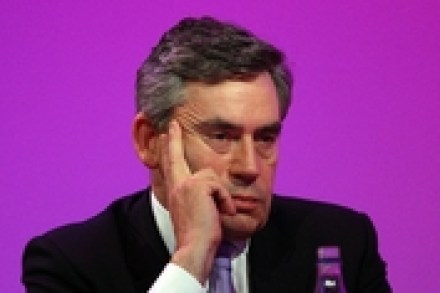
If I was Gordon Brown, one of the things that would worry me most is how much more relaxed Labour figure are becoming about expressing unhelpful thoughts. Just today we have Matthew Taylor, Tony Blair’s former chief strategic adviser, telling The Guardian that the Brownite handling of donor-gate has been “inept” and that it’s "too early to say that the position for the government is terminal" and a minister who was dropped when Brown came to office confiding to a Sky journalist that he thinks the government is a ‘disaster.’ There’s also pressure on Brown from the opposite end of Labour’s ideological spectrum.
All faiths are welcome but none

From our UK edition

Mitt Romney’s campaign has released extracts from his speech today on the role on faith in public life, or more cynically his explanation of why his Mormonism shouldn’t bother voters. Throughout the speech, Romney is keen to stress that there is more that unites religious folk than divides them. But a large part of the speech is a crude sectarian rallying cry, albeit aimed at atheists rather than followers of any conventional faith. So, Romney tells us that: "Freedom requires religion just as religion requires freedom.” Now, I certainly agree with the second half of the sentence but the first part of it seems dubious.

What the Brownite bunglers are up to today

From our UK edition

Fraser explains the absence of Douglas Alexander and Ed Balls from the airwaves in the past week in this week’s cover story and today brings further news on what this dynamic duo are up to. Alexander has pulled out of Question Time tonight, begging the question of what should replace him. (Iain Dale has a list of the questions that Douglas might not have been too keen to answer). While Ed Balls will not be facing the media today but playing Santa Claus at a No. 11 Christmas party, Ben Brogan reports. Ben also reveals that Balls owns his own full Santa outfit. Considering the way this government is going it is good to know that Balls has an alternative form of employment lined up.

The religion question

From our UK edition

Tony Blair recently complained of how in Britain people think of politicians as nuts if they talk about God. But Blair was a lot better off than Mitt Romney, a former governor of Massachusetts who is running for the Republican presidential nomination. Tomorrow, Romney is delivering a speech which could be entitled why a Mormon can be president too. The polls show that Romney’s Mormonism is a serious electoral problem for him with as more than one in four voters saying they wouldn’t vote for a Mormon candidate in some polls. To compound Romney’s problem his main rival in the must-win for him Iowa caucuses is Mick Huckabee a Baptist preacher who is running, perhaps, the most faith-oriented campaign in history.

An explanation for why the Bush administration changed course on Iran

From our UK edition

Bob Baer, a retired CIA officer who has been deeply sceptical of the Bush administration’s approach to the world, has an interesting take on the whole Iran NIE business: “The real story behind this NIE is that the Bush Administration has finally concluded Iran is a bridge too far. With Iranian-backed Shi'a groups behaving themselves, things are looking up in Iraq. In Lebanon, the anti-Syrian coalition and pro-Syrian coalition, which includes Iran's surrogate Hizballah, reportedly have settled on a compromise candidate, the army commander General Michel Suleiman. Bombing Iran now would upset the fragile balance in these two countries. Not to mention that Hizballah has threatened to shell Israel if we as much as touch a hair on Iran's head.

Clegg ahead in the press

From our UK edition

Iain Dale is out with his monthly ranking of the shadow cabinet’s media appearances but it is actually his Lib Dem numbers that are most interesting. If anyone had asked me whether Nick Clegg or Chris Huhne had got more press last month, I would have said that it was pretty even but with Huhne probably edging it. But according to Iain’s numbers, Clegg got vastly more mentions than Huhne—450 to 301. Whether this is any predictor of the final result of the leadership election is unclear, but it does emphasise how much of a front-runner advantage Clegg has had.

More details emerge about the Wendy Alexander fundraising scandal

From our UK edition

The Jersey based businessmen whose donation to Wendy Alexander’s leadership bid should not have been accepted, has revealed more about his contacts with the Alexander campaign. He alleges that Charlie Gordon, MSP assured him that he was allowed to donate the money despite not being on the electoral roll. Speculation is now rife that Gordon will resign his seat. Meanwhile, The Scotsman reports that Alexander is claiming that emails from her to Gordon questioning the legality of the donation to her campaign will clear her name. Labour are acutely aware that if Alexander goes then others could follow.

At least Labour have money coming from somewhere

From our UK edition

One inevitable consequence of donor-gate is that Labour will find it even more difficult to raise money. If things were hard after the whole ‘cash for honours business’, just imagine how much worse it will be now. For a party, that’s £20,178,392 in debt this is a serious problem. Guido, though, has found a silver lining for the Labour bean-counters. As all the deputy leadership candidates were required to give 15 percent of all money raised to the Labour party, Peter Hain will now presumably have to write Labour a cheque for 15 percent of his unregistered donations. Does this mean, though, that Harriet Harman's indebted campaign can get a rebate for the cheques that it has had to return to sender?

Can you put a fork in this government?

From our UK edition

The speed with which things are unravelling for Labour at the moment is quite extraordinary. But the big question is, can Gordon recover? I’ve always been inclined to say yes. Brown is nothing if not resilient as his ability to remain the heir apparent for 13 years demonstrated. But there are reasons to believe that Gordon really might be John Major circa 1994. First, the current set of crises is obscuring other bad news for the government not good news. Just take Britain’s tumble down the educational league tables which have not got nearly as much attention as they should because of all these events. Second, the government’s political judgement appears to have gone missing along with the child benefit data.

What’s wrong with Nick Clegg?

From our UK edition

The lacklustre nature of Nick Clegg’s public performances is becoming more and more bizarre. This morning on the Today Programme he let Chris Huhne comprehensively out muscle him. Indeed, at times it seemed like he was acting as the set up man for Huhne. Listening to the candidates you would also have thought that Huhne—not Clegg—was the young and dynamic candidate. If Clegg can’t go toe to toe with Huhne, one wonders how he’ll fare in the bear pit atmosphere of Prime Ministers Questions. Michael Gove, admittedly not a disinterested observer, pithily sums up the new Westminster conventional wisdom in his Times column this morning, “Nick looks past it before he’s even got it.

How Labour will try and fight back

From our UK edition

The Labour fundraising scandal has taken another twist this morning with the news that there is a hunt on for the mole in the Scottish Labour party who is supposedly leaking these damaging documents. But the Tories need to be ready for the coming counter-attack from Labour. Andrew Porter reports that Gordon Brown pledged to go after the Tories on fundraising at last night’s meeting of the Parliamentary Labour party.  An obvious starting point for any Labour attack is Lord Ashcroft. Now, clearly there is no equivalence here as Ashcroft’s donations are completely legal. But the Tories would be in a stronger position if they could state unequivocally that Ashcroft is resident in this country for tax purpose.

Iran’s nuclear programme is on hold, according to US national intelligence estimate

From our UK edition

A new report signed off on by the various US intelligence agencies says that Iran halted its nuclear weapons programme in 2003. This declaration is, to put it mildly, a major surprise and reverses the judgement of the 2005 National Intelligence Estimate on Iran’s nuclear ambitions. It also transforms the political and diplomatic debate about what to do about Iran. At first blush, it appears to thwart any chance America and the EU-3 had of getting the UN Security Council to vote for tougher sanctions on Iran.

What is Gordon up to?

From our UK edition

This morning the general view was that Wendy Alexander was staying in post because Gordon Brown feared the consequences of her quitting. Yet when Brown was offered the chance to defend his embattled counterpart, the best he could come up with was this: “"Wendy Alexander is of course subject to an Electoral Commission inquiry," the Prime Minister pointed out, "and it's not really right for me to say anything about the individual instances of that..." As Boulton and Co. note even Harriet Harman got more emphatic support than that. It seems perverse that having turned Alexander’s survival into a test of his own strength, Brown can’t summon up the courage to give her his full-throated backing.

Can Clegg be caught?

From our UK edition

Following this weekend’s release of a YouGov poll that showed Nick Clegg ahead of Chris Huhne by 56 to 44, the Clegg camp have released their own internal numbers which show him with 61 percent of the vote. But things might not be as comfortable for the front runner as these figures suggest. A party source tells the BBC that only around half of party members have voted so far. Those who’ve delayed sending in their ballots must have noticed how Huhne has been dominating the air waves in recent days while Clegg has been nowhere. If Clegg wins, the next hurdle for him is to beat Huhne by a larger margin than Ming Campbell did, Campbell won 57 to 42 in second round.

What’s at stake in Scotland

From our UK edition

Perhaps, more extraordinary than anything going on south of the border with donor-gate is the situation in Scotland. When it was revealed on Friday that Wendy Alexander had sent a letter to the Jersey businessmen Paul Green thanking him for his donation, which he was unable to make under electoral law and which Alexander had previously denied knowledge of, it seemed inevitable that she would have to go. Alexander clung on, though. Then, came yesterday’s suggestion that her office might have had doubts about Green’s eligibility to donate far earlier than previously thought. But Alexander came out fighting. Even, though, her argument that she did nothing wrong intentionally seems rather weak, as Ben Brogan points out.

How bad will this week be for Labour?

From our UK edition

Last week events drew forth plenty of “worst week ever” headlines in the Sunday papers. But there is reason to think that this week could be even worse for Gordon Brown. First, there’s the situation in Scotland where Wendy Alexander’s position looks increasingly untenable. Second, there is the fact that David Abrahams has no intention of going quietly—articles in the Guardian on Saturday and the Independent on Sunday are hardly suggestive of a man trying to keep his head down. While his comments about who knew about how he was funding the party have been phenomenally damaging. Third, the question of who in the Labour party knew about how Abrahams was funnelling money to the party has yet to be answered satisfactorily.

The succession chatter just got a lot louder

From our UK edition

If you haven’t already, do read John Rentoul’s column in today’s Independent on Sunday. It is the first time that a major commentator sympathetic to New Labour has seriously suggested that Gordon Brown won’t make it to the next election.  Rentoul predicts that Brown will recover and then fizzle again. Here’s what happens next in his scenario: “This time next year, therefore, after Brown's second bounce has dribbled away, the party is likely to turn to David Miliband. Fittingly, he foretold Brown's woes. Nine months ago he said on BBC1's Question Time: "I predict that when I come back on this programme in six months' time or a year, people will be saying, 'Wouldn't it be great to have that Blair back because we can't stand that Gordon Brown.

Abrahams causes more damage to Labour

From our UK edition

David Abrahams has plunged the hierarchy of the Labour party further into crisis with an article in the Independent on Sunday describing how he donated to the party. Here’s the passage that is generating headlines this morning, My political friends in the party's northern region were unaware of any donations whatsoever that I was making; only a very few officials and party figures in higher echelons of the national party structure were aware. Perhaps as a result I was received warmly at functions and was occasionally contacted to make further donations. On 25 April of this year at a British Board of Deputies dinner in London at which Gordon Brown was the guest speaker, I was placed next to Jon Mendelsohn which, at the time, I felt was just a little more than coincidence.

What Gordon Brown should have done

From our UK edition

As this scandal drags on it is becoming clearer that Gordon Brown made a huge political mistake on Wednesday morning.  When Jon Mendelsohn confirmed Nick Robinson’s report that he was aware of the arrangements by which David Abrahams was funding the Labour party, Brown should have sacked him.  Brown could have issued a statement saying that he had requested the resignation of anyone in the party who was aware of what was going on with Abrahams. His failure to do so means that Brown has effectively endorsed Mendelsohn’s actions and anything that damages Mendelsohn damages him. There is now a row going on between Mendelsohn and Abrahams about who knew what when.

A note of caution

From our UK edition

Any Tory feeling almost light-headed about the speed with which things are collapsing around Gordon Brown, should read this typically intelligent posting from John Rentoul on the danger of the Tories thinking they can just coast to victory. Another sobering thought comes from Martin Bright, who writes “In terms of the loss of trust in the political class I really don't think it could get any worse. But then I thought that last week too.” If the Tories do win the next election, as looks increasingly likely, restoring people’s faith in politics will be one of the biggest challenges that faces them.