James Forsyth

James Forsyth

James Forsyth is former political editor of The Spectator.

The Tories should manoeuvre Brown away from a snap election

From our UK edition

The Tories would far rather fight an election in 2010 than early next year. By 2010, reality will have caught up with Gordon Brown. But the best way for the Tories to avoid a poll next year is to talk about it endlessly. Brown Central is aware that they cannot go through another bout of election speculation like the one in the summer of 2007; it would look hideously self-serving at this time of economic crisis. So, if Brown does decide to go early, he’ll aim for a snap announcement too. The Tory counter should be to start talking about it now. A line to take would be: "We know what he did last summer—and he’s doing the same again, flirting with an election for partisan advantage.
How Cameron should respond to the ‘Tory cuts’ jibe

From our UK edition

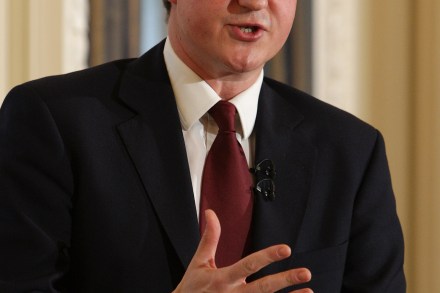
The clunking fist will be swinging for David Cameron today at PMQs. Gordon Brown will see yesterday’s Tory decision not to pledge to match Labour’s spending plans for 2010-11 as his chance to paint them as both clueless and heartless. David Cameron should reply to Brown’s inevitable tirade about ‘Tory cuts’ with something along these lines: "We’ll match his party on education, funding for the police, the military and the frontline of the health service. But we won’t match them on waste, inefficiency and pointless bureaucratic schemes.

In other news…

From our UK edition

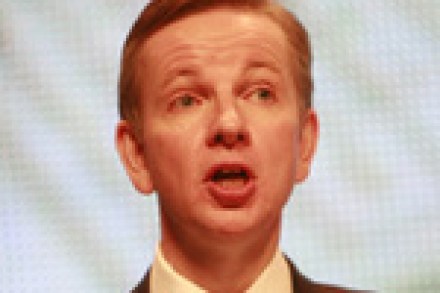
It won’t get as much attention as it should because of today’s announcement on spending by the Tories, but Michael Gove’s speech this evening pledging to allow state schools to choose alternative exams to GCSEs and A-Levels is important. It offers a way away from the race to bottom in examination standards that has so bedevilled the education system in recent years. It will also be a genuinely meritocratic reform; no longer will it just be pupils from independent schools who have access to things like the IB, the Pre-U and IGCSES. Education is the policy area where the Tories are most consistently innovative.

The Tories should move all their MPs to Witney or Tatton

From our UK edition

One of the underappreciated factors in Obama’s success is that his campaign was not based in the Washington area. This meant there were fewer journalists around, fewer bits of gossip were picked up in bars and restaurants and those who moved to Chicago to work for the campaign were focused on getting Obama elected and not worried about protecting their own reputations among the political and journalistic elite. It all aided the ‘No drama with Obama’ mantra and meant that when he hit a rocky patch the effect wasn’t amplified by a string of stories filled with blind quotes from staffers about worries within the campaign. By contrast, when the Clinton and McCain campaigns ran into trouble there were a slew of stories about who was to blame.

Credit where credit’s due

From our UK edition

Today’s news that the Tories will no longer pledge to match Labour’s spending plans will, I’m sure, be welcomed by CoffeeHousers. The word on the street is that there will be more announcements coming soon that will indicate a more robust Tory approach on the economy. But it is worth noting that it is also confirmation of another ConservativeHome scoop following on from the news that the Tories are, as Tim reported back in September planning to downplay—or dump—green taxes. (Personally, I’m not convinced this is a good idea. Those of us on the right should be in favour of shifting the tax burden from work to waste.

The social effects of recession

From our UK edition

David Brooks has a typically masterful column in the New York Times this morning on the social consequences of recessions. His warning about the possible impact on people’s perceptions of democracy and the market system in developing countries are particularly worth paying attention to. But it was this statistic about the US that jumped out at me: “The recession of the 1970s produced a cynicism that has never really gone away. The share of students who admitted to cheating jumped from 34 percent in 1969 to 60 percent a decade later.” I’d be fascinated to know what the statistics on this are for Britain today compared to 50 years ago. If anyone knows, or has any ideas where to look, do let us know in the comments.

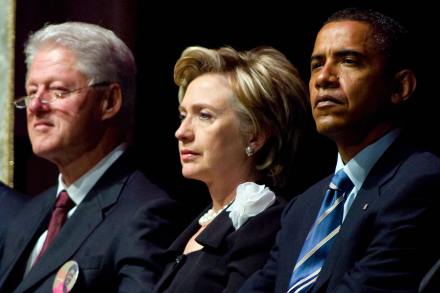
Will Bill play ball, so Hillary can be Secretary of State?

From our UK edition

Mike Allen reports the latest on the Hillary for Secretary of State story: “Team Obama, after all but offering SecState to Senator Clinton, is expressing EXASPERATION with the Clinton camp for the difficulty in getting a clean vet on President Bill Clinton’s many entanglements. “The ball is very much in her court, but the president's finances have been a major point of sensitivity from day one,” a Democratic official said. (“Day One!

Will Peter Mandelson end up a national treasure?

From our UK edition

I know this will be anathema to most Coffee Housers, but I can’t help wondering if Peter Mandelson will become a much-loved figure once he leaves the political stage. Tony Benn proves that even the most controversial political figures can work their way into the nation’s affections once they are out of power. The thought first occurred to me at The Spectator Parliamentarian Awards where Mandelson reveled in playing up to his own reputation; if Alan Rickman was ever to tire of the role, Mandelson would be perfect for the part of Severus Snape in the Harry Potter movies. Now, we hear from Andrew Sparrow that Mandelson is promising to show off his ball-room dancing skills on television once the economic situation improves.

The Tories are being outspun

From our UK edition

If anyone doubts that the Labour spin machine is once more firing on all cylinders turn to pages 2 and 3 of The Sun today. On page 2, under the headline ‘Hans off PM’s car’, Sun readers are informed that ‘Gordon Brown has snubbed German car maker BMW and insisted his new bomb proof limo is a British Jaguar.’ While on the opposite page, we hear about how ‘X Factor finalists were stunned to receive letters from the Prime Minister praising them for chart-topping charity single Hero.’ These are just small examples of a Labour operation that once more has the bit between its teeth. Just look at how effectively they made their pitifully weak case against Osborne on Saturday, turning Osborne's attack back on him.

A constitutional monarch is best seen and not heard when it comes to politics

From our UK edition

Jonathan Dimbleby's essay in The Sunday Times about the kind of king Prince Charles would be suggests that the monarchy will be in for a turbulent time if and when Charles ascends to the throne. Dimbleby reports that Charles intends to move away from the strict silence on political issues of his mother and instead adopt a role more akin to that of the German or Irish president. Obviously keen to avoid encouraging comparisons to To Play the King, Dimbleby stresses that Charles would avoid partisan issues.

What needs to be done in Afghanistan

From our UK edition

David Kilcullen is one of the intellectual forces behind the Petraeus strategy in Iraq which has transformed the situation there. It was Kilcullen, an Australian and an anthropologist by training, who grasped the pre-eminent importance of population security.  So, Kilcullen’s thoughts on Afghanistan, relayed to George Packer of the New Yorker, are well worth reflecting on. Kilcullen sees four crucial challenges the mission there must rise to:  “(1) We have failed to secure the Afghan people. That is, we have failed to deliver them a well-founded feeling of security.

If Cameron shifted Osborne, he would place himself in danger

From our UK edition

There is yet more speculation in the papers today about whether Osborne will be moved from his role as Shadow Chancellor. But it is almost certain that he won’t be. If David Cameron were to shift him he would be handing Labour, the press and his internal critics a major scalp. It would demonstrate that, under pressure, Cameron can be pushed into jettisoning even his closest political allies. We can debate if Osborne is the best choice for Shadow Chancellor until the cows come home, but this essential political reality cannot be ignored. If Osborne is shuffled away from his job, it will suggest that Cameron’s confidence is shot.

Institutional arrogance must be rooted out

From our UK edition

Jenny McCartney’s column on the appalling arrogance of Haringey Council is essential reading this morning. Her conclusion is absolutely spot on: “Various commentators have said that there is little point in demonising Haringey council and the employees concerned. Well, no one is calling them demons, but there is surely every point in conducting a relentless, forensic examination of their decisions and holding those individuals accountable. That applies equally to Dr Sabah al-Zayyat, the paediatrician who only partly examined the boy and failed to spot that he had nine broken ribs and a broken spine. Two days later he died in agony. The case of "Baby P", a child long known only by an initial, is impossible to read without weeping, but our weeping now will do little good.

The State is failing the most vulnerable

From our UK edition

The Guardian reports today on the horrific state of child protection. The evidence it has uncovered suggests that the failings that led to no one intervening to protect Baby P are hideously common.  “More than 80% of children who are killed or seriously injured as a result of abuse or neglect are missed by the national child protection register, the Guardian can reveal. ... The figures, obtained from unpublished government-commissioned research, show a widespread pattern of missed opportunities where police, social workers and health professionals fail to communicate or act on evidence of potential abuse.

Brown’s patriotism, the last refuge of a scoundrel

From our UK edition

Labour has, predictably, accused George Osborne of “talking down” the pound for his comment that Brown’s reckless borrowing risks a run on sterling. Gordon Brown, doing his best father of the nation impersonation, says that he regrets the “partisan talk from the opposition”. But the truth is that Osborne’s warning is right; what Brown is doing at the moment is incredibly irresponsible and he deserves to be called out on it. Brown has long tried to rule huge chunks of criticism of him out of bounds. Anyone who questioned his economic management was talking down the economy, and now anyone who points out the dangers in his approach is talking down the pound.

The Republicans are where the Tories were in 1997

From our UK edition

A week into the Obama honeymoon it is debatable who has the bigger headache, the Democrats, who have been celebrating every day like it’s election day, or the Republicans, who have to work out how to rebuild their party. How and how quickly the GOP rebuilds at both the state and federal level will have a profound impact on British politics as the Tories have, to an underappreciated extent, taken to leaning on the Republicans for policy ideas in recent years. The headline election numbers were bad enough for the Republicans — Obama 365 electoral college votes, McCain 173 — but the details were even worse.

The party chairmanship just got a lot more attractive

From our UK edition

Ever since the Parliamentary Commissioner began his inquiry into Caroline Spelman she has been in an odd political limbo land, neither sacked nor acquitted. Now, Sam Coates reports that we might not know the commissioner’s verdict until the New Year. One thing that has changed during the inquiry is the desirability of Spelman’s job. A few months ago the party chairmanship was a much diminished role, there was even talk that some shadow cabinet members wouldn’t take it as they considered the job to have become pretty much meaningless. This was an understandable point of view. George Osborne was doing the party’s political strategy, Andrew Feldman was running CCHQ and Lord Ashcroft was in charge of target seats.

Hillary Clinton for Secretary of State?

From our UK edition

Mike Allen has the latest on the rumour that Washington is obsessing over: “Even officials who like the idea threw up strong “caution” flags. Fresh off his electoral triumph, Obama does not feel he needs the Clintons. The president-elect has never liked the idea of former President Bill Clinton as a back-seat driver. The former president has had many tangled foreign business dealings that could complicate his wife’s entry into an administration that is promising transparency. And at most a few people, none of whom are talking, know what Obama really thinks about all this.

What Baby P says about our society

From our UK edition

The case of Baby P is stomach-turning, it is hard to conceive of how anyone could do such things to a child. It is a tragic illustration of more general problems, though. There is the incompetence and seeming unaccountability of the local authority and the whole issue of how society reached a place where something as awful as this can happen. Camilla Cavendish, in a quite brilliant column in The Times, writes that: “In my bleaker moments I feel that the welfare state has pulled off a truly brilliant stunt: not only has it managed to institutionalise shamelessness among people who might once have been forced to take heed of social taboos.

What can the Republicans learn from the Tory experience?

From our UK edition

The conversations going on in Republican circles right now about what the party should do next sound very familiar to British ears, they are similar in tone and content to the Tory discussions post 1997. Now, there are obviously limits to what the Republicans can take from the Tories efforts to return to being a credible party of government. For all their similarities, there are still considerable differences between British and American politics; not least the way in which a presidential candidate can recast the image of their party. But I think it is a useful exercise to look at what worked and, just as importantly, what didn’t work for the Tories. I’ve taken a first stab at this in this week’s magazine. A couple of other British voices have weighed into the debate.