James Forsyth

James Forsyth

James Forsyth is former political editor of The Spectator.

Can Boris make it to the next election?

From our UK edition

13 min listen

Katy Balls talks to James Forsyth and James Johnson, the co-founder of the J. L. Partners polling company, about what the Conservative defeat in North Shropshire means for the Prime Minister's future.

If the Tories can lose in Shropshire, they can lose anywhere

From our UK edition

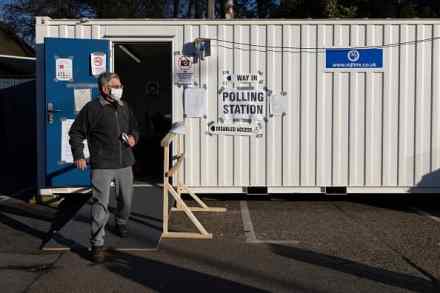
The Tory defeat in North Shropshire is a far worse result for the party and Boris Johnson than their loss in Chesham and Amersham. Chesham and Amersham could be put down to local anger about HS2 and disquiet over planning reform. It was also a seat ripe for tactical voting given it had voted Remain and the Lib Dems were a clear second. North Shropshire, by contrast, is a heavily voting Leave seat where the Liberal Democrats were in third place. There was also no single policy driving voters away from the Tories in the way that planning reform did in Chesham and Amersham. If the Tories can lose this seat in a by-election, they can lose anywhere in one of these contests.

Christmas Special

From our UK edition

90 min listen

Welcome to the special Christmas episode of The Edition! In this episode, we look at five major topics that dominated the news this year and the pages of The Spectator. First up a review of the year in politics with our resident Coffee House Shots' team James Forsyth, Katy Balls and Isabel Hardman. We discuss how Boris seemed to make such a strong start to the year through the vaccine rollout, but squandered this goodwill with several own goals. We also touch on some of the big political moments of the year: Partygate, the Owen Paterson affair and of course Matt Hancock. (00:39) Next, we go global and look at three of the major powerhouses that took headlines this year. The EU, who ends the year in a panic over Russia, extreme Covid measures, and upcoming elections.

Is this lockdown by stealth?

From our UK edition

12 min listen

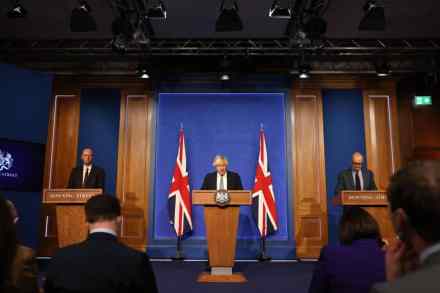
Today saw record numbers of Covid cases with infections higher than the January 2021 lockdown. In reaction to soaring cases, Boris Johnson held a press conference yesterday. Although nothing new was announced, he pushed further on the booster program and encouraged the public to rethink their socialising ahead of Christmas.Many people believe the PM is encouraging a lockdown by stealth, with hospitality venues struggling to cope under staff shortages coupled with vast cancellations. But should financial support be put in place for them throughout this tricky time?Also today, the Bank of England has increased interest rates to 0.25% in reaction to inflationary pressures.‘We have to consider, does changing interest rates help [inflation]?

Ben Wallace takes aim at the misuse of the military

From our UK edition

On this week’s Spectator TV, Andrew Neil interviews the Defence Secretary Ben Wallace. The pair discuss Ukraine, Taiwan, Iran and the fallout from the withdrawal from Afghanistan. But, perhaps, the most striking part of the interview came when Wallace talked about his concern that politicians are turning to the military as a first resort not a last resort. He said that once the Covid crisis has passed, the Ministry of Defence will need to ‘reassert that we are the last resort, not the first’. Wallace was critical of both Whitehall and the devolved administrations for the speed with which they have turned to the military to help in recent times.

‘Politics exacts a very high price’: an interview with Michael Gove

From our UK edition

What is Boris Johnson’s government for? The answer, we’re often told, is ‘levelling up’. So far this has been a slogan without much meaning. More than two years on from Johnson’s election victory, it has been left to Michael Gove, as the new Secretary of State for Levelling Up, Housing and Communities, to define the concept. He intended to set out his plans before Christmas, but Covid stopped that. It nearly stopped this interview, too. Under the government’s rules at the time, Gove is in self-isolation because he met Barnaby Joyce, Australia’s deputy prime minister, who then tested positive for Covid, possibly the Omicron variant. It means we have to speak over a computer screen.

Can Boris take back control?

From our UK edition

21 min listen

Last night Boris Johnson suffered the biggest rebellion of his Tory premiership. But, unlike his predecessor, he still managed to get his vote through with Labour's support. Nearly 100 Conservative MPs voted against the government's plans for vaccine passports.Their reasons for rebelling varied. For some, they want to send a message to the PM that he cannot take his majority for granted. For others, it is about the principle of vaccine passports.'Boris Johnson is proving to be a deeply illiberal Prime Minister. He’s turning into the sort of Prime Minister he used to warn us against when he was writing’ - Fraser NelsonKaty Balls is joined by Isabel Hardman, Fraser Nelson and James Forsyth to discuss last night's rebellion and the booster vaccine program.

Boris is in deep trouble

From our UK edition

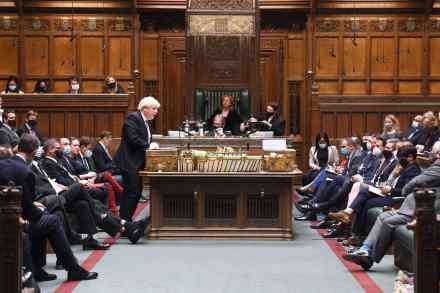
This evening feels eerily familiar to anyone who remembers the meaningful votes of Theresa May’s premiership. The Tory rebellion on the Covid measures is bigger than expected; the rebels are claiming to be the mainstream of the parliamentary party; the cabinet ministers loyalists to the PM are blaming the whips office; there are mutterings about how long this can go on for. There is, of course, one crucial difference: thanks to Labour, Boris Johnson won tonight’s vote. But it is clear that if he wants to tighten restrictions further, he will be reliant on Starmer’s party’s support in doing so. Relying on the opposition to get their business through is never a comfortable place for a Prime Minister to be.

What does a large rebellion mean for Boris?

From our UK edition

11 min listen

Christopher Whitty has told the public he expects a 'significant increase' in Omicron hospitalisations over the next few weeks. The chief medical officer is concerned about the pressures this new variant will put on the NHS. Could he be overreacting? In contrast, there are encouraging signs coming from South Africa that continue to show that Omicron is less severe than Delta. The Commons vote on vaccine passports is looming where Boris Johnson could face a rebellion larger than his majority. The vote this evening is currently predicted to have over 80 rebels that want to send a message to the Prime Minister:'The worry is that the vaccine program, something that Boris Johnson has taken huge political capital from, is starting to fade as a success story for a lot of voters' - Isabel Hardman.

Plan B rebels have safety in numbers

From our UK edition

In rebellion, there is safety in numbers. At some point, if enough backbenchers are going against the party whip there is a limit to what those enforcers of party discipline can threaten. There is also the fact that after such a large rebellion, there must be an attempt to bring the party back together: which means there can’t be a blanket bar on promotion for rebels. The Tory uprising against the government’s Covid Plan B has easily passed this tipping point: the whips can’t blackball 75 MPs. This means rebellion is more likely to grow than shrink. The whips can’t blackball 75 MPs. This means rebellion is more likely to grow than shrink Tomorrow, Labour can exploit this to the full.

Is Boris in for a Christmas rebellion?

From our UK edition

12 min listen

Boris Johnson's problems are not going away anytime soon and he is facing extreme pressure on several fronts going into the weekend. Hypocrisy charges from the media and the Labour Party, more scandal regarding the No. 10 flat refurbishment, and a massive Tory rebellion regarding his Plan B measures. Not to mention his recent announcement that it is time to have a serious conversation about vaccine mandates. 'This anger is diffuse across the parliamentary party. It isn't just one ideological faction that are upset with him.' - James ForsythKaty Balls breaks down the Prime Minister's many woes with James Forsyth and Isabel Hardman.

The Tories have no answer to the Channel crossings crisis

From our UK edition

One of this government’s favourite tactics is to act as if the beginning of its time in office was the general election of December 2019. This means it can dodge the usual charge against any party that has been in power for more than a decade: why haven’t you fixed the problem already? Some problems, though, have clearly got much worse since December 2019. One of those is the situation in the Channel. Five years ago, pretty much no one was attempting to cross it illegally on a small boat. So far this year, more than 25,000 migrants have arrived via this route. Last month, 1,185 landed in one day: a new record. The crisis poses a particular problem for the government for two reasons. First, Boris Johnson has made much of taking back control of Britain’s borders.

How damning is the whistleblower’s Afghanistan report?

From our UK edition

12 min listen

A new 40-page document written by Raphael Marshall, a former desk officer at the Foreign Office, depicts a disorganised mess in the handling of this year's Afghanistan withdrawal. 'I think the picture that is painted of chaos... it raises a whole slew of questions.' - James Forsyth Katy Balls and James Forsyth dissect some of the key accusations in this report and give us an update on tensions between the US and Russia over Ukraine and the spread of the Omicron variant. Subscribe to The Spectator's Evening Blend email, from Isabel Hardman and Katy Balls, for analysis of the day's political news and a summary of the best pieces from our website. Go to spectator.com/blend to sign up.

Will Boris’s crime crackdown backfire?

From our UK edition

13 min listen

Boris Johnson is launching a week of crime-related government announcements. Tackling middle-class drug use tops the agenda today, and the Prime Minister watched police raid a home in Liverpool this morning as part of 'Operation Toxic' to infiltrate county lines drug dealing.But with a report from the Sunday Times revealing that traces of cocaine were found in several of Parliament's lavatories, and some Cabinet ministers having previously been asked about their own drug use before entering politics, could the plan backfire? Katy Balls speaks to Isabel Hardman and James Forsyth. On the podcast, James says: 'It is inevitably going to turn into every Cabinet minister and minister who does interviews on this being asked about their own personal drug use.

Should you snog a stranger this Christmas?

From our UK edition

15 min listen

With the Omicron variant putting everyone on edge, there has been quite a bit of mixed messaging from the government about how we should all be conducting ourselves this festive period. With a bizarre emphasis placed on snogging - some preaching caution, others saying snog away.'I don't think I've ever heard people say the word snogging this much in my entire life.' - Isabel HardmanKaty Balls talks to Fraser Nelson, Isabel Hardman, and James Forsyth about the cabinet's conflicting advice and the politics of public displays of affection.Subscribe to The Spectator's Evening Blend email, from Isabel Hardman and Katy Balls, for analysis of the day's political news and a summary of the best pieces from our website. Go to spectator.com/blend to sign up.

The Tories’ crime crackdown

From our UK edition

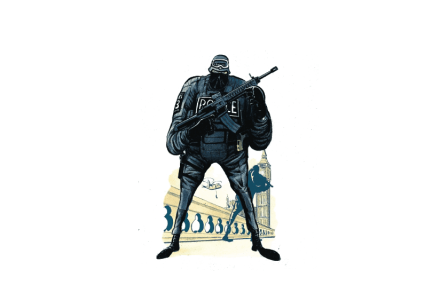
Dealing with crime is a political necessity for the Tories, I say in the Times today. Whenever Labour outflanks them on the issue, as Tony Blair did, the Conservatives are in trouble. But law and order has taken on even more importance for this government because of its link to levelling up: Boris Johnson is convinced you can level up only if you deal with crime. He believes that places are poor because of crime, rather than the other way round. So, next week we’ll see a slew of announcements, with a particular focus on increasing drug rehabilitation efforts. Tackling crime and antisocial behaviour can show rapid progress The public are not sure what levelling up means but, as far as anyone can guess, dealing with disorder is seen to be part of it.

What’s behind the reduced majority in Old Bexley and Sidcup?

From our UK edition

10 min listen

The by-election last night was a result for the Tories. However, their majority for this seat fell dramatically. Labour tried to badge it as good news for them, claiming that they are 'back in business'. But the poor voter turnout was more likely the reason for the fall in Tory votes rather than a swing in Labour's direction.With this win, will the Conservatives move on from the difficult month they’ve had? Perhaps not with more scandals appearing. Tory peer, Michelle Mone has just been accused of racism after some leaked WhatsApp messages show she told a man of Indian heritage that he was a ‘waste of a man’s white skin’.

Boris’s festive fear

From our UK edition

Until a few days ago, ministers could see how the government might regain its footing after several weeks of self-inflicted damage. The argument, as I say in this week's magazine, went like this: as Christmas approaches, voters will see that life in Britain — and specifically England — carries on with very few Covid restrictions whereas elsewhere in Europe more draconian measures have been imposed. This scenario seemed plausible. Austria was in lockdown and heading for compulsory vaccination; there had been rioting in Holland after the announcement of an 8 p.m. curfew and several German states had cancelled Christmas markets.

Will the UK copy Europe with new Covid restrictions?

From our UK edition

11 min listen

A lot of news coming out of Europe this week. From French President Emmanuel Macron calling Boris Johnson a clown, to more extreme Covid prevention methods rolling out in Germany. Will Anglo-French tensions cool, boil or simmer? Are we going to see the return of talks about Covid passports and vaccine mandates? Isabel Hardman looks for answers to these questions with James Forsyth and Katy Balls. Subscribe to The Spectator's Evening Blend email, from Isabel Hardman and Katy Balls, for analysis of the day's political news and a summary of the best pieces from our website. Go to spectator.com/blend to sign up.