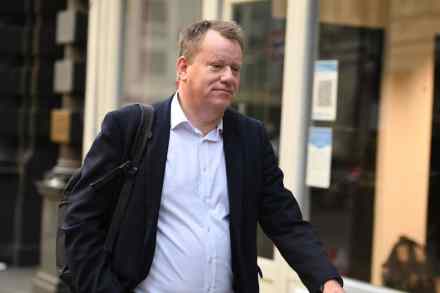
James Forsyth

James Forsyth

James Forsyth is former political editor of The Spectator.

The Tory grassroots are putting pressure on Boris Johnson

From our UK edition

Tory associations are about to become central to Boris Johnson’s fate. Even before last night’s Telegraph story revealing how a party was held in Downing Street the night before Prince Philip’s socially distanced funeral, several Tory MPs told me that their associations were putting pressure on them to be more critical of the Prime Minister. This is now increasing. One member of the government payroll tells me he is coming under huge pressure from his association to act. Lots of Tory councillors are up for re-election in May and so risk being the first to face the anger of the voters At the moment, only five Tory MPs have publicly called for Johnson to go.
Is it over?

From our UK edition

34 min listen

In this week’s episode: Is Boris Johnson done for? In this week’s Spectator cover story, our political editor James Forsyth and our deputy political editor Katy Balls write about Boris Johnson’s perilous position in the aftermath of the Partygate scandal. They join the podcast to predict the Prime Minister’s fate. (00:40)Also this week: Is there a dangerous side to self-improvement?The hashtag manifesting has had billions of impressions on social media in the last year. Younger generations love it and Mary Wakefield explores this viral phenomenon in her column this week. She joins the podcast along with Ally Head, the health and sustainability editor for Marie Claire UK who has interviewed a number of manifestation experts.

Do the Tory whips have Boris’s back?

From our UK edition

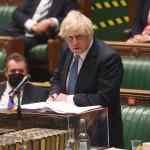
Whips are made for leadership crises. They are a party leader's early warning system; they can sniff out plots before they get going. So it is, as I report in this week's magazine, far from ideal for Boris Johnson that relations between him and the whips office remain strained. The problem dates back to the Owen Paterson affair. The whips were furious that their chief, Mark Spencer, received so much of the blame when they felt he was just following orders from No. 10. The result, one Johnson ministerial loyalist complains, is that ‘the whips’ office are on a go-slow’. When Labour went on the attack with an urgent question on Tuesday, the whips made little effort to get ministers and backbenchers into the chamber: the empty Tory benches spoke volumes.

Is the cabinet really behind Boris?

From our UK edition

10 min listen

After a hard PMQs for Boris Johnson which included multiple MPs calling for his resignation, the cabinet took to the media to show support for their embattled leader... though some took a bit longer than others. 'Notably, Rishi Sunak and Liz Truss took quite some time. I think they both got round to it by the early evening.' - Katy BallsCindy Yu talks to James Forsyth and Katy Balls about how deep the senior Tories' loyalties lie.

Is it over?

From our UK edition

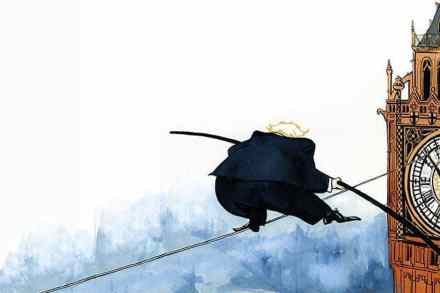
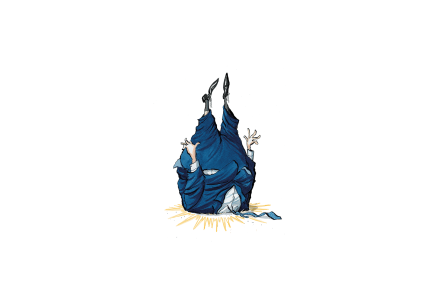
Throughout his political career, Boris Johnson has defied all odds. He has been defeated, written off, mocked. At one stage, he left the House of Commons completely. Yet no matter how down-and-out he has looked, how bleak his prospects have appeared, he has always managed to recover. His party chose him as leader partly for this ability to pull off the seemingly impossible. Yet now he faces the gravest peril of his premiership. For the first time, his fate is out of his hands. His excuse for attending a drinks party in the garden of No. 10 after passing such restrictive lockdown laws is that he ‘believed implicitly that this was a work event’ — even though his private secretary had convened the event via a mass email asking staff to ‘bring your own booze’.

Have Tory MPs finally had enough?

From our UK edition

11 min listen

Boris Johnson has finally commented on the accusations of a Downing Street garden party held in the first lockdown. Yet his defence – 'I believed implicitly that this was a work event' – has satisfied nobody.On the episode, James Forsyth and Isabel Hardman give their verdict. 'When I started my career I spent a lot of time in magistrates courts and I have to say, I've heard better ones from people who were drunk who were defending themselves in Portsmouth Magistrates Court', Isabel says. And for James, the problem was Boris Johnson's own party – 'The Tory benches were almost totally silent'. Can these MPs really defend Boris Johnson to their constituents, and what happens to this Prime Minister if they can't?

It’s getting worse for Boris

From our UK edition

Talking to Tory MPs this morning, it is clear that the mood today is even worse than yesterday. Even one of those MPs closest to Boris Johnson thinks that it is now 50/50 whether enough letters go in to force a no confidence vote. Ironically, the improving Covid numbers are changing the calculus for some Tory MPs about a contest. A few weeks ago, even the most ardent Boris critics didn’t think you could have a no confidence vote, given the situation with the soaring Omicron variant. But now it is somewhat in retreat, and that restrictions are likely to go on 26 January giving hostile MPs the chance to do so. PMQs today is, obviously, an important moment. Lots of Tory MPs are holding off on replying to angry constituents until after it.

Can Boris survive another Partygate scandal?

From our UK edition

13 min listen

Another day, another party scandal. ‘Bring your own booze’ said Martin Reynolds, the Prime Minister's private secretary in a leaked email to around 100 staff in May 2020, inviting them to a picnic at 10 Downing Street. At the same time, the rest of the country was limited to socialising within household bubbles or one other person outdoors. 'This is the most serious party allegation yet when it comes to Boris Johnson specifically' - Katy BallsNo.10 have refused to respond to the leaked email whilst Sue Gray's investigation into other Downing Street parties are ongoing. Can this line of response last through to PMQ’s tomorrow? Boris Johnson can expect challenging questions from Keir Starmer as the crisis unravels.

How soon will Plan B restrictions lift?

From our UK edition

13 min listen

With some early signs that the Omicron threat is waning, talk has begun around Westminster as to when we can get rid of the remaining Covid restrictions. To help Katy Balls, James Forsyth and Isabel Hardman make sense of the latest figures, they are joined by Editor, Fraser Nelson with an update from The Spectator's data hub. 'When you look at the number of admissions to hospitals, that actually hit a peak of 2,370 on December the 29th. It hasn't been back at that.' - Fraser NelsonKaty, Isabel and James also assess Michael Gove's plan to address new-build cladding in the wake of Grenfell.

Could the Cabinet save Boris’s premiership?

From our UK edition

12 min listen

Despite a torrid time for the Prime Minister's popularity over the last few months, there may be a political revival on the horizon. His decision not to lockdown over the Omicron variant seems to have paid off and won back some of the support from his party. But will the Johnson project end up a failure? A lot of the Prime Minister’s future rests on the people who work closest him. On the podcast, Fraser Nelson points to the high turnover of staff at No.10 that has been destabilising, especially for someone who usually builds a strong support system around him. ‘This is a sign, the high turnover of staff suggests a dysfunctional No.

Have Boris’s ‘lost’ texts fuelled the sleaze scandal?

From our UK edition

11 min listen

The ‘lost’ texts sent by Boris Johnson to Lord Brownlow over his Downing Street flat refurbishment continues to dominate the headlines today. As the story unravels, it's a sign that the Tory sleaze issues hitting Boris at the end of 2021 will continue way into the new year.'It’s not going to go down well when people are seriously thinking about the cost of their energy bills over the next few months: how much it costs to buy food, what supplies are in shortage, to be reminded that the Prime Minister was trying to put extremely expensive wallpaper up in his flat' - Kate AndrewsAlso on the podcast, various problems are snowballing towards a cost of living crisis.

Who let the Mogg out?

From our UK edition

10 min listen

In yesterday's Cabinet debate, Jacob Rees-Mogg called on Boris Johnson to abandon the planned hike in national insurance, amid warnings of a looming cost of living crisis. This is not the first time the leader of the Commons has criticised the government following his opposition to tougher Covid restrictions. Might this be a sign that Rees-Mogg is going to jump before he is pushed?‘After the Patterson affair, there is now a clear distance between No.10 and the whips office. As we both know Isabel, when that is the case, that is when Parliament begins to unravel quite quickly' James Forsyth.

What Boris must do to survive

From our UK edition

In recent years, the notion of cabinet government has been a polite fiction. In theory, the prime minister is merely the first among equals when he meets his secretaries of state. In practice, they all owe their position to No. 10 and usually do what they’re told. The situation was summed up by an old Spitting Image sketch showing Margaret Thatcher at a restaurant with her cabinet ministers. She orders steak. ‘What about the vegetables?’ the waitress asks. ‘Oh,’ she replies, ‘they’ll have the same as me.’ For the first two years of Boris Johnson’s premiership, cabinet ministers were more claque than cabinet. ‘How many hospitals are we going to build?’ he asked at their first meeting after his general election victory.

Did Rayner get the better of Boris?

From our UK edition

11 min listen

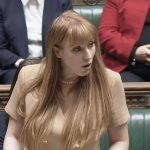
The first PMQs of 2022 was a little different. It was Angela Rayner’s turn to step up to the dispatch box whilst Keir Starmer is isolating having tested positive for Covid.Rayner went after Boris Johnson on inflation and the cost of living crisis looming in Britain, criticising the government for refusing to cut VAT on energy bills. Another topic that came up was the pressure on the NHS as a result of the pandemic. NHS Trusts are declaring critical incidents saying they’re not going to be able to perform certain treatments due to high staff absences.'The crisis in the healthcare sector is not that anybody is being overwhelmed.

Rayner hits Johnson where it hurts

From our UK edition

The first PMQs of the year gave us a preview of the political debate we’ll be having for the next few months. Labour went after the government on inflation. Angela Rayner asked Boris Johnson why he had dismissed fears over it as unfounded back in October: Johnson denied he had said it — which is an odd claim given what he said in that interview. She then punched the Tory bruise, by asking why Johnson wasn’t cutting VAT on fuel, as he had said he would do during the EU referendum. Johnson made the point that this help wouldn’t be well targeted, which is true. But the political pressure for this from Labour and his own backbenchers are going to make it very hard for him to resist.

Energy bills are Johnson’s next big battle

From our UK edition

Keir Starmer is not a lucky politician. He has again been forced into self isolation after testing positive for Covid, which means he misses the first PMQs of the year. This is the Labour leader’s sixth period of self-isolation. So, instead it will be Rayner versus Johnson at PMQs at the later time of 3 p.m. this afternoon. These contests are normally more hammer and tongs than the Johnson–Starmer ones. Rayner’s style is more direct than Starmer’s; and is often more effective in rattling Johnson.  The obvious area for her to go on today is cutting VAT on household energy bills. Labour is already in favour of this and Tory MPs are getting increasingly agitated about the issue.

New year new Keir?

From our UK edition

11 min listen

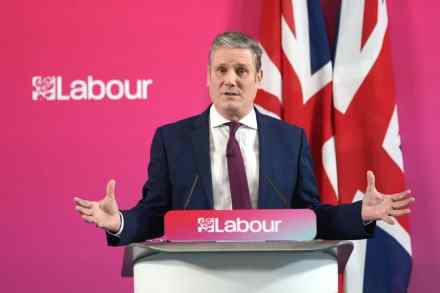
Keir Starmer arrived in Birmingham today to deliver his agenda-setting speech, outlining Labour's vision for the future. The opposition leader had to tread the delicate path between offering a substantial, policy-based agenda whilst holding his cards close to his chest.'One of the challenges of opposition in the midterm is, they come up with new policy and then the government pinches it' - James Forsyth.Also on the podcast, James and Isabel discuss the reaction to the news that Tony Blair is to be awarded a knighthood. The former prime minister is a controversial choice for some, raking up to 500,000 signatures on a petition demanding to reverse the decision. For others, the question is: why has it taken this long?Cindy Yu is joined by Isabel Hardman and James Forsyth.

Has England dodged lockdown?

From our UK edition

15 min listen

The government has delayed making any announcements about further Covid restrictions in the face of Omicron for weeks. But with more data coming in every day about this new variant, seemingly showing it leads to a lot less hospitalisations than previous waves, will there even be any new measures at all? 'The science and the vaccines have created the situation where Britain doesn't have to lockdown.' - Fraser NelsonCindy Yu talks to Fraser Nelson and James Forsyth about the UK's response to Covid at the beginning of 2022.Subscribe to The Spectator's Evening Blend email, from Isabel Hardman and Katy Balls, for analysis of the day's political news and a summary of the best pieces from our website. Go to spectator.com/blend to sign up.

Why David Frost resigned

From our UK edition

19 min listen

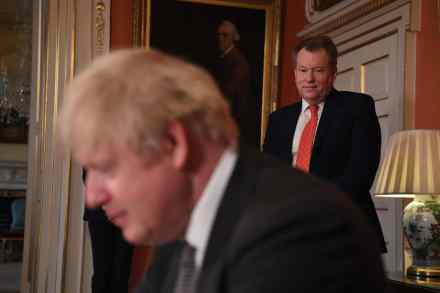
Boris Johnson once boasted that you couldn't hold a cigarette paper between him and David Frost, the man he brought on to take Brexit over the line. Yet this key ally has resigned when the Prime Minister is at his most vulnerable. In his resignation letter, Lord Frost cites his concerns on whether the country is making the most of Brexit to cut taxes and red tape, and the direction of travel when it comes to dealing with the pandemic. On the podcast, Katy Balls talks to Fraser Nelson and James Forsyth about the significance of this moment – which Fraser says is 'a bigger blow to the Prime Minister than the by-election'.

Lord Frost’s resignation is a brutal blow to Boris Johnson

From our UK edition

Boris Johnson’s premiership has been plunged into further crisis tonight by the resignation of the Brexit minister Lord Frost. Frost has, according to the Mail on Sunday, quit over the political direction of the government, citing Plan B, tax rises and net zero. His decision to go makes Johnson more vulnerable than he has been at any point in his premiership. He has lost the man who negotiated his Brexit deal, the person he used to reassure hardline Brexiteers he wasn’t going soft and the second most popular member of his Cabinet among the party faithful. Frost, a canny political operator, will know just how much his departure will weaken Johnson, and the reasons he has given for leaving hit the Prime Minister’s weakest spots with his activists.