James Forsyth

James Forsyth

James Forsyth is former political editor of The Spectator.

Labour’s generation game

From our UK edition

I see from today’s Evening Standard that the film that Peter Mandelson allowed to be made about himself during the election campaign has been pulled from the Hay Festival at his insistence. Now, in these cases there is often an innocent explanation: I would suspect that we’ll get to see the film soon enough But if Mandelson’s memoirs are going to be as frank as he is suggesting and deal with his whole career, then they are going to make comments—some unflattering—about a whole host of still active Labour politicians. There are bound to be comments in there on all three of the serious leadership challengers and the acting leader of the Labour party.
How quickly could Laws return?

From our UK edition

As I say in the column this week, there’s an expectation in Westminster that David Laws will be back in the Cabinet sooner rather than later. The broadly sympathetic public reaction to his resignation suggests that there’d be little public opposition to him returning in six months or so. Laws’ quotes today do rather make you think that he is planning a return. They don’t read like the words of a man planning to quit politics which is what many of his friends feared he might do last weekend. Laws, rightly, points out that his decision not to go public about his relationship meant that he was claiming less in expenses than he otherwise could.

More than a thousand schools apply for academy status

From our UK edition

Michael Gove announced in the Commons’ chamber earlier that 1,100 schools have applied for Academy status since he wrote to all schools asking them if they would be interested in doing so. 626 of these are schools rated outstanding by Ofsted which means they are pre-approved for academy status. One would expect the vast majority of these schools to have become academies by the start of the next school year. Given that there are currently only two hundred odd in the whole country, these 626 schools will dramatically increase the number of academies. There are more than twenty thousand schools in the country so academy status will still be a long way off being the norm.

Cameron impresses on first outing

From our UK edition

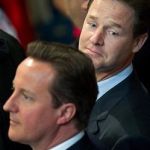
The shootings in Cumbria this morning meant that today’s PMQS was always going to be a subdued affair. David Cameron was impressive, though.  You wouldn’t have guessed it was his first time answering questions and he controlled the pace of the session expertly. There were fewer people on the front bench than last week meaning that Nick Clegg was more visible than he had been during the opening of the Queen’s Speech debate. Clegg sat to Cameron’s right while Hague was on his left. Harriet Harman asked some cleverly constructed questions, her ones protesting at plans for those accused of rape to be given anonymity are never going to be easy to dismiss.

What to look out for at PMQs

From our UK edition

Today is the first PMQs of the new term. Given the Coalition, the whole thing will be a bit different from what we’re used to. The leader of the opposition will, as before, have six questions. But no other MP will have more than one question.   There’ll be a couple of little things I’ll be keeping a particularly close eye on. During the opening of the Queen Speech debate last week, the front bench was so crowded that Nick Clegg was not really visible on the TV. Instead, Cameron appeared to be flanked by two Tories. It’ll be interesting to see if this leads to a slightly different seating arrangement today. I’ll also be watching to see if Clegg whispers advice to Cameron during it.

The Labour leadership contest continues

From our UK edition

With the Coalition facing its first major test, it is easy to forget that there is a Labour leadership contest going on. But there are two interventions in that race worth noting this Bank holiday weekend. First of all, Jon Cruddas and Jonathan Rurtherford have anessay in the New Statesman  sketching out a ‘new covenant with the electorate.’ It would be based around the ideas of an ethical economy, reciprocity and liberty. The piece will make Cruddas’ many admirers in the Labour movement regret that he’s not running. What’ll be interesting to see is which of the declared candidates picks up his ideas and runs with them.

Danny Alexander was already doing a job crucial to the Coalition’s success

From our UK edition

Apart from Nick Clegg, David Laws and Danny Alexander were the two most important Lib Dems in the first iteration of the Coalition. Laws as Chief Secretary to the Treasury ensured that the two sides were equally committed to deficit reduction, the main task for this government. While Alexander was responsible alongside Oliver Letwin for making sure that the Coalition agreed on its approach to every issue that came up. Their job was to preempt any dispute between the two parties. A look at the Cabinet Committee structure shows how crucial a figure Alexander was in his role as the minister providing ministerial support to the deputy Prime Minister, Nick Clegg. (His work as Scottish Secretary was far less relevant to the success of the Coalition).

This resignation is a disaster for our public life, the coalition and the nation’s finances

From our UK edition

David Laws’ departure from government is a massive blow to the British public life, to the coalition and this country’s chance of returning to fiscal sanity. It is depressing beyond belief that a man with David Laws’ talent has been driven out of public life. His breaking of the rule on expenses was motivated not by venality but by a desire to keep his personal life private. It was hard not to well up on reading these line from Laws’ statement last night, "I've been involved in a relationship with James Lundie since around 2001 - about two years after first moving in with him. Our relationship has been unknown to both family and friends throughout that time.

The coalition may be united, but in the Commons its adversarial politics as usual

From our UK edition

James Forsyth reviews the week in politics In this era of ‘new politics’, one might have expected a new, more consensual style of debate in the Commons chamber. But judging by the opening days of the debate on the Queen’s speech, we have got quite the opposite. MPs are keener than ever to shout each other down, to cheer their own side and barrack the other. The one difference from the last parliament is that many of the new Labour MPs make their point by clapping rather than bellowing the traditional ‘hear him, hear him’. Oddly enough, it is the coalition — the very apogee of this new more consensual politics — that is making MPs behave like this. The Tory-Lib Dem alliance has raised the partisan stakes for all three parties.

Westminster’s next set of elections

From our UK edition

Next week in Westminster is going to be dominated by the election of deputy speakers and select committee chairmen. On the select committee front, the party whips will agree on which party will chair which committee. Then, the chairmen will be elected by the whole House. There are some intriguing races in prospect. I’m told that Patrick Mercer, who was sacked by David Cameron and then went on to do a homeland security review for Brown, will challenge James Arbuthnot for the job of chairing the defence select committee. Richard Ottaway, the defeated candidate in the race to be chairman of the 1922 Committee, will, I hear, go for the Foreign Affairs Select Committee. It had been previously thought that Sir John Stanley was the favourite for that post.

A new approach to party management

From our UK edition

The newly-elected 1922 Executive is another demonstration of the strength of the right wing of the Conservative party. Paul Goodman notes that of the seven MPs elected to the executive who were are not new to Parliament, six are on the right. The only one who isn’t is Nick Soames, who is a special case. As one member of the ’22 executive said to me earlier today, Soames, because of his immense popularity and standing in the party, transcends his factional labelling. Of the five new MPs elected to the exec, three — Robert Halfon, Charlie Elphicke and Priti Patel — are definitely on the right of the party. On the Today Programme this morning, Cameron signalled a welcome shift in his approach to party management.

Vince resigns as Lib Dem deputy leader

From our UK edition

Vince Cable’s resignation as deputy leader of the Liberal Democrats has, predictably, sparked speculation about his motives. But one definite effect of his resignation will be to create a contest for the deputy leadership.  The deputy leader is elected by the parliamentary party. So it is unlikely that anyone will stand on a coalition-sceptic position. But it’ll be interesting to see if the job goes to someone inside or outside the government. If the deputy leader is not a member of the government, then they’ll be in a position to express Lib Dem as distinct from coalition policy.

The Tory right asserts itself

From our UK edition

The results of the 1922 elections show that Conservative backbenchers are distinctly right-wing and keen to assert independence. In the race for chairman, Graham Brady — the only man to resign under David Cameron’s leadership on an issue of party policy — romped home by 126 votes to 85. This result suggests that Brady would have beaten Richard Ottaway even if Ministers had been allowed to vote. Brady’s margin of victory suggests that the new intake are an independent bunch as it was the worst kept secret in Westminster that Ottaway was the leadership’s preferred candidate. Indeed, one member of the new intake told me that he thought his colleagues had gone for Brady by a two to one margin. Down ticket results were also good for the right.

Tactical considerations over the timing of the AV referendum

From our UK edition

A referendum on AV was the concession that Nick Clegg felt he needed to get a coalition deal with the Tories past his party. But the referendum poses obvious dangers to the coalition, just imagine the sight of Nick Clegg and the leader of the Labour party sharing a platform to denounce the Tories' 'reactionary' opposition to electoral reform.   The Guardian this morning reports that the Lib Dems are pushing for this referendum to take place in May 2011 at the same time as the Scottish and Welsh elections. There is, as the article notes, a huge benefit to the Lib Dems in getting this referendum in early before the cuts kick in and the coalition becomes unpopular.

Laughs, politics and sincerity

From our UK edition

The opening of the Queen’s speech debate is, traditionally, a light-hearted affair. Peter Lilley opened up with a rather witty speech. He compared the Liberal Democrats to the bastards of the Major Cabinet, it is better to have them inside the Cabinet pissing out than outside the Cabinet pissing in. He went on to warn the new Prime Minister that the appropriate response to John Major and Gordon Brown’s microphone troubles is not to turn your microphone off but to keep ‘your receiver switched on to hear legitimate concerns.’ David Cameron would be well advised to heed this tactfully-expressed advice. Lilley ended with a heart-felt plea to bring the troops home from Afghanistan as soon as possible.

The long haul starts here

From our UK edition

Sunshine might have won the day but today was also the start of the age of austerity, as George Osborne and David Laws laid out £6.243bn of cuts. Despite the fact that they were cutting ‘wasteful’ and ‘low priority spending’, both men were keen to insulate themselves against the Labour attack that the coalition is cutting for ideological reason. Osborne said that ‘controlling spending is not an end it itself.’ While Laws stressed that the Coalition would ‘cut with care.’ Within its first fortnight in office, the government has found savings with commendable celerity. But the fact that the whole package was agreed on at 11.

Burnham fails to explain what the point of his candidacy is

From our UK edition

Another Sunday, another Labour leadership contender on Marr. But Andy Burnham’s performance this morning did him few favours. His argument for his candidacy seems to be that because he’s northern and from a working class background he’d be a better leader than either of the Milibands or Ed Balls. The limitations around Burnham’s candidacy were exposed when the question of immigration came up, an issue that Burnham has sought to make central to his candidacy. Burnham said that immigration was one of those issues where Labour’s traditional vote felt the Labour government was ‘not on its side’.

A friendly warning to Cameron

From our UK edition

Charles Moore’s column in the Telegraph today on Cameron and the 1922 is quite an indictment of the way that the new Prime Minister has treated his parliamentary party. Charles has long been an advocate of Cameron. As Thatcher’s official biographer and the most trusted Conservative-leaning journalist of his generation, he has played a crucial role in explaining Cameron to the party. He has offered reassurance to the party that their leader is one of them. Criticism from a man who called Cameron the most skillful Tory leader of the opposition since Disraeli cannot be lightly dismissed by the Cameroons.

Will any leadership candidate tell Labour the hard truths it needs to hear?

From our UK edition

James Forsyth reviews the week in politics The entry of a forty-something, privately educated white male Oxford graduate into a political contest normally does little for its diversity. But when Ed Balls jumped into the Labour leadership race he did at least expand the pool beyond members of the Miliband family. Even now, all three candidates read the same subject at the same university. If Andy Burnham joins the fray, though, there will be a non-Oxonian candidate. Burnham went to Cambridge. For the People’s Party, the self-proclaimed champions of the working class and diversity, it is a bit embarrassing that all the likely candidates to lead it are Oxbridge-educated white males. But this problem goes beyond appearances.

A taxing question

From our UK edition

During the coalition negotiations, the Tories agreed to introduce the Lib Dems' plan to raise the income tax threshold to £10,000. As part of paying for this, they agreed to increase Capital Gains Tax to 40 percent. But, crucially, this increase only applies to non-business assets. What makes this so important is that there is no legal or HMRC definition of a non-business asset. All the definitions are of what business assets are, not what non business assets are.