James Forsyth

James Forsyth

James Forsyth is former political editor of The Spectator.

Why the Bloody Sunday soldiers must not be brought to trial

From our UK edition

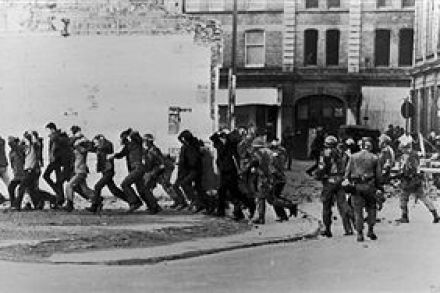
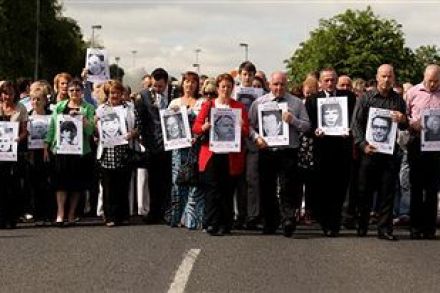
In The Times today, Danny Finkelstein eloquently sums up why it would be so wrong for any of the soldiers involved in Bloody Sunday to be prosecuted given all that has happened in the peace process: "To stop the killing, we sacrificed principles that should stand above everything. We sacrificed the rule of law and the principle of one law for everybody. We sacrificed justice and accountability to the courts. We bought peace but there is a bill to pay. And today we must pay it." I must admit to sometimes wondering if the price we have paid for peace in Northern Ireland is too high: that too many victims have been denied justice, that unforgivable acts have been forgiven.
Cameron is dignified in trying circumstances

From our UK edition

As David says, the conclusions of the Saville Inquiry make for grim reading. One person with close links to the services who served in Northern Ireland just told me, ‘it is far worse than we expected.’ In the House, David Cameron’s statement on it was heard in subdued silence. It would be remiss not to say that David Cameron dealt with this situation as well as anyone could. There was no equivalent to Jonathan Powell’s disgraceful statement that ‘the war against Irish terrorism was not our war’. He pointed out the context of the event and the fact that it was very much the exception rather than the rule of the work of the British security services in Northern Ireland.

McGuiness, culpability and atonement

From our UK edition

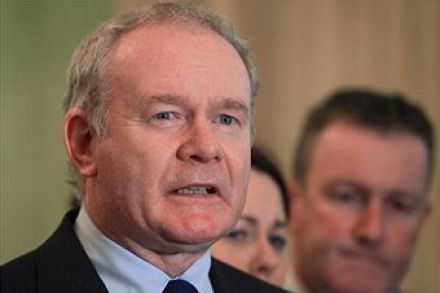
I wish that every time Martin McGuinness offered commentary on the Saville Inquiry, it was pointed out that he admitted to the inquiry that he was the IRA’s second in command in Derry. We should never forget that the IRA has more to apologise and atone for than any other group that played a role in the Troubles. The idea that the RUC or the British military and the IRA are all equally guilty is the worst kind of simplistic moral relativism. McGuinness is now deputy first minister of Northern Ireland and drawing a handsome salary as part of the peace process.

Trimble frozen out of government

From our UK edition

The announcement that Lord Trimble will join the Israeli review into the flotilla incident is a reminder that he has no role in the current government. Trimble takes the Tory whip and given that the party is not overly supplied with Nobel Prize winners, it is a bit of a surprise that no role has been found for him. In opposition, the word was always that relations between him and the new leadership of the Ulster Unionists, the Tories’ electoral allies in Northern Ireland, were not great. But the UUP leader has resigned since the election. Now, it may well be that Trimble himself is the obstacle. Even his admirers admit that he is not the easiest man in the world to get along with. Or, it might be that Trimble is a victim of the Coalition.

Balls blames Labour’s defeat on Darling’s refusal to rule out a VAT increase

From our UK edition

In an article in the Telegraph tomorrow, Ed Balls demands that Labour oppose any increase in the rate of VAT by the Coalition. Balls confirms that he had wanted Labour to rule out raising VAT before the election and claims that doing so would have changed the ‘course of the election.’ Balls is, in effect, accusing the voices of fiscal responsibility in the party of losing it the election. The piece is a challenge to Darling who stopped Labour from ruling out raising VAT, his fellow leadership challengers who’ll be asked if they agree with his position and Harriet Harman who’ll now be under pressure to have Labour oppose whole heartedly any rise in VAT. Balls’ intervention is a clever act of positioning for the Labour leadership contest.

Hughes pushes Lib Dems into the mix on tuition fees

From our UK edition

The first Sunday of the World Cup is predictably quiet on the political front. But Simon Hughes’ comments this morning about tuition fees are worth noting. Hughes said “So to me the big task is to make sure the moment that Lord Browne publishes his report in the Autumn the Liberal Democrat case is entered into the mix. That we talk to Vince Cable, who’s the minster and my very good friend and colleague, and David Willetts, and we make sure the government understands that there may well be ways of finding the money universities need, and they need it, without penalising students from disadvantaged background. I think that circle can be squared, it will require imagination and ingenuity.

Labour leadership contenders go head to head

From our UK edition

The news from today’s Labour leadership hustings was Ed Balls saying that he thought the last Labour’s government plan to halve the deficit over the next four years was too ambitious. But the thing that struck me most about today’s event was how the entry of Diane Abbott into the race has changed its dynamic. Her crowd-pleasing answers and her styling of herself as the heart of the Labour party has made it harder for Ed Miliband to make the emotional connection with Labour audiences that was always one of his great strengths. The candidate, though, who is in real trouble in this race is Andy Burnham. It is hard to see what the point of him is, what he is bringing to the contest.

Electoral reform is the dark cloud on the coalition’s horizon

From our UK edition

James Forsyth reviews the week in politics It is a sign of how well things are going with the coalition that the civil servants left the room towards the end of the Cabinet meeting on Tuesday and let the politicians get on with it. The first ‘political Cabinet’ — when its members talk about party business rather than government business — was a brief affair; it only lasted about five minutes and consisted of everyone agreeing that until Labour came up with a credible position on cuts, their joint enemy was going to be isolated. But a full political Cabinet has been scheduled for the end of next month. When the coalition was first formed, no one quite knew what would happen to political Cabinets.

Meet Mr Efficiency

From our UK edition

On the table outside Phillip Hammond’s office is a red box with the words ‘Secretary of State for Transport’ embossed in gold. Realising it has caught my eye, Hammond opens it up — it’s empty, as befits a diligent minister. I ask if he follows the ‘Yes Minister rule’ — starting at the bottom to see what his department doesn’t want him to read. I expect him to smile but he looks puzzled, then explains methodically that he takes all the papers out and sorts them in order of importance. This rather sums him up: Mr Efficiency. He even walks in an efficient way, his long legs taking sensible strides and his arms swinging just enough. Until the Conservatives fell short of an overall majority, he was also the party’s Mr Efficiencies.

Cameron’s BP problem

From our UK edition

Now that the World Cup is under way, there’ll be a definite lull in the pace of government announcements. There’s no point in putting a good news story out only for it to end up on page seven behind six pages of World Cup coverage. I suspect though that the BP story will keep rumbling on. Obama will keep on upping the rhetoric as he needs a target for the public’s anger that at the damage that’s been caused and that the spill hasn’t been stopped yet. The Louisiana state treasure is even speculating that the clean-up bill could bankrupt BP. This puts Cameron in a very difficult position.

Keeping the backbenches occupied

From our UK edition

In this new world of Coalition politics, there is a difference between Conservative party policy and government policy. There are things that the Conservatives would like to do but can’t do because they didn’t win a majority. As Tim wrote this morning, this provides an opportunity for the Conservative parliamentary party to fill this gap. When the backbench policy committees of the 1922 are set up, they should start working on developing, detailed policy ideas rather than just critiques of Coalition policy. The Prime Minister should encourage this for three reasons. First, it would provide him with a series of possible options for the next manifesto.

Cameron repulses Harman’s misdirected assault

From our UK edition

The PMQs attack No 10 was expecting from Labour on the Coalition’s planned spending cuts did not materialise and today’s was another relatively quiet affair. It started with a minute’s silence in memory of those who died in the shootings in Cumbria. Harman asked one question on gun laws before moving on to the electoral roll and whether it is fair to redraw the boundaries on a roll that does not include three and a half million people. Harman would be on quite strong ground here except for the fact that the boundaries were redrawn under the last government using this electoral register, a point Cameron made.

John McDonnell pulls out of Labour leadership race in an effort to get Diane Abbott on the ballot

From our UK edition

John McDonnell’s decision to pull out of the Labour leadership contest should help Diane Abbott get the number of nominations required. But it is worth pointing out why so many Labour people at Westminster are not thrilled about this prospect despite the fact she would stop the contest from being between four embarrassingly similar figures. Their fear is that Abbott—with her TV skills and fondness for one-liners—will spend the contest making jokes at the expense of the four white male Oxbridge special advisers turned politicians she is running against. She won’t win but the tags she applies to her opponents could stick, making it even more difficult for the new Labour leader to be taken seriously once he is elected.

Nats go nuclear on the Lib Dems

From our UK edition

The Scottish and Welsh Nationalists have managed to prompt the first Commons vote where one of the governing parties has to vote against its own manifesto. They have put down an amendment calling for Trident to be included in the SDR, which will be voted on at 10pm tonight. The Lib Dem manifesto commits the party to ‘Saying no to the like for like replacement of the Trident nuclear weapons system, which could cost £100 billion. We will hold a full defence review to establish the best alternative for Britain’s future security.’ But the Coalition agreement states that the government will keep Britain’s nuclear deterent and says that the renewal of Trident should merely be scrutinised for value for money.

Ed Balls and the art of opposition

From our UK edition

There’s been a lot said about Ed Balls’ Observer piece on immigration. But the most striking thing about it to my mind is that it shows that Balls has made the transition to an opposition mindset.   Take his proposal that ‘Europe's leaders need to revisit the Free Movement Directive’. This is classic opposition politics; suggest something that sounds good but it practically impossible. The other EU member states are unlikely to agree to agree to renegotiating this directive. But the Tories can hardly point this out; emphasising the UK government’s impotence when it comes to changing the rules of the game would hardly go down well with the Tory base. So Balls gets to make the weather on this point.

Cameron lays the ground for cuts

From our UK edition

David Cameron’s speech today was about preparing people for the cuts to come, persuading them that Labour’s mismanagement of the public finances had made this ‘unavoidable’ and reassuring them that he had no ideological desire to make cuts and so would do them in the most sensitive way possible. Cameron managed to pull this off fairly effectively. He is managing the rhetorical transition from leader of the opposition to Prime Minister fairly well. In a way, what Cameron is doing now is the easy bit: the intellectual case for dealing with the deficit is unarguable. It is when the Coalition has to outline not broad principles but the specifics that things will get tough.

Cameron won’t lead the charge against AV

From our UK edition

The most significant political news today is that David Cameron won’t play an active role in the save first past the post campaign. When Cameron told Conservative MPs that he was going to offer the Lib Dems a referendum on AV in exchange for them going into coalition with him, he told them he would campaign against it. Now, his words to the Sunday Times today are consistent with that pledge as he says he remains a supporter of the current voting system and “will make that clear at the time” of the referendum. But they are also consistent with the Tories soft-pedaling their opposition to the change to try and keep the Coalition together. If the referendum on AV was lost, Nick Clegg would face loud and sustained calls from his party to pull out of the coalition.

Osborne’s successful first outing on the international stage

From our UK edition

George Osborne’s Asia trip has now been rounded off with a meeting of the G20 finance ministers in South Korea and he is now heading back to Britain and his Budget preparations. The trip must be marked up as a success for Osborne. In its communiqué, the meeting implicitly endorsed Osborne’s two major moves since becoming Chancellor, cuts this year and the setting up of the Office of Budgetary Responsibility:  ‘We welcome the recent announcements by some countries to reduce their deficits in 2010 and strengthen their fiscal frameworks and institutions’ No one can doubt that the Tories have comprehensively won the argument for in-year cuts.

New Labour, a question of dates

From our UK edition

Ed Balls makes an interesting definitional point in his interview with The Times. He says that to him “new Labour was 1994 to 1997, us translating from being a party of opposition to a party of government, understanding that our radicalism had to be based on credible foundations, that no one would trust you on public services unless you were trusted on interest rates and inflation.” What many other people mean by New Labour is the public service reform agenda. But that didn’t really kick into gear until after 2001. Balls claims that, that was when New Labour lost its way. Balls is trying to argue that it was the ’94 to ’97 period that was responsible for the three election victories and that the party can, therefore, move left.

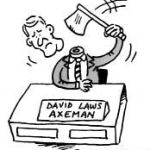
Laws’s resignation is a disaster for the coalition in all but one respect

From our UK edition

James Forsyth reviews the week in politics Straight after David Cameron had announced his final offer to the Liberal Democrats — a referendum on Westminster’s voting system in exchange for entering into coalition — I bumped into a member of the Tory Cabinet. I asked him if he thought that the offer was unnecessary seeing as a ‘coalition of the losers’ between the Labour and the Liberal Democrats was so unlikely to succeed. This Tory disagreed. He argued that the reward — the reunification of the right — was well worth the risk. My companion soon warmed to his theme.