James Forsyth

James Forsyth

James Forsyth is former political editor of The Spectator.

Cameron needs to tread with care

From our UK edition

David Cameron’s Oxford gaffe is refusing to die down. Whenever I’ve called Tory MPs or other members of the Conservative family in the last few days, it has been the first subject they have wanted to raise. People are genuinely perplexed — and worried — as to why Cameron said what he said. As Pete pointed out earlier, Bruce Anderson — the commentator who is David Cameron’s longest standing media supporter — warns that the Prime Minister is fuelling fears of government encouraged discrimination against the middle classes. Another long standing Cameroon loyalist said to me earlier, that he now worried that Cameron just felt too guilty about his own upbringing to be an effective PM. I think these fears are, hugely, overblown.
Lansley and Cameron in the firing line

From our UK edition

The coalition’s decision to ‘pause’ its NHS reforms has left an open goal for its opponents, and they’ve been busy tapping the ball into this empty net this morning. At its conference up in Liverpool, the Royal College of Nursing has, predictably but embarrassingly, declared that it has no confidence in the health secretary. Back in London, Ed Miliband has been making hay while the sun shines attacking both the bill and the pause. His refrain at his press conference this morning was ‘the answer to a bad bill is not to slow it down but to junk it.’ Miliband’s performance this morning was striking for him speaking at a level of policy detail that party leaders normally eschew.

Another fight looms for Cameron over votes for prisoners

From our UK edition

Prisoner voting is back on the agenda. The European Court of Human Rights has rejected the British government’s appeal and declared that the coalition has six months to draw up proposals to change the law.   David Cameron now has to decide whether to ignore the Strasbourg Court or go against the will of his MPs, who voted overwhelmingly to oppose giving prisoners the vote in response to the court’s initial decision. In many ways, ignoring the court is the safer option. Tory MPs aren’t inclined to back down on this issue and if Cameron tried to make them he would create a lot of ill-will and take an awful kicking from the press.

A question of access

From our UK edition

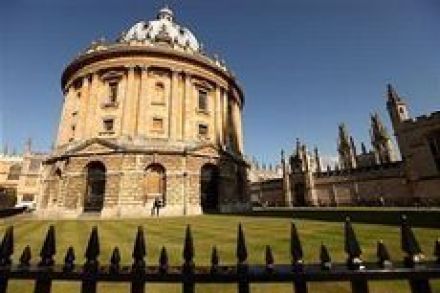
When a Prime Minister gets his facts wrong as spectacularly as David Cameron did yesterday with his comment that  ‘only one black person went to Oxford last year’ everyone wonders why. Now, the simplest explanation is that it was a straight cock-up. One of the pitfalls of these Cameron Direct events is that errors can come out. Another theory doing the rounds this morning is that Cameron is giving a speech on immigration later this week, with some tough language in it, and so was trying too hard to show that he is anti-racist. But whatever the explanation, Cameron needs to be careful about how he approaches the university access issue.

Why the Vickers Review won’t harm the City’s global competitiveness

From our UK edition

The headline measure in the Vickers Review—the need for a ring fence between retail and investment banking—should not harm the City’s global competitiveness as it only applies to banks with a UK retail operation. For everyone else, Vickers would leave London as a relatively good place to do business: far more certain than Hong Kong and less restrictive than New York once the new Dodd-Frank regulations are in place. In Conservatives circles tonight, there is a quiet confidence that the government will be able to accept the Vickers Review in full when it reports in the autumn.

The Vickers Review, acceptable to both halves of the coaltion

From our UK edition

The Vickers Review into the future of banking appears to have prevented a possible coalition row. The Tories and the Liberal Democrats have had different views on what to do about the banks, with the Lib Dems keener to break up the banks come what may and the Tories more worried about preserving the competitiveness of the City.   At the very start of the coalition there was a rather unseemly turf war between Cable and Osborne about who controlled policy on the banks, and many have expected a row to break out when he review reported. But, as we predicted on Coffee House back in February, the review has come up with a solution acceptable to both sides.

Politics: Time for Cameron to do some pruning

From our UK edition

When spring arrives in England, the Prime Minister likes to roll up his sleeves and do a spot of gardening at his constituency home. When spring arrives in England, the Prime Minister likes to roll up his sleeves and do a spot of gardening at his constituency home. This year, he’ll have to find another way to pass the time. The police can only protect him properly in Oxfordshire by taking up post in the garden, and his wife, Sam, overheard her children enthusing about their guns. So it’s Chequers for the Camerons this April, where the protection officers can be both more effective and less obtrusive. And instead of pruning the roses, Cameron can turn his attention to the thorny problems of government.

The consequences of political abuse

From our UK edition

Nick Clegg’s interview with Jemima Khan (née Goldsmith), in which he admits to crying regularly to music, is already coming in for predictable mockery. But the point that Clegg makes about how his job is affecting his kids is worth dwelling on.   Clegg is not the only coalition minister to fret about this. Sarah Vine, Michael Gove’s wife, wrote earlier this year about how she worried about the psychological effect on her children of people verbally assaulting her husband in front of them. During the Labour leadership contest, Ed Balls, for all his faults, spoke movingly about his concern over how he would protect his kids from what was said about him and Yvette Cooper.

Planning for a reshuffle?

From our UK edition

David Cameron is determined to get away from the idea of an annual Cabinet cull. He has repeatedly told friends that he doesn’t want to reshuffle the Cabinet until March 2012. But The Times, the most pro-coalition paper, today uses its leader column (£) to call on Cameron to reshuffle straight after the May elections. I suspect that Cameron will only reshuffle the Cabinet, as opposed to the junior ranks, if AV passes. But there are a few Tory junior ministers who would impress as Cabinet ministers. Greg Clark and Nick Herbert, two members of the pre-election shadow Cabinet who missed out on the Cabinet because of coalition, have both performed well as junior ministers.

Nick Clegg was claiming that the NHS reforms were the Lib Dems’ idea just three months ago

From our UK edition

Ahead of this morning’s Cameron, Clegg, Lansley event on the NHS, it is worth reminding ourselves of what Nick Clegg was saying about these reforms back at the start of the year. On January 23rd, he went on the Andrew Marr show and had this exchange: 'ANDREW MARR: Huge change to the NHS just coming down the line. Was that in the Liberal Democrat manifesto? NICK CLEGG: Actually funnily enough it was. Indeed it was. We were one of the primary critics in opposition of what we felt was a top … ANDREW MARR: (over) I don't remember you saying you were going to get rid of Primary Care Trusts and pass it down to GPs. NICK CLEGG: We certainly said we were going to get rid of Primary Care Trusts.

Get ready for the Cameron, Clegg and Lansley NHS show

From our UK edition

Get your guide to body language out for tomorrow morning Cameron, Clegg and Lansley will be doing a joint event on NHS reforms. The three men all have subtly different messages to get across and there are concerns in Tory circle that Clegg will use the occasion to present himself as the defender of the NHS against these Tory reforms. Cameron will be walking a tightrope at tomorrow’s event. He will have to show that he is listening, that this whole exercise is not a sham, but without abandoning the principles on which the reforms are based. Expect Cameron, who will only have arrived back in the country hours before the event, to emphasise his personal connections to the NHS as he tries to build support for the policy.

Short term solutions to Britain’s long-term education problem

From our UK edition

The most important planks of the coalition’s social mobility strategy are its education and welfare reforms. Raising the standards of state education in this country will give far more children a chance to get on in life. While reducing the number of children brought up in workless households will, hopefully, halt the development of a hereditary non-working, benefit-dependent class.   But these measures will take time to work. Which raises the question of what should be done in the meantime?   One thing would be allowing academics to use discretion in admissions. We don’t expect the England cricket selectors to pick the side based solely on county averages and we shouldn’t expect universities to select pupils purely on exam results.

Lansley faces the music alone

From our UK edition

A weary-looking Andrew Lansley has just finished answering MPs’ questions following his statement announcing a delay to the coalition’s NHS reforms. The statement left us none the wiser as to what is up for review in the listening exercise the coalition is about to undertake. What it did demonstrate was both Lansley’s encyclopedic knowledge of the NHS: he seemed to know the GP who was leading the consortium in the area of every MP who questioned him: and his inability to clearly explain the purpose of his reforms. Indeed, if it had not been for a question from John Redwood the point that these reforms are meant to free up more money for patient care would have been lost.

Hardly a model of good government

From our UK edition

What is going on with the government’s health reforms is highly unusual. Normally, once a bill has gone through second reading and committee stage in the Commons there are very few changes made to it. But the coalition is considering some fairly significant changes to the Health and Social Care Bill in a bid to make it more politically palatable. It is hardly a model of good government.   This state of affairs provides ample opportunity for Ed Miliband to land some blows on the coalition, as he did in this morning’s speech delivered — symbolically — at the RSA, the new home of Blair’s former policy chief Matthew Taylor. In a sign of where Labour intends to go on the issue, Miliband said that delay would not be enough.

The coalition is in a mess of its own making over the NHS

From our UK edition

The NHS is, as Nigel Lawson once remarked, the new national religion of this country. This makes it difficult to discuss the subject in a rational matter and any attempt to reform it is likely to run into its own Pilgrimage of Grace as Andrew Lansley and the coalition are discovering. The government’s problem is that it can’t do a simple u-turn. As I say in the Mail on Sunday, Cameron can’t shelve this scheme without bringing his own judgement into question. Once Cameron and Clegg signed the introduction to the white paper setting out these reforms, they crossed the Rubicon. So instead the coalition is left trying to tinker and slow down the reforms to make them more politically palatable. But this brings with it its own risk.

Parliamentary privilege must be protected from over-mighty judges

From our UK edition

Sometimes, one does really wonder about the British judiciary. Its decision to issue injunctions which bar people from talking to their MPs about an issue, as revealed in The Times this morning, displays a shocking contempt for parliament. It suggests that the court have learned little from the Trafigura case. The justification for these so-called ‘hyper injunctions’ is that if someone tells an MP about a case, it can then be raised in parliament and what the MP said reported under parliamentary privilege. But parliamentary privilege exists for a reason: MPs must be able to raise any issue they want in parliament. For judges to try and limit it goes against the spirit of our unwritten constitution.

EXTENDED VERSION: Playing the heavy

From our UK edition

A longer version of James Forsyth's interview with Eric Pickles, the Cabinet’s surprisingly intellectual bruiser There are politicians who shy away from confrontation and those who relish it. Eric Pickles, the Communities and Local Government Secretary, is firmly in the latter camp. As we sit around a small table in his room in the House of Commons, he entertains with war stories from his days as the budget-cutting leader of Bradford City Council at the end of the Thatcher era. ‘I arrived at the railway station and there were thousands of people outside chanting “Death to Pickles”. So I pulled my hat down, pulled up my coat, got out of the cab chanting “Death to Pickles” myself and got in.

Politics: The Lib Dems are sensing that it’s time to get hostile

From our UK edition

There are few things that irritate an MP in the chamber of the House of Commons more than the sight of all the journalists in the press gallery walking out in the middle of a debate. There are few things that irritate an MP in the chamber of the House of Commons more than the sight of all the journalists in the press gallery walking out in the middle of a debate. It annoys them so much not because it means their own remarks will probably go unreported but because it is a visible symbol of the shift in power from the legislature to the executive. The journalists are all dashing out to hear some government aide explain what a minister really meant by an earlier statement.

Playing the heavy

From our UK edition

An interview with Eric Pickles, the Cabinet’s surprisingly intellectual bruiser There are politicians who shy away from confrontation and those who relish it. Eric Pickles, the Communities and Local Government Secretary, is firmly in the latter camp. As we sit around a small table in his room in the House of Commons, he entertains with war stories from his days as the budget-cutting leader of Bradford City Council at the end of the Thatcher era. ‘I arrived at the railway station and there were thousands of people outside chanting “Death to Pickles”. So I pulled my hat down, pulled up my coat, got out of the cab chanting “Death to Pickles” myself and got in.

A shameful episode

From our UK edition

Libby Brooks’ piece in The Guardian today is shameful. Writing about the violence that followed last weekend’s march, she  argues that the ‘relevant question is not whether or how to condemn those acts – but if any coherent agenda lies behind them and how important it is for that to sit neatly with the agenda of the whole’. She even quotes approvingly the idea that the violence can be beneficial as it might push the government to do a deal with the moderate elements of the movement and wants us to remember that 'the vast majority of damage on Saturday was sustained by property, not persons (84 people were treated for mainly minor injuries); nor was this vandalism mindless, but targeted at banks and other emblematic high street institutions.