James Forsyth

James Forsyth

James Forsyth is former political editor of The Spectator.

Next right

From our UK edition

If you wanted a preview of the future of British politics, you should have headed through the back alleys of Westminster to Lord North Street on the last Monday in February. There, in the slightly cramped premises of the Institute of Economic Affairs, you could have seen the early stirrings of a Tory revolution. A group of MPs, most of whom had been in parliament for less than two years, were explaining why nothing less than ‘fundamental structural reform’ of the economy would solve the country’s woes. Holding a public meeting a few weeks before your own government’s budget to announce what you would do if you were in charge would normally be seen as an act of monstrous vanity.

Greece has a government, of sorts

From our UK edition

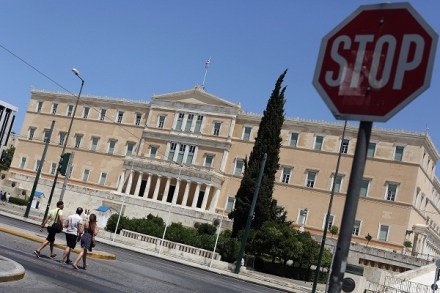
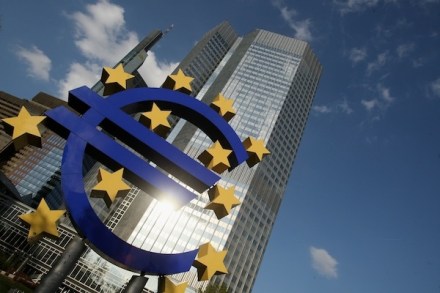
Greece has a new Prime Minister. But no one could call the coalition that he is set to unveil this evening stable. For the other two parties, Pasok and the Democratic Left, are both stressing that none of their members will become cabinet ministers, leaving New Democracy and various worthies to carry the can for the austerity measures. Pasok is also saying that it has entered coalition to take on ‘the burden of responsibility to renegotiate the bailout agreement’. This suggests that if Prime Minister Samaras is incapable of extracting many concessions from the Troika then the coalition will be in deep political trouble.

PMQs without the PM

From our UK edition

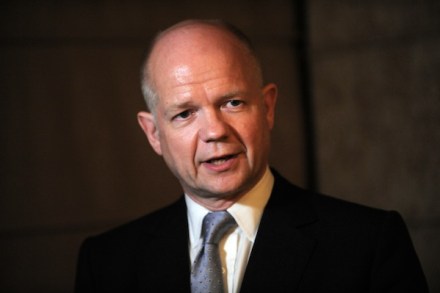
PMQs today wasn’t the usual bun fight. With Cameron and Clegg away, it was missing its usual bite. Instead, Harman and Hague started off with some very statesman-like comments on Burma. Even when discussion moved to the NHS, things didn’t really heat up. Hague had some good jokes at Ed Balls’s expense but Balls wasn’t there to heckle back.  The laid-back atmosphere got to a couple of the questioners. Simon Hughes, the Lib Dem deputy leader, called Hague the ‘Deputy Prime Minister’ before catching himself. Luciana Berger went one better, addressing Hague as Prime Minister. One possible moment of tension came when Peter Bone called on Hague to ‘divorce the yellow peril’ and usher in a Tory-minority government (see the video below).

Danger in the Lords

From our UK edition

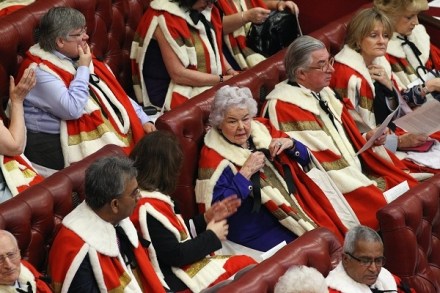
Opponents of an elected House of Lords have been flexing their muscles in the last few days. Yesterday, Archie Hamilton, a Tory peer and former chairman of the 1922 Committee, and a sceptic of the coalition’s plans for an elected Lords, put down a manuscript amendment on the Financial Services Bill, on which the government was defeated. This means that the bill will have to go through a full committee stage. This is just a little indication of how much more difficult the coalition could find getting its legislation through the upper house once the Lords reform debate has started in earnest. So much of the proceedings in the Lords is governed by convention, that it is far easier to delay the government there than in the Commons.

Boris beats two loud drums

From our UK edition

Boris Johnson’s interventions today are another reminder of his ability to please the Tory tribe, and be a thorn in Cameron’s side. The prime minister has concluded that the best approach on Europe is to argue that the Eurozone needs to follow through on the logic of the single currency and move to fiscal union. This is not a popular position in the Tory party. From the Cabinet down there are doubts about the wisdom of it; I understand that Justine Greening told last week’s Cabinet meeting that she did not believe that a transfer union could be made to work. But no senior Tory expresses their disagreement with this policy more often or more publicly than the Mayor of London.

The worst of all possible worlds

From our UK edition

The Greek election has, in terms of the Eurozone crisis, produced the worst possible result. If the Interior Ministry’s initial projections are accurate, New Democracy has come first. But it is hard to see how they can form a coalition given that PASOK, the party of the establishment left, have said they won’t go into coalition without Syriza, the anti-bailout party. PASOK’s ambivalence is understandable given that any party that goes in with New Democracy is likely to be wiped out at the next election. But the coming Greek stalemate is likely to make life particularly difficult for central bankers: do they act before tomorrow morning or wait for the aftermath of the third Greek vote?

The return of Osborne’s good spirits — and his cat

From our UK edition

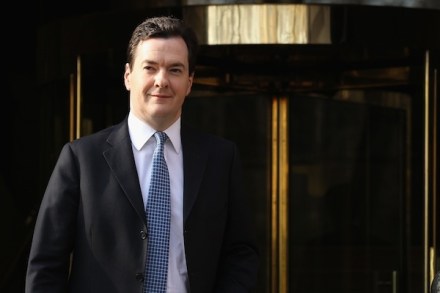
The most important event today is the Greek election, with its huge implications for the future of the Eurozone. But this morning, the political class is chattering about George Osborne because of the poll which Fraser blogged about earlier. Osborne is one of the more self-aware politicians that you’ll meet. One colleague says, only half-jokingly, that Osborne’s mood is the best guide there is to the future prospects of the government.  In recent weeks, Obsorne has not been in good form—his post Budget woes and the never ending crisis in the Eurozone appeared to be getting him down. As one person who works closely with him remarked to me recently, ‘That Tiggerish glint in his eyes had gone.’ But Osborne’s mood has improved in the last week.

Meet the ‘Syriza Tories’

From our UK edition

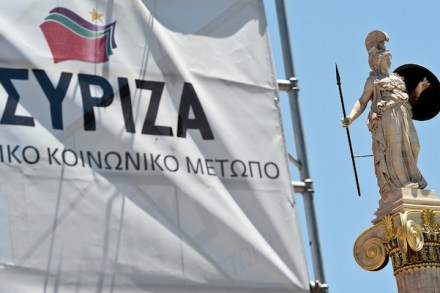
The ranks of the 'Syriza Tories' have been swelling in the run up to the Greek elections this Sunday. As I say in the magazine this week, the 'Syriza Tories' have decided that the Eurozone crisis needs to be brought to a head. Their argument is that the one thing worse than the Eurozone breaking up, is this crisis dragging on for the rest of the decade and preventing the return of confidence to the global economy. So, they are rooting for the radical leftists in the Greek elections in the belief that a Syriza victory would force a resolution of the crisis one way or the other.

The Tories who are hoping Greece will go

From our UK edition

There’s a new and growing faction in the Tory party. It includes several members of the Cabinet, various senior backbenchers and many of the brightest members of the 2010 intake. They are the Syriza Tories, united in their belief that the best thing for Britain and the government would be for the anti-bailout Syriza party to triumph in the Greek elections on Sunday. Syriza, a party of the radical left, is hardly a natural bedfellow for the Tory right. But these ministers and MPs have come to the conclusion that the eurozone crisis must be brought to a head, and a Syriza victory would do exactly that.

Osborne leans on King

From our UK edition

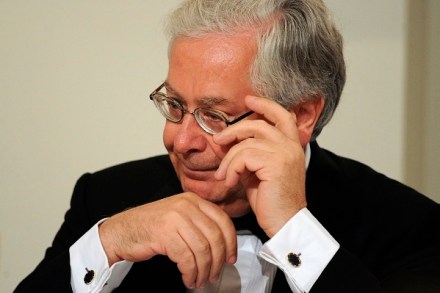
What we saw at the Mansion House last night gave us some hints of where British economic policy will go if the Eurozone start to fragment. For the moment, Osborne is persisting in getting the Bank of England to do the heavy lifting using monetary policy rather than attempting a fiscal stimulus. The first line of defence is what one source described to me as ‘highly active monetary policy.’ The fact that the chancellor has persuaded the notoriously prickly Bank Governor to offer loans against weaker security is a definite success for him and a sign that he’s developed a far better relationship with King than either Brown or Darling.

Cameron escapes unscathed

From our UK edition

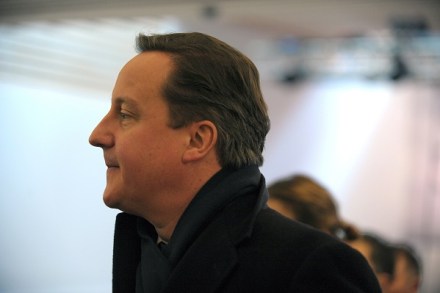
Friends of David Cameron are pretty satisfied with how today went. Their sense is that nothing explosive came out and that if that embarrassing Brooks text is the worst headline from his four hours plus on the stand then that’s not too bad a result. The prime minister has also been greatly helped by the fact that we haven’t seen any of his text messages to Ms Brooks. When it came to press regulation, Cameron was not as emphatic as Michael Gove or George Osborne. But he was clear that he is not keen on any new laws. Instead, he seemed to be urging Leveson to opt for beefed-up self-regulation. However, Leveson seemed doubtful of the merits of this idea.

Cameron’s difficult morning

From our UK edition

David Cameron’s morning at the Leveson Inquiry has not been a pleasant experience for him. In the opening hour or so, Cameron was calm and statesmanlike. But as the inquiry moved onto his connections to News International and how Andy Coulson was hired, the prime minister was pushed onto the back foot. One could see why some in Number 10 refer to the inquiry as ‘the monster we have created’. The headline for tomorrow’s papers is, at the moment, coming from a text sent to him by Rebekah Brooks. The clinging text read, ‘But seriously I do understand the issue with the Times. Let's discuss over country supper soon.

The message for Leveson

From our UK edition

George Osborne and Michael Gove are two of the Cabinet ministers closest to the Prime Minister. In their appearances before the Leveson Inquiry, they have both made clear that they are not interested in some giant new regulatory system for the press. Indeed, the vigour with which Gove made this argument rather got under the judge’s skin, while Osborne openly mocked the kite-mark system that Leveson is so interested in. The implicit message to Leveson was: propose something too big and you might as well post your final report to the Long Grass at the back of Downing Street.   Now, both Osborne and Gove are to the right of the Prime Minister politically, and both are less inclined to seek consensus than the PM.

The coalition’s ties are weakening

From our UK edition

The government won’t fall over the Lib Dems abstaining on an opposition motion attacking Jeremy Hunt. But Nick Clegg’s decision to order his MPs to sit out today’s vote is another sign of how the ties that bind the coalition are weakening. Those close to Clegg argue that because Cameron did not consult Clegg when referring Hunt to the independent adviser on the ministerial code, the deputy PM can’t be expected to defend it as a collective decision. This line has some merit. But there’s no getting away from the fact that Tory ministers and MPs feel that the Lib Dems have chosen to kick a Cabinet colleague when he’s down. Cabinet collective responsibility is already a much diminished concept under this coalition government.

Hunting season at PMQs

From our UK edition

A slightly absurd PMQs today, dominated by Leveson and Jeremy Hunt. I suspect that history will not look kindly on the fact that there were no questions on what is happening in the Eurozone until 28 minutes into this half hour session. The Cameron Miliband exchanges were rather laboured, neither man was on particularly good form. Cameron brandished a letter from the independent adviser on the ministerial code Sir Alex Allan. But it later transpired that the letters had been exchanged with undignified rapidity this morning. The perception created by this rather undercuts Allan’s reputation for independence.   Towards the end of the session, the Labour MP Steve Rotheram asked a rather long-winded question which contained various rhymes in it.

Osborne’s pointed musings

From our UK edition

George Osborne’s musings today on how Greece might have to leave the Eurozone before the Germans will act in order to save the single currency makes public the British government’s current thinking on the future of the Eurozone. In remarks the frankness of which have taken other parts of government by surprise, Osborne told The Times’s CEO summit: ‘I ultimately don’t know whether Greece needs to leave the Euro in order for the eurozone to do the things necessary to make their currency survive… I just don’t know whether the German government requires Greek exit to explain to their public why they need to do certain things like a banking union, eurobonds and things in common with that.

Who wins as Spain stutters?

From our UK edition

The news that matters today isn’t what was said at Leveson, it’s becoming increasingly clear that the government won’t act on the inquiry’s report if it suggests anything big, but that the Spanish bailout is failing. Indeed, Spanish bank stocks are lower this evening than they were this morning and the yield on Spain’s 10 year bonds is back above six percent. But one group who will benefit from the Spanish bailout is Syriza, the Greek anti-bailout party. The decision to bailout Spain without fiscal conditions is a major boost to Syriza’s pitch that ultimately the rest of the Eurozone will blink if Greece demands changes to the terms of its bailout.

Vintage Brown

From our UK edition

Gordon Brown’s appearance at Leveson is yet another reminder of his stubborn refusal to ever admit error. The contrast between his and Tony Blair’s testimony is striking. One is left wondering how Brown ever became Prime Minister. Brown is maintaining that he didn’t get too close to the Murdochs, and that he never knew or encouraged his special advisers to brief against Tony Blair or other colleagues. Taking Brown at his word, the latter suggests that his operation was even more dysfunctional than we thought. One thing worth noting is that Brown has denied wholesale Rupert Murdoch’s claim, made on oath, that Brown called him after The Sun withdrew its support from Labour and told him that he had no choice but to 'make war' on the company.

No. 10’s response to its difficulties

From our UK edition

Two issues are dominating Number 10’s thinking at the moment: Europe and the cost of living. How to deal with Europe is the biggest strategic challenge facing David Cameron. Cameron has to work out how to use this moment to advance the British national interest. But he also knows that Europe is an issue that could split the coalition and the Tory party.   Inside Number 10, it seems that it is becoming a question of when to announce a referendum not whether to call one. As I say in the Mail on Sunday today, senior figures there are pushing for the Tory commitment to a future referendum on the EU to be brought forward from the manifesto to this year’s conference season.

A poor man’s compromise

From our UK edition

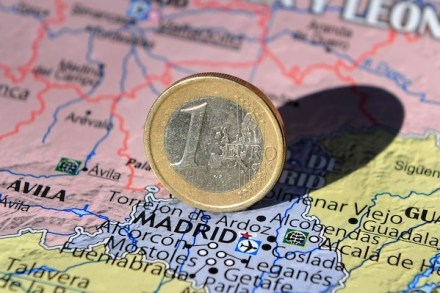
The expectation in both Brussels and Whitehall is that this weekend will see a bailout for Spain agreed. It appears that a compromise which would not impose harsh external conditions, which is why Madrid has been rejecting offers of help to date, but would satisfy German concerns about bailouts simply encouraging reckless behaviour, is close to being reached.   But this does not mean that the Eurozone governments will be doing anything to get properly ahead of the crisis. Instead, they have decided to wait until after the results of the Greek elections before deciding what to do next.