James Forsyth

James Forsyth

James Forsyth is former political editor of The Spectator.

The Boris bandwagon poses little threat to David Cameron, for now

One of the criticisms of the idea of Boris Johnson as a potential Prime Minister is that he doesn’t look the part and isn’t serious enough. The argument goes that it is all very well for the Mayor of London to jape around, but quite another thing for the Prime Minister to (Phil Collins produced a very punchy version of this point of view (£) in The Times this week). But as Charles Moore argues in his column, this argument misses that ‘conventional politics is now failing more comprehensively than at any time since the 1930s, and that Boris Johnson is the only unconventional politician in the field.’ It is precisely because Boris does not conform to what is expected of a modern politician that he appeals.

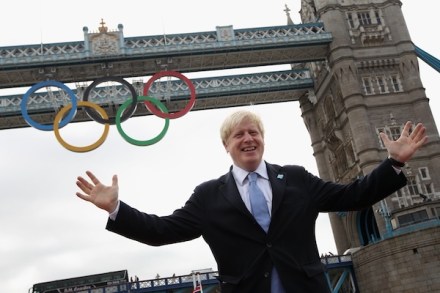
For Boris, the Games could be just a warm-up

It is an odd summer in Westminster. The political big beasts have stayed around because of the Olympics. Government ministers have international schmoozing to do; and in any case, like their senior shadows, they would not want to risk being seen scrambling back from abroad in the event of a national emergency. They are not, however, expecting to be able to score many political points while the Games are in progress. Only one office-holder is making full use of them: Boris Johnson. The Mayor of London has been doing what he does best — directing the emotional energy of a crowd. His performance has reminded me of a conversation I had several years ago with one of his former colleagues who had known him in several guises.

No sweeteners for Clegg on Lords reform

In recent weeks, Downing Street has been repeatedly told by Tory MPs that if proposals for an elected element in the House of Lords were brought back to the Commons, the next rebellion would be even bigger than the 91 who voted against second reading. Downing Street, as the Telegraph reported this morning, has now accepted that Lords reform will have to be dropped and there is talk of a formal announcement to this effect as early as Monday. But, intriguingly, I understand that David Cameron does not intend to abandon efforts to get the boundary reforms through. This, as Isabel noted this morning, has the potential to cause a massive coalition row.

The restless Tory family

Today’s YouGov poll is the latest Boris talking point. For what it is worth, it shows that the idea of Boris as leader reduces the Labour lead from six points to one. It is the first polling evidence we’ve seen that suggests the Tories would do better nationally under Boris. The Boris speculation has now reached such a level that nervous Liberal Democrats are calling up asking whether they should start taking it seriously and sotto voce inquiring as to how the Tories replace their leaders. All of this is, in many ways, hugely premature. Boris isn’t even an MP and there’s a massive difference between Tory backbenchers wondering after a drink or two about whether Boris might be a bet than Cameron and actually deciding to back him.

Boris puts the bubbles back into his campaign champagne

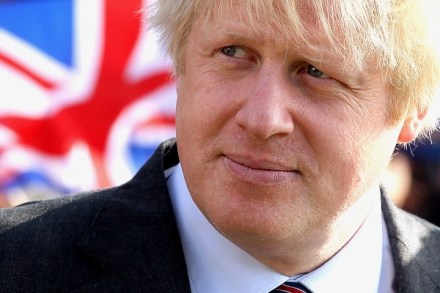
After Boris’s re-election as London mayor, his departing aide Guto Harri complained that the dry but effective campaign had rather taken the ‘bubbles out of the champagne'. Well, the Olympics is certainly putting them back in. Boris keeps taking opportunities that no other politician would dare to—the zip wire ride today being the latest, and most dramatic, example. The question is where does all this end, is it all just Olympics hi-jinks that will be forgotten when the flame leaves Stratford or is it just the next stage of the Boris for PM campaign? In my column in the magazine tomorrow, I say that it does seem to be more the latter than the former. Certainly, the attitude of Tory MPs to the thought of Boris as PM seems to be changing.

Cameron’s reshuffle quandary

One can see why the idea of Iain Duncan Smith as Justice Secretary appeals to some in Tory high command, as the Daily Mail reveals this morning. The former leader is one of the few people who could square the party to a policy that treated rehabilitation as the main aim of the penal system. I expect, though, that IDS himself would not be keen on the move. But this story does illustrate one of the biggest problems that Cameron will face with his reshuffle, how to make room at the top. Among Tory ministers, there promises to be very little movement in the higher echelons of government. The Chancellor, the Foreign Secretary and the Home Secretary will all stay where they are.

Kicking the euro crisis can down the road

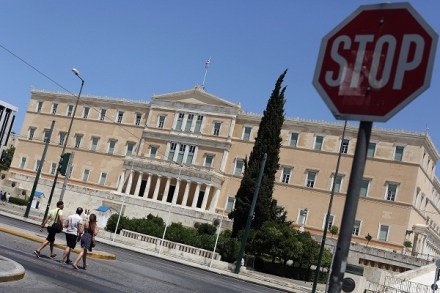
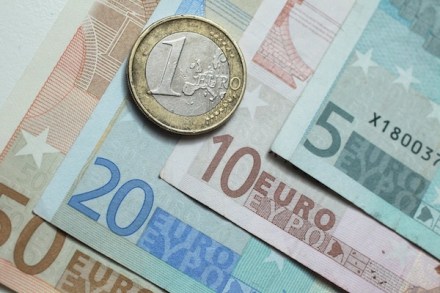
Today brought yet more reminders of why the eurozone can’t carry on like this much longer. Youth unemployment in Spain and Greece is above 50 per cent - a generation being crucified on a cross of euros - 163 billion euros left Spain in the first five months of the year, and the Greek deputy finance minister is warning that the country’s ‘cash reserves are almost zero’. So far, the eurozone has managed to find a way to kick the can just far enough down the road. But this is becoming increasingly difficult. As the increasingly desperate messages from Athens make clear, if the country isn’t given another bailout it will simply run out of money. The Germans, though, seem increasingly prepared to accept this.

Planning reform is an easy way of helping the economy

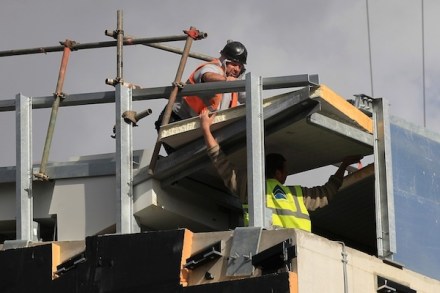
'Desperate Treasury to water down planning laws,’ blasts the Telegraph today, making it quite clear that it’ll oppose any effort by the government to return to planning reform. Those Tories who were uncomfortable with the original proposals are also making clear that they haven’t changed their position. The new national planning policy framework was announced this spring. Those who helped craft this compromise are privately stressing that it is simply too early to tell whether further changes are needed. But I still think there is a good chance that the Treasury will push for more planning reform this autumn. First, it is something that it genuinely believes would help the economy, and the particularly hard hit construction sector, in both the short and the long term.

Ministers consider further planning reform

Today’s papers are stuffed full of Olympic reportage rather than analysis of the GDP figures. But down in the bowels of Whitehall, a list of policy options to try and boost economic growth are being drawn up. Decisions on what to do will be taken after the Olympics but I understand that further planning reform is currently on the list. The coalition announced a new national policy planning framework in the Spring. But it was not as radical as George Osborne and the Treasury wanted it to be: opposition from heritage groups like the National Trust and various environmental organisations led to it being watered down. With the economy shrinking and construction in particular decline, though, the Treasury wants to come back to this fight.

Using the Olympics to turn a corner

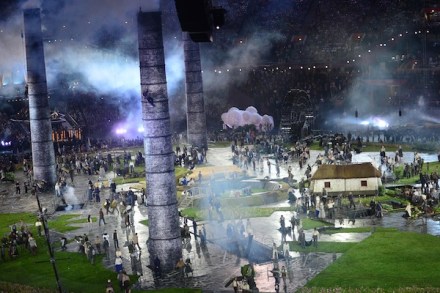
I suspect there’s a certain relief in Downing Street today. First, the opening ceremony passed off pretty well; no one is talking about G4S this morning. Second, Standard and Poor’s has reiterated Britain’s AAA credit rating despite the negative GDP figures this week. The government is hoping that the Olympics will help it turn the corner from the negative economic news of recent months. Over the next week or so, we’re going to see what one minister described to me as ‘the government’s industrial strategy’ in action. The Global Investment Conference at Lancaster House is meant to showcase the benefits of investing in Britain for specific sectors.

Cameron can’t risk becoming the status quo candidate

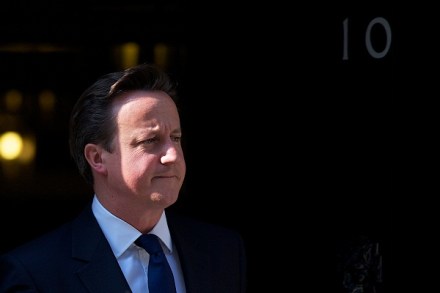
The next few weeks should be a good time to be Prime Minister. Unusually for this decade, anti-politics will not be the mood of the moment. Instead, the nation will indulge in an Olympic holiday from austerity. Every time the Prime Minister congratulates a British medal winner, his words will be eagerly reported. He will also be on hand whenever a foreign businessman announces a new investment in Britain. Cameron knows that looking like he is trying to gain partisan advantage from the Games would be disastrous. So he’s quick to stress that the public won’t confuse Olympic success with economic growth, something which remains alarmingly elusive. The economy shrank a further 0.7 per cent last quarter, meaning that we have had nine months of negative growth.

Academies to be allowed to employ teachers without formal training

The pace of reform in education has been stepped up again today. The model funding agreement for all new academies has now been changed by the Department for Education to remove the requirement for all teachers to have Qualified Teacher Status. Any existing academy will also be able to change its funding agreement to include this new freedom. This change might sound technical but its importance is that it means that academies will now be able to employ people who have not gone through a year of teacher training. Previously, an academy couldn’t have employed, say, James Dyson to teach design without him having done a year in a teacher training college. These new, more flexible arrangements should spur a change in the nature of teacher training.

The problem isn’t that Osborne is too political but that Number 10 isn’t political enough

There’s been a lot of attention over the past few days as to whether George Osborne is too political. But what should really worry Tories is not how political George Osborne is, but how unpolitical Number 10 is. There are far too many Tories who think that politics is something you do in opposition not government. This view is profoundly mistaken. As I say in my column this week, city mayors were a major plank of David Cameron’s vision for reviving England’s cities. Yet all but one of the mayoral referendums were lost. Why? Because voters were never shown that mayors wouldn’t just be another politician. The Number 10 machine failed to find the kind of inspiring figures who’d have made people see the merits of the idea.

Olympic strike averted

The PCS decision to call off the strike scheduled for tomorrow lessens the chances of a logistical nightmare of a start to the Olympics. It also means that the government’s challenge to the strike won’t be heard in court. Both sides are claiming victory in the dispute. Government sources are claiming that the union has backed down in the face of public opposition to an Olympic strike and the union is saying that it has won a promise that a certain number of new posts will be created. But the mere fact that this strike almost happened on such a low turnout will strengthen the hand of those in government who are pushing for a minimum threshold strike law. There is a feeling on the Tory side of government that they now have permission to move on this matter.

GDP figures show the economy needs fundamental reform

Today’s GDP figures are far worse than expected. They mean that the economy has now shrunk for three consecutive quarters. The figures have destroyed the optimism created by the fact that employment and tax revenues are rising. Politically, these figures are undoubtedly a blow to the coalition. Labour is out trying to pin the blame for the continuing recession on the government’s economic policy. The Treasury is countering that the figures confirm that ‘the country has deep rooted economic problems’. In a sign, though, of how serious the GDP fall is, the government is conspicuously avoiding suggesting any external reasons for it — such as the Eurozone crisis, the weather etc. What is clear is that the economy needs fundamental reform.

The coalition trial of strength

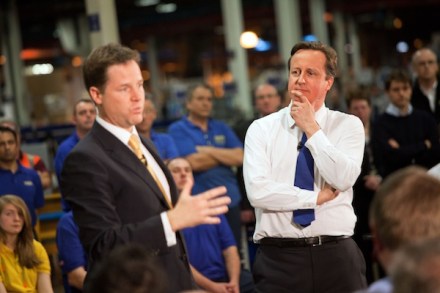
The coalition is most fragile when both party leaders feel that they have a point to prove to their own side. We are, post the Lords reform rebellion, in one of those moments. Nick Clegg has to show the Liberal Democrats that he’s no push-over, that he’ll exact something from the Tories for the death of Lords reform. In the last few days the Clegg circle have been suggesting that not only will there be no boundary changes if there is no Lords reform but that the deputy Prime Minister also has fresh resolve to fight the green agenda’s corner in government. For his part, the Prime Minister is trying to reestablish his authority in his party.

Spain and Italy present a bigger terror for the Eurozone

MPs have been amusing themselves with a rather grim game in which they guess what event will lead to Parliament being recalled in August. Over the last few days, the Euro crisis has become the definite favourite. The yield on Spanish bonds is now over 7.55 per cent - a rate that is unaffordable in anything other than the shortest of terms - the IMF is indicating it will cut off future aid to Greece, and Italy’s regional debts are about to pull back into the eye of the storm. Now, this crisis has so far being marked by a willingness by the Eurozone to do just enough to stave off the trouble for another day. But that is becoming increasingly difficult as the markets begin to ask where the actual money is in all these supposed rescue packages.

The secret seven

David Cameron’s decision to convene an inner Cabinet of seven Tories to advise him is a sensible move. As I say in the Mail on Sunday, calling this group together shows that Cameron knows he needs help handling his party. I understand that it meets regularly with a particular emphasis on the Conservative party side of coalition management. One Cabinet minister told me recently that the Prime Minister spends more time on coalition management than any other subject. To date, this has too often been at the expense of party management. Inevitably, if you spend most of the time thinking about what the Liberal Democrats will accept you begin to lose touch with your own party.

Cable on the move

Vince Cable’s decision to speculate publicly about a post Nick Clegg leadership race is a significant moment. To be sure, saying ‘I wouldn’t exclude it’ about running for the job is a long way from launching an actual challenge. But it is not the answer that a politician gives if they want to stop all speculation. There’s long been gossip at Westminster that Cable’s interest in the leadership has revived — and this interview appears to confirm that. It is worth remembering that Cable only didn’t run last time because he thought that the party wouldn’t pick another veteran as leader after the Ming Campbell disaster. So, there's unfulfilled ambition there.

Big is beautiful

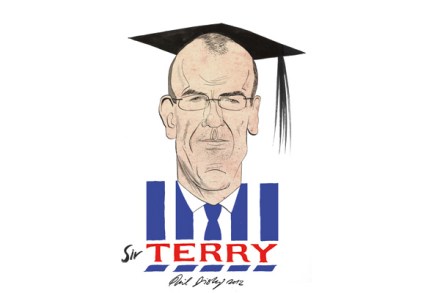
Sir Terry Leahy might be the UK’s most successful businessman. He turned Tesco, love it or loathe it, from a second-tier supermarket worth £7 billion into the £37 billion behemoth of the sector. As an interviewee, however, he is not a natural performer. There is no Bransonian bonhomie about him. He is dressed in a non­descript dark suit, and, though he has no entourage, is accompanied by a publicist from his publisher; he starts to steal not-so-subtle glances at his watch almost as soon as we have started talking. But Leahy’s awkwardness shouldn’t obscure the truths he has to deliver. He has a bracing analysis of the situation that Britain is in.