James Forsyth

James Forsyth

James Forsyth is former political editor of The Spectator.

Is the coalition’s time drawing to a close?

There’s long been a certain amount of speculation in Westminster about how long the coalition will last. This topic used to be the sole preserve of those who were sceptics of it; it was a question hoping for the answer not that long. Enthusiasts for coalition, took it as a given that it would last to 2015. But today Matthew Parris, one of the commentators who has been most welcoming of the coalition, writes, ‘I’m close to despair and no longer confident that the coalition can continue even into next year.’   When even the coalition’s friends are saying this, then it is time for the Prime Minister and deputy Prime Minister to take notice.

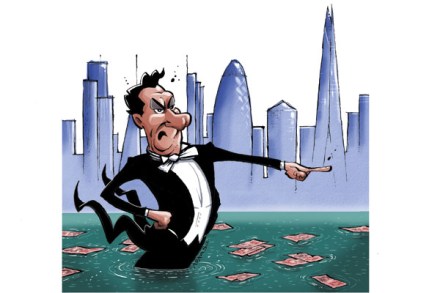
Chancellor on the charge

Walk into George Osborne’s suite of offices in the Treasury and you are struck straightaway by a new excited mood. People who a month ago looked worn down by the burdens of office are now full of life.  In no one has the transformation been more dramatic than the Chancellor himself. He strides out of his room, shoulders back, a smile playing across his face, and says, ‘Come on, stop gossiping with the political advisers. Let’s get on with it.’ It is remarkable to think that just a few weeks ago colleagues were discussing whether his enthusiasm had been permanently dented by events. This new enthusiasm is the result  of the Libor scandal.

The euro sticking plaster peels off

The sticking plaster is peeling off again. Spanish bond yields have again breached 7 per cent this morning. That 10 year gilts are back over this level is yet another reminder that the piece-meal solutions the Eurozone is trying just won’t work. Indeed, they are unravelling at an ever quicker rate as the markets realise that the supposed agreements reached at these summits rarely survive close inspection. What is becoming quite clear is that the prosperous, fiscally-prudent countries of northern Europe — and that’s not just Germany but Holland and Finland also — simply aren’t prepared to give the Spanish and the Italians let alone the Greeks, the kind of help that is needed to actually stabilise the situation.

QCs could be the solution to the banking inquiry row

There are, though partisans don’t want to admit it, problems with both a judicial inquiry and a parliamentary inquiry into the Libor scandal and the wider culture it has revealed. A judicial inquiry would drag on and, judging by the Leveson Inquiry, there’s no guarantee that the judge would understand the industry he’s meant to be examining. But, as yesterday demonstrated, the standard of questioning at any parliamentary inquiry is going to be patchy.   John Thurso, a Lib Dem member of the Treasury select committee and one of the most respected MPs, has been out floating a compromise solution. His idea is that the Joint Committee should have the power to take on QCs.

Inquiry debate leaves acrimonious atmosphere

Following the vote just now, there will be a parliamentary inquiry into the Libor scandal. Andrew Tyrie, chairman of the Treasury select committee, will chair it because Ed Balls has agreed that Labour will participate in it as long as it concerns about membership and the secretariat are addressed; presumably, this means that Labour will argue that as it is a joint committee of both House there should be no government majority on it. The debate, though, has left an atmosphere of acrimony behind. It was noticeable that during the vote, Ed Balls walked past George Osborne who appeared to be trying to engage him in conversation.

Osborne and Balls are playing high stakes on Libor

The exchanges between Balls and Osborne just now are some of the most heated and most personal in parliamentary memory. I suspect that Balls would now not offer to cook Osborne ‘my 14-hour pulled pork South Carolina barbecue. I’d know he, as an American aficionado, would truly appreciate it’. The cause for this row is George Osborne’s interview in the new issue of The Spectator. The following paragraphs have sent Balls into a rage: 'If exonerating the Bank is his first priority, his second is tying this scandal to the last government. He starts by blaming the regulatory system devised by Brown and Balls for allowing these abuses to happen.

Exclusive: Osborne, ‘They were clearly involved’

After a subdued PMQs, the politics of the Libor scandal has just been ratcheted up another notch. In an interview with The Spectator for this week's issue, George Osborne has said that those around Gordon Brown ‘were clearly involved’ in the discussion about how to keep Libor down during the 2008 financial crisis. In the interview, George Osborne gives short shrift to Barclays’s accusation that the Bank of England urged it to get its Libor down.

Cameron’s position on Europe grows clearer

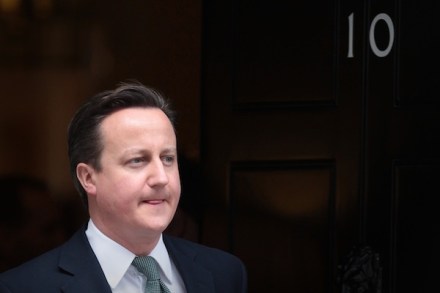
David Cameron’s position on Europe is becoming clearer. ‘Fresh settlement, fresh consent’, the soundbite he kept using, is simply a euphemism for renegotiation followed by a referendum. It seems that this renegotiation will span the next election. Indeed, it will start as soon as a new EU treaty is proposed. In response to a question from Peter Lilley, Cameron said he will try to use any forthcoming treaty to attempt to bring powers back to this country. Those close to Cameron say that the plan is to get as much back before the next election and then accelerate the process as soon as there is a treaty negotiation under a Conservative-only government. When the referendum does come, it will most likely offer a choice between the new terms and out.

Cameron feeds the eurosceptic beast

Nick Clegg won’t be sitting next to the Prime Minister in the chamber for today’s statement on the EU Council. He has, I’m told, got other meetings to attend. This absence might be for the best given what Tory MPs are planning to ask Cameron. As Isabel revealed earlier, a string of Eurosceptic backbenchers are planning to push the Prime Minister to go further than he did in his Sunday Telegraph piece. Number 10 is also expecting a question from Liam Fox. Tory MPs are being reassured that they’ll like what they’ll hear from Cameron on a referendum. It does seem that the statement will be firmer than what William Hague said on the Andrew Marr Show on Sunday morning. The dwindling band of pro-European Tory MPs is in despair.

Osborne savages Balls on Libor

The Osborne/Balls clash today was one of the most brutal I have seen in parliament. Osborne, leaning across the despatch box, mockingly enquired, ‘who was the City Minister when the Libor scandal happened? Put your hand up if you were the City Minister?’ Balls looked increasingly cross as Osborne continued down this path, demanding that the shadow Chancellor take ‘personal responsibility’ for the failures of the regulatory regime. Labour argues that the public are turned off by this kind of stuff; that they want to see answers rather than point-scoring. Even Darling — hardly an admirer of a man who coveted his job for so long — offered a partial defence of Balls, telling Osborne that the public don’t want partisanship on this issue.

Deeper Libor trouble

The more we learn about the Libor scandal, the more serious it becomes. Robert Peston’s suggestion that during the financial crisis, Barclays traders thought they were manipulating Libor under instruction from the Bank of England takes matters to another level.   It should be stressed that the Bank is indicating that it offered no such instruction. But the fact that Barclays traders, at least at one point, believed their behaviour was sanctioned does show that these abuses were not simply the work of a few bad apples.   Politically, the parties are battling to show which is best placed to drain the financial swamp. As I say in the Mail on Sunday, those close to Ed Miliband feel that this could be a defining moment for him.

Miliband calls for a banking inquiry

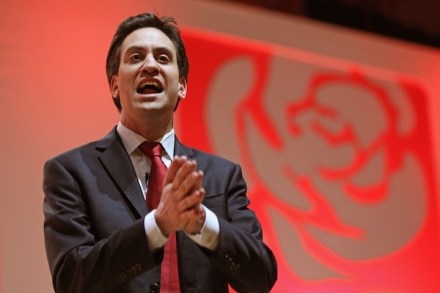
The momentum for a public inquiry into banking is growing. The Daily Mail front page demands ‘Put Bankers In the Dock’. While Ed Miliband has given an interview (£) to The Times in which he calls for an inquiry into the ‘institutional corruption in the City’. Miliband thinks that this inquiry should be tasked with drawing up a code of conduct for investment bankers equivalent to the one governing solicitors. Bankers who breached this code would be struck off.   Now, many will say that Labour have a cheek lecturing on banking regulation given the total failure of the new system they introduced.

Jockeying for position in post-coalition politics

‘Coalition is like a see-saw,’ David Cameron used to say. The line, delivered with that confident smile which says politics is child’s play to me, summed up Cameron’s approach to the job in the first months of his government. Back then, he thought it was his and Clegg’s job to shift the weight around so that no one fell off the see-saw. This was based on the premise that the Prime Minister and Deputy Prime Minister could control events; they could ensure that any victory for the social democratic wing of the Liberal Democrats was followed by something that pleased the Tory right. But Cameron and Clegg don’t have the see-saw to themselves any more.

Libor is an opportunity for Miliband

The Libor scandal is both a threat and an opportunity for Labour. The threat is that the abuses took place under a regulatory system that was devised by the last Labour government and by a Chancellor who both Eds worked for. As I said yesterday, the Tories are determined to hammer Balls — a former City minister — on this. But the opportunity is that it offers Ed Miliband a chance to act as if he is the tribune of the people, the leader brave enough to take on the powerful. So as with News International and phone hacking, we’ve seen Miliband getting out in front in terms of calling for the top people at Barclays to go and Labour is also backing an independent inquiry into the banks, something the government is currently opposed to.

Osborne goes for Balls over Libor scandal

The Libor scandal is yet another blow to the reputation of the City of London. Alistair Darling may have been right when he told George Osborne that we’re ‘kidding ourselves if we think this was the only country where this happened.’ But there’s no getting away from the fact that an uncomfortably large number of financial scandals start in London.     In the Commons, Osborne seemed keen to move towards a more American-style system of regulation with more prosecuting powers for the FSA and new criminal offences. But he was also keen to make a political point, this happened under the last government and a regulatory system set up by Gordon Brown and Ed Ball.

Miliband grows to relish PMQs

Ed Miliband had a bit of swagger about him at PMQs today. In a sign of how the two leaders fortunes have reversed, it is now Miliband who appears to be relishing their exchanges.  From the off, Cameron was in a peevish mood. Miliband secured a fairly comfortable points victory. His ‘Cabinet of comedians’ line was a definite hit and Nadine Dorries keeps presenting him with new material. But Cameron will be relieved that Miliband is landing any knock-out blow on him; there was nothing said today that will stick long in the memory. Interestingly, the Tory whips had planted a question which allowed Cameron to open the session by saying how keen he was to get Lords reform through. The intended message to the Lib Dems was: look, we really are trying on this.

The lesson in Chloe Smith’s car crash interview

  Before David Cameron reshuffles his government, he should sit down and watch Chloe Smith’s interview on Newsnight yesterday. It was a reminder of how important it is how to have ministers in departments who can go out and do the media on difficult days for the government, something that there are going to be plenty more of in the next few years given the economic situation. One of the priorities of the shuffle should be to ensure that every department has at least one minister who can go out and get the government’s message across. The freezing of fuel duty should have been all about the government doing something to help people whose budgets are being squeezed by below inflation pay increases.

Cameron’s fuel duty gamble

Talk to anyone in Downing Street and they can give you the four main reasons that voters cite for switching from the Tories to Labour: the Tory leadership is out of touch, the cost of living, immigration and welfare. The first two of these reasons are why the government has been prepared to risk further ridicule by changing the Budget again to postpone the 3p fuel increase planned for August until the end of the year. The timing of today’s move, just hours after Ed Balls said Labour would call a Commons vote on the matter, will attract much Westminster comment. But the Tories are confident that this will pass most of the electorate by.

Greece’s troubles deepen

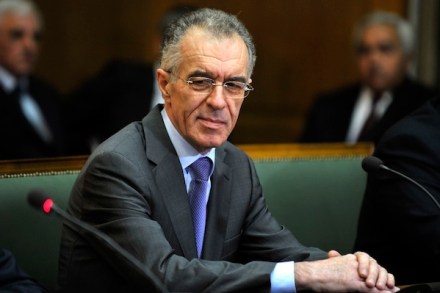
The Greek coalition was already a pretty shaky affair but the resignation of the finance minister before he’s even taken office weakens it even further. Vassilis Rapanos, who was the Chairman of the National Bank of Greece, has been in hospital and his resignation does appear to be health related. But given that the two left-wing junior coalition partners are refusing to allow their MPs to join the new Cabinet, his inability to take up his post is a severe blow to the government. Another threat to the government’s survival is that the Germans, whose public and private positions have been surprisingly aligned throughout this crisis, are making clear that they are not interested in easing the terms of the bailout.

The big beast Boris savages Lords reform

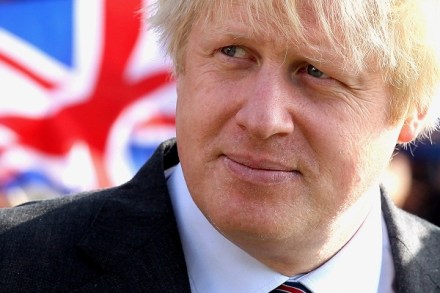
The coalition’s plan for House of Lords reform will go to Cabinet on Tuesday. It could have a trickier time there than expected: some Tory Cabinet ministers who favour an elected Lords are deeply unhappy about the idea of using regional lists. But, even before Cabinet, one active Tory big beast has come out against the proposals. Boris Johnson savages the idea in his Telegraph column, declaring it to be ‘a bunch of tidy-minded Lib Dem nonsense.’ He makes the standard Tory arguments against it: the Lords works as it is, two elected chambers would inevitably clash and reform will just expand the numbers — and cost — of the political class.   The column is a reminder of the price that Cameron will pay with his own side for pressing on with Lords reform.