James Forsyth

James Forsyth

James Forsyth is former political editor of The Spectator.

The next election campaign starts here

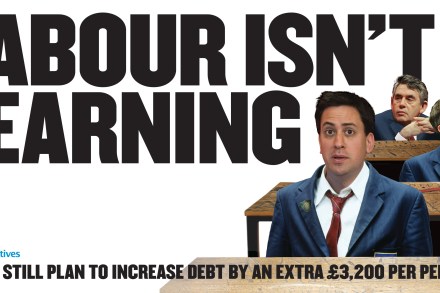
This conference season marks the half way point to the next election and we can see the political battle lines becoming clearer. The Tories, as their new poster campaign shows, intends to hammer Labour as the party that has learnt nothing from its mistakes. The argument of the coalition parties, which Nick Clegg previewed in Brighton, will be that the world has changed but Labour is stuck in the pre-crash era with its borrow and spend economics. Ed Miliband for his part wants to run as the man who is ‘on your side’. Today’s policy announcement taking aim at pension charges and the energy companies are designed to resonate with those voters who feel that the economy is not working for them.
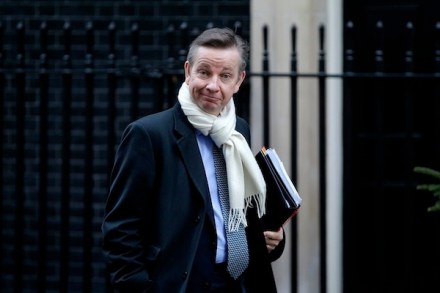
Michael Gove accepts his private emails can be searched

Michael Gove is withdrawing his appeal against the Information Commissioner’s ruling that his private emails were searchable under the Freedom of Information Act, I understand. The Education Secretary has decided to do this because the Cabinet Office has concluded that anything that constitutes ‘information’ falls within the scope of the act which removes Gove’s ground for appeal. In other words, if two ministers, or a minister and a special adviser, email or text each other from their personal accounts or phones and that conversation involves any discussion of government business—however, fleeting or peripheral—then those texts are FOI able. I’m informed that new Cabinet Office guidance to this effect will be issued in the near future.

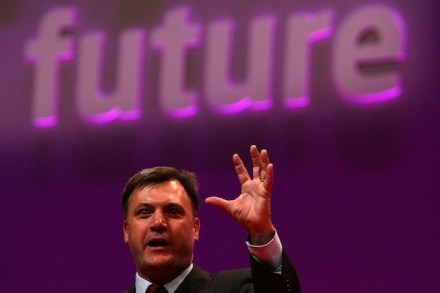
Ed Balls puts off public spending decisions until after the 2015 election

The announcement by Ed Balls today that Labour would conduct a zero-based spending review is a cute piece of political positioning by the shadow Chancellor. It allows him to sound tough—we’ll look at every piece of public spending and see if it delivers value for money, and is an olive branch to those Blairites who still moan about how the Brown Treasury blocked this idea when Labour were in power. But the weakness with it is that it puts off these decisions until after the next election. Based on conversations with various Tories this morning, they are confident that this will make it easier for them to portray Labour as being incapable of making tough decisions on spending.

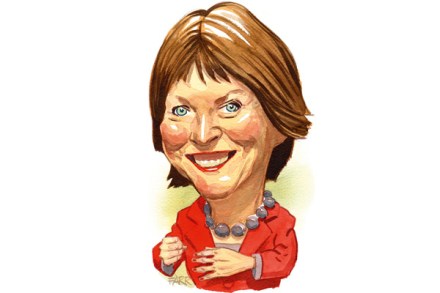
Harriet Harman: Labour mustn’t match Tory spending plans at the next election

The spotlight is shifting from the Liberal Democrats to Labour ahead of the party’s conference. But I suspect that at least one theme from Brighton will be carried on to Manchester: what to do about the coming spending review. In The Spectator this week, Labour's deputy leader Harriet Harman makes clear that she is adamantly opposed to Labour repeating Gordon Brown’s 1997 trick of promising to match, at least initially, Tory spending plans: ‘Our argument against the Tories is that the scale and pace of their deficit reduction is self-defeating and hurting the economy and therefore making less money available. So we have got a fundamental economic critique — we would not be signing up to doing the very thing we think is hurting the economy.

Miliband must define himself – before the Tories do it for him

After the tribulations of last year’s conference, few in Ed Miliband’s camp would have dared hope that he would turn up this year as the only major party leader totally secure in his position. For the first time, his main challenge will not be to cut through the chatter about whether he is up to the job or not. As one aide puts it, ‘It’ll feel like his first conference.’ It is certainly his best chance yet to give the country a sense of what he would do as prime minister. I understand that Miliband has two main aims for the next week. The first is to give people a sense of who he is. He needs to escape from the shadows of his brother and father to craft his own persona.

Labour’s lady in waiting

Harriet Harman’s office reflects her status as the grande dame of British politics. Ensconced in a corner of Portcullis House, she enjoys two of the finest views in London, over both the Palace of Westminster itself and Parliament Square. As she ushers me in, the imposing effect is only spoiled by the fact that the windows are in dire need of cleaning. As deputy leader, Harman is, officially, the second most important person in the Labour party after Ed Miliband. She has been an MP for 30 years and is married to a unionist-turned-parliamentarian, Jack Dromey. She knows the party like few others on the Labour front bench. Several of her colleagues, including Miliband, have worked as her advisers.

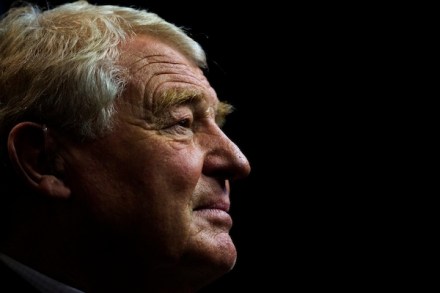
Lib Dem conference: The significance of the Paddy Ashdown appointment

The only line of Nick Clegg’s speech that drew whoops from the hall was the announcement that Paddy Ashdown was returning to run the 2015 general election campaign. The enthusiasm was testament to the affection that the grassroots of the party still have for their former leader. The appointment tells us several intriguing things about the internal state of the Liberal Democrats. That Clegg felt the need to announce who was running the next election campaign at this conference, more than two years out from the date of the next general election, shows he’s keen to do everything he can to demonstrate that he is going to lead the party into that election.

This Lib Dem conference was about two subtly different speeches

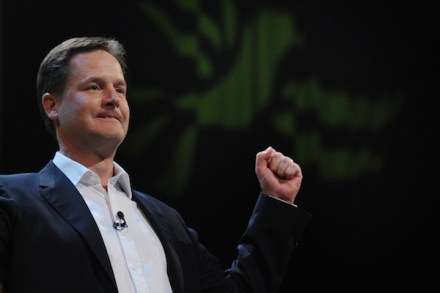
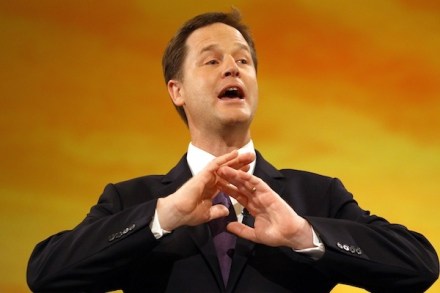
Nick Clegg’s conference speech wasn’t designed to be a barn burner. Instead, it was meant to tell the party that there’s no turning back, that they now have to become a Liberal, centrist party of government. The Clegg camp believes that up to 3 million of the 6.8 million votes they won at the last election might be gone for good. So, the party needs to go and find new voters. They believe these are to be found in the centre ground among those who don’t want to, as he put it, to ‘trust Labour with their money again’ and have doubts about whether the ‘Tories will make Britain fairer’. As one influential Lib Dem remarked to me earlier, this positioning would undoubtedly be the right strategy for a new political party.

Lib Dem conference: Is Jo Swinson the answer to the Lib Dems’ women problem?

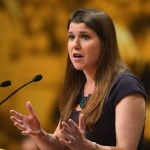
Jo Swinson has just given what, by my count, is her third platform speech of the conference. All of them have been competently delivered and got her message across. She has an impressive ability to carry the hall with her. One can see why so many of those around Nick Clegg view her as the solution to the Lib Dems’ women problem. At the moment, all five of the party’s Cabinet ministers are men. Given her qualities as a communicator and her age—she’s 32, one would be tempted to tip Swinson as a future leader. But her seat is a problem. Her majority in East Dunbartonshire is only a touch over two thousand with Labour in second place.

Lib Dem conference: The morning after the Vince before

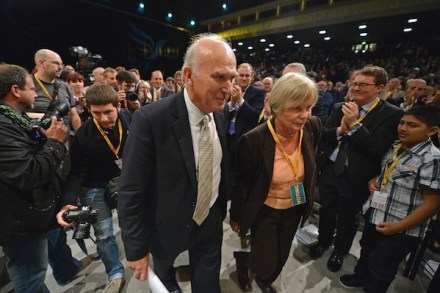
Vince Cable’s speech yesterday setting out how he thinks there’ll be another hung parliament was a significant moment. It was clear last night, that it had placed in peoples’ minds the question of whether Cable was more likely to hold Lib Dem seats than Nick Clegg and whether he would be able to better exploit a second hung parliament. This has added to the importance of Nick Clegg’s speech tomorrow. I understand that on Wednesday Clegg will be forceful rather than apologetic, it will be a book end to his sorry over tuition fees. He intends to use it to set out where he is taking his party.

Lib Dem conference: The battle for the soul of the Liberal Democrats

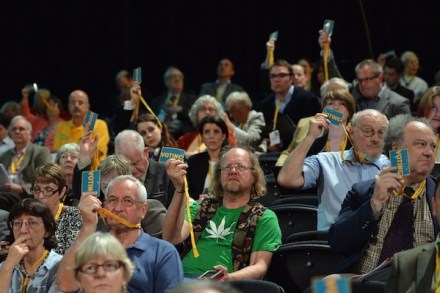
The Liberal Democrats are a party facing an identity crisis. During their many years in opposition, they had a slight all things to all men quality. But now they are in government, they are rapidly becoming defined in the public mind. How to respond to that is a question that they have been grappling with for the past two years. In a packed and over-heated fringe meeting last night, Nick Clegg’s former director of strategy Richard Reeves provided his answer—which is, although more starkly stated, the leadership’s. Reeves’ argument is that the party should become a Liberal party of the radical centre. In other words, he wants to take off the Social Democratic hand brake. Reeves makes this case with verve and one can see the political space he’s talking about.

Lib Dem conference: Nick Clegg says spending plans may be ‘re-jigged’

There is something very Liberal Democrat about Nick Clegg’s Q&A session with party members at conference. There’s a distinct mix of familiarity, fondness—the loudest applause came for the announcement that today is Nick and Miriam’s 12th wedding anniversary and policy debate. In response to a questioner who claimed that Danny Alexander was more right wing than ‘Peter Osborne’, Clegg was keen to stress to members that the coalition’s fiscal plans were more flexible than they are given credit for.

Lib Dem conference: Danny Alexander admits he knew tuition fees pledge was unaffordable

Liberal Democrats here in Brighton are divided on the Clegg tuition fees apology. Most of them feel it was worth a try, that it was necessary if the party is to get a hearing on other issues. But one Lib Dem minister has told me that he worries the apology is too complicated. He fears that anger will bubble back up when people realise what a few newspapers didn't: that Clegg is apologising for making the promise, not breaking it. On the Sunday Politics today, Danny Alexander conceded that he had signed the fees pledge after he had warned Nick Clegg that it was unaffordable. This is an embarrassing admission. It emphasies that the party leadership ran with the pledge despite knowing that it was a deeply flawed policy.

Lib Dem conference: Clegg will accept further welfare cuts but wants to squeeze rich more

The opening act of any party conference is the interview for Sunday morning TV and Nick Clegg made clear to Andrew Marr that the welfare budget is ‘not immune from further savings.’ He also said that he was confident that he could persuade the Tories to agree to further ways to make the ‘rich’ pay more. But under pressure from Marr, he couldn’t provide any details on what form this new tax might take. In an attempt to damp down the continuing chatter about Vince Cable’s conversations with Ed Miliband, Clegg said that he was in regular touch with both Milibands, Tony Blair and Peter Mandelson.

Rallying the Liberal Democrat faithful

One of the striking features of the opening rally at Liberal Democrat conference was how it was figures from the left of the party who attacked Labour most vigorously. Simon Hughes, the deputy leader, scolded those who think that governing with Labour would be easy; pointing out that the parties are at odds on nuclear power, Trident, civil liberties and a whole host of other issues. While the party’s president Tim Farron demanded that Labour apologise for the expensive failure of the NHS PFI projects, the Iraq war and a whole host of other issues. Nick Clegg himself was on fairly confident form. He began with a couple of gags about his unlikely chart success.

Don’t expect Nick Clegg to throw too many rocks at the Tories in Brighton

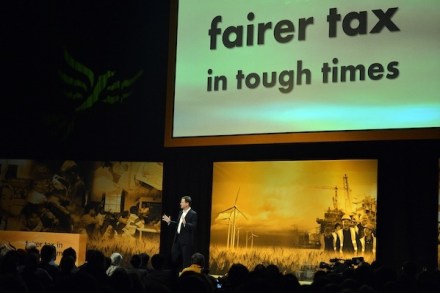
The Lib Dem round of pre-conference interviews today shows where the party wants to look distinctive. It is tax ‘fairness’, greenery and social mobility on which it has decided to set its stall. One thing worth noting, though, is that Nick Clegg’s interview in The Independent does not rule out future welfare cuts. He tells Andy Grice that 'We are not going to do an across-the-board, two-year freeze of all benefits during this parliament'. This leaves the Liberal Democrats plenty of room for manoeuvre ahead of the autumn statement on December 5th. I expect that we won’t hear too much bashing of his coalition partners from the deputy Prime Minister himself at this conference.

Nigel Farage’s real strategy

Nigel Farage’s very public willingness to explore a UKIP-Tory electoral pact in exchange for a pledge from David Cameron to hold a referendum on EU membership is, I suspect, designed to achieve two things. First, it is meant to flush out Cameron. If Cameron declines the offer, Farage will be able to claim that only UKIP are the only party to vote for if you want an In/Out choice on the UK’s EU membership. It’ll undercut the Tory offer of a renegotiation referendum. Second, by floating the offer he makes it more likely that individual Tory MPs and candidates might sign up to the offer themselves, pledging to back an In Out referendum in exchange for no UKIP challenge.

A blast of common sense on social media censorship

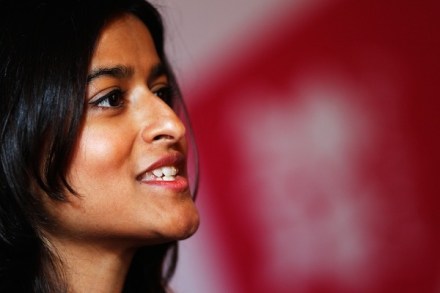
Munira Mirza, Boris Johnson’s deputy mayor for education and culture, provides a much needed blast of common sense in today’s Evening Standard. She says that the police, and society, need to calm down about people making idiotic and offensive comments on Twitter and other social media sites. As she points out, ‘Do the police have nothing better to do than patrol Twitter, hunting out people who send tasteless tweets?’ But there’s another reason to worry about this policing beyond the fact that it is a waste of resources: the more we race around arresting people for saying stupid things or things that go against the current orthodoxy, the less free we become as a society. We need to be able to argue out our differences.

Clegg’s attempt to repair tuition fee damage

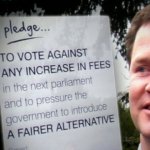
Going into the last election, many of Nick Clegg’s closest allies and, I suspect, the Lib Dem leader himself found the tuition fees pledge embarrassing. It was precisely the kind of opportunistic policy that they had tried to wean the party off. But when it came to the election and it was still, despite their best efforts, party policy they decided to run with it. As soon as the election results came in, it was clear that Clegg’s exploitation of the subject was going to cause him problems seeing as both Tories and Labour were committed to the Browne review which was almost certain to come out for higher fees.

Lib Dems committing to radical future for the coalition

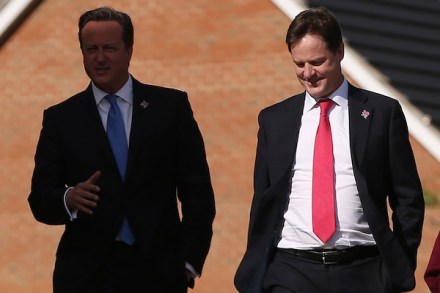
Nick Clegg, Danny Alexander, David Laws and a couple of Lib Dem advisers spent Monday at Chequers. They were there to discuss the final details of the coalition’s mid-term review with David Cameron and George Osborne. I understand that this document will now contain new coalition commitments on the economy, education, welfare, childcare and social mobility. As I say in tomorrow’s Spectator, I suspect that this meeting tells us more about the state of the government than what Clegg will say in Brighton or Cameron in Birmingham. It is further evidence that after a period of coalition paralysis, the two leaderships have decided that their best hope is to go back to being radical.