James Forsyth

James Forsyth

James Forsyth is former political editor of The Spectator.

Conservative conference: Cameron writes the Liberal Democrats out of his speech

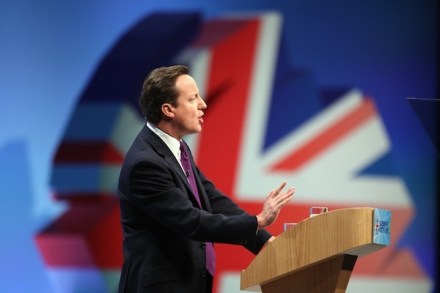
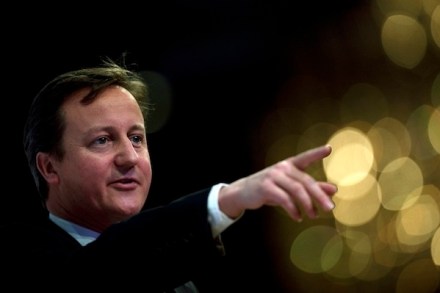
The only mention that the Liberal Democrats received in David Cameron’s speech was a reference to the fact that they, unlike the Tories, had not been committed to real-terms increases in the NHS budget. Combine this with the fact that the speech saw Cameron pit the Tory view of the world against Labour’s and one could see an attempt to write the Liberal Democrats out of the script. The absence of the Liberal Democrats from the speech was, I’m informed, quite deliberate. Cameron’s implicit message was that the really big things the coalition is doing — education and welfare reform and the structural changes to the economy — are Conservative things. In 2015, the choice between Labour and the Conservatives will be stark.

Conservative conference: Clear blue water

The next election is going to be a clash of ideological visions. There is now clear blue water between the Tories and Labour. Last week, Miliband set out his view of ‘one nation’. Its power came from its authenticity but it was also a distinctly left-wing vision of the world. Today, Cameron responded with one of the most Tory speeches I’ve ever heard him make. Too often, Cameron has tried to portray himself simply as a competent steward of national affairs, shying away from ideological definition. But this speech was different. It had a central argument, about the need for Britain to become more competitive. His answer was right-wing: boost enterprise, improve schools and deal with an unaffordable welfare system.

Conservative conference: David Cameron gives a clear explanation for the first time of what the government is doing

The Cameroons are leaving Birmingham with a spring in their step. David Cameron’s conference speech was the best he has delivered in years. He finally got off the mat and took on Labour’s argument about 50p and him being out of touch. His willingness to engage Ed Miliuband on his claim that he is writing cheques to millionaires was a refreshing sign of confidence in the power of Tory arguments about the relationship between the state and the individual. Crucially, Cameron — for the first time — gave a really clear explanation of what his government is doing. He linked together education reform, welfare reform and his economic measures as part of a broader effort to make Britain more competitive.

Conservative conference: Michael Gove’s facts on the ground

The speed with which Michael Gove is going about his education reforms means that he is creating facts on the grounds, facts which Labour will—I suspect—have to accept by the next election. Parents with children at new free schools and academies are not going to vote for a party that is going to abolish their child’s school. For example, the mother of a child at a Birmingham free school—Geraldine Henry—spoke at Tory conference today in favour of free schools. I expect that Henry would never have expected to find herself speaking at a Tory conference but she clearly felt compelled to come and promote and defend her son’s school.

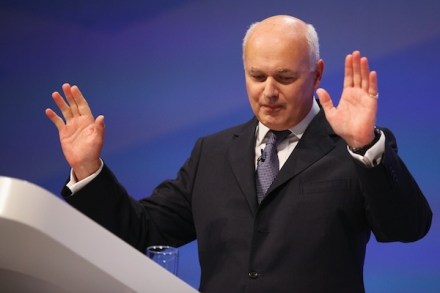
Conservative conference: Iain Duncan Smith rips into Labour’s welfare legacy

Iain Duncan Smith has just delivered the most political speech of what has been a highly partisan conference. He tore into Labour’s record on welfare, accusing them of having fostered welfare dependency and increased inequality. He said that they had created two nations: one who worked and one who was trapped on welfare. Having done that, he then denounced Labour for having opposed all of his changes to the welfare system, attacking them in moral terms for this. Labour ‘don’t know anything about work do they’ he told the audience to cheers. The flip side of this attack on Labour was an attempt to claim the mantle of ‘social reform’ for the Tory party.

Conservative conference: George Osborne tells Tories he is not for turning

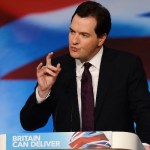
listen to ‘George Osborne conference speech, 8 Oct 12’ on Audioboo   George Osborne began his conference speech by pointing out that two years into government, Ted Heath had flinched on the economy and lost while Margaret Thatcher had kept on and won. Osborne’s message was, I’m determined to be Thatcher not Heath. The Chancellor’s allies clearly knew this was an important speech for him. Several times, Michael Gove — probably, Osborne’s closest friend in Cabinet — started to clap before the applause line had finished been delivered. One strategic objective of the speech was to try and win back the ‘one nation’ mantra that ‘we’re all in this together’ for the Tories.

George Osborne: ‘New taxes on rich people’ to accompany welfare cuts

Ahead of his conference speech this morning, George Osborne was on the Today Programme. Much of the interview revolved around whether or not the Chancellor would have to abandon his aim of having the national debt falling as a percentage of GDOP by 2015/16. Osborne batted away these questions, stressing that he was waiting for the numbers from the Office of Budget Responsibility. Osborne also said that there would be ‘new taxes on rich people’ to accompany the £10 billion of welfare cuts that he wants to see. Osborne stressed that efforts to make the rich pay more were not simply to ‘appease Liberal Democrats’. One of the dilemmas for the Tories is how much to talk up the economy at this conference.

Conservative conference: Iain Duncan Smith admits ‘We will have to take more money out of welfare’

The Tory party loves its former leaders and the queue for Conservative Home’s fringe event with Iain Duncan Smith went round the block. IDS began by explaining why he had chosen to stay in the Welfare job rather than move to Justice in the reshuffle. Though he stressed that there had been no Prime Ministerial demand that he did move but merely what he described as, a ‘genuinely good discussion’ about it. IDS, who is known not to be a big fan of giving free TV licenses and the like to wealthy pensioners, said that any changes to pensioner benefits were ‘off the table’ because of David Cameron’s election pledge. He admitted that this meant that the ‘burden is greater on working age recipients.

Conservative conference: the Tory attack on Labour

If the next election is simply a referendum on the government’s performance, I doubt that the Tories will win. But if it is a choice about which party you want to govern Britain, then they are in with a chance. So, today we’ve seen a determined attempt to draw contrasts with Labour. Notice how quick David Cameron was to turn to the question of what Labour would do on Marr. The most detailed attempted takedown, though, came in William Hague’s speech. He ran through his holy trinity of coalition reforms—economic, education and welfare.

David Cameron gets political on Marr

David Cameron was in feisty form on the Andrew Marr Show  this morning. Cameron, who has finally woken up to the need to be more political, defended his record — including his decision to cut the top rate of tax — with vigour. Cameron stressed how the richest 10 per cent are paying 10 times more towards the cost of deficit reduction than the bottom 10 per cent. But he argued, correctly, that the 50p tax rate was dangerously uncompetitive. He said that he was determined ‘to always be fair and seen to be fair’ which suggests to me that some new tax on the rich, something the Liberal Democrats could call a wealth tax, is on the way. Although he ruled out a mansion tax and the Chancellor has said there’ll be no new council tax bands, there are other options.

The Tory task in Birmingham

Too often the debate about the future direction of the Tory party is polarised between those who want to ‘modernise’ and those who want to ‘go right’. But there’s another problem, these labels now obscure as much as they reveal. In the next few days in Birmingham, the Tories have two important tasks: to show that they understand the squeeze on people’s living standards and are doing something about it and that they have a proper growth strategy. Some Cameron aides have long argued that the Prime Minister with his personal wealth can’t talk about the cost of living.

The real story of the 2007 ‘election that never was’

‘The election that never was’ is one of the most important events, or non-events, in recent British political history; if it had gone ahead, David Cameron might never have become Prime Minister and there might not have been a coalition at all. Equally, Gordon Brown could have seen Labour’s majority slashed and had to quit long before the financial crisis hit. The story of what happened that day has been told several times. But I don’t think I’ve read a more gripping account than Damian McBride’s. McBride did disgrace himself but he can sure as hell write. If you like the political game, you really sure read it.

Why the Cameroons have grounds for optimism

With Labour conference winding down, attention shifts to the Tories. They will head to Birmingham facing several challenges. First, the loss of the boundary changes means that winning a majority requires them to be on, at least, forty two per cent — six points up on where they were in 2010. Second, Ed Miliband has shown this week that he has more political life in him than many Tories appreciated. Third, the government’s reputation for competence has taken a beating over the past few months. But despite all this, one finds a renewed sense of confidence among the Cameroons. The listlessness of a few months ago has gone to be replaced by a sense of determined optimism. To my mind, things do look better for them than they did before the Olympics.

The coalition take on Ed Miliband’s speech

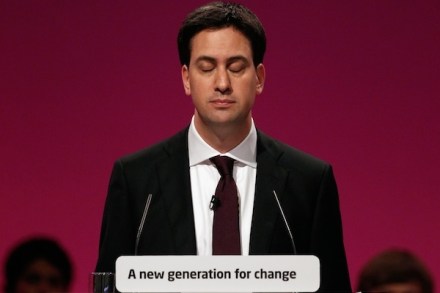
Talking to senior Liberal Democrats and Conservatives about Ed Miliband’s speech, it is striking how similar their analyses of it are. Despite coalition, we’re entering into a period of stark government, opposition dividing lines. Pretty much everyone admits that Miliband has put to bed the question of his leadership of the Labour party and moved himself out of the IDS category. But they argue that he’s not dealt with Labour’s biggest weakness, the public’s belief that it spent and borrowed too much. One influential Liberal Democrat accused Miliband of ducking the generational challenge that is the deficit likening his speech to one in 1942 that didn't mention there was a war on.

Grounds for optimism

Before the summer, the occupants of Downing Street were being worn down by coalition, battered by bad news and demoralised by dire economic data. One No.  10 source says: ‘We were all so depressed we wanted to slit our wrists. But now we’ve got our confidence back.’ This is just as well, for the electoral mountain they have to climb is now considerably steeper. With the boundary review went one of the central planks of the Tory plan for a majority, and Ed Miliband’s conference speech suggested that there’s more political life in him than many had appreciated. But the Cameroons have justified reasons for optimism. First, the coalition is functioning again.

Doctor Hunt

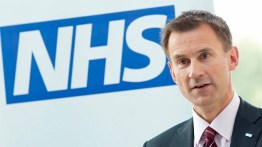
‘I would like to be the person who safeguards Andrew Lansley’s legacy,’ says Jeremy Hunt, the Health Secretary, as he sits in his new office. Hunt is touchingly eager to praise his predecessor. He predicts that Lansley ‘will be seen as the architect of the modern NHS’ and stresses that he is in regular touch ‘to make sure that I learn as much as I can from him, because I don’t think there is anyone who knows more about the NHS than Andrew’. But if Lansley was such a paragon, why was he moved? Hunt replies defensively: ‘You’d have to ask David Cameron about that.

Labour conference: The stakes are raised for Miliband’s speech

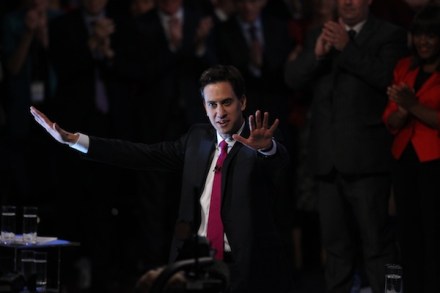
Ed Miliband will roam the stage as he delivers his leader’s speech. With negative polls about whether voters can see him as Prime Minister been giving prominent play in the papers, the stakes for this speech have been raised. I suspect that the speech will be better delivered than last year’s—Miliband is far more comfortable when he is not behind a podium—and more tightly written. Judging by what has been briefed out in advance, we know that it also contains more concrete policies. But I expect that the speech will still set off quite the political bun fight. The Tory strategy for the next election campaign requires them to, in effect, disqualify Miliband as a potential Prime Minister.

Labour conference: The Ed Balls two-step

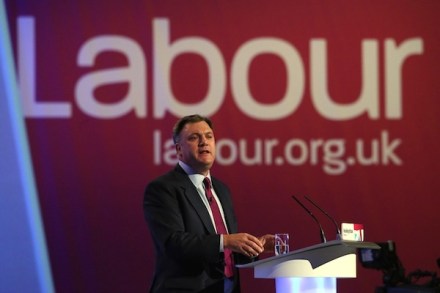
Ed Balls’ speech was a wide-ranging affair. It started with a tribute to the Olympics and Tessa Jowell’s role in securing them, a make-nice gesture given how badly those two have got on over the years. It ended with a paean of praise to the Labour spirit of 1945. In between, it included attacks on the Liberal Democrats as the ‘same old Tories’ — Balls’ response to Sunday newspaper reports that they won’t work with him. On the economy, the Ed Balls two-step was much in evidence. He promised to spend money now, saying he’d put the as yet unknown proceeds from sale of the 4G spectrum into house-building.

Labour conference: Harman rows back from her Spectator interview

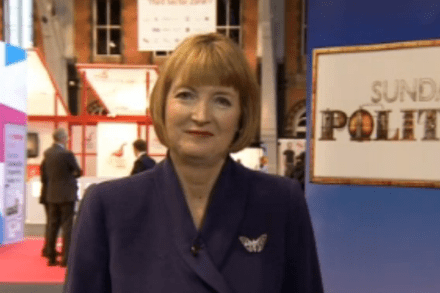
On BBC1 Sunday Politics just now, Harriet Harman rowed back from what she told me for this week's magazine: that Labour would not match Tory spending plans at the next election. The change in position is significant as it shows how Labour—and Ed Balls, in particular—want to keep this option open ahead of 2015. In 1997, Gordon Brown’s commitment to keep to Tory spending plans for two years largely succeeded in reassuring people that Labour could be trusted with the economy. Balls, who was one of the architects of this policy, is said to be interested in doing the same in 2015. The thinking is that it would take the deficit off the table as an election issue and make it harder for the Tories to claim that a Labour government would spook the markets.