James Forsyth

James Forsyth

James Forsyth is former political editor of The Spectator.

David Cameron must rule out votes for prisoners at PMQs

From our UK edition

The issue of prisoner votes has turned into a question of trust between David Cameron and his backbenchers. Most Tory MPs well remember that the Prime Minister’s initial intention was to comply with the Strasbourg court’s ruling; he only changed his mind after seeing how strong feelings were on the issue on the Tory benches and in the country. For this reason, Cameron needs to scotch all this talk of a draft bill on votes for at least some prisoners at PMQs today. If he doesn’t, he’ll have just as large a rebellion on his hands as he did last time. The issue will also drive a further wedge between Cameron and his backbenchers.

Margaret Thatcher and the Tory party’s change on Europe

From our UK edition

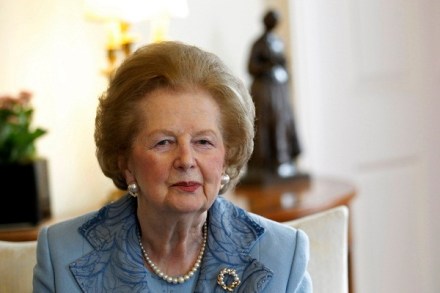
Charles Moore’s biography of Margaret Thatcher promises to be the most important British political book in decades. Tonight, we got a preview of it when Charles delivered the Centre for Policy Studies’ second Margaret Thatcher lecture. The subject was Thatcher and Europe. I won’t say too much about it because we’re running a version of it in the coming issue of The Spectator. But one thing that Charles demonstrated was that even when Thatcher was campaigning for British membership of the European Community, as then was, she was never in favour of the European project. One of the other thing that Charles’s lecture brought out was the shift in the balance of power in the Tory party on Europe.

Cameron irked on Europe as backbenchers rattle the referendum cage

From our UK edition

Throughout his statement on the European Council, David Cameron seemed slightly irritated. One sensed that the headlines of the last few days have rather got under his skin. Cameron began by declaring that the Council meeting had made ‘limited progress’, which is hardly much to report to the House. He also was unable to resist another pop at Chris Bryant; complaining that he still hadn’t apologised to him when the Labour MPs asked a question. It was striking what a pro-European tone Ed Miliband took in his response to Cameron. It was all about how Cameron was losing control of his party over Europe and needed more friends there.

Theresa May won’t deny she told Andrew Mitchell to go

From our UK edition

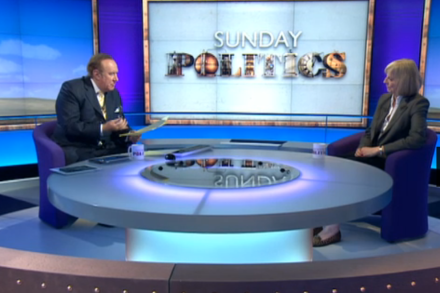
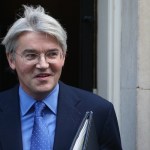
Theresa May’s political stock has risen this week. Announcing an intention to opt-out of EU law and order directives pleased Tory MPs while her decision not to extradite Gary McKinnon was popular. But we’ve also seen the Home Secretary operating -rarely for her - beyond her brief. She played a key role in pushing Andrew Mitchell out, something she effectively confirmed on the Sunday Politics. When Andrew Neil pressed her on this, she simply replied ‘I’m not going to talk about private conversations’.

It isn’t Miliband’s anti-austerity message that should worry the Tories but his pitch for small business support

From our UK edition

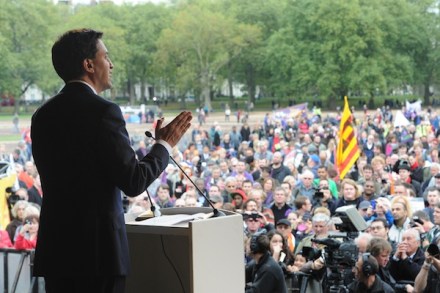
Ed Miliband’s speech to the anti-cuts rally today was well-pitched. The lines about how any government would have to make cuts guaranteed him the jeers that he needed to show that he wasn’t pandering to his audience. What should worry the Tories, though, is not the generic anti-austerity and pro-NHS rhetoric but the direct pitch for small business support. One of the big changes since the 1980s is that those who run small and medium sized enterprises now view the banks as part of the problem not the solution. This provides a significant political opening for Miliband, and one he is intent on exploiting. It’s worth noting that he was in the Tory territory of Bedford yesterday speaking to small businesses that feel they have been done over by the banks.

David Cameron turns to Sir George Young again

From our UK edition

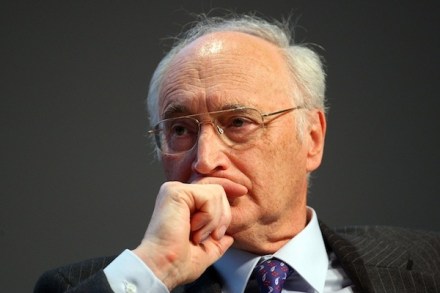
Sir George Young’s appointment as chief whip is testament to both the respect David Cameron holds him in and the Prime Minister’s intense dislike of reshuffles. This is the second time that Cameron has asked Young to step in after a colleague has imploded, the first time was in 2009 when Alan Duncan was caught complaining about how MPs were ‘treated like shit’ and ‘forced to live on rations’. I suspect, though, that one thing that marked Young out this time was that his appointment would not require any other changes in the government ranks. Sir George is one of the politest people that you're ever likely to meet.

David Cameron’s EU dilemma

From our UK edition

David Cameron is determined to renegotiate the terms of Britain’s EU membership. But to get a good deal and to show his own eurosceptics  - let alone UKIP voters  - that he’s serious about this, he is going to have to be prepared to say that he would be prepared to leave if the rest of the European Union doesn’t play ball. (This poker game is why the other northern European countries that Cameron is relying on to help him secure a better deal have been quick to suggest that they wouldn’t mind Britain leaving that much.) Cameron, though, is highly reluctant to do this. Not only does he think EU membership does provide genuine benefits to Britain but he also worries about how business would react to any threat of withdrawal.

Standing up for Charles Moore’s ‘why does no-one stick up for Jimmy Savile’ piece

From our UK edition

Getting into arguments with people on the internet about selective quoting is generally a waste of time. But sometimes the intellectual dishonesty is such that one can’t help but respond. Political Scrapbook ran a post yesterday headlined ‘EX-CHAIRMAN OF POLICY EXCHANGE SAYS SAVILE SHOULD KEEP HIS KNIGHTHOOD’, though the headline now seems to have changed. It quotes Charles Moore thus: 'Isn’t there a single, solitary person who will maintain that Savile devoted himself to charity work for good reasons as well as bad? … Sir Jimmy should keep his knighthood.' This is not a mis-quote. Strictly, it is accurate. But it does seem to be almost deliberately missing the point that Charles was trying to make.

The expenses scandal’s next chapter?

From our UK edition

The Daily Telegraph is the paper that broke the expenses scandal and its splash tomorrow threatens to become the latest chapter in this sorry saga. Holly Watt reports that ‘at least eight MPs are either letting properties to, or renting from, another MP’. Now, it is worth stressing that this is not against the rules. One senior MP, who is not renting out his London residence to another MP or anyone else, argued passionately to me earlier that this is a product of badly drawn up rules. They allow MPs to claim for rent but not mortgage interest payments even if the later would be cheaper for the taxpayer. But what is certain is that parliamentary expenses will now be back under scrutiny and that, almost certainly, means more damage to the reputation of politics.

Cameron will announce an EU referendum by Christmas

From our UK edition

William Hague is now one of the most pro-European Conservative member of the Cabinet. The man once reviled by the bien-pensant for his views on this subject is now regarded by the Liberal Democrats as a brake on his more sceptical colleagues and praised in Brussels for his pragmatism. He told his party’s conference that he wants Britain’s membership of the European Union to be about more than just the single market and to extend to ‘co-operation on climate change and other great issues facing us’. In today’s Conservative party, this is unusual. When I asked various ministers in Birmingham if they agreed with it, nearly all said emphatically not.

The 1922 swings behind its chief whip

From our UK edition

In normal circumstances, five Tory MPs questioning the chief whip's position at the 1922 Committee would send Tory high command into a panic. But tonight there is relief that only five MPs spoke out against Andrew Mitchell and that more than a dozen spoke in his support. I understand that Bernard Jenkin’s intervention was particularly effective, persuading at least one MP not to speak against Mitchell. Those present say that the mood of the room was largely in favour of the chief whip remaining in post. There’s a sense that while what he did was foolish, the issue has now been hijacked by the Police Federation and the media. Some who initially thought that he should quit now believe there’s simply no good outcome.

Cameron to make EU referendum pledge before Christmas

From our UK edition

Sometime in the next nine weeks David Cameron will announce that if re-elected, he would seek to renegotiate the terms of Britain’s EU membership and then put the results to the public. I understand that the current plan is to have a referendum offering a choice between the new terms and out. Cameron believes that with time, he can secure far more satisfactory terms of membership for Britain. He also reasons that this announcement — the formalisation of the new terms, fresh consent that he talked about again at PMQs — will reassure his own eurosceptics. Conservative strategists also hope that this should stem the tide in support for UKIP before the 2014 European elections.

PMQs: Labour will be out for blood on Andrew Mitchell

From our UK edition

The first Prime Minister's Questions after the conference season is more important than most: the House and the press gallery are looking to see who has come back with a spring in their step. But today’s session has an added element to it: the Andrew Mitchell factor. Labour attempted to have a go at the chief whip at Home Office questions on Monday. But with the Chamber only half full, it fell a bit flat. Today, though, the House will be packed and Ed Miliband's party will be out for blood. I expect Mitchell himself will deal with it quite resolutely.

Cheryl Gillan steps up anti-HS2 campaign

From our UK edition

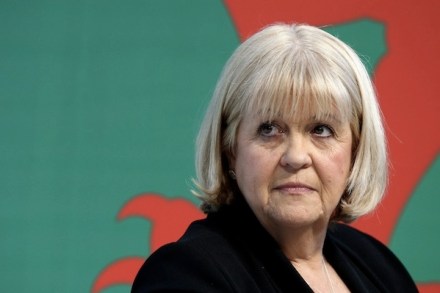
The West Coast Mainline debacle has given opponents of HS2 another stick with which to beat the government. Cheryl Gillan took the opportunity of Patrick McLoughlin’s statement on the matter to ask how anyone could trust the Department of Transport’s twenty year projections for HS2 when it got the ten year ones for the West Coast so wrong. Gillan, the former Welsh Secretary who has a Chilterns constituency, is now freed of the constraints of collective responsibility and is stepping up her campaign against HS2. She’s tabled 22 parliamentary questions on the matter and it’s quite clear that the tenacious Gillan isn’t going to let this go. The Prime Minister, though, needs no reminder of the strength of feeling that HS2 generates.

Scottish independence referendum: the Better Together campaign needs a decisive win

From our UK edition

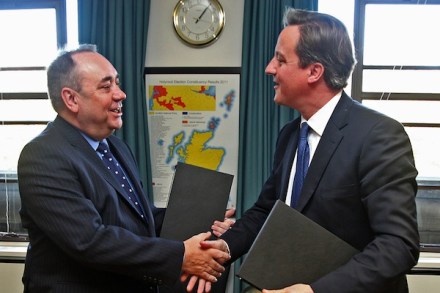
There’s a quiet confidence in Unionist circles that Alex Salmond will be defeated in the Scottish independence referendum. But Unionists know that Salmond needs to be defeated decisively. If the ‘Better Together’ campaign wins 55-45, the Nationalists will be back for another go in ten years time. But, as Alex says, the anti-independence side needs to be careful about what it says. Non-specific talk of more devolution for Scotland if it chooses to stay part of the United Kingdom is dangerous as it enables a future SNP leader to claim that the Scottish people were hoodwinked into rejecting independence.

Grant Shapps: No talks with the Lib Dems on a party funding for boundary changes deal

From our UK edition

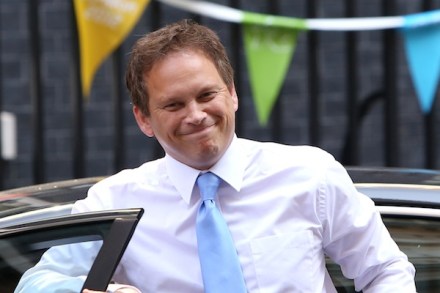
Grant Shapps, the perky new Tory chairman, has just been grilled on The Sunday Politics by Andrew Neil about the Tories’ majority strategy. In a sign of how tight the next election will be, Shapps stressed that you don’t actually need 326 seats to have a majority in the Commons because Sinn Fein don’t take their seats. He said he was able to "reveal" the Tories' 40/40 election strategy:  “We’re going to defend our [40] most marginal seats, and we’re going to go and attack the 40 seats that we will need to win. We’re going to focus and target on those seats in a way that we’ve never done before. Targetting is very, very important and it comes down to pavement politics,  winning it seat by seat.

Why the government should clamp down on health tourism

From our UK edition

One of the problems with the welfare state is that the contributory principle too often gets lost. People’s faith in the whole system is undermined when they see those who haven’t put it, or even tried to, taking out. A classic example of this is ‘health tourists’, those who come here from abroad with the deliberate aim of taking advantage of the medical care offered by the NHS. Too little is being done to address this problem. The Daily Mail reports today that ‘New guidelines tell doctors across England they must register any foreign patient who asks for care otherwise it would be ‘discriminatory’.

The EU wins the Nobel Peace Prize

From our UK edition

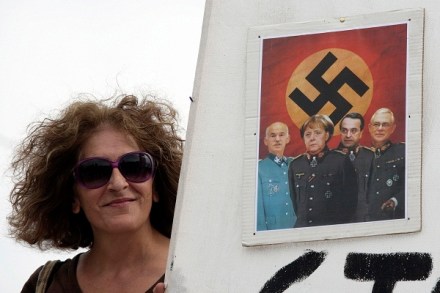
Today is not April the first; but the European Union has indeed won the Nobel Peace Prize. It is a bizarre decision given what is going on in Europe right now. Watching the reaction of the Greek crowd to Angela Merkel on her visit there this week, it was hard not to worry that the European project was now a threat to peace and stability on the continent. To be sure, France and Germany have not gone to war again since 1945. But to chalk that up solely to the European Union is a profound misreading of history. I suspect that the decision to award the prize to the European Union was a product of the desire of the Norwegian elite to rebuke the people there for not wanting to join the European Union. They are raging against the dying of the light.

David Cameron and the long election campaign

From our UK edition

Number 10 will be pleased with the press coverage this morning of David Cameron’s conference speech. It has received a good write-up in nearly every centre-right newspaper. Cameron will today return to normal Number 10 work, addressing how to commemorate the centenary of World War One. Over the next few months, it’ll be intriguing to see how he strikes the balance between his party duties and his Prime Ministerial ones. Since the reshuffle in September, Cameron has been more political and his conference speech brought together his governing strategy and political strategy. This conference speech has, in many ways, fired the gun on a two and a half year election campaign; we now know what pitch all three party leaders want to make to the electorate in 2015.

Will there be cracks over cuts? It all depends on Cable

From our UK edition

In Birmingham this week all the talk is of two dates. There’s 2015 of course, but also 5 December this year, because that is when George Osborne will have to spell out (in the autumn statement) how the coalition is planning to respond to our continuing lack of growth. Since Osborne delivered the Budget in March, Britain has slipped back into recession and the Conservatives have undergone their most difficult period in government, and this has only added to the importance of the autumn statement. Both sides are acutely aware that within weeks, the Office for Budget Responsibility will present the coalition with its economic forecasts. These will reveal how far off the coalition is from having national debt falling as a percentage of GDP by 2015-16, its key fiscal target.