James Forsyth

James Forsyth

James Forsyth is former political editor of The Spectator.

Nick Clegg’s secret reasons to be cheerful

From our UK edition

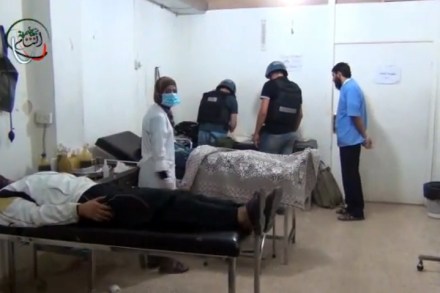
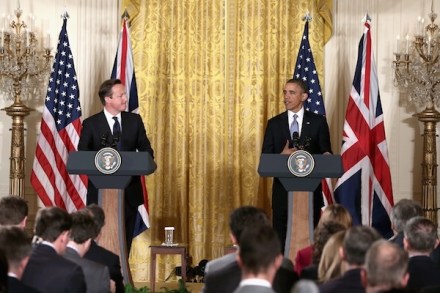
His party may be struggling to reach double digits in the polls, but Nick Clegg is entitled to feel smug as he heads to Glasgow for this year’s Lib Dem conference. This gathering, the penultimate one before the general election, has long been circled in Westminster diaries as the moment when a challenge to his leadership would emerge. But Clegg will arrive free from any threats to his position. Not even the coalition’s defeat over Syria has destabilised Clegg. If, in May 2010, you had told a Liberal Democrat that their leader would back the coalition going to war in the Middle East without a UN mandate and then lose a Commons vote on it, he or she would have said that he’d be finished.
The EU and UN have made fools of themselves

From our UK edition

Today has not been a good day for multinational organisations. Both the European Union and the United Nations have made fools of themselves. José Manuel Barroso’s claim that a European renegotiation would lead to another war on the continent revealed the warped mindset of the Eurocrat class. Indeed, if we’re talking about what’s likely to cause extremism to rise in Europe, austerity imposed on countries from the outside seems a more likely bet than powers flowing back to democratically elected national governments. The United Nations’ embarrassment came from the absurd claim of its official Raquel Rolnik that the so-called bedroom tax, which isn’t actually a tax, infringed ‘human rights’.

Cameron wants to stop talking about ‘the crisis of our time’ as quickly as he can

From our UK edition

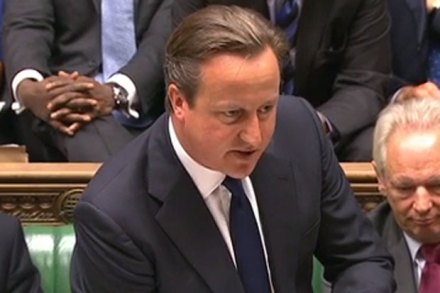
David Cameron’s statement to the Commons on the G20 wasn’t as lyrical as his response to Russia’s ‘small island jibe’. But it was a reminder of the needle that now exists between Cameron and Miliband. In previous times, these statements—which are far less tense affairs than PMQs—have seen a bit of badinage between the two front benches. But that has now gone. The statement was dominated by Syria, which Cameron called the ‘refugee crisis of our time’. When Cameron talks about his defeat in the Commons on Syria, he speaks very quickly, with no pauses between the words. It’s as if he wants to get talking about it over as quickly as possible.

Miliband has to win the fight that he’s started

From our UK edition

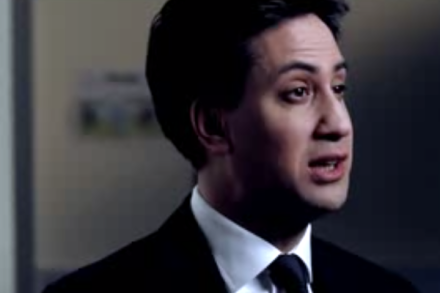
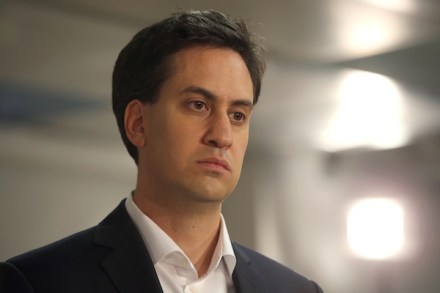
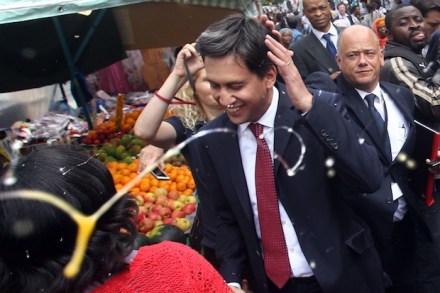
When Ed Miliband was booed at the TUC in 2011, there was quiet delight among many of his closest aides. They thought that this jeering would help put some distance between Miliband and the unions and show that he wasn’t their puppet despite the role they had played in his election. But this year, the booing that Miliband is expected to receive will matter far more. Miliband is now engaged in a defining struggle with the union machine over his party reforms. As I say in the Mail on Sunday today, if he doesn’t get them through, then he’ll be a busted flush as a leader. Unite being cleared by the Labour party of wrongdoing over the Falkirk selection shows just how much of a fight Ed Miliband has on his hand.

The coalition’s new case for HS2

From our UK edition

The coalition government is preparing a new case for HS2. Concerned that public and political support for the project is slipping away, there’ll be a major effort to renew enthusiasm for it. In this new case, there’ll be far less emphasis on speed and far more emphasis on how HS2 is needed because the existing railway lines are full up. This marks a recognition inside government that the savings on the journey time to Birmingham, which are less than half an hour, are too small to act as a public justification for the project. Expect to see this new argument reflected in the Transport Secretary Patrick McLoughlin’s speech on Wednesday. I suspect that HS2 will retain the support of all three front benches in this parliament.

Syria vote? What Syria vote? David Cameron’s strategy is to forget it ever happened

From our UK edition

The political conference season may be lacking in party activists nowadays, but it has lost none of its importance to the party leaders. For David Cameron, Nick Clegg and Ed Miliband, the next four weeks are a chance to position themselves for the final, full parliamentary year before the general election. Clegg needs to get his party members to sign off on the policies he has pursued in government, to prevent any manifesto embarrassments. Miliband needs to find an iconic policy which tells voters what his government might be like. Cameron needs to protect his right flank from Ukip, while still appealing to the centre. But none had planned for the new parliamentary term starting with the eruption of the Syrian conflict on to the British political agenda.

William Hague tells the 1922 that ‘lessons will be learned’ from Syria vote

From our UK edition

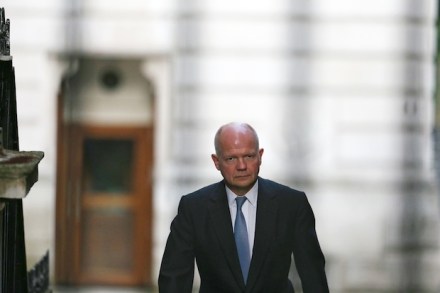
William Hague’s appearance at the 1922 Committee has underlined the fact that the Tory party is now split on foreign policy. I’m told that the questions that the Foreign Secretary received were pretty much evenly split between the passionate supporters of intervention in Syria and its passionate opponents. Those present calculate that the room was evenly split between the two factions. Hague, I understand, made a robust case for why Britain needs to remain an outward looking nation that is prepared to use its military forces. But he did say, when asked, that ‘lessons will be learned’ from how the Syria vote was handled. This answer will fuel Westminster speculation that Hague was unhappy with the decision to recall Parliament.

PMQs: David Cameron’s hatred towards Ed Miliband is palpable

From our UK edition

MPs piled into the Chamber expecting a blood and thunder affair. But instead it was rather subdued. Ed Miliband chose to ask six questions about the Syrian situation concentrating on the humanitarian and diplomatic situation and Cameron had to respond in measured tones. Though, one could sense that Cameron would have loved to have gone for Miliband. listen to ‘Miliband questions Cameron on Syria at PMQs’ on Audioboo The most needle came in their finale exchange when Miliband declared that last week’s vote had not been about Britain withdrawing from the world but ‘preventing a rush to war'. Cameron witheringly replied that his regret was that Miliband had chosen ‘to divide the House on a vote that could have led to another vote’.

George Osborne: There’ll be no second Commons vote on Syria

From our UK edition

There’ll be no second parliamentary vote on Syria, George Osborne stressed this morning. There had been speculation that following President Obama’s decision to go to Congress before using military force, meaning that strikes won’t happen before the week of the 9th of September, there could be a second parliamentary vote on UK military involvement. But Osborne scotched that idea on the Andrew Marr show this morning. listen to ‘Osborne - No second Syria vote’ on Audioboo Obama’s decision, though, has eased the political pressure on David Cameron.

Why the US is striking Syria

From our UK edition

The US strikes against Syria haven’t started yet. President Obama’s Rose Garden statement and the fact Congressional leaders are being briefed on the intelligence tomorrow suggest that there’ll be no strikes today. (Update, 19.00: Obama has now said he's going to seek authorisation from Congress before acting, meaning they'll be no strikes until both chambers have voted in favour). When assessing the consequences for the ‘special relationship’ of Britain not being involved, we need to remember why the Americans are acting. They’re doing so largely because Obama declared that chemical weapons use by Assad was a red line. For the sake of America’s credibility in the world, he has to show that crossing the red lines he imposes has consequences.

Ed Miliband’s problem is he’s trying to keep his options open on Syria

From our UK edition

Ed Miliband’s scepticism about striking Syria puts him more in line with public opinion than David Cameron. On top of this, he’s had the better of the political manoeuvrings these past few days — forcing the Prime Minister to pull back from a straight parliamentary vote on military action. So, why then did his speech today fall so flat? Part of the problem is the nature of the Commons chamber. Tory MPs heckled and intervened on him effectively, rather throwing him off his stride. But the more fundamental problem is that Miliband is trying to keep his options open. Miliband’s opening was a strong argument against any British intervention in Syria. But then Miliband went on to say that he might back intervention at a future date.

Graeme Wilson of The Sun to be new Downing Street press secretary

From our UK edition

The Cameron operation’s effort to move onto an election footing continues with a set of new appointments to the Number 10 political operation. Gabby Bertin, who has been with Cameron since he became Tory leader, will return from maternity leave to become director of external relations. Bertin, who was previously Cameron’s political spokeswoman, will be responsible for forging – and maintaining Downing Street’s – relations with business, pressure groups and charities. The appointment of one of his most trusted aides to this role is a sign of how imperative Cameron believes it is to prevent Labour from securing business support at the next election.

Ed Miliband may be stumbling – but don’t forget his huge headstart

From our UK edition

Coming back to the office after a holiday is never a pleasant experience. There’s the clogged inbox, the reminders that you have left undone those things which you ought to have done, and the realisation that you won’t get another break for months. But even by these standards, Ed Miliband has had a difficult return to work. He’s been met by a cacophony of demands, many of them contradictory. Miliband does have problems. He lacks the sort of policies that would show the voters what he’s about, his shadow cabinet are underperforming, and the Tories seem to have moved into disciplined election-fighting mode. But he can take comfort from a problem he doesn’t have: there is no left-wing alternative to Labour, no party cannibalising his vote.

Is Lord Adonis the right man to lead Labour’s Growth Review?

From our UK edition

One of the things we know about Labour’s policies is that the Adonis Growth Review is meant to produce a fair few of them. Launched by Ed Miliband last month, the former head of Tony Blair’s Policy Unit’s review is meant to publicly report in spring 2014. When Miliband announced this review, he praised Adonis’s work in reforming public services in the last government. But this positive view of Adonis’ work does not seem to be shared by all the shadow cabinet. In his Guardian interview on Saturday, Andy Burnham said ‘I wasn't cheerleading for academies.’ Academies were, of course, an Adonis initiative.

Why Ed Miliband is being so quiet this summer

From our UK edition

Labour’s failure to fill the summer news vacuum has now become a news story in itself. Ed Miliband comes back from holiday to find the Sunday papers full of stories about Labour grumbling, shadow Cabinet reshuffles and the like. But there’ll be no dramatic return by Miliband. There are no plans for big set piece speeches or a whistle-stop tour of Britain. One reason why Miliband himself has been so quiet this summer is that conference is already dominating his, and his team’s, thoughts. As I say in the Mail on Sunday today, they view conference as crucial to their efforts to persuade the country that Miliband is Prime Ministerial. It’ll be at this conference that they’ll begin to roll out the policies on which Labour intends to fight the next election.

The villain of the Gibraltar piece

From our UK edition

As the Gibraltar situation rumbles on, those familiar with the situation blame the Spanish Foreign Minister José García-Margallo for Spain’s bully-boy tactics. I’m told that he’s far more gung-ho on the matter than Prime Minister Rajoy on the matter. What makes the Foreign Minister’s behaviour particularly galling is that he began his career as the representative for one of Spain’s African enclaves in the Spanish parliament. If Melilla can be Spanish, then Gibraltar can be British. But as Danny Finkelstein points out in The Times today, one senses that Spanish politicians would rather have the Gibraltar issue than Gibraltar.

The time has come for Ed Miliband to act

From our UK edition

Tom Watson might be preparing to fly half round the world to continue his fight against Rupert Murdoch. But Ed Miliband has still not named a replacement for Watson as Labour’s campaign coordinator. It was thought that the contest for this role was between Michael Dugher, who was part of Watson’s team and is the choice of the Labour machine, and Douglas Alexander, the shadow Foreign Secretary, who ran Labour’s 2010 general election campaign and David Miliband’s leadership bid. Vernon Coaker, who is in line for promotion from the Northern Ireland brief in the coming reshuffle, was also considered a contender. But Patrick Wintour reports that two new names have entered the frame: Rachel Reeves, the shadow Chief Secretary, and Owen Smith, who covers the Welsh brief.

Is the EU stopping Britain’s shale revolution?

From our UK edition

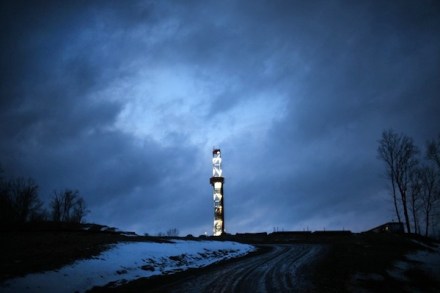
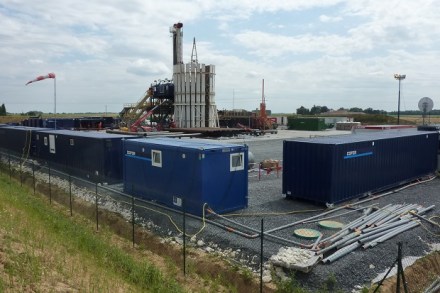
A few months after the last election, Oliver Letwin warned Cabinet colleagues that a chunk of Britain’s income would be gone for good after the economic crisis. Letwin, who has always been the Cameron project’s in-house intellectual, told them that some of the complex high finance in which Britain had specialised was never coming back. We would have to develop a new form of economic activity to make up for the loss. The good news is that this new form is looming into view. Fracking the Bowland Shale alone will, on a relatively cautious estimate, produce the equivalent of 90 years of North Sea gas production.

The EU is being used to put the brakes on shale

From our UK edition

It is beginning to dawn on Westminster just how much shale Britain has. The Bowland Basin — which runs from Nottingham and Scarborough in the east to Wrexham and Blackpool in the west — will deliver, on a cautious estimate of how much of it can be recovered, the equivalent of 90 years of North Sea gas production. This country is six to seven years away from seeing the full economic benefits of shale. But they will be substantial — the next election will be a good one to win. However, there are still opponents of shale. The hyper-local ones have received considerable coverage recently, see David Blackburn’s very good piece about drilling for oil in Sussex. But there are also those trying to use the European Union to put the brakes on shale.

Chris Christie lays down a marker for the 2016 US presidential election

From our UK edition

Ties between the Tories and the Republicans have rarely been weaker than they are today. The hiring of Jim Messina, Barack Obama’s campaign manager, is another sign that the Tories are more interested in the technical effectiveness of the Obama machine than they are in anything that the Republicans are producing. I suspect that the Republican most likely to revive Tory interest in the GOP, its idea and its electoral strategy, is Chris Christie, the governor of New Jersey. Christie is neither a southern Republican nor a Tea Party man. Rather, he’s a north eastern Republican with a more emollient attitude to government. Christie is up for re-election in New Jersey this autumn, a contest that he’s expected to win easily.