James Forsyth

James Forsyth

James Forsyth is former political editor of The Spectator.

If left unchallenged, Putin will attempt to create a new Russian empire

From our UK edition

In Ukraine, the West has played—quite disastrously—into Vladimir Putin's hands. The mistakes go back almost a decade. But the most recent one occurred when protesters took to the streets to oppose the Yanukovych government. The West, by which I mean Nato and the European Union, should have made clear that whatever sympathies they had with the protesters' aims, the right way to change the government was by the ballot box. The failure to do that has provided Putin with the pretext he needed to have Russian forces seize control of Crimea. Putin's motivating factor is his desire to avenge, what he sees as, the humiliation of Russia at the end of the Cold War. A key part of that for him is reasserting Russia's influence in its near-abroad.

Putin asks the Russian parliament to approve sending troops to Ukraine

From our UK edition

Vladimir Putin’s decision to ask the Russian parliament to approve the deployment of Russian troops to Ukraine makes the situation there even more serious. The request shows that Putin has no intention of heeding Western warning to request the sovereignty of Ukraine. It is also noticeable that the request doesn’t simply cover the Crimea, with its ethnic Russian population, but the whole of Ukraine. It now seems that at the very least this situation will lead towards the de-facto partition of the Ukraine. But the question is whether Putin will be satisfied with this. His ambition has always been to restore Russia’s pride about its place in the world, ‘defeating’ the West in Ukraine would—in Putin’s worldview—do that.

Welcome to the age of four-party politics

From our UK edition

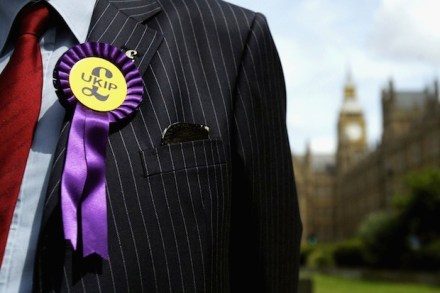
[audioplayer src="http://traffic.libsyn.com/spectator/TheViewFrom22_27_February_2014_v4.mp3" title="James Forsyth and Isabel Hardman on why the two party political system is dying" startat=1207] Listen [/audioplayer]Two things will make the next general election campaign quite unlike any previous election in this country. The first is that we now have four-party politics right across Britain. In Scotland and Wales, the nationalist parties have been a political force for a generation. But the big change is in England, where Ukip is emerging as a fourth force. Second, the campaign will be haunted by the spectre of another hung parliament. The question of what happens if no party wins an overall majority will be asked time and time again by an impatient media.

Merkel makes it clear: no special status for Britain in the EU

From our UK edition

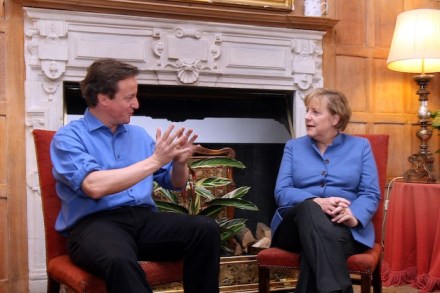
Angela Merkel's speech today didn't close doors on EU reform but nor did it open as many as some close to Cameron had hoped that it would. As the German Chancellor made clear at the start of her speech, she didn't want to say either that Britain could have what it wanted from the renegotiation or that Britain could have nothing. listen to ‘Angela Merkel: ‘We need to reform the political shape of Europe’’ on Audioboo The German Chancellor talked of the need for a more competitive EU, suggested that she might be open to some changes on freedom of movement and offered the vaguest hint of possible treaty change.

Clegg admits that the quango he and the Lib Dems boasted of saving made the floods worse than they needed to be

From our UK edition

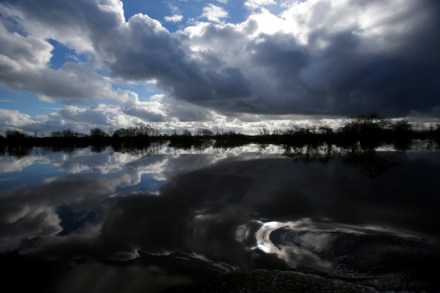
At Lib Dem conference last autumn, the Liberal Democrats couldn't tell you often enough how they had saved the quango Natural England from the Tory axe. Both Nick Clegg and Ed Davey made a big deal out of it in their conference speeches, portraying the Tory desire to abolish it as evidence of their coalition partner's anti-green agenda. But at the inaugural meeting of the Cabinet Committee on flooding, Clegg admitted that Natural England had made the situation on the Somerset Levels worse than it needed to be. According to a civil service record of the meeting, he said that Natural England and the Environment Agency's approach of letting nature take its course ‘was nonsensical for what were essentially artificial environments such as the Somerset levels.

Angela Merkel is the key to reform – but David Cameron still needs a European strategy

From our UK edition

Angela Merkel is getting the full red carpet treatment when she visits next week. In a 24 hour visit, she'll address both Houses of Parliament and meet the Queen. These honours are being heaped on her because she is Cameron's indispensable ally. Merkel is so vital to Cameron because as the most important person in the most important country in Europe she holds the key to his plan to renegotiate the terms of Britain's EU membership. If she is prepared to offer encouragement to this, then Cameron's plan is credible. If she's not, then it isn't. Several of the other big European players, notably the French, would be happy to cut Britain out of any future treaty talks by simply using an inter-governmental treaty rather than an EU one to define the governance of the Eurozone.

Only Angela Merkel can save David Cameron now

From our UK edition

[audioplayer src="http://traffic.libsyn.com/spectator/TheViewFrom22_20_February_2014_v4.mp3" title="James Forsyth and Isabel Hardman discuss Cameron's relationship with Merkel" startat=1204] Listen [/audioplayer]British politicians still prize a visit from the President of the United States above all others. Yet no American President has been as important to a British Prime Minister, in domestic political terms, as the German Chancellor is to David Cameron. Angela Merkel is the person who can both help him keep his party together as it approaches the next election and then, with luck, deliver his promised renegotiation of Britain’s EU membership. For Cameron, Merkel — far more than Barack Obama — is the indispensable ally.

Nick Clegg to challenge Nigel Farage to a head to head debate on Britain’s EU membership

From our UK edition

I understand that Nick Clegg is to challenge Nigel Farage to a debate on Britain’s EU membership ahead of the European Elections this May. The Liberal Democrat leader will issue this challenge imminently. Clegg’s decision to challenge Farage to a debate is all part of his party’s effort to try and turn the European Elections into a contest between the Liberal Democrats, championing In, and Ukip, who are for out. Those close to Clegg hope that a head to head debate between these two will highlight this contrast. They alos expect that it will put pressure on the Tories and Labour to be clearer about where they stand on the European Question. Nigel Farage has little choice but to accept Clegg’s challenge.

Why Nick Clegg is so keen to pick a fight with Nigel Farage

From our UK edition

Before the European Elections in May, don’t expect either David Cameron or Ed MIliband to engage with Nigel Farage. Both the Tory and Labour leaders think that the best strategy for dealing with Ukip and its leader is to deny them the oxygen of publicity. Nick Clegg, by contrast, is desperate for a scrap with the Ukip leader. Clegg’s rationale is that the more fights he can pick with Farage, the more he can turn the European Elections into a fight between In—led by Clegg and the Liberal Democrats—and Out, championed by Farage and his party. Clegg hopes that this polarised contest will prevent a total wipeout of Lib Dem MEPs. Being pro-European might, to put it mildly, not be the most popular cause in Britain but it is a lot more popular than the Liberal Democrats.

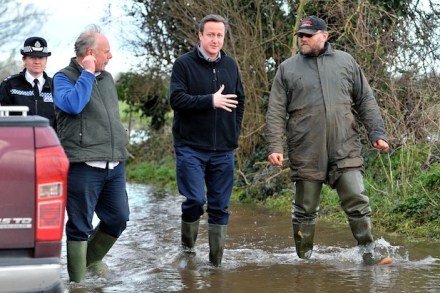
If David Cameron can’t get the floods right, all his hopes will wash away

From our UK edition

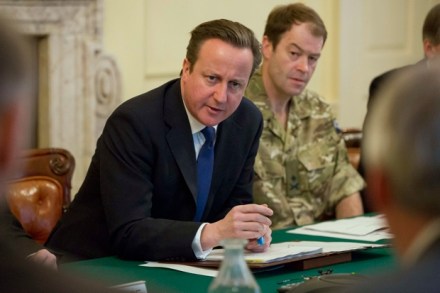
[audioplayer src="http://traffic.libsyn.com/spectator/TheViewFrom22_13_February_2014_v4.mp3" title="James Forsyth and Isabel Hardman on how the floods will define the PM's legacy" startat=1218] Listen [/audioplayer]It is all hands to the pump in Downing Street. The entire No. 10 operation from the Prime Minister down to the Policy Unit is focused on the floods. ‘We are all on a war footing,’ declares one official. David Cameron is spending his time poring over maps of the affected areas. ‘It is quite remarkable,’ says one minister who attends the Cobra meetings on the floods, ‘to hear the Prime Minister asking Gold Command about individual farms.’ Cameron knows that the floods will be a defining moment for his government.

An incompetent response to the floods could lose Cameron the election

From our UK edition

David Cameron can't win the next election in the next three weeks, but he can lose it. If the floods see the government forfeit its reputation for competence, then the coalition parties won't get the credit they need for the economic recovery. As John Major's experience after Black Wednesday showed, once a government is no longer seen as competent, it doesn't receive any of the credit for the good things that happen on its watch. Number 10 is acutely conscious of this and, as I say in the column this week, the whole building from the Prime Minister to the Policy Unit is now working on the government's response. One normally level-headed official tells me that the place is 'on a war footing'. There are two parts to showing that the government has a grip.

Westminster attack on Scottish currency union shows jitters about referendum result

From our UK edition

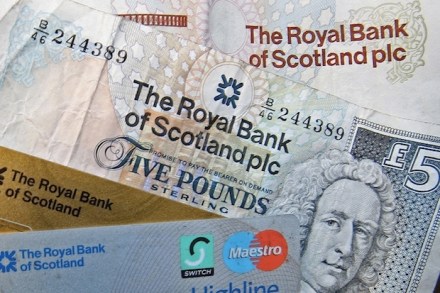
It might be bullying but, I suspect, it will be effective. The Tories, Labour and the Liberal Democrats ruling out Scotland sharing sterling after independence—as Nick Watt reported this morning — is designed to hole below the waterline the SNP's attempt to reassure voters that even after independence they could still share a currency union with the rest of the Union. (Alex Massie does a very good job of taking apart the SNP's response). The potency of this argument is a reminder of what a disaster the Eurozone crisis has been for the SNP. It has made the Euro a far less attractive alternative currency than it was a decade ago and it has alerted everyone to the dangers of currency unions that aren't accompanied by political union.

PMQs: Miliband won’t put politics away over the floods

From our UK edition

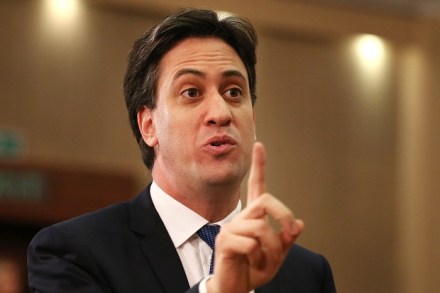
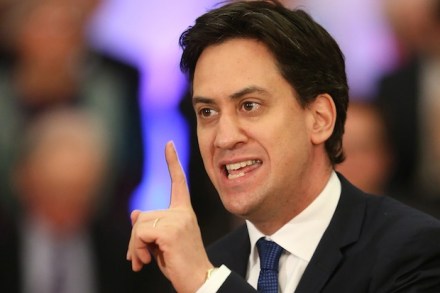
PMQs today started with a more genteel tone in deference to the floods. But Ed Miliband showed that he has no intention of putting politics away entirely, effectively needling David Cameron on cuts at the Environment Agency. Tellingly, at the end of their exchanges, Cameron rebuked Miliband for seeking 'to divide the House'. When a Prime Minister uses that line, it is a sure bet that they haven't had the best of the exchanges.

Could smoking around children be made illegal in the near future?

From our UK edition

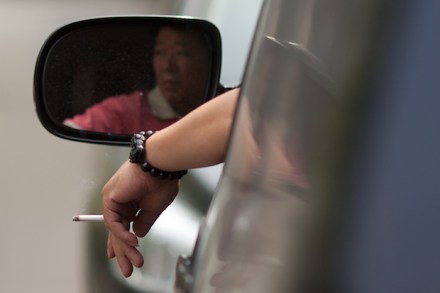
The most remarkable thing about the ban on smoking in cars when children are present, which will pass the Commons later today, is how quickly minds have changed. There’ll be ministers and MPs voting for it today who were dismissing it as absurd nanny-statism just a week ago. What has happened is that MPs, particularly Tory and Lib Dem ones who have a genuinely free vote on the matter, have reflected on how far the state already restricts liberty when it comes to smoking. Once you have decided to ban smoking in pubs, where adults go voluntarily, and even private members clubs, then it is very hard to defend allowing people to smoke in a confined space when a child is present.

Ed’s finally reforming Labour. So why are the unions happy?

From our UK edition

[audioplayer src="http://traffic.libsyn.com/spectator/TheViewFrom22_6_February_2014_v4.mp3" title="James Forsyth and Marcus Roberts discuss Labour's election strategy" startat=702] Listen [/audioplayer]Ed Miliband has his legacy. Or, at least, what he hopes will be the first part of it. He has succeeded in scrapping the system by which he was elected Labour leader. Gone is the electoral college split three ways between MPs, trade unions and ordinary party members. It has been replaced by a one-member, one-vote system. This will be simpler and more democratic. It will mean that unions can’t send out ballot papers with leaflets telling people who to vote for, and nobody will have the advantage of wielding multiple votes.

Labour’s internal reforms will have consequences

From our UK edition

[audioplayer src="http://traffic.libsyn.com/spectator/TheViewFrom22_6_February_2014_v4.mp3" title="James Forsyth and Marcus Roberts discuss Labour's election strategy" startat=702] Listen [/audioplayer]At the end of last year, there was an expectation that Labour’s internal reforms would be one of the big themes of the first quarter of the year. But this week, Labour’s National Executive Committee voted through the changes by the comfortable margin of 28 to 2 and with remarkably little dissent. The absence of a public row over the issue makes it tempting to think that the changes don’t amount to much. But this would be wrong. Labour is going to scrap its current electoral-college split between MPs, the Unions and members and replace it with a one member one vote system.

PMQs sees Miliband press Cameron on his party’s ‘problem with women’

From our UK edition

Today was not a good PMQs for David Cameron. Ed Miliband went on the issue of whether the Tory party has a ‘problem with women’ and was handed a huge helping hand by the fact that the front bench was all male. It made Miliband’s point for him. It was also sloppy planning by the Tories given that Harriet Harman had used this line of attack on Michael Gove on the Andrew Marr Show on Sunday. listen to ‘PMQs: Cameron ‘failing women across his party and across the country’’ on Audioboo But this doesn’t explain why Cameron was quite so off in response. He did mention that the Tories had had a female leader while Labour had not. But he didn’t make enough of this point. He also seemed oddly listless in answering the question.

Is it better to ban smoking in cars containing children than in pubs?

From our UK edition

Whenever you cross from Washington, DC into the state of Virginia, you’re met with a sign saying ‘Buckle up Virginia, it’s a law we can live with’. The sign is meant to persuade people in a state where libertarianism runs deep to put their seatbelts on. But, even in the four years I lived in Washington, the sign became to feel rather out of date. Buckling up had become the norm. I wonder whether the same will happen with the proposed ban on smoking in cars when children are present. At the moment, the idea seems unenforceable, nanny statism taken to the max. But it is worth remembering how quickly attitudes to these things change.

It’s cohabitation, not coalition now

From our UK edition

The Tories and the Liberal Democrats are increasingly going their separate ways. But they’ll stay in government together until the election is called. As one Whitehall Lib Dem told me recently, ‘We’re not in a coalition now. We’re just cohabiting’ During the immigration bill, it was striking how Tory Ministers abstained on the Raab amendment while Lib Dem ministers voted against. Indeed, if there had been more votes, there would have been more coalition splits for the government had agreed to suspend ‘collective responsibility’ on various amendments. Oddly enough, though, this distancing is one of the reasons why the coalition looks likely to go the distance.