James Forsyth

James Forsyth

James Forsyth is former political editor of The Spectator.

The Fixed-term Parliaments Act is no longer helping Miliband

From our UK edition

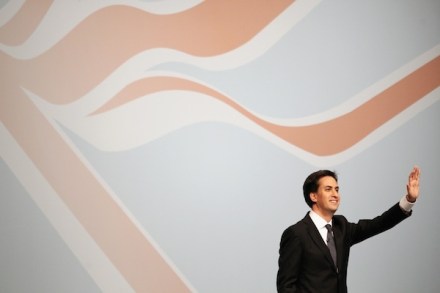
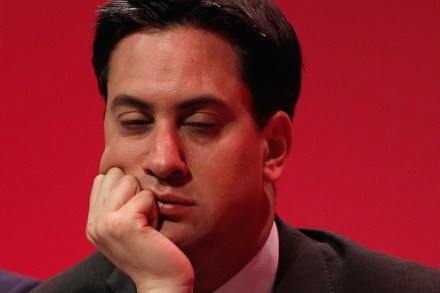
Up until now, the fact that we know the date of the next general election has worked in Ed Miliband's favour. He has known the timetable to which he has to work and has been able to resist demands to produce policy early by pointing out that we know the next election will not be until May 2015. But in the present circumstances, the Fixed-term Parliaments Act is not helping Miliband. Normally, in the fourth year of the parliament with the government receiving a bounce in the polls, the opposition would be wary of a snap election. This would create some internal discipline. But everyone on the Labour side now knows that there are still 14 months to go to polling day. This means that there is plenty of time to argue about what should be in the manifesto and the party's approach.
Today’s inflation fall means the Tories can have their interest rate cake and eat it too

From our UK edition

Today's inflation figures bring more good news for the government. CPI inflation is now down at 1.7 per cent, the lowest rate in four years and below the Bank of England's target – so making it less  likely that interest rates will rise before the next election. Inflation as measured by RPI is 2.7 per cent, down from last month's 2.6 per cent. With Osborne's pensioner bonds, which will offer 4 per cent return, the Tories can now have their interest rate cake and eat it. Adding to the buoyant mood in coalition circles is that Labour still hasn't worked out its critique of the Budget. I'm told that Labour have not yet informed the government whips which Budget resolutions they intend to vote against. Normally, this information would have been relayed last night.

It’s time for the state to trust adults with their own money

From our UK edition

The changes that George Osborne announced to pensions yesterday were so big that there was always going to be a backlash. Sure enough, the IFS and various others have today voiced concerns about the scheme. The essential complaint is that if you let people take charge of their own pension pots, they might spend their money too quickly. This is an argument that George Osborne should relish taking on. Trusting people with their own money is a fundamentally Tory idea. It is also slightly absurd to suggest that people who have been diligent enough to build up a pension pot over their working life are suddenly going to become spendthrifts in retirement.

The risks for Osborne now he’s back on top

From our UK edition

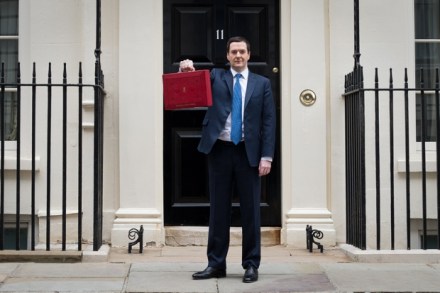
[audioplayer src="http://traffic.libsyn.com/spectator/TheViewFrom22_20_March_2014_v4.mp3" title="Fraser Nelson, James Forsyth and Isabel Hardman discuss the 2014 budget" startat=749]The old Budget traditions are dying off. No Chancellor has observed Budget purdah, the tradition of not speaking about the economy for two months beforehand, since Norman Lamont. These days, the Chancellor even appears on the BBC on the Sunday before the Budget to begin the drum roll of announcements. The convention by which he exercises his prerogative to have an alcoholic drink as he delivers the speech has also fallen into abeyance. Ken Clarke, with his glass of whisky, was the last chancellor to have a tipple as he spoke. But some customs remain.

Budget 2014: Who benefits from Osborne’s savings revolution?

From our UK edition

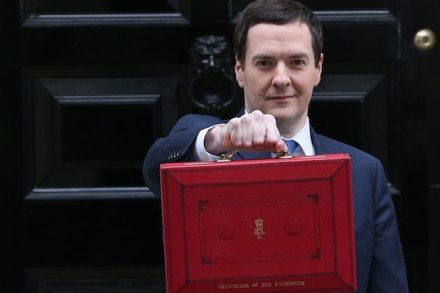
The most obvious beneficiaries of George Osborne's savings package are pensioners. They now can buy government bonds with an interest rate of 2.8% for an annual bond and an annual rate of 4% for a three year bond, making up for how low the Bank of England base rate is. But it is not just pensioners who benefit. The fact that people no longer have to buy an annuity will benefit those coming up to retirement most. Those planning for retirement know that they now have far more flexibility about how they structure their retirement. While increasing the ISA limit to £15,000 helps those trying to save up a deposit for a house or a flat. These changes also mean that Osborne can have his cake and eat it when it comes to interest rates.

Budget 2014: Has Osborne come up with a silver bullet for dealing with Ukip?

From our UK edition

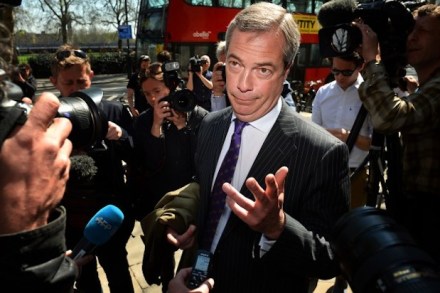
The Budget today contained a host of measures that'll benefit the silver savers; those in, or coming up to, retirement. From January next month, pensioners will be able to buy pension bonds that offer a 2.8 per cent interest rate for a one year bond and a 4 per cent annual rate for a three year bond. This is far better than the rate available on the high street and will cost the government £170 million in 2015-16. It should assuage the pain, and anger, that many pensioners have felt at the government's deliberate policy of keeping interest rates as low as possible. Considering that defections from the Tories to Ukip have been particularly high among the over 60s, one has to imagine that this will have an electoral impact.

Time to switch energy companies say ministers

From our UK edition

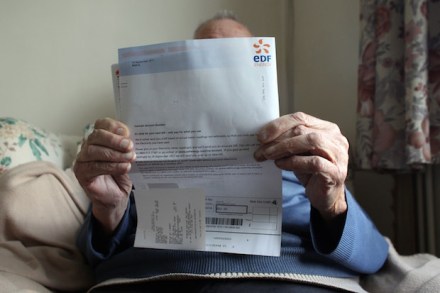
Both coalition parties remain scarred by the political potency of Ed Miliband's pledge to freeze energy prices. They are determined to do what they can to stop this issue gaining salience again. So, it is telling that Ed Davey and Michael Fallon have both personally signed up to The Big Deal, a new initiative designed to gets consumers cheaper energy bills through bulk buying. Their decision to sign up shows how it is politically imperative to be seen as on the side of the customer rather than the producer when it comes to energy. (It is also testament to how well connected the campaign is in Westminster.) No politician wants to look like they are defending the big six energy companies at the moment.

George Osborne readies his tax dividing line

From our UK edition

George Osborne was on Andrew Marr this morning announcing support for a new garden city at Ebbsfleet in Kent and the extension of Help to Buy on new build homes until 2020. The Tories hope that these policies will show both that they are planning for the long term and that they are supporting aspiration. But what struck me as most significant was Osborne’s response when told by Marr that he was sounding more like a Liberal Democrat than a Conservative. He instantly replied, ‘Conservatives believe in lower taxes, Liberal Democrats want to put taxes up.’ We already know that Osborne believes that the rest of the deficit can be cleared without any more tax increases and this reply suggests that the Tories will run in 2015 as the only party that won’t put up taxes.

Michael Gove, Boris Johnson and the return of Tory wars

From our UK edition

[audioplayer src="http://traffic.libsyn.com/spectator/TheViewFrom22_13_March_2014_v4.mp3" title="James Forsyth discusses Gove vs Boris" startat=722] Listen [/audioplayer]From the moment he took his job, Michael Gove knew that he would make energetic and determined enemies. The teachers’ unions, local councillors and even his own department all stood to lose from his reforms — and all could be expected to resist them. What the Education Secretary did not expect was hostile fire from those who should be his friends. At the start of the coalition, Gove and Nick Clegg were allies. With a moral passion rarely seen in British politics, they used to argue that social mobility should be the centrepiece of the government’s reform agenda.

It’s time for the Tories to rally to the aspiration agenda

From our UK edition

School reform is economically essential for Britain's future success, morally necessary for a fairer, more socially mobile society and politically essential for a centre-right party that wants to show that it is about spreading privilege not defending it. This is why Michael Gove's agenda is so important to the Tories and their future success. Gove was always going to face opposition. Members of the National Union of Teachers hustled David Blunkett and his guide dog into a room and then screamed at him for merely condemning school strikes from opposition in 1995. They were, obviously, going to do far worse to a radical Tory Education Secretary.

Powys County Council reaches dizzy new heights

From our UK edition

This must count as the most bizarre government decision in a long time. But from 31 March, Powys County Council will take over the Office for Fair Trading's role as the lead enforcement body for all UK estate agents. When I was first told this, I assumed it was a joke. Powys County Council might have many strengths but one struggles to see how they are qualified to be the lead enforcement agency for estate agents in London or Birmingham or, frankly, anywhere other than Powys. But when you check Hansard, it is confirmed by the relevant minister the Lib Dem Jenny Willott: 'The Office of Fair Trading has a duty to supervise the working and enforcement of the Estate Agents Act 1979.

A ‘no’ to Scottish independence won’t save the Union

From our UK edition

The longer the Scottish referendum campaign goes on, the more I fear for the long-term future of the Union. I suspect that the pro-Union campaign will win this September, but the way in which they will do this is storing up problems for the future. The pro-Union campaign has, so far, concentrated on two messages: the dangers of independence and the fact that there'll be more devolution if the Scots vote no to independence. These tactics will help with this September's referendum—indeed Hamish Macdonell argues persuasively that a ‘devo plus’ offer would deliver victory. But strategically they are storing up problems for the future. Gordon Brown is today proposing a whole slew of extra powers for the Scottish parliament.

David Cameron pays the price for another lazy shuffle

From our UK edition

The Tory leadership is not best pleased with James Brokenshire, the Immigration Minister whose ill-judged speech turned a media spotlight onto the Cameron’s nanny. There are mutterings in Downing Street about the speech having being submitted for clearance very late. But Number 10 can’t escape its share of the blame for this fiasco. First, the speech should never have been cleared. The problems it would cause were obvious, which is why one Lib Dem tells me ‘we all fell out about laughing when we read it.’ Second, Brokenshire should never have been appointed to this job.

Will Howard Davies recommend the Heathrow Hub after the next election?

From our UK edition

As Patrick McLoughlin makes clear in his interview with The Spectator, Sir Howard Davies's report on where in the south east new runways should be built will be published soon after the next election. The plan is that the new runways will then be approved and construction under way by 2020; meaning that there'll be no chance for people to vote against them at a general election. Strikingly, the Heathrow Hub option — which would extend the northern runway and then turn it into two runways — is rapidly gaining support in Westminster. Part of its attraction of is that the scheme would also enable you to extend the southern runway and turn that into two runways, creating — in effect — a four runway airport.

Patrick McLoughlin on HS2, rebellion and Ukip

From our UK edition

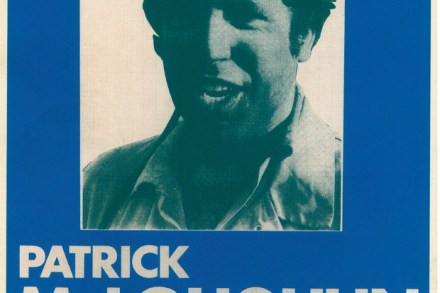
It was, perhaps, inevitable that heading to interview the Transport Secretary I would end up stuck in traffic — so by the time I reached Patrick McLoughlin’s office, I was running a few minutes late. The normal punishment for tardiness is to be left languishing outside a minister’s office. But McLoughlin does things differently. When I arrive, his door is open and he urges me to come straight in. As befits a man who used to earn his crust as a miner, McLoughlin has a big physical presence. He is broad-shouldered and the buttons on his shirt sleeves look close to bursting as they try to contain his large forearms. His physical appearance is just the most obvious of the many traits that make McLoughlin stand out in a cabinet dominated by Oxbridge graduates.

Will HS2 become an election issue?

From our UK edition

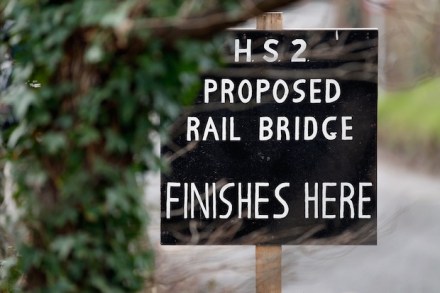
In an interview with The Spectator this week, the Transport Secretary Patrick McLoughlin admits that HS2 will not have been approved by parliament before the next election. This invites the question, will HS2 become an election issue? Both Ed Balls and Andy Burnham have made forays against HS2 in recent months. But both have been slapped down by Ed Miliband's office. His allies believe that Labour can't run on a platform of rebuilding Britain while simultaneously promising to put a stop to the biggest infrastructure project in decades. But one wonders if this Labour position will hold. The Tory election campaign will claim repeatedly that Labour's sums don't add up, they'll constantly accuse Labour of planning to raise taxes or borrowing.

PMQs: Cameron won’t commit to travel restrictions on the Russian elite

From our UK edition

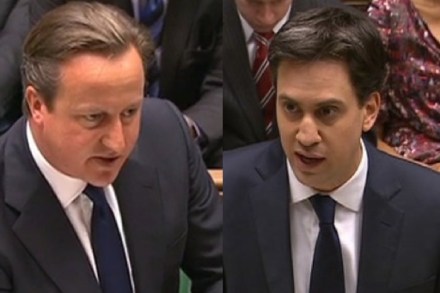
Six questions from Ed Miliband on Ukraine resulted in a calmer, more discursive PMQs than normal. Though I suspect that the headlines will be grabbed by Samantha Cameron's presence in the chamber. In response to Miliband's questions, Cameron indicated that he expected to boycott the G8 meeting in Russia saying that it was ‘hard to see how a G8 meeting could take place in these circumstances.’ Miliband tried to move Cameron towards a tougher line on travel restrictions on the Russian elite, but Cameron side-stepped the question.

Exclusive: Cameron and Osborne ambush Lib Dems in Cabinet meeting

From our UK edition

A dramatic Cabinet this morning as the Tories ambushed the Lib Dems over the contents of the Queen’s Speech. First, Cameron took them by surprise by demanding that a recall bill be included in the speech. This was quite a slap to the Liberal Democrats seeing as just last month they were publicly blaming Cameron and Osborne for the fact that a recall bill was not going to be included in the Queen’s Speech. But this wasn’t the only bit of Tory aggression this morning. For Osborne then took up the baton, pushing for the inclusion of an EU referendum bill in the coalition’s legislative agenda. David Laws and Nick Clegg dismissed this idea. But IDS then pointed out that the Liberal Democrats used to boast of being in favour of an In / Out referendum.

No.10 aide Patrick Rock resigns after being arrested over child abuse image allegations

From our UK edition

Jaw-dropping news tonight: the Daily Mail’s James Chapman reveals that Patrick Rock, the deputy director of the Number 10 policy unit and a long-serving political ally of David Cameron, has resigned after being arrested on child porn charges. Rock was one of Cameron’s Downing Street fixers. The two had worked together as SPADs to Michael Howard and Rock was very much part of the old special adviser network. So, when Cameron and Ed Llewellyn, Cameron’s chief of staff, were looking for a trusted hand to beef up the domestic side of the Downing Street operation they turned to their old colleague, Rock. Rock’s influence in Downing Street had ebbed slightly in recent months. Jo Johnson had been brought in over his head to run the Policy Unit.