James Forsyth

James Forsyth

James Forsyth is former political editor of The Spectator.

Ukip aren’t just David Cameron and the Tories’ problem anymore

From our UK edition

How the Tory party will react if, as excepted, Ukip pushes the party into third place in the European elections is one of the most discussed topics in UK politics. But overlooked in all this is how Labour will react if Farage’s party beats them on May 22nd. If Ukip come top in the European Elections, as the polls indicate they have a very good chance of doing, Labour will be thrown into a panic. No opposition has ever triumphed at a general election having not won the previous European Elections. A failure in the European Elections would be a big blow to the idea that Ed Miliband is going to be the next Prime Minister. Already, influential members of the shadow Cabinet are grumbling about how the leadership hasn’t taken these elections seriously enough.
Revealed: George Osborne’s plan to become Foreign Secretary

From our UK edition

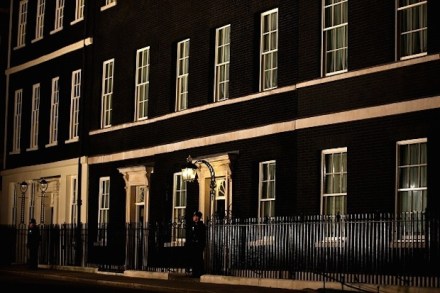
[audioplayer src="http://traffic.libsyn.com/spectator/TheViewFrom22_1_May_2014_v4.mp3" title="James Forsyth and Isabel Hardman discuss Osborne's Foreign Secretary aspirations" startat=646] Listen [/audioplayer]Confidence is coursing through Downing Street at the moment. The economy is growing at a good clip and senior Tories feel more optimistic than ever about the result of the next general election. With this belief in retaining office comes more thought about what a second-term Cameron government would have to do. Minds are also turning to the question of how the top team should be reshaped after the general election. Politically, one issue towers above all others: Europe.

Why Farage isn’t standing in Newark

From our UK edition

I always thought that it was unlikely that Nigel Farage would stand in Newark. When I discussed the prospect of a by-election there with him on Monday, he seemed drawn to the idea of a local candidate; pointing out how the Canadian Reform Party had secured their key by-election breakthrough with ‘a completely unknown geography mistress, who lived in the town, who had lots of relations there’. Farage's decision not to stand is a recognition that the Tories are bound to pick a local candidate and that their campaign would paint him as someone who is interested in what Newark could do for him, not what he could do for Newark.

Why Nigel Farage might not stand in Newark

From our UK edition

Nigel Farage told me on Monday how closely he was watching the situation in Newark. He introduced the subject by saying, "there’s one other thing that could change everything". But Farage’s comments to me yesterday make me think that he’s unlikely to stand in Newark. He said that he’d ‘been looking at candidates’ and mused on how just one MP would make such a difference. He pointed to how the Canadian Reform party had won a seat in a by-election in 1989 and then go on to become the largest opposition party in at the next election. What struck me about this anecdote was how taken Farage was by the fact that the Reform party had picked "a completely unknown geography mistress, who lived in the town, who had lots of relations there".

Today’s GDP growth figure could mean a political dividend for the Tories

From our UK edition

Today's GDP figures are another sign that the recovery is strengthening. The 0.8 per cent growth in the first quarter is equivalent to more than 3 per cent annual growth. This means that the UK is on course to have the fastest growing economy in the G7 this year. The rapid fire press releases from Osborne, Alexander and Clegg this morning all strive to avoid saying that the job is done. But with the economy having grown 3.1 per cent since this time last year, it is clear that the economy is now on a far healthier trajectory. No one can say that it is bumping along the bottom anymore. The crucial political question is, as always, when and how many voters will feel the benefits of the recovery. My sense is that by the autumn more people will be beginning to feel it.

Can Ed Miliband save the Union?

From our UK edition

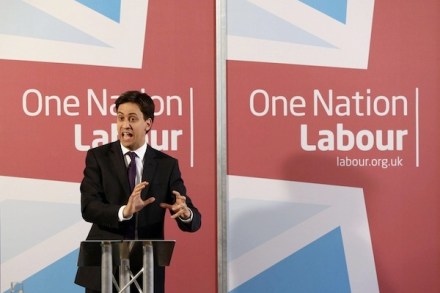
When Ed Miliband goes to Scotland and declares that ‘It is Labour that’s got to win this referendum’ it is a statement of political reality as much as it is braggadocio. The Tories have only one MP north of the border and the Liberal Democrats are the fourth party in the Scottish parliament. If this vote is to be won, Labour—as by far the largest Unionist party—will have to get the No camp over the line. Ed Miliband’s decision to take the entire shadow Cabinet to Glasgow last week was meant to show that UK Labour is now engaging fully in this battle. Miliband himself thinks that he has come up with an argument for the Union that is distinctly Labour.

How Nick Clegg missed his chance with Nigel Farage

From our UK edition

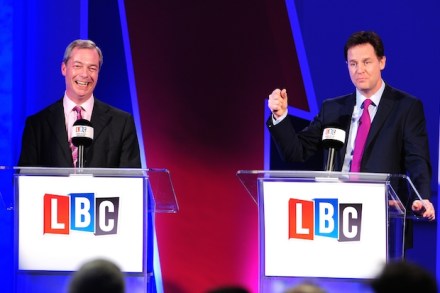
At the start of the year, some of the air seemed to have gone out of the Ukip balloon. The party’s warnings about the scale of Romanian and Bulgarian immigration to Britain hadn’t been borne out by events. But the debates with Nick Clegg enabled Nigel Farage to get his momentum back. In those debates, Clegg was too passive in the first one and then over-compensated in the second with the result that he ended up losing both of them. Clegg’s decision to not engage with Farage in the first debate meant that he missed his best chance to get under the Ukip leader’s skin.

Exclusive: Max Chambers to join No.10 policy unit

From our UK edition

I understand that Max Chambers of Policy Exchange will soon join the Number 10 policy unit. Chambers will take on the home affairs brief that has been vacant since Patrick Rock's resignation in February; Rock quit shortly before being arrested over an alleged offence related to child abuse images. [caption id="attachment_876626" align="alignright" width="177"] Max Chambers[/caption] At Policy Exchange, Chambers has advocated devolving more powers to Police and Crime Commissioners and building bigger, more modern prisons. He is the latest figure from Policy Exchange to be recruited to the Number 10 policy unit; Alex Morton joined to cover housing in December of last year.

The optimism deficit

From our UK edition

The extent of public pessimism in Britain is striking. 54 percent of people think that young people's lives will be worse than that of their parents’ generation. This pessimism, I argue in the column this week, explains why Ukip is doing so well. If you think that life is getting worse regardless of what you do, then you want to cast a vote of no confidence in the entire political class—and the easiest way to do that is to vote Ukip. As one Tory minister says, ‘Ukip has captured a zeitgeist of grumpiness.’ I think there are three things fuelling this mood of pessimism. There is the financial crash and the subsequent squeeze on living standards combined with the sense that those who crashed the system haven't paid for their mistakes.

David Cameron must tackle the optimism deficit

From our UK edition

[audioplayer src="http://traffic.libsyn.com/spectator/TheViewFrom22_24_April_2014_v4.mp3" title="James Forsyth and Alex Massie explain why we need more optimism in Scotland and Westminster" startat=1538] Listen [/audioplayer]There is an optimism deficit in British politics. Politicians seem incapable of making a positive argument for anything, including the country itself. The British government’s case in the Scottish independence referendum has been almost entirely negative. Those looking for an uplifting defence of the United Kingdom have been left sorely disappointed as the government has instead stuck to technocratic arguments about why Scotland would be worse off on its own.

Will the Lib Dems enter another coalition?

From our UK edition

Danny Alexander's comments to the BBC that, in the event of another hung parliament, the Lib Dems wouldn't make a confidence and supply deal with either the Tories or Labour, is the clearest statement yet of the leadership's position. The Clegg circle believes that a second term in government is crucial to consolidating the changes that he made to the party, to making the Liberal Democrats think like a party of government. Not everyone in the party is so keen on a second coalition. One influential Lib Dem MP told me a few months back that he thought a post 2015 coalition with either party would be a disaster for the Lib Dems. His rationale was that going in with David Cameron again would make the Lib Dems look like an annex of the Tory party.

Don’t do it Boris!

From our UK edition

Is Boris Johnson about to announce his intention to stand at the next general election? The well-connected Jason Groves reports today that Boris will make clear his plans before the Tory conference and that his friends expect him to run for parliament but stay as Mayor of London. I think this would be a mistake for Boris, a move that would make him less likely to end up as Tory leader and Prime Minister one day. First, Boris was clear in the campaign that he wouldn't try to return to the Commons before 2016: 'If I am fortunate enough to win I will need four years to deliver what I have promised. And having put trust at the heart of this election, I would serve out that term in full.

How Nigel Farage hopes that immigration can deliver victory for Ukip

From our UK edition

Nigel Farage’s strategy for winning the European Elections is based around winning over blue collar workers who normally vote Labour. Ukip believe that they can use immigration as a battering ram to break through Labour’s defences in the north. One of the party’s campaign billboards unveiled last night simply says, ’26 million people in Europe are looking for work. And whose jobs are they after’. (I suspect that Ukip will welcome the controversy these posters are attracting because it will help amplify their message) https://twitter.com/Adrian_Hilton/statuses/458163441531097088 Ukip’s argument is that it is the only party that can actually do something about immigration.

An American, an Australian and a South African walk into a British election

From our UK edition

All three main parties have now hired foreign advisers to help run their general election campaigns. These foreign advisers have one thing in common: they’re all from the English speaking world. Despite our membership of the European Union, when it comes to winning elections, all our political parties think there is more to learn from other English speaking countries than France or Italy. Indeed, it is hard to imagine any of them putting a European in charge of their campaign. But they are all delighted to have their American, Australian and South African campaign hands. Partly, this is a language thing. But, I think, it also goes deeper than that.

Top Obama strategist David Axelrod to advise Labour

From our UK edition

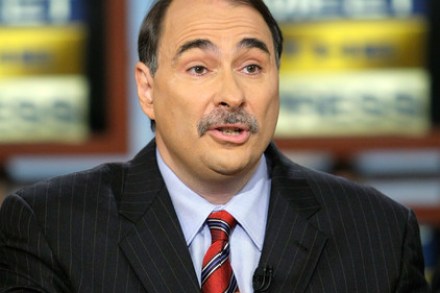
The Labour Party has announced tonight that David Axelrod, the man who masterminded Obama's two election victories, is to advise them in the run up to the next election. Axelrod's involvement will boost Labour morale. His willingness to sign up will be seen as a vote of confidence in Miliband and his strategy. The role will pit Axelrod against Obama's 2012 campaign manager Jim Messina who is consulting for the Tories. Labour, at the time , dismissed Messina as a press release hire and are tonight stressing that Axelrod is far more than that. The question now is , how actively involved will Axelrod be? The answer to that should be clearer once he has been to London next month.

John Bercow’s problem with PMQs

From our UK edition

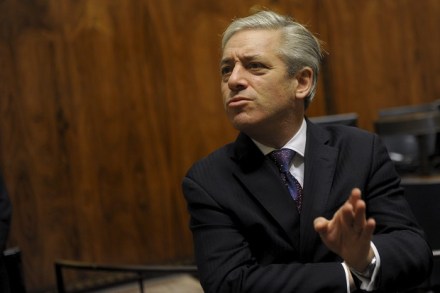
John Bercow doesn’t like Prime Minister’s Questions. He’s told the BBC in an interview that it is ‘so bad’—in other words, rowdy—that a bunch of female MPs no longer attend. PMQs is becoming particularly partisan with the approach of the election. Miliband has abandoned his attempts to change it just as quickly as Cameron did before him. But Bercow would do well to look closely at his own role in setting the tone of these sessions. From the chair, Bercow understandably tries to silence the hecklers. But, sometimes, he seems to be indulging in a bit of ‘Punch and Judy’ too. Often he moves into put-down mode, trying to get the House to laugh at the offender.

David Cameron tells Britain to be ‘more confident about our status as a Christian country’

From our UK edition

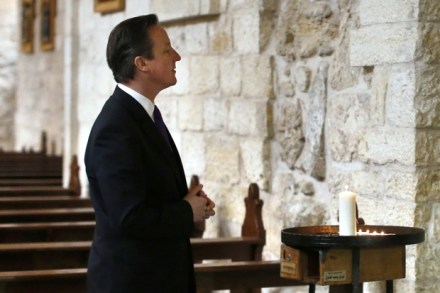
David Cameron is doing God. He has followed up his comments about his faith at last week’s Downing Street reception with an article for The Church Times in which he declares that we should be ‘more confident about our status as a Christian country’ and ‘frankly, more evangelical about a faith that compels us to get out there and make a difference to people's lives.’ This is a strikingly different tone to the one that Cameron used to adopt. Back in opposition, he talked about his faith being ‘like reception for Magic FM in the Chilterns: it sort of comes and goes'. Personally, as I say in the magazine this week, I find Cameron’s openness about the importance of religion in his life refreshing.

How David Cameron does God (even when his Chancellor wishes he wouldn’t)

From our UK edition

[audioplayer src="http://traffic.libsyn.com/spectator/TheViewFrom22_16_April_2014_v4.mp3" title="James Forsyth and Fraser Nelson discuss politics and religion" startat=636] Listen [/audioplayer]If Ed Miliband wins the next election, he’ll be Britain’s first atheist Prime Minister. It is a sign of how social attitudes have changed that Miliband feels comfortable wearing his atheism on his sleeve. He has not received the kind of criticism that Michael Foot and Neil Kinnock did when they professed that they did not believe in God. Atheism doesn’t seem as dangerously counter-cultural as it did in the 1980s. Nick Clegg is also a self-declared atheist. This leaves David Cameron as the only major party leader who believes in God.

Inflation falls again

From our UK edition

Wages in the private sector are now rising faster than inflation. The latest CPI inflation figures show that it now down to 1.6 per cent, comfortably below the Bank of England’s 2 per cent target. This is the sixth time in a row where inflation has fallen. An interest rate rise this side of the election is becoming ever more unlikely. Tomorrow, the Office for National Statistics provides it figures for average wage growth in the last three month. This is expected to show that wages are now increasing faster than prices, easing the cost of living squeeze. Labour argues that the cost of living crisis is about far more than this. But there’s no doubt that if this trend continues between now and May 2015, people will feel better off on polling day than they do today.

Cabinet concern over the state of the Unionist campaign in Scotland laid bare

From our UK edition

There are only five months to go to the Scottish referendum and the Cabinet is becoming increasingly agitated about the state of the Unionist campaign. At Tuesday’s meeting there was a frank and realistic discussion about its problems. The government’s concern is prompted by the fact that it has fired its biggest gun, telling the Scots there’ll be no currency union after independence, but the Nationalists are still standing. Indeed, they appear to have strengthened their position. The coalition now thinks that part of the problem is that there are not enough purely Scottish voices making the case for the Union. They fear that even Scots with Westminster seats are, to some extent, seen as outsiders in this debate. Another worry is the state of Scottish Labour.