James Forsyth

James Forsyth

James Forsyth is former political editor of The Spectator.

David Cameron has fewer problems than Ed Miliband and Nick Clegg this morning

For more than year Westminster has assumed that David Cameron would have a Tory crisis to deal with after the European Elections. Whenever anyone remarked on the Tories unifying, someone would say ‘well, wait until after the Euros’. The conventional wisdom was that the Tories coming third would lead to a slew of senior Tories pushing for more robust policies on immigration and Europe and more and more Tory MPs calling for a pact with Ukip. But this morning, Cameron has fewer problems than either Ed Miliband or Nick Clegg. The fact that the Tory party has responded so calmly to coming third in a nationwide election for the first time in its history is partly a triumph of expectation management.

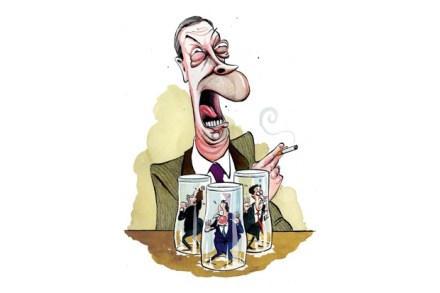
It was the immigration issue wot won it for Ukip

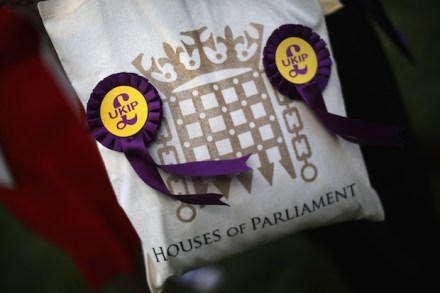
Ukip have triumphed in the UK European Elections. The BBC project that Ukip's national share of the vote will be 28 per cent ahead of Labour on 25 per cent and the Tories on 24 per cent with the Greens on 8 per cent beating the Lib Dems who are on the 7 per cent into 4th. This is the first time that anyone other than Labour or the Conservatives has won a nationwide election in more than a century. Nigel Farage and his party has given the British political system a mighty shake this morning. They have demonstrated that, in these elections at least, they can put together a coalition that can defeat both main parties. The big development in this campaign has been Ukip making inroads into the Labour electoral base.

The three things keeping Nick Clegg safe

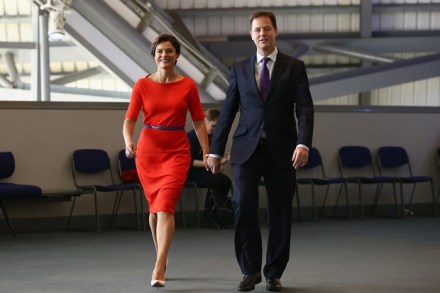
This weekend was always going to be an unpleasant one for Nick Clegg. The delay between the council results on Friday and tonight’s European Election count meant that the pain was going to be drawn out for the Liberal Democrats, giving activists plenty of time to vent their anger at the leadership. So far, the anti-Clegg mutterings have been fairly limited. There are no big beasts calling for him to go. This could change after tonight’s results, especially if the Lib Dems come behind the Greens. But I suspect that three things will keep Clegg safe. 1). He’s made very clear he won’t go without a fight. Trying to force a leader out of office is an unpleasant and mucky business and I doubt that many Liberal Democrat MPs have the stomach for that fight.

Today’s Westminster projections show that Labour is not in a comfortable place

We now have both the BBC's projected national vote share and Sky's Westminster projection of what this result would mean in parliamentary seats. Both show Labour ahead but not by much. They are on 31 percent of the vote to the Tories' 29 according to the BBC. While Sky's parliamentary projection has Labour a handful of seats short of a majority. With a year to go, and with the economy expected to grow strongly, in the next 12 months, this is not a comfortable place for Labour to be. There's a reason why more Labour MPs than Tory ones have been taking to the airways to sound off about their party's direction. Of course, Labour still has big structural things in its favour. The boundaries give them an advantage and the left-wing Liberal Democrat vote has collapsed.

Ukip surge as Labour make sluggish progress

Only one party can be happy with the local elections results so far, Ukip. Nigel Farage’s party has so far added 86 councilors to its tally and these results suggest that Sunday, when the European Election votes are counted, should be a good night for the party. Labour’s results have been mixed to disappointing. Their best news of the night was picking up Hammersmith and Fulham off the Tories. Knocking over one of the Tories’ flagship councils will delight Labour. But Hammersmith is a region where the demographics have been running against the Tories, look at how Shaun Bailey failed to win the parliamentary seat last time. Labour has also gained control of Merton and Cambridge City councils.

How has Farage prospered? By keeping his message simple

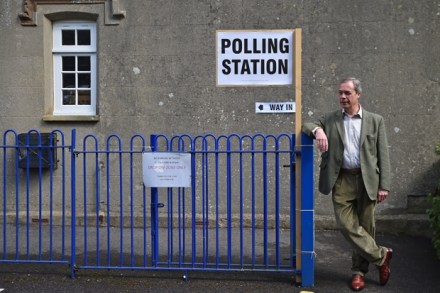
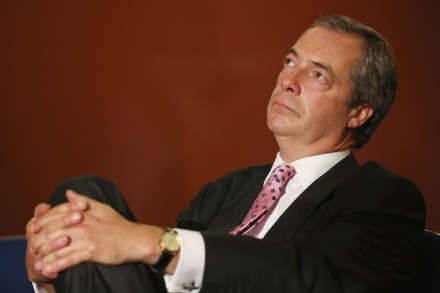
Whatever the result is when the votes are counted, there's no doubt who has dominated this campaign: Ukip. From the Farage-Clegg debates to the discussions during the past few days about Romanian neighbours, it has been the other parties that have been responding to Ukip. A party that has no MPs and received a mere 3 per cent at the last general election has managed to set the agenda for a nationwide election. To try and understand how Ukip have done this, I went out on the road with Nigel Farage. One of the things that marks Farage out from the other party leaders is that he relishes debate. When a group of Politics A-Level students came up to him in the pub and told him he was disgusting, he didn't simply walk away but stayed to talk the matter through with them.

‘Every pub is a parliament’: on the campaign trail with Nigel Farage

[audioplayer src="http://traffic.libsyn.com/spectator/TheViewFrom22_22_May_2014_v4.mp3" title="Fraser Nelson and James Forsyth discuss what will happen in this week's elections" startat=921] Listen [/audioplayer]Ambushing your opponent’s walk-about is a classic tactic of the political insurgent. When a major party leader comes to town, you position guerrilla campaigners on his route, near the cameras. Then you pounce, so the local news features your posters and messages, rather than his. Senior Tories often complain about how often Ukip has done this to them. But in this European election campaign, it is the Tories who were trying to muscle in on Nigel Farage’s action.

Exclusive: Nigel Farage doesn’t want to lead the Out campaign

Nigel Farage has told The Spectator that he doesn't want to lead the Out campaign come an EU referendum. In an interview, he said, 'It needs a figurehead and I'm a warrior not a figurehead.' Farage believes that if Ukip win the European Elections then a referendum will be inevitable. He says that come the referendum, he will play his part 'I'm a fixed bayonet man, albeit that I don't see myself as a private. But I see myself leading a division into battle, that's where I fit in.' The Ukip leader wants someone who 'someone who has been very big in British politics' to take charge of the No campaign, though Farage doesn't give any clue as to who that person is.

Andrew Mitchell demands the police publish transcripts of ‘plebgate’ hearings

The plebgate scandal has flared back to life tonight with a letter from Andrew Mitchell to the Commissioner of the Metropolitan Police Bernard Hogan-Howe. Mitchell alleges that one of the police officers on duty on the night of the incident boasted to a friend ‘I can topple the Tory government’. According to Michael Crick, Mitchell gathered this evidence at the recent Met disciplinary hearings that he was allowed to attend. Mitchell now wants the transcripts of these hearings published along with the evidence presented to them. The Met’s response tonight suggests that they won’t agree to this. Those close to Mitchell are getting increasingly frustrated at how long this whole business is taking.

Westminster still expects Ukip to win

The polls are all over the place this morning. Ukip is either on course for a thumping victory, going to be edged into second by Labour or has fallen into third place depending on which is your preferred pollster. But all three Westminster parties are operating on the assumption that Ukip will win, as I say in the Mail on Sunday. Certainly, Labour are getting their excuses in early. Those close to Miliband are quick to point out that Tony Blair never won a European Election and that the party machine will be concentrating more on Thursday’s council contests than the European Elections as having a strong council base will matter more in 2015 than who has the most MPs.

An NHS tax is just another name for a tax rise

Finding a way to raise taxes that is popular is, for some on the centre-left, the Holy Grail. As the well connected Andrew Grice reports in The Independent today, a growing number of people on the Labour side are attracted to the idea of an NHS tax. Their logic is that the public value the NHS so wouldn’t mind paying more for it. They point out that when Gordon Brown raised National Insurance to fund extra spending on the health service there was none of the backlash you would normally expect to a tax rise. But the reality is that the introduction of a new NHS tax won’t be matched by tax cuts elsewhere. It will simply lead to people paying more tax overall. Demand on the NHS might well be about to rise.

Nick Clegg’s loopy strategy

I am beginning to think that Dominic Cummings has driven Nick Clegg round the bend. The Lib Dem leader should want this row over universal free school meals to go away; it is a massive distraction with elections only six days away. But he can't help himself from keeping it going. So, today we have a joint Gove Laws op-ed in The Times declaring that they are not at loggerheads over the policy. This is accompanied by a news story which reveals that Clegg demanded that Gove write the piece. The piece also reveals, rather unhelpfully, that some schools are not on track to deliver the policy in time for September. Not content with this, Clegg has been busy stoking the row in his morning interviews. He doesn't seem to realise that he has a lot to lose while Cummings has nothing to lose.

Nick Clegg’s weird war with a former Gove adviser

[audioplayer src="http://traffic.libsyn.com/spectator/TheViewFrom22_15_May_2014_v4.mp3" title="James Forsyth and Miranda Green discuss Nick Clegg's war with Dominic Cummings" startat=590] Listen [/audioplayer]We’ve come to expect strange things from coalition government, but the events of the last few days have been particularly odd. On Saturday, several newspapers contacted the Department of Education about a story claiming that its budget was in chaos. Officials set about drafting a clear rebuttal. But this was vetoed by David Laws, the Liberal Democrat schools minister, preventing his department from denying a damaging story. This act of self-harm was just the latest twist in the spat between the Liberal Democrats and Michael Gove’s former adviser, Dominic Cummings.

Ed Miliband makes the best of a bad situation at PMQs

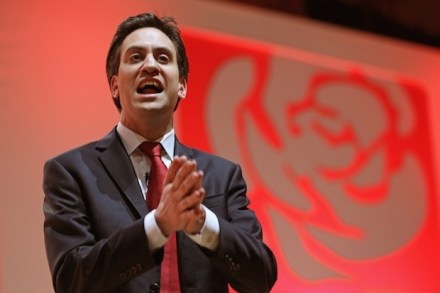
Today's PMQs was never going to be easy for Ed Miliband. The latest polls have put a spring in the Tories' step and made Labour MPs jittery. And today's job numbers — with employment hitting record levels — gave Cameron the perfect springboard from which to argue that the government's economic plan is working. But, given all this, Miliband did relatively well. The Labour leader went on Pfizer again, attacking its planned take-over of Astra-Zeneca. The issue suits Miliband as it allows him to make his big argument that the Thatcher/Blair consensus kept politicians and the markets too far apart. By contrast, Cameron is constrained in what he can say on the matter.

Tories ahead in national poll for first time since 2012

The Tories are ahead in a national opinion poll for the first time since 2012. The first Lord Ashcroft/Conservative Home poll has the Tories ahead by two points, on 34 to Labour's 32. The Lib Dems are on 9 and Ukip 15. One swallow doesn't a summer make. But this poll will have a psychological impact at Westminster. It will make it that much easier for the Tory leadership to persuade its MPs to stay calm in the face of a bad European Election result and will add to worries on the Labour side that the party is in trouble. Worryingly for Labour, Miliband's rating among swing voters is particularly low. There will be those who'll dismiss this as a 'Tory poll'. But Ashcroft's polling has not been kind to the Tories in the past.

The Axe man cometh

David Axelrod jets into London this week for the first time since signing up to help Labour in 2015. Axelrod, who friends admit is no expert on UK politics, will have two days to try and get his head round the shape of the next election campaign. This trip will mark the first time that Axelrod and Miliband have met face to face. Up to now, they have only spoken on the telephone. Axelrod will also address a specially convened meeting of the shadow Cabinet. There’s no doubt that having the man who helped Obama get to the White House in town will be a boost to Labour morale. But the scale of the task facing Axelrod is demonstrated by the events of the last week.

George Osborne’s Waterloo

Hougoumont should be a place known to every Briton. It was the site of one of the finest feats of arms in the history of the British military. If this farmhouse had fallen to Bonaparte's forces during the battle of Waterloo, Napoleon's 100 days would have become a French 100 years. But history has not been kind to Hougoumont. It stopped been a farm at the end of the last century and souvenir hunters are simply stripping the place. The excellent Project Hougoumont stepped in to try to preserve the site. They found an ally in George Osborne, who first visited Hougoumont in 2012 and was shocked by what he saw. He started helping with their fund raising efforts.

How George Osborne thinks that Britain can get a new EU deal

A second Tory term would be dominated by the EU renegotiation. Within 18 months of returning to office, David Cameron would have to get the rest of the European Union to agree to new membership terms for Britain and put the results to the public in a referendum. It is a tall order. But on a trip to Brussels with George Osborne earlier this week, I was struck by how confident he was that a deal could be done. His argument is that the northern European countries, led by Germany, want Britain in as a liberal, free market influence and so will be prepared to accommodate this country's needs. Given that Germany is by far the most powerful player in the EU, this is a significant start.

Meeting George Osborne at Waterloo

The defence of Hougoumont is one of the great British feats of arms. If the farmhouse had fallen to Bonaparte’s forces during the battle of Waterloo, Napoleon’s 100 days would have become a French 100 years. But history has not been kind to Hougoumont; it fell into disuse as a farm at the end of the last century and has become increasingly dilapidated. Now, however, Hougoumont has an unlikely champion: the Chancellor of the Exchequer. George Osborne first visited the site two years ago and was shocked by what he found. Souvenir hunters were simply removing bricks from the building. Osborne is a bit of a battlefield buff — he tries to visit a US Civil War site every time he goes to Washington for an International Monetary Fund meeting.

The 2015 conundrum

One of the striking things about the next election is how what is going on at the macro level looks so different from what is happening at a micro level. On the macro front, things seem to be moving the Tories' way. The economy is growing at a good clip and that is set to continue until polling day and David Cameron has a considerable advantage on the question of who would make the best Prime Minister. But to return to the micro, it is easier to see seats where Labour might gain from the Tories rather than the other way round. Ask even the most optimistic Tories what constituencies they might win to give them a double-digit majority, and they come up short. The crucial question is whether these marginals are a lagging indicator or not.