James Forsyth

James Forsyth

James Forsyth is former political editor of The Spectator.

What are the Liberal Democrats for?

Of the three main parties, none is clearer about how they intend to fight the next election than the Liberal Democrats. Their message will be that they’ll make the Tories be fair and Labour economically responsible. Their ground game will fight for every inch in the seats they hold but effectively withdraw from the rest of the country. I suspect that this strategy will yield the Liberal Democrats around 40 seats and, if there’s another hung parliament, the balance of power again. But this near-term strategic certainty obscures a bigger question, what are the Liberal Democrats for? This is a question that Jeremy Browne, the former Lib Dem minister, is trying to answer in his new book.
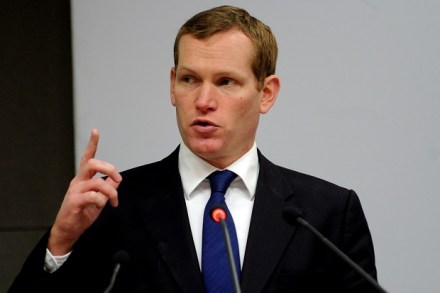
Could Jeremy Browne be the anti-Nigel Farage?

Conviction politics is back. The two men making the political weather at the moment, Alex Salmond and Nigel Farage, both serve their politics neat. They have no interest in any ‘third way’. They stand for big, simple, defining ideas. They are both far closer to success than the establishment ever imagined they would be. Now the Liberal Democrat Jeremy Browne is trying to apply this outsiders’ formula to mainstream politics. Sacked as a minister six months ago by Nick Clegg, he is setting out the case for pure, unadulterated liberalism. His new book, published this week, is a deliberately bracing read. It is full of dire warnings about what will happen to Britain in ‘the Asian century’ if it does not reform.

The Tories have brought back the expenses scandal and buried their own good news

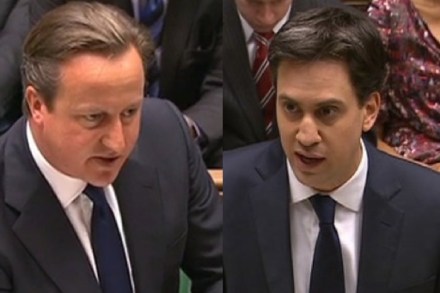
PMQs today was bad for David Cameron, but nowhere near as bad as it could have been. No permanent damage was done to him. Ed Miliband did not, to my surprise, come with a set of reforms to the expenses regime that he wanted Cameron to agree to there and then. Instead, he chose to concentrate on what this said about Cameron's judgment. 'This is about him', Miliband thundered. I was, though, surprised not to hear Miliband making more of his usual line that Cameron 'stands up for the wrong people.

Sajid Javid is the new Culture Secretary

Sajid Javid is the new Culture Secretary. Javid has impressed as a junior minister at the Treasury. He has learnt the political ropes fast despite only becoming an MP in 2010 and having done very little in politics before that. Javid’s appointment will please modernisers and the right alike. The right will be pleased that this Eurosceptic, Thatcherite has made Cabinet. Modernisers will be pleased that the Tories have their first Muslim male Cabinet Minister. Javid comes with a back-story that is all too rare in British politics. He is the son of a bus driver and was the first person in his family to go to university. His father, an immigrant from Pakistan, was nicknamed ‘Mr Night and Day’ because he worked so many jobs to make end meet.

Maria Miller had no choice but to resign

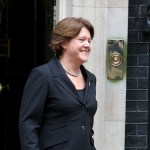
Listen: Fraser Nelson, James Forysth and Isabel Hardman discuss Miller's resignation listen to ‘Podcast special: Maria Miller resigns’ on Audioboo Maria Miller has bowed to the inevitable and resigned. For days now, it has been clear that Miller's Cabinet career was essentially over and the question was when, not if she went. By quitting this morning, she has resolved the issue before PMQs today. Yesterday showed the political price the government was paying for keeping Miller in place. The IMF's prediction that Britain would grow faster than any other G7 economy was totally overshadowed by Miller's expenses. I suspect that if last Thursday, Miller had bent the knee and thrown herself on the Commons' mercy, she would have given herself a fighting chance of survival.

Miliband’s moment of decision, does he call for Maria Miller to go?

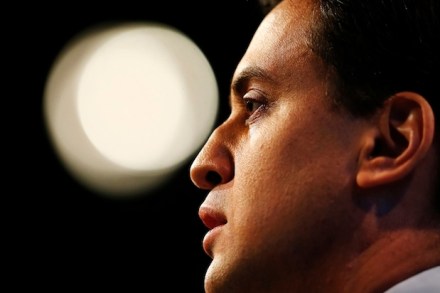
Ed Miliband faces a big decision tonight, does he use PMQs tomorrow to call for Maria Miller’s resignation. So far, he has limited himself to saying that Cameron has questions to answer about how this whole business has been handled. But if Miliband went for it at PMQs, it would keep this story going for yet another day. It would also fit Miliband’s argument that Cameron is a Prime Minister who ‘stands up for the wrong people’. Set against this, though, is the question of whether it is in the interests of any party to get into a row over expenses. Tory MPs are quick to point out that five Labour MPs—and no Tories or Lib Dems—have been found guilty of expenses fraud by a court and sent to prison.

Will David Cameron insult the Welsh by sending them Maria Miller?

The Maria Miller problem is not going away for the government. Tory MPs who went back to their constituencies over the weekend have come back to Westminster depressed about how big the issue is playing on the doorstep. There is fear that the whole story is playing straight into Nigel Farage's hands. The 2010 intake are particularly concerned about the level of public anger over the issue. David Cameron has always prided himself on not giving scalps to the press. This is why I'd still be surprised if Miller went before the reshuffle. But her prospects in that reshuffle are looking far glummer today than they did on Thursday. In the present circumstances, sending her to the Welsh Office would look like an insult to Wales.

Cameron’s renegotiation strategy is no longer an obstacle to a second Tory-Lib Dem coalition

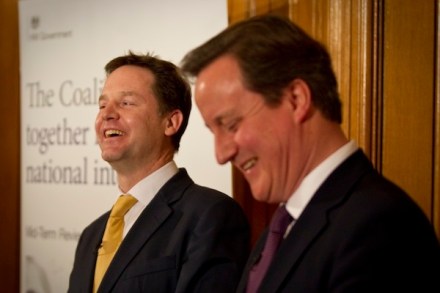
David Cameron’s plan to renegotiate Britain’s membership of the European Union has long been regarded as a major obstacle to a second Tory-Lib Dem coalition. But, as I report in the Mail on Sunday, this is no longer the case. The Lib Dem logic is essentially that any deal that other European leaders are prepared to offer Cameron is one that they can accept as well. One Clegg confidant tells me that when it comes to the renegotiation, ‘It is not us David Cameron is going to have a problem with but the Tories.’ Indeed, there are parts of the renegotiation that the Liberal Democrats are already on board with. Clegg is fully supportive of the tightening up of the benefit rules for EU migrants that Employment Minister Esther McVey will announce on Wednesday.

Maria Miller, a political zombie

Talking to Tory ministers in the last 24 hours, one of the things I’ve been struck by is the level of irritation with Maria Miller’s graceless apology. It is easy to see why this is the case. If Miller had been more contrite in the Commons on Thursday, the story would not be running as strongly today. Miller could easily have talked about how the old system under which she had been claiming was not fit for purpose and pointed out that it is no longer in operation. She also could have explained in human terms why she had been so slow to cooperate with the inquiry. If she had done those things, she would have helped herself. But, instead, Miller finds herself a political zombie. It is now nigh-on-impossible to imagine her rising further than Culture Secretary.

There’ll be no promotion for Maria Miller after her short, bitter apology

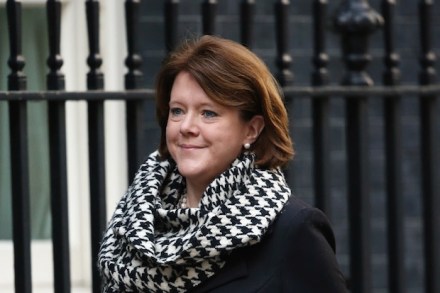
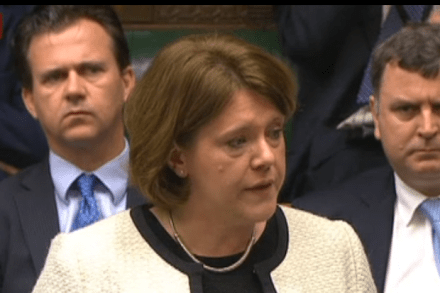
Maria Miller's apology today to the House of Commons over her attitude to the investigation into her expenses was short, 32 seconds. But it was not sweet. Rather, it was bitter. ‘I wish to make a personal statement in relation to today's report. The report resulted from an allegation made by the member for Bassetlaw. The committee has dismissed his allegation. The committee has recommended that I apologise to the House for my attitude to the Commissioner's inquiries, and I of course unreservedly apologise. I fully accept the recommendations of the Committee, and thank them for bringing this matter to an end.

Two coming revolutions: in election tactics, and in Whitehall

[audioplayer src="http://traffic.libsyn.com/spectator/TheViewFrom22_3_April_2014_v4.mp3" title="James Forsyth and Isabel Hardman discuss how electioneering is changing" startat=1229] Listen [/audioplayer]This is a unique moment in British politics. All three major parties have a realistic prospect of being in power after the next election, but they are all acutely aware that they’re won’t be swept to power. Success will have to be eked out constituency by constituency — so the expensive business of polling specific constituencies, normally left until much closer to the election, is under way for all three. And that’s not all. The Liberal Democrats know that an election that followed the national swing would be a disaster for them.

Polls show Farage as the victor of the EU debate

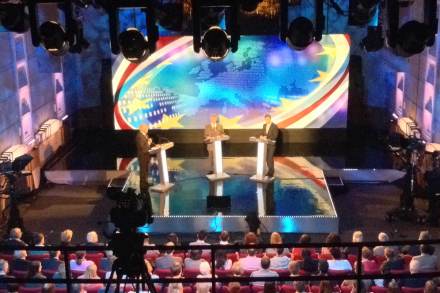
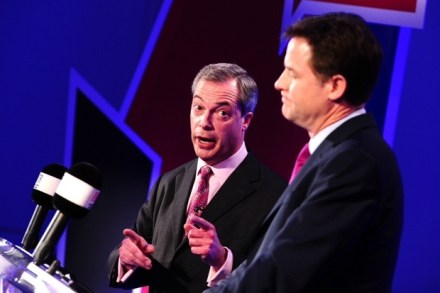
Tonight’s Clegg Farage debate on Britain's membership of the EU was far more combative than last week’s. Nick Clegg came out swinging from the start. In a sign of how much Ukip have changed politics, it was Clegg who was behaving like the challenger and Farage the incumbent. But despite this change in tactics from Clegg, the result—according to the instant post-debate polls—was the same: a clear Farage win. Indeed, the polls had Farage ahead by an even bigger margin than last week. The Liberal Democrats argue that these debates were not about Clegg ‘winning’, but of him enthusing the Liberal Democrat base and appealing to pro-European voters.

PMQs: Meet ‘the dunce of Downing Street’ and the ‘muppets’

The increasingly personal bickering between Cameron and Miliband went on today for most of the session. After a bad tempered set of formal exchanges—with Miliband branding Cameron 'the dunce of Downing Street' and Cameron calling Miliband and Balls 'muppets'—the two front benches continued to trade barbs as backbenchers asked their questions. At one point, Cameron even accused Miliband of laughing at the failings of the Welsh NHS. listen to ‘PMQs: Muppets and dunces’ on Audioboo Miliband went on the sale of Royal Mail and the fact that the share price has shot up since the government sold it off.

Without Scotland, the UK would be poorer both culturally and spiritually

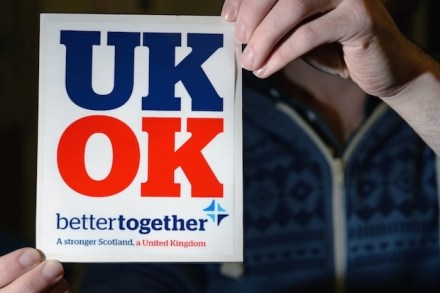
If Alex Salmond gets his way, this country will be rendered asunder. Once you cross the Tweed, you'll be in a foreign land. The fact that Salmond is so keen to suggest that even after independence there'll still be a 'social union' between Scotland and the rest of the United Kingdom suggests that he knows that people are disturbed by this idea. But one of the puzzles of the Scottish referendum campaign is how reluctant politicians have been to make the emotional case for the Union. Instead, Better Together and the government have chosen to concentrate on a series of technocratic argument. This is why Nick Watt's story about a senior government minister conceding that there would be a currency union if Scotland went independent has been so damaging to the No campaign.

Has Ed Miliband’s luck finally run out?

[audioplayer src="http://traffic.libsyn.com/spectator/TheViewFrom22_27_March_2014.mp3" title="James Forsyth and Isabel Hardman discuss whether Miliband's luck has run out" startat=802] Listen [/audioplayer]Ask anyone in Westminster about the obstacles to a Tory victory in next year’s election and you’ll hear a well-rehearsed answer. The constituency boundaries are so ancient that Labour can win on a far lower share of vote; Ukip is eating into the Tories’ base while the coalition has united the left behind Labour; being beaten by Ukip in the European elections will send Tory MPs into a regicidal frenzy. By contrast, Labour appears to be holding itself together; its problems are hidden well below the waterline. But that’s changing.

Nigel Farage wins LBC debate but will he regret ‘blood on their hands’ comment?

Tonight's YouGov poll says that Nigel Farage won the debate with Nick Clegg by 57 per cent to 37 per cent. But, intriguingly, the plurality of those polled said that they'd vote to stay in the EU. For Farage, the hope has to be that this victory gives him back some of the momentum that he lost when Romanian and Bulgarian immigration failed to become the problem that he had predicted it would be. He'll also be happy with the fact that 70 per cent of Tory voters polled said that he'd won. The Liberal Democrats will not be surprised to lose tonight. For them, the bonus is that Clegg polled 37%--far better than the single digits in which the Lib Dems have been receiving in European Election polls.

Nick Clegg stands to beat Nigel Farage in tonight’s Europe debate. Here’s why.

Tonight is the first round of the Clegg/Farage debate on Britain's EU membership. It is perfectly possible that both of the leaders could benefit from it. They could emerge as champions of their causes and gain plaudits for having the courage to debate the issue. But I suspect that this won't happen. They both believe too passionately in their positions on Europe to play it safe, thought they might be cautious tonight knowing that there's another debate coming in a week's time. One other thing that has raised the stakes is the barrage against Farage. If Farage has a poor night tonight, there'll be a lot of talk about how Ukip has lost the momentum that it had at the end of last year. My instinct is that the format slightly favours Clegg.