James Forsyth

James Forsyth

James Forsyth is former political editor of The Spectator.

If Grexit happens, parliamentary egotisms may well be to blame

From our UK edition

In 1987, the American historian Richard R. Johnson wrote a quite brilliant essay explaining how a clash of legislatures had contributed to the American declaration of independence. In short, his argument was that a deal was eminently achievable, but ‘parliamentary egotisms’ made it impossible to achieve. Westminster wouldn’t give way to the Massachusetts Assembly and vice-versa, for they feared that any concessions would strengthen the power of the crown against them. I wonder, increasingly, if history won’t end up saying something similar about the Greek crisis. The gap between the various sides is actually relatively small. But neither side wants to be seen to back down and both want the other to have to publicly retreat.
‘Purdah’ amendment to EU referendum bill defeated — but only thanks to Labour

From our UK edition

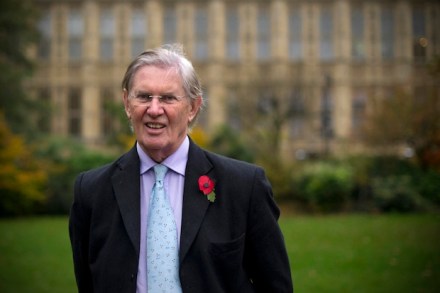
The government has defeated Bill Cash’s rebel amendment on the changes to the ‘purdah’ rules during the EU referendum campaign, but only thanks to Labour abstaining. The actual vote was 288 to 97. Now, the SNP voted with the Tory rebels as did Douglas Carswell, a few Labour Euro-scpetics, Plaid and the DUP. This means that around 2o to 30 Tories rebelled, we’re still waiting for the full division list to get the precise number. This is a rebellion that is embarrassing rather than earth shattering. But with Labour support, it would have been enough to overturn the government’s majority, which is a reminder of how hard governing with a majority of 12 could turn out to be.

Keeping Britain in the EU will be easier than keeping the Tories united on the issue

From our UK edition

Privately, senior Tories admit that winning the EU referendum, by which they mean securing a vote to stay in on Cameron’s new terms, is the easy part. The more difficult challenge, they admit, will be keeping the Tory party from splitting over the issue. But this realisation doesn’t seem to be informing how the government is actually approaching the referendum hence the row over the attempt to lift the normal purdah restrictions for the campaign itself. Cameron should be bending over backwards to ensure that the whole process is seen as ‘fair’ and to ensure that everyone on the Tory  bench has to accept the result. For as one senior backbencher warns, ‘If the thing doesn’t appear fair, people aren’t going to accept it’.

Osborne’s audition

From our UK edition

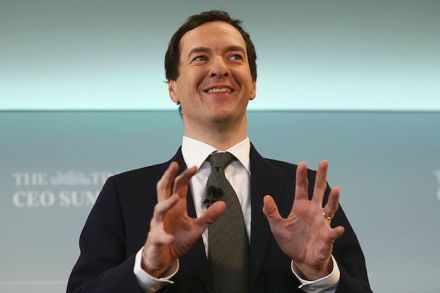
On Wednesday at Noon, George Osborne will rise to respond for the government at Prime Minister’s Questions. The symbolism of this moment won’t be lost on anyone on the Tory benches. It will be the start of Osborne’s audition for the top job. A few years ago, the idea of Osborne as Prime Minister was—as one of his backers puts it—‘a minority taste’. But now, he continues, ‘it is a mainstream assumption’. What has changed things is the economic recovery and the Tories’ surprise election victory, which has vindicated Osborne’s political strategy. Osborne, I argue in the Mail on Sunday, has also become a better politician in recent years; more comfortable in his own skin and in public.

How far will Merkel go on Greece?

From our UK edition

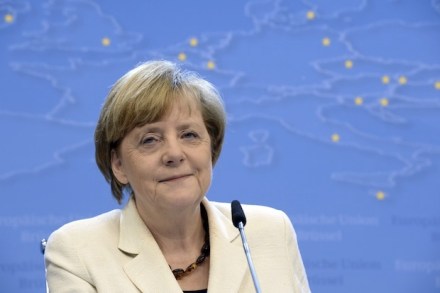
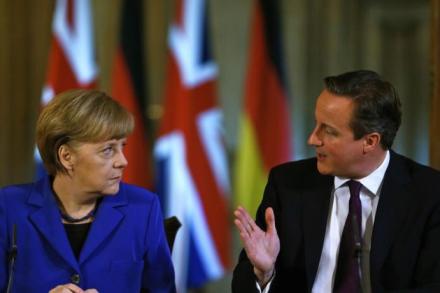
The Greek crisis has been going on for so long now, it is hard to imagine it actually coming to a conclusion. But next week’s meeting of European Finance Ministers is one of the last chances for a deal to be struck. However, there is no sign of an agreement yet. The Financial Times today picks up on German press reports about the German government preparing for Greece leaving the Euro. The Germans have long been convinced that any contagion from Greece leaving the single currency could be contained privately many in Whitehall think that Berlin is far too complacent about this. Now, it appears that Merkel is turning her attention to how Greece could be kept inside the EU if it was, effectively, kicked out of the single currency.

Despite winning a majority, Cameron will be remembered for how he handles Europe

From our UK edition

At 6.30pm on election-day, the Cameron invited their guests out into the garden for a drink. It was a very English occasion. Everyone was in their coats, huddled on the patio trying to pretend it was 10 degrees hotter than it actually was as they sipped their glass of wine. The mood was, understandably, nervous. The prospect of defeat was on everyone’s mind. David Cameron even read out his resignation speech to the assembled gathering. I’m told that the reaction as he did so showed that many of those present feared he would be doing it for real in less than 24 hours time. Now, obviously, things turned out very differently.

Cameron’s dark evening of the soul

From our UK edition

At 6.30 p.m. on 7 May, the Camerons invited guests at their home in Oxfordshire into the garden for a drink. Everyone stood on the patio, wrapped up in coats and shawls and drinking wine. They were understandably nervous. The Prime Minister had prepared a resignation statement and read it out to the assembled gathering. The group that huddled together on the patio that day tells us a lot about the qualities which Cameron values in people. Most of them were close to him long before he entered No. 10. Ed Llewellyn, his chief of staff, worked with him at the Conservative Research Department more than 30 years ago. Kate Fall, Llewellyn’s deputy, was one of the first to sign up when Cameron went for the Tory leadership in 2005.

PMQs: Harman puts Cameron in his place

From our UK edition

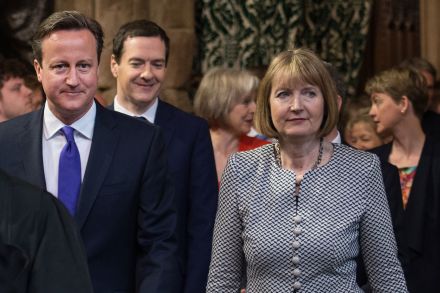
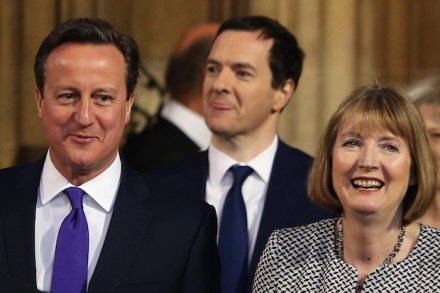
Harriet Harman has 16 years on David Cameron and she used that advantage very effectively today. After Cameron replied to her first question on the EU referendum with a string of mocking quips about Labour’s mass conversion on the subject, Harman scolded him for gloating and told him to ‘show a bit more class’. This dressing down took Cameron aback. For the rest of the session he wasn’t sure whether to tone it down or mock Harman for complaining. With Harman refusing to play along with the usual Punch and Judy show, Cameron turned to the SNP. He took advantage of Angus Robertson’s questions to mock the Nationalists for saying that they wanted full fiscal autonomy and then not trying to actually get it.

Labour’s role in the EU referendum campaign dominates party hustings

From our UK edition

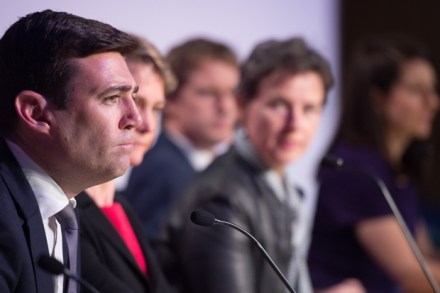
‘There’s a sense that no one is hitting it out of the park right now’, commented one Labour MP after this lunchtime’s Parliamentary Labour Party hustings. I’m told that all the candidates had their moments at the behind closed doors event, but that no one truly dominated. Liz Kendall continued with her role as the teller of hard truths. She warned the assembled MPs that nothing else would matter if people still don’t trust Labour with their money in 2020. Andy Burnham struck a different tone. He stressed that on inequality, Labour must not distance itself too much from the last five years. However, interestingly, he argued that Labour should not abolish right to buy, stressing that the party mustn’t give up on home ownership.

Why so many senior Tories want Zac Goldsmith to run for mayor

From our UK edition

Over the last few weeks, a string of senior Tories have urged Zac Goldsmith to run for Mayor of London. Goldsmith is, as I report in the Mail on Sunday, regarded by the Tory hierarchy as giving the party the best chance of keeping City Hall blue. In a contest that it will be very difficult for the Tories to win, Goldsmith scrambles the race—what other Tory would get Green second preferences? The attraction of Goldsmith is particularly strong as Nick Ferrari, as Daniel Boffey writes in the Observer, is unlikely to throw his hat in the ring.

Out’s Farage dilemma

From our UK edition

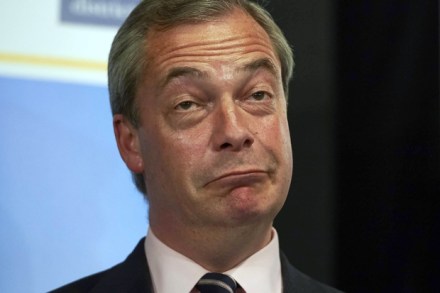
Nigel Farage’s latest intervention—declaring that Ukip is ‘going to take the lead making the case for voting to leave the EU in the referendum—neatly sums up the dilemma facing the Out campaign. On the one hand, there’s a danger that if it doesn’t get moving now then the In campaign will have a massive, and possibly insurmountable, advantage by the time the vote is actually called. On the other, if Out is too closely associated with Ukip then it won’t be able to get the 50.1 percent of the vote that it needs to win the referendum. For while Farage might be quite brilliant at motivating the 13 percent who voted Ukip, he also alienates a lot of people too.

Ed Miliband returns to the Commons as Osborne announces £3bn of more cuts

From our UK edition

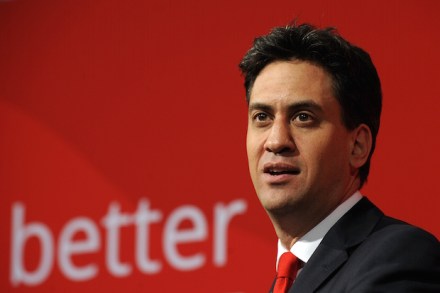
Ed Miliband has wasted little time in returning to speaking duties in the House of Commons. George Osborne came to the Chamber to announce £4.5bn of savings - made up of £3bn from non-protected departmental Budgets and £1.5bn from asset sales, including the disposal of the government’s remaining 30 per cent stake in the Royal Mail - and Miliband was in place to hear him. Once Osborne’s duel with the new shadow chancellor Chris Leslie was over, Miliband rose to speak. Unlike when he was leader of the opposition, Miliband was heard in respectful silence — Tory backbenchers, perhaps, took their cue from Osborne who declared that Miliband had earned the ‘respect of the House’ by turning up to the debate.

The march of the ‘yes’ men

From our UK edition

Forty years ago this week, Britain voted to remain part of the European Community. That remains the only direct vote on the European question that the country has had. The promise of a say on the EU constitution was shelved when that document metamorphosed into the Lisbon Treaty, and the ‘referendum lock’ that the coalition introduced has not yet been triggered by a transfer of power to Brussels. So it’s a historic process that the government will begin on Tuesday, with the first Commons vote on its referendum bill. Straight after the election, there was much speculation that the government would opt for an early referendum on EU membership, rather than leaving it until the 2017 deadline set in the Tory manifesto.

Cameron has a PMQs trump card – he won the election

From our UK edition

The first PMQs after an election victory is a moment to savour for a Prime Minister. He knows that the result gives him a trump card he can play again and again. So, it was unsurprising that Harriet Harman made little progress against Cameron. He treated it as a gentle net session, meeting each question with a slightly more aggressive and expansive answer. He did, though, seem slightly discombobulated by Ed Balls’ absence. Early on he made a joke about Balls’ defeat and then looked over to where Balls used to sit to drive the point home, but Balls – of course — wasn’t there.

What can modern politics learn from Thatcher? Charles Moore will tell us

From our UK edition

The first volume of Charles Moore’s biography of Margaret Thatcher is one of the finest political books of recent times. With the second volume due out in October, Charles, a columnist for both the Telegraph and this magazine, has agreed to also become a visiting scholar at the think tank Policy Exchange where he will work on what lessons contemporary politics can learn from Margaret Thatcher’s career. Policy Exchange has long been the favourite think tank of the Tory modernisers. With Charles and Steve Hilton’s arrival, it will be at the centre of the debate about where the Tory party should go next. For a flavour of the discussions to come, do watch Charles interview Hilton about his new book.

The two tightropes that Cameron must walk on Europe

From our UK edition

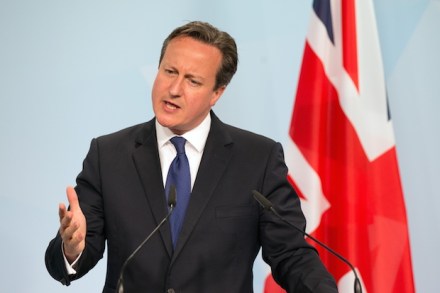
David Cameron has to walk two tightropes on Europe, and at the same time too. The first is to negotiate a deal with other European leaders that satisfies the bulk of his Euro-sceptic party. If this was not difficult enough, simultaneously Cameron has to show voters that the European question isn’t consuming all of his government’s energies. For despite its importance, it still rankles relatively low on the public’s list of priorities. To address the latter point, I’m told that Cameron will make a major domestic policy announcement in the week of every EU summit in an effort to show that he is not taking his eyes off the home front.

Will Cameron’s renegotiation efforts be boosted by the Out campaign’s troubles?

From our UK edition

David Cameron is in Holland and France today trying to pave the way for the renegotiation of the terms of Britain’s EU membership. Number 10 believe that now the referendum is definitely happening, the bill for it was published today, they can get other countries to engage with Cameron’s concerns. As I say in the column this week, Cameron’s renegotiation strategy has become clearer in recent weeks. Rather than trying to address every concern about EU membership, he is - as one Cabinet Minister told me - going to ‘focus on three or four big things and make a really big push on them.

Cameron’s EU rollercoaster

From our UK edition

[audioplayer src="http://rss.acast.com/viewfrom22/defeatingisis/media.mp3" title="James Forsyth and Rob Oxley discuss David Cameron's EU negotiations so far" startat=1493] Listen [/audioplayer]We have just had a very insular general election campaign, but the mood at Westminster is now determined by news from foreign capitals. There was a flurry of excitement last Wednesday when the German finance minister, Wolfgang Schaüble, suggested linking the British renegotiation to eurozone reform.

The first day of the Parliamentary session posed several challenges for Labour

From our UK edition

The first day of the Parliamentary session always has a slightly back to school feel to it. There are two, traditionally, witty speeches that are full of in jokes. The leader of the opposition then makes a speech that mixes the serious with humour and the Prime Minister replies in kind. But today won’t be remembered for the jokes but the shifts in Labour’s position that Harriet Harman attempted to execute. First, she confirmed that Labour would now support the EU referendum. But then, more surprisingly, she announced that Labour was ‘sympathetic’ to Tory plans to reduce the benefits cap, the amount that an able-bodied family without anyone in full time work, can receive in benefits to £23,000.

Cameron tries to bring the campaign into government

From our UK edition

Tomorrow’s Queen’s Speech will be almost cut and pasted from the Tory manifesto. Partly, this is because Number 10 believes that the Salisbury convention dictates that the House of Lords will not block policies that have a manifesto mandate. But it is also because the Tories wish to carry on in office where they left off in the campaign. They believe that continuing with both the message and the discipline they exhibited in the election is crucial to their future success. This desire to bring the campaign into government can be seen in Cameron’s latest staff appointments too. Giles Kenningham, who has been in charge of the highly effective CCHQ press operation for the last two and a bit years, is moving to Downing Street to become one of Cameron’s special advisers.