James Forsyth

James Forsyth

James Forsyth is former political editor of The Spectator.

David Cameron resigns as MP for Witney

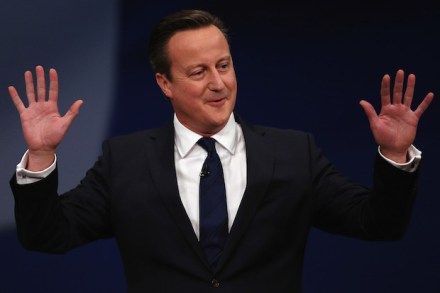
David Cameron is quitting as an MP. The former Prime Minister has just told ITV’s Chris Ship that he is resigning with immediate effect, prompting a by-election in Witney. Cameron’s decision is a surprise. It had long been assumed that Cameron would be the anti-Blair, staying on as the MP for Witney for some time after leaving Number 10. In that famous 2015 interview with James Landale, when he committed to not standing for election as Prime Minister again, Cameron waxed lyrical about his connections with Witney and the importance he attached to them. By going with immediate effect, Cameron has missed the opportunity to demonstrate to voters the importance he placed on being a good constituency MP.
Cameroons fume about May’s grammar school plans

Theresa May has picked the first defining fight of her leadership—and it is the same one that David Cameron chose. But, as I say in The Sun today, she has picked the opposite side from him: in favour of, not against, more grammar schools. Cameron’s opposition to more grammar schools infuriated many Tories, particularly those who were grammar school educated. They objected to a privileged public school boy telling them that they couldn’t be more of the schools that had done so much for them. May, by backing grammars, is sending out a very different message. She is showing these Tories that she’s one of them, a grammar school girl. As one Number 10 source puts it, ‘It is a bit of red—or blue—meat for the party’.

After Brexit, who should Britain let in?

Why has ‘trust’ became such a dominant issue in British politics in the early 21st century? Is it the failure to find weapons of mass destruction in Iraq? Or the arrogant ineptitude that led to the financial crisis and the bank bailouts? Or the parliamentary expenses scandal? Or is it, more than the above, the failure of successive governments to meet their immigration targets? Trust in politics will fall to dangerously low levels if-immigration continues as is following this year’s referendum. This is why the government has acknowledged that some control over EU immigration must be part of the Brexit deal. The extent of these restrictions will be key to our agreement with the rest of the EU. The relationship between the Brexit vote and immigration is complex.

Theresa May: We have selection in state schools already, selection by house price

Theresa May received the traditional desk banging reception when she addressed the 1922 Committee of Tory backbenchers. May pleased Tory MPs by emphasising that they  would have more opportunity to feed into policy making process now through George Freeman and the policy board and the green papers that will---once again—precede white papers. But what most excited Tory MPs was what May said about opportunity and grammar schools. May said that she would give a speech on a 21st century education system soon, explaining how selective schools--in other words, grammars--fit into the mix. Strikingly, she defended an ‘element of selection’ arguing that there is selection already in the system, and it is selection by house price.

What we learnt about Brexit from Theresa May today

Theresa May began her statement on the G20 by talking about Brexit. She insisted that she wasn’t going to give a ‘running commentary’ or reveal the government’s negotiating hand as, she said, that would not deliver the best deal for Britain. In other words, we’ll all just have to wait and see what she negotiates. May’s insistence that she won’t rule anything in or out does lead to some rather bizarre moments. May repeatedly, and rightly, stressed the trade deals that the UK would seek to do outside the EU. But when Labour’s Emma Reynolds asked her to confirm that these deals would require leaving the customs union, May ducked the question.

Some clues as to what David Davis means by Brexit

David Davis has just finished his first statement to the Commons on the process for the UK exiting the European Union. Davis’s initial statement stuck closely to what the government has said already; the coordinated Labour backbench heckle of ‘waffle, waffle’ had some truth to it. But it was striking that Davis said he hoped the UK’s security relationship with the EU would be as close or closer post-Brexit; in Whitehall, Britain’s intelligence and military capabilities are regarded as one of our key assets in the negotiation. But in answer to the questions that followed, Davis--a naturally frank politician—gave a clearer sense of what he means by Brexit.

May says general election will be in 2020

Theresa May is on her way to her first G20 summit. But she has still sat down for the traditional start of term interview with Andrew Marr. Reading the transcript of it, it looks like a classic Theresa May interview: with very little given away. She avoided answering Marr’s questions on whether she would like to see more grammar schools and refused to say whether she shared her chief of staff Nick Timothy’s view that Chinese involvement in the Hinkley point nuclear project would be security risk. On Brexit, May said little new about the deal she would like to strike--confirming the sense that, as one Minister told me, the government is ‘a way away from forming a definitive position’.

The Cabinet’s Brexit talk

So, where are we at on Brexit? Well, we know that Theresa May wants immigration control as part of the deal which essentially rules out a Swiss or Norwegian style deal. But, as I report in The Sun, beyond that little is settled. As one Cabinet Minister said to me after the away day at Chequers this week, ‘The truth is that, at the moment, we’re still in the preparatory stage’. Cabinet Ministers were struck by how open the discussion was at Chequers. Unlike in the Cameron era, there was no early indication as to what the Prime Minister wanted the meeting to conclude. According to those present, one of the most forceful speakers was the Chancellor Philip Hammond. He emphasised that growth would be lower next year.

Theresa May’s Brexit minefield

When David Cameron resigned, the Conservative Party Board pushed back the planned date for the election of a new leader until after the G20 summit had taken place. The official reason was to give the new Prime Minister time to read into the job and save him or her from having to fly off to meet world leaders directly after moving into Downing Street. More cynical members of the board, though, suspected Cameron had another motive: he wanted the chance to say a proper goodbye to Obama and Co. Thanks to Andrea Leadsom’s withdrawal from the leadership race, however, Theresa May now heads to the summit this weekend with almost two months in No. 10 under her belt. She will be a main focus of interest in Hangzhou, China.

Theresa May shows she wants to be defined by more than just Brexit

Theresa May welcomed the Cabinet to Chequers with this address, just released by Number 10: 'Thank you very much for coming together today. It’s our first opportunity to meet since the summer recess, but also the first opportunity for us to meet since the fantastic success of the GB Team at the Olympics – absolutely great. And also the Paralympics will be starting very soon, so we wish our Paralympic athletes all the very best and success there as well. But obviously over the summer – over the last few weeks – quite a lot of work has been done. We’re going to be having an opportunity today to discuss this.

Why an early election would be bad for the Tories

Ten points ahead in the polls, Theresa May regarded as the best Prime Minister by a majority of voters and both Labour and Ukip in disarray. It is little wonder, as I say in The Sun today, that some Tories are beginning to get excited about an early election. But going for an early election would be a massive mistake for the Tories. First, what the public seem to like about Theresa May is that she is a no nonsense politician who gets on with the job in front of her. Voters appear to like her refrain that politics isn’t a game. But calling an early election would destroy all this for it would be game playing on an epic scale, a move designed to take advantage of Labour weakness. Next, you can’t know how long a honeymoon is going to last.

Corbyn joins Cameron in giving peerages to pals

David Cameron’s resignation honours have now been published—and it is an extensive list. Cameron has nominated 13 people for peerages including his former chief of staff Ed Llewellyn, the former head of his policy unit Camilla Cavendish and his former head of operations Liz Sugg. The current treasurer of the Tory party Andrew Farmer is another heading to the red benches. But Michael Spencer, the former Tory treasurer and head of ICAP, is not on the list. As the Sunday Times revealed last week, there will be honours for many of Cameron’s closest allies and those who worked with him at Number 10. George Osborne becomes a Companion of Honour. Michael Fallon becomes a knight commander of the Order of Bath.

Labour’s problems go far beyond Jeremy Corbyn

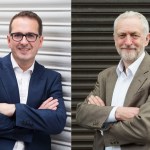
Owen Smith takes on Jeremy Corbyn in the first Labour leadership hustings this evening. The moderates are desperately hoping that these head to heads can change enough minds among the Labour electorate to give Smith a chance of beating Corbyn, hence their eagerness to have them televised and the Corbynite desire to keep them off air. But as I argue in the magazine this week, Labour’s problems go far beyond Jeremy Corbyn. He is a symptom of what ails the party, not the sole cause of it. Even if he announced tonight that he was off to spend more time on his allotment, Labour would still have big, existential questions to resolve. One obvious problem Labour has to sort is, what is its economic policy?

Who can lead Labour?

Westminster prefers to concentrate on one drama at a time. That is why the old rule of thumb was that only one party leader could be under pressure at any given moment. Recent events have upended that convention. The Brexit vote precipitated leadership crises for more than one party. But the spectacle of the Tory leadership election has rather overshadowed the fact that Labour is having its own leadership contest. The contest between Jeremy Corbyn and Owen Smith, the party’s former work and pensions spokesman, will run all summer. In Labour circles, Corbyn is regarded as the clear favourite. Once again, the hard left appears to have succeeded in getting far more people to sign up to Labour’s registered supporter scheme than the so-called moderates have.

Steven Woolfe excluded from Ukip leadership race

Steven Woolfe has been barred from standing for Ukip leader. The party’s national executive committee has ruled that he didn’t submit his nomination papers in time and so is ineligible.   Woolfe’s exclusion from the race is a major blow for Ukip donor, and Leave.EU founder, Arron Banks who had thrown his weight behind Woolfe. Woolfe also had the support of several of those closest to Nigel Farage. This group will not take Woolfe’s exclusion lying down, and will try and find a way to stop the contest or somehow get his name onto the ballot. I wouldn’t even rule out a split if the NEC won’t back down; Banks has talked in the past about creating a new party. If the leadership contest does go ahead, the MEP Diane James will be the favourite.

The European Commission chooses not to play Brexit games

Jonathan Hill’s post-referendum resignation as the UK’s EU Commissioner was a deeply regrettable act. Even after the referendum, the UK remained a member of the EU and thus entitled to a commissioner. The UK government has nominated Sir Julian King, the Ambassador to Paris, as Hill’s replacement. Today, the Commission President Jean-Claude Juncker has said that he would, subject to European Parliament’s approval, like King to be the Security Commissioner. This is a grown-up, mature decision. King has been offered a proper job, not a small one designed to punish the UK for Brexit. The role also recognises the reality that UK-EU co-operation on anti-terrorism measures will need to continue long after Brexit.

Theresa May is right not to mess with David Cameron’s resignation honours

Downing Street has made clear today that Theresa May will not move to prune down or veto David Cameron’s resignation honours list. This is the right decision. Whatever you think of the list, it wouldn’t be right for a new Prime Minister to seek to amend the resignation honours list of their predecessor. If this started to happen, it would make politics even more bitter and factional than it is today. Imagine if this Downing Street transition was not from one Tory to another but a Labour PM being replaced by a Tory who immediately vetoed all the honours proposed by the outgoing Labour Prime Minister. Now, this doesn’t mean that the Cameron list is wise.

Decision time approaches for Theresa May

Parliament is off for the summer, and the exodus to the beaches has begun. But Theresa May isn’t heading off there. She has serious work to do this summer, she has to work out what she wants out of the UK’s EU exit deal. As I say in The Sun this morning, May is just being honest when she says that she has an ‘open mind’ on what the deal should look like. But she doesn’t have long to decide what she does want. Indeed, I understand, that the Mays have already scrubbed one planned summer break to allow her to work on this. May is right to want the deal that’s best for Britain, rather than simply trying to replicate someone else’s deal with the EU. But a bespoke deal will, inevitably, take time to negotiate.

Big boost for Jeremy Corbyn after court victory

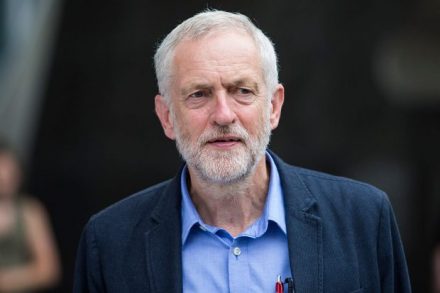
The Labour donor Michael Foster has lost his High Court case attempt to force Jeremy Corbyn to get 51 nominations from MPs and MEPs to be a candidate in the Labour leadership race. The Judge upheld the Labour National Executive Committee’s decision that Corbyn, as the incumbent, should automatically appear on the ballot. Today is a significant victory for Corbyn. If he had to get parliamentary nominations to appear on the ballot paper, he would have struggled badly to do so. Indeed, he might well have lost by default. But now, Corbyn can get on with his leadership campaign. Corbyn goes into this campaign as the firm favourite to win. Owen Smith is clearly trying to tack left in an attempt to eat away at Corbyn’s left-wing support.

Three key tests for any Brexit deal

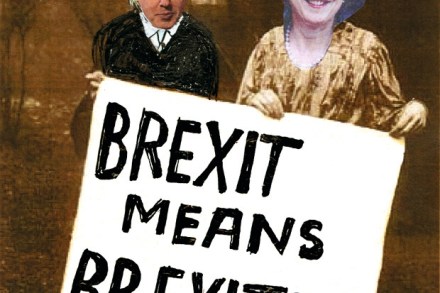
‘Brexit means Brexit’ is one of the most brilliant political soundbites of recent times. It worked wonders for Theresa May during the Tory leadership contest. It showed that she didn’t intend to ignore the referendum result — that would have been politically suicidal — but the phrase is essentially meaningless. Brexit could mean many things. The question of what it actually is will define British politics for the next five years at least; it will be no surprise if we are still arguing about it in a decade’s time. At its most basic, Brexit means leaving the European Union. But the real debate is going to be about how the United Kingdom does that and what its relationship with the EU will be afterwards. May has, understandably, kept her options open.