James Forsyth

James Forsyth

James Forsyth is former political editor of The Spectator.

Theresa’s Tory love-in

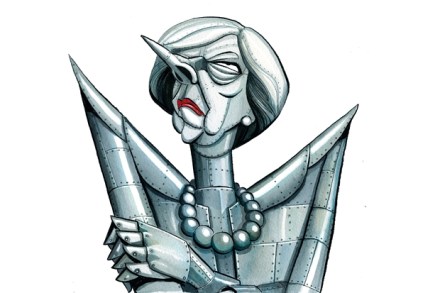
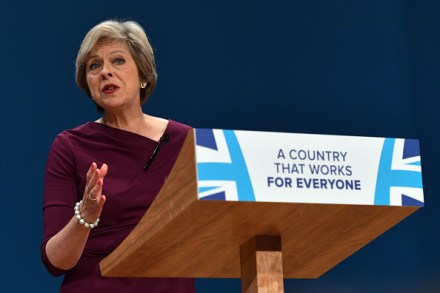
Theresa May doesn’t use an autocue for her speeches. She feels that reading off a screen at the back of the hall makes it far harder to connect with the audience. But the Prime Minister had no need to worry about her connection with the audience at this conference. Tory activists love her; they regard her as one of their own and are rejoicing at her leadership. ‘The grown ups are back in charge’ was a refrain heard frequently in Birmingham this week. The mood of Tory activists has been further improved by what Mrs May has said about Brexit.
Theresa May’s ‘carpe Brexit’ speech

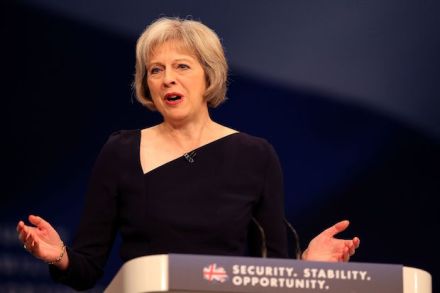
Theresa May’s speech was an attempt to seize the moment created by Brexit and Labour’s lurch to the left. She tried to set out a new centre-ground politics, promising to stand up to elites on behalf of ordinary people.  She attempted to nationalise Clement Attlee, the Labour Prime Minister who presided over the creation of the NHS, hailing him as one of her inspirations and promised government intervention to fix the housing, energy and broadband markets. In political terms, the speech was clever. There are an awful lot of voters who will nod along with her criticism of a ‘sneering’ elite who view themselves as ‘global citizens’ and her demands that multinational businesses accept that they have obligations to the communities they operate in.

The Hammond era will be very different to the Osborne one

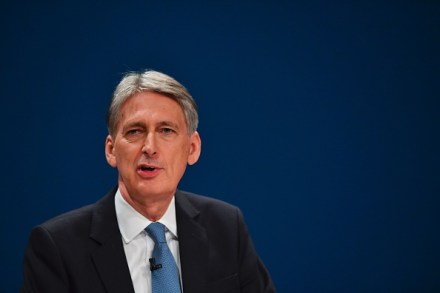
Philip Hammond is a very different kind of Chancellor than George Osborne. Osborne’s conference speeches ranged across the policy landscape; Hammond’s was tightly focused on his brief. You wouldn’t have known from it that Hammond had been Foreign Secretary until a few months ago. On the economy, Hammond confirmed that the government was no longer targeting a surplus by 2020. Hammond, sounding less downbeat about Brexit than he had on the radio this morning, was clear that there will be a fiscal stimulus announced in the autumn statement. Hammond also talked about how to raise productivity, his favourite subject. One striking feature of Hammond’s speech was how he repeatedly emphasised the importance of high-skilled immigration to the economy.

A Boris speech that made you think

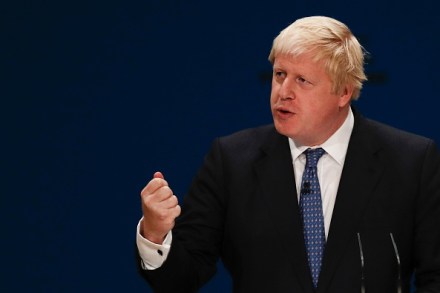
Boris Johnson’s speeches at Tory conference have normally been dedicated to making the audience laugh. As Mayor of London, he was freed from the constraints that Cabinet Ministers must labour under and so could have more fun than any other speaker. But as Foreign Secretary, Boris is constrained both by the conventions of diplomacy and a Number 10 that is keeping a particularly close eye on him. Now, Boris being Boris he didn’t totally obey the usual diplomatic niceties. He began by telling the audience how when he met the Russian Foreign Minister in New York at the UN general assembly last month, he had told him that Russia’s problems were down to how the West had ‘imposed democracy’ on the country in 1990.

Chris Grayling: UK won’t set out its negotiating position when it triggers Article 50

So, what will be in the UK’s Article 50 letter? Boris Johnson had previously implied that the document would set out the UK’s aims for the negotiations, detailing the kind of relationship that this country wants with the EU in the future. But Chris Grayling just told Robert Peston that when Theresa May triggers Article 50, which she has said she will do before the end of March next year, she won’t set out the UK’s negotiating position. If this is the case, it is a mistake. Business and industry need to have a sense of, at least, what the UK government is trying to achieve. Without that, it will end up assuming the worst case scenario.

May’s Brexit offering

Theresa May’s biggest conference dilemma was what to say about Brexit. She doesn’t want to trigger Article 50 yet, or even say when she will do so. Why, because the government hopes that the longer it waits, the more the rest of the EU will be inclined to have preliminary discussions before the actual negotiations start. But May had to have something to say to conference on Brexit. So, May’s team have come up with an announcement that doesn’t involve Article 50 but does enable her to show ‘momentum’, and to claim she is getting on with things. It is a ‘Great Repeal Bill’ which will repeal the 1972 European Communities Act, but only when Britain actually leaves the EU.

May will have to say more on what Brexit means — and soon

Theresa May will receive a rapturous reception from Tory activists tomorrow. She is not just their new leader, but—as I say in The Sun today—someone they see as one of their own. She joined the party as a teenager, met her husband at a Tory disco and still goes out canvassing most weekends. She’s also much closer to the activists in age than Cameron was when he became leader: she turns 60 today, Cameron was 39 when he became party leader. But May should enjoy the applause on Sunday because her job is about to get harder. She is taking the unusual step of speaking on the opening day of conference to try and get Brexit out of the way.

The May machine

Theresa May isn’t much given to shows of emotion. When Andrea Leadsom called her to concede in the Tory leadership race, May was preparing for the first event of her nationwide campaign. She went ahead and delivered her speech, giving nothing away. But even May might be tempted to do a victory jig upon entering the leader’s suite at the Conservative party conference. Only a year ago, her leadership chances were being written off. Her ambition was a source of much amusement to Cameroons and her cabinet colleagues (including some now holding very senior jobs in her government). They thought her speech warning that ‘it’s impossible to build a cohesive society’ when immigration is too high was at odds with the one-nation, optimistic theme of that conference.

Corbyn talks past the country

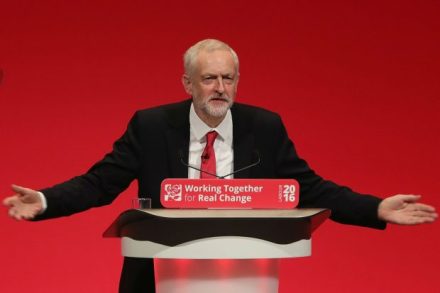
Jeremy Corbyn’s second leader’s speech was much better than his first. One has to beware the soft bigotry of low expectations when judging his performance as leader of the opposition. But, it’s fair to say that Corbyn’s speech was up there with some of Ed Miliband’s off year efforts. The delivery was much improved, there was a joke or two and some canny lines. Corbyn cleverly made the moderates an offer they’ll struggle to refuse, saying that the one thing everyone in Labour agreed on was that a divided party would not persuade the public. So, he asked them, ‘accept the decision of the members, end the trench warfare and work together to take on the Tories’.

Why there will be no new shadow Cabinet for weeks

Normally, a leadership election is followed by the leader appointing a new top team. But that won’t be happening in this case. Instead, a new shadow Cabinet will have to wait for the Labour party to agree a new set of rules on how it should be selected. The problem is that many of those who resigned from the front bench over Corbyn’s leadership will only return if MPs are allowed to elect a section of the shadow Cabinet; the thinking—as Tristram Hunt writes in this week’s magazine — is that this would allow them ‘to return to work for Corbyn with honour’. But Corbyn isn’t keen on agreeing to this reduction in his power. The NEC have discussed this for hour and hours in the past few days but to no end.

Now Corbyn has triumphed, Labour’s real civil war begins

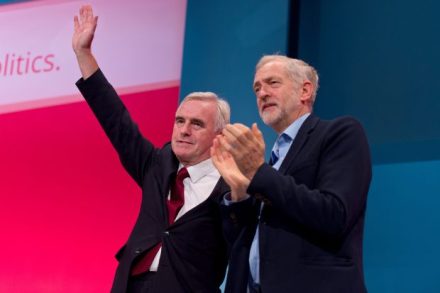
Jeremy Corbyn has never been in a stronger position as Labour leader than he is today. A leadership contest that was meant to topple—or at the least, weaken him—has ended up solidifying his position. His Labour critics came for him, and he defeated them. He garnered 61.8 percent of the vote in this leadership contest, even more than he received last year. He won a majority among full members, something he just failed to do in the first round last time. He can, justifiably, say that the Labour membership have seen the leadership he is offering, and voted for more of it. Corbyn might have said, to his critics, ‘let’s wipe that slate clean’ in his victory speech. But this isn’t going to happen: there’s simply too much bitterness on both sides.

This Labour leadership contest has represented an intellectual surrender to Corbynism

The Labour leadership result isn’t announced until 11.45am today. But whatever the result—and no one seems in much doubt what it will be, this contest has represented an intellectual surrender to Jeremy Corbyn and the ideology he represents. Isabel Hardman and Marcus Roberts discuss Corbyn's victory on Coffee House shots I argue in The Sun this morning, that his opponents surrendered right at the start of the contest. Owen Smith was offered up as a more competent and media savvy leader rather than as the antidote to Corbynism. Smith himself emphasised that the party owed Corbyn ‘a debt of gratitude for helping Labour rediscover its radical roots’. He stressed, ‘I am just as radical as Jeremy Corbyn’.

Jeremy Corbyn promises to ‘wipe the slate clean’

Yesterday evening, Jeremy Corbyn released a statement saying that: ‘As far as I am concerned, the slate will be wiped clean this weekend’. He promises, if re-elected, to ‘reach out and work with all Labour MPs to form a broad and effective opposition’. The statement shows how confident the Corbyn camp are of winning, I haven’t found anyone in the last few days who doesn’t think he has won and relatively comfortably. It is fair to say, though, that not all of his critics will take this supposed peace offering at face value. Word is that we shall see some of those who resigned return to the front bench once this contest is over. I know of one prominent figure in the Owen Smith campaign who is keen to rejoin the shadow Cabinet.

The party’s over

This leadership contest was meant to topple Jeremy Corbyn, or at the very least weaken him. It has ended up strengthening him. The Corbynites will be now emboldened to go after all those who stand in their way, from the general secretary and the deputy leader to party staff and regional organisers. They are tightening their grip over the party from top to bottom, something the Blairites never did. Alarmingly for the moderates, the party could be beyond saving by 2020. Even the Parliamentary Labour Party, a bastion against Corbynism, could be pushed hard to the left at the next election. Candidate selection will enable Momentum and co. to oust some of their most determined foes.

New Ukip leader says Putin is one of her heroes

Diane James, Ukip’s new leader, did her first major TV interview as Ukip leader this morning. And very revealing it was too. When Andrew Neil asked her who her political heroes were other than Vladimir Putin, she did not deny that the Russian leader was one of her heroes. She said that neither Clinton nor Trump were a hero of hers. When Andrew then pushed her on who were her heroes were, she named Margaret Thatcher and Winston Churchill. Andrew then summed up by saying, your heroes are Putin, Churchill and Thatcher. James said that yes, they were. Here's the clip.  So, the leader of the UK’s third political party does not deny that Putin, who has authoritarian tendencies and is no respecter of international laws, is one of her heroes.

Philip Hammond, the frankest man in the Cabinet

On Thursday, the Cabinet’s Economic and Industrial Strategy committee met. There were, as I write in The Sun this morning, controversial issues on the agenda: new rules on foreign takeovers of British companies, executive pay and workers on boards. May made clear her views on these questions in the last speech of her leadership campaign. But in this meeting, the members of the committee didn’t simply echo May’s views back at her. One of those present tells me that Philip Hammond made a ‘fearless’ intervention setting out his own, distinct take on these questions. Hammond was then supported by several Cabinet colleagues.

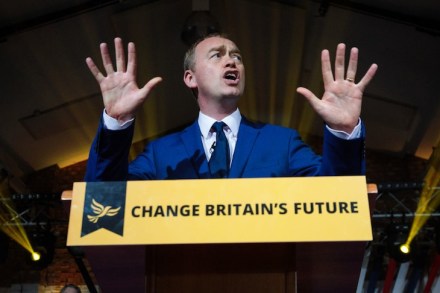
Diane James is Ukip’s new leader – but will she be haunted by Nigel Farage?

Diane James is the new Ukip leader. The party’s home affairs spokesman won with 8,451 votes. She beat Lisa Duffy into second place by nearly 4,000 votes. Bill Etheridge came third, Phillip Broughton fourth and Liz Jones fifth. James was the frontrunner and her victory was expected given that Steven Woolfe and Suzanne Evans were both barred from running. But James ran one of the least inspiring leadership campaigns in recent political memory. She didn’t announce any new policies and avoided debate at every opportunity. James, as anyone who watched her in the BBC’s young people’s EU debate during the referendum campaign will know, is not as accomplished a media performer as Nigel Farage.

Will David Cameron only be remembered for Brexit?

At the moment, the consensus is that Brexit will be Cameron’s legacy, that the thing people will remember about his premiership is that he called a referendum on the EU and lost it. But I don’t think this will necessarily be the case. As I argue in the magazine this week, if Brexit -- to use a phrase -- turns out to be a ‘success’, then that will allow attention to turn to other parts of Cameron’s career. It will allow people to reflect on how, after three successive general-election defeats, he turned the Tories back into the natural party of government. On how he made them more comfortable with modern Britain and more representative of it. The irony of all this is that Cameron’s legacy depends on him being proved wrong on the dangers of Brexit.

Inside David Cameron’s personal Brexit

In the days following David Cameron’s resignation as prime minister, Michael Gove tried to persuade the Cameroons to back Boris Johnson for the job. He argued that the former London mayor was the real continuity candidate. While Johnson would strike a very different path on Europe, Gove argued, he would keep Cameron’s domestic agenda going in a way that Theresa May would not. This was something Gove got right. But the referendum result was far too raw for this argument to work. The rest, as they say, is history. Since May became Prime Minister, it’s been clear that she does not represent continuity. May is her own woman.

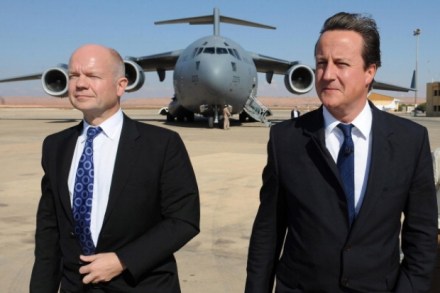
David Cameron is only partly to blame for Libya’s problems

David Cameron is not having the best of weeks and the Foreign Affairs Committee’s highly critical report on his Libya intervention will not improve his mood. When the Chilcot Report came out, Cameron made much of how the National Security Council structure that he had put in place had improved policy making. But the FAC report states that despite the National Security Council, there was still no coherent strategy for the intervention. Indeed, it calls for an inquiry into how the NSC actually makes policy. The Libya intervention might have prevented a massacre in Benghazi. But the chaos in Libya since, the migrant crisis and the increase influence of Islamic State there mean that it cannot be judged a success.